UN Security Council condemns Houthi attacks
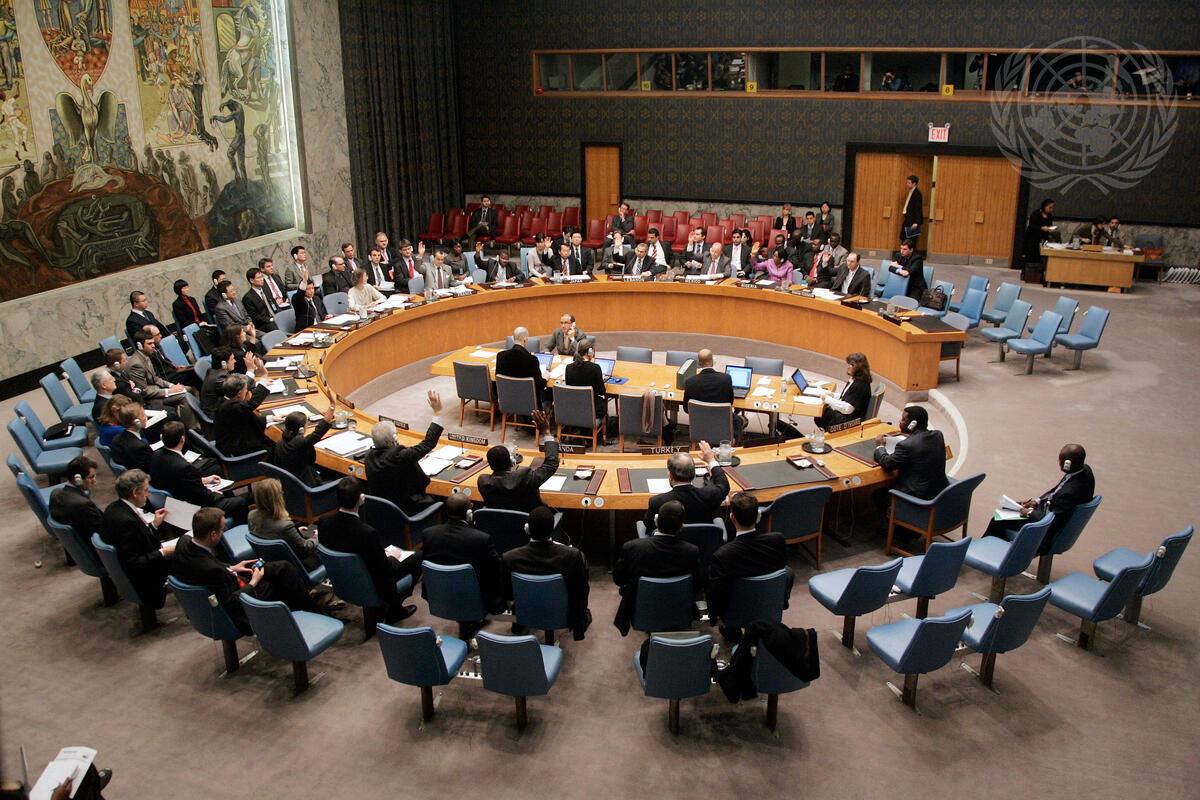
UN Security Council condemns Houthi attacks: all 15 members of the United Nations Security Council joined a statement on Friday, September 25, condemning the escalating Houthi campaign against Saudi Arabia “in the strongest terms.” Delivered by the council’s rotating president, French ambassador Jérôme Bonnafont, the statement backed the kingdom’s inherent right to self-defence under international law and demanded that the Houthis immediately stop attacks affecting civilians, civilian objects and energy infrastructure.
The unanimity is the central fact. Security Council members that routinely divide over conflicts in the Middle East agreed on the same public language at a moment when missiles, drones, oil-tanker attacks and territorial advances in Yemen are merging into one regional security crisis. The council also condemned attacks and threats against commercial shipping in the Red Sea and Bab al-Mandab, stressing the navigation rights and freedoms protected by the UN Convention on the Law of the Sea.
But a unified statement is not the same as an enforcement plan. It creates diplomatic pressure and a shared legal frame; it does not itself stop a missile, release a detainee or move food through a contested road. The test is whether the consensus can now produce practical cooperation on air defence, maritime security, arms interdiction and humanitarian access without widening the war.
Why this matters: rare unanimity changes the diplomatic signal
The Security Council’s words matter first because every permanent and elected member accepted them. In a body where geopolitical rivalry often produces abstentions, vetoes or carefully diluted language, unanimity denies the Houthis an easy claim that condemnation reflects only a Saudi or Western position. It also gives Riyadh a stronger diplomatic basis for defensive operations, while keeping those operations bounded by international law.
The statement explicitly affirmed the “inherent right of the Kingdom of Saudi Arabia to self-defence in accordance with international law” and expressed full solidarity with Riyadh. That construction is significant: it validates defence against cross-border attacks but does not provide an unlimited endorsement for offensive action inside Yemen. Proportionality, distinction and civilian protection remain legal obligations for every belligerent.
For Saudi Arabia, the gains are political and operational. A unanimous council statement strengthens its case that the missile-and-drone threat is international, not merely a bilateral remnant of Yemen’s civil war. For the Houthis, the loss is diplomatic room: even governments willing to criticize Saudi airstrikes or question Western policy accepted language demanding an immediate end to Houthi escalation.
What the UNSC Yemen press statement demands
The council condemned continuing Houthi attacks against the kingdom, including strikes affecting civilian and energy infrastructure that have injured civilians, among them women and children. It demanded an immediate halt to military escalation and to attacks affecting civilians and civilian objects. The statement also renewed its condemnation of attacks and threats against commercial vessels in the Red Sea and Bab al-Mandab.
That maritime language links the Saudi front to a global economic interest. Bab al-Mandab is a gateway between the Red Sea and the Gulf of Aden. Threats there can force ships onto longer routes, increase crew danger and raise insurance and fuel costs even when a vessel is not hit. The council’s reference to UNCLOS navigation rights makes the point that freedom of passage is not a favor granted by whichever armed group controls nearby coastline.
The council also reaffirmed Yemen’s unity, sovereignty, independence and territorial integrity, backed the internationally recognised Yemeni government and said sustainable peace “cannot be achieved through violence, coercion, or use of force.” It urged renewed engagement with UN Special Envoy Hans Grundberg toward a comprehensive political settlement. That pairing matters: the council condemned one side’s attacks while refusing to reduce Yemen’s future to a military settlement.
Red Sea and Bab al-Mandab shipping attacks raise the price of war
The Red Sea Bab al-Mandab shipping attacks are no longer a separate file from the ground war. Houthi forces have seized swathes of Yemen’s Red Sea coast and imposed what they describe as a naval blockade on Saudi Arabia. Oil tankers have been struck, and the resulting risk has helped push energy prices higher. The economic effect works through probability as much as physical loss: insurers, shipowners and commodity traders price the chance of the next successful attack before it happens.
Saudi Arabia’s exposure is especially acute because energy exports are both an economic lifeline and a strategic target. Even intercepted weapons force the kingdom to sustain expensive surveillance and air-defence coverage across ports, cities and industrial sites. Saudi authorities have reported destroying six Houthi ballistic missiles in the latest phase of attacks. As with other battlefield claims, the precise count depends on official reporting and cannot by itself establish the effectiveness of every launch or interception.
The Houthi naval blockade oil prices connection therefore has three layers: direct damage to ships or terminals, higher war-risk premiums, and the possibility that a wider confrontation closes or degrades two crucial maritime routes at once. Signal Post News has separately examined the Houthi assurances and threats around Red Sea shipping and the latest Saudi missile and drone interceptions.
Resolution 2216 and the targeted arms embargo
The council called for full implementation of Resolution 2216, adopted in 2015, including its targeted arms embargo. It urged practical cooperation with the Government of Yemen and other partners to prevent the Houthis from obtaining arms, technical assistance, training and financing. The wording moves beyond simply asking states not to ship weapons: it identifies the support systems that allow an armed movement to sustain and improve a missile, drone and maritime campaign.
Arms-embargo enforcement is difficult because the prohibited flow is not necessarily a complete weapon crossing one border in one shipment. Components can move through commercial networks, technical knowledge can travel electronically, financing can pass through intermediaries, and dual-use parts can be repurposed after import. Effective enforcement requires customs intelligence, financial tracing, end-use monitoring and maritime inspections coordinated across jurisdictions.
Critics of a sanctions-first response argue that interdiction can harden wartime economies without changing battlefield choices and may complicate legal commerce into Yemen. Supporters counter that diplomacy without control of weapons flows allows negotiations to proceed under missile pressure. The best test is narrower than either slogan: whether enforcement can measurably reduce military supply while protecting food, fuel, medicine and other civilian imports.
Humanitarian access and 73 detained UN staff
The humanitarian section of the statement is not an appendix to the security crisis. UN reporting puts the number of people killed, injured or displaced since early September at at least about 125,000. International Organization for Migration figures cited in related reporting put displacement alone near 130,000. The totals use different dates and categories, so they should not be treated as a single precise count; together they show a crisis expanding faster than relief systems can absorb.
The council called for full, safe, rapid and unhindered humanitarian access. It also demanded the unconditional release of detained personnel, including 73 UN staff as well as workers from nongovernmental organisations, civil society and diplomatic missions. Detention does more than harm the people held. It reduces field presence, interrupts aid programs and makes independent verification of civilian conditions more difficult.
Access is now the key operational measure. A diplomatic statement can be evaluated by whether food and medical convoys move, whether staff can work without detention, whether ports remain usable and whether displaced families can reach functioning hospitals. Signal Post News’s reporting on Yemen’s overwhelmed hospitals shows why a corridor on paper is not enough if fuel, beds and trained staff are missing at the destination.
How we got here: from repeated warnings to a wider front
Friday’s statement followed council language on September 21 and an earlier statement on August 7 addressing Houthi attacks. Repetition can be read two ways. It shows that the council has maintained a consistent position; it also shows that previous condemnation did not prevent further escalation. The shift now is the combination of cross-border attacks, maritime pressure, rapid territorial change in Yemen and visible regional defence coordination.
Saudi Arabia, Pakistan and Türkiye have discussed joint defence coordination under the Mecca Joint Defence Agreement. That creates potential for intelligence sharing, air-defence support, training and maritime coordination, although the public record does not establish the scale or rules of any deployment. A collective framework may strengthen deterrence; it can also create new escalation pathways if personnel or assets from another member are attacked.
Iranian President Masoud Pezeshkian has denied Iranian backing for the latest Houthi actions, saying “the Houthis are responsible for their own actions.” Tehran’s statement matters because the council’s arms-embargo emphasis places outside support under renewed scrutiny. It does not settle the long-running dispute over Iran’s relationship with the movement. Evidence about weapons origins, financing and command influence must be assessed independently rather than inferred from alliance labels alone.
Who gains, who loses, and what critics will watch
Saudi Arabia gains diplomatic support and a clearer international-law frame for defensive action. Its risk is that a broad military response causing civilian harm would weaken the same coalition of support the statement assembled.
The internationally recognised Yemeni government gains political backing for sovereignty and the arms embargo. It still must demonstrate that it can protect civilians, maintain services and offer a political future beyond renewed mobilisation.
The Houthis lose diplomatic cover but retain leverage on the ground and at sea. The movement can continue to impose costs with relatively inexpensive missiles, drones and threats to shipping. Yet each attack also increases the chance of more coordinated regional defence and tighter interdiction.
Civilians and commercial crews bear the immediate losses. Families face displacement, disrupted health care and danger from attacks by multiple parties. Seafarers, shipowners and consumers absorb a separate chain of risk through delayed cargoes, insurance charges and energy prices.
Critics will judge the council on consistency. Condemning Houthi attacks does not absolve other forces from investigating civilian harm or respecting international humanitarian law. Supporting Saudi self-defence does not erase the need for a political settlement. And calling for humanitarian access has little value unless council members use their diplomatic and economic influence to make access possible.
What happens next: three scenarios
1. Coordinated deterrence limits attacks
Saudi defences improve through intelligence and technical cooperation with regional partners, maritime patrols reduce the risk to commercial shipping, and arms-interdiction efforts make launches harder to sustain. The Houthis preserve political control but reduce cross-border and maritime attacks. This is the council’s preferred path, though it depends on credible consequences and an off-ramp.
2. A cycle of interception and retaliation continues
The more likely near-term scenario is continued launches, mostly successful interceptions, periodic damage and sustained pressure on shipping. Energy and insurance markets remain volatile, while the humanitarian crisis grows without a decisive battlefield change. Diplomatic unity contains the crisis at the margins but does not resolve it.
3. Regional coordination becomes direct intervention
A successful strike on a major Saudi city, energy facility or partner force could trigger a wider response under the Mecca agreement. That might degrade Houthi capabilities, but it could also expand the geography of retaliation and make aid access harder. The same mechanism designed to deter escalation could accelerate it if red lines are crossed.
The decisive indicator is whether unanimity survives the next incident. If the 15 members can convert Friday’s language into enforceable protection for civilians, shipping and aid workers while sustaining Grundberg’s political channel, the statement may become more than another warning. If not, it will join the August 7 and September 21 statements as evidence that the council could agree on the danger but not on how to stop it.
Sources and reporting notes
- United Nations Security Council press statement via ReliefWeb
- WE News English — UN statement and regional response
- News Central TV — Reuters reporting on the Security Council statement
- FANA News — Security Council condemnation and Red Sea shipping
- Sweden Herald / AFP — rare Security Council unanimity
Reporting cutoff: September 26, 2026. Military claims remain attributed. Humanitarian totals reflect different reporting windows and definitions and should not be combined into a single exact figure.