Quebec helicopter crash four killed
Four people were killed Saturday afternoon when a helicopter crashed and caught fire near Sainte-Brigide-d'Iberville, Quebec, about 50 kilometres southeast of Montreal, provincial police said. Emergency crews were called at roughly 2:30 p.m. Eastern time and found the aircraft burning near Rang des Écossais, off Highway 10. All four occupants were declared dead at the scene.
Sûreté du Québec Sgt. Audrey-Anne Bilodeau said the aircraft appeared to be a private helicopter. Authorities had not identified the victims and had not confirmed the helicopter's owner, operator, make, model, registration, departure point or destination. The cause was also unknown. Those gaps are central to the investigation, and they make any theory about why the aircraft went down premature.
What is confirmed about the Sainte-Brigide-d'Iberville helicopter crash
Police received an emergency report of a helicopter in distress that may have crashed and caught fire. CTV News reported that preliminary information indicated the distress developed shortly after takeoff, but police had not publicly established where the aircraft took off or what mission it was flying. Firefighters brought the blaze under control within about an hour, while officers secured the rural scene.
The Transportation Safety Board of Canada said it deployed investigators. That federal team will investigate the occurrence as a transportation-safety event, while the SQ Major Crime Unit and crime-scene technicians handle the police and forensic work. The involvement of a major-crime unit does not itself establish criminality; specialist units are commonly used to document sudden-death scenes and preserve evidence while the facts are unknown.
Families are still waiting for identification
The human story remained painfully incomplete Saturday night. Police had not released the victims' names, ages or hometowns and said formal identification could take several days. That process exists to avoid compounding a catastrophe with a mistaken notification. Investigators must reconcile the physical evidence with records, confirm who was aboard and notify next of kin before names can be made public.
Fire can make that work slower. Heat may damage identity documents, personal effects and electronic devices, while the wreckage itself can be unstable or contaminated by fuel and firefighting agents. For families, that means the absence of names in the first hours should not be read as indifference or confusion; it reflects the evidentiary care required after a high-energy, fire-involved crash.
Why this matters beyond one rural field
Fatal general-aviation crashes are comparatively rare, but each one tests a safety system built around learning from low-frequency, high-consequence events. Private helicopter operations can involve short flights, small landing sites and changing local conditions. Unlike airline travel, they may not have a dispatcher, large maintenance organization or cockpit voice and flight-data recorders creating an extensive digital trail.
That does not mean private flying is inherently unsafe, nor does it point to a cause in this case. It means investigators may have to assemble the sequence from many smaller pieces: witness accounts, air-traffic and radar data, weather observations, maintenance records, pilot qualifications, phone or onboard electronics, and the physical signatures left in the wreckage.
Two investigations, two distinct questions
The SQ's forensic investigation is responsible for the scene as a place where four people died. Officers and crime-scene specialists document the location of remains and debris, establish identities, interview witnesses and determine whether there is any evidence of criminal conduct or another issue within provincial jurisdiction.
The independent TSB inquiry has a different mandate: determine what happened from a transportation-safety perspective and identify lessons that could prevent another occurrence. TSB investigators typically examine the wreckage and its controls, engine and rotor-system evidence, the flight path, maintenance history, weather and visibility, pilot training and records, operational decisions, and any available electronic data. Their job is not to assign civil or criminal blame.
The fire is likely to complicate both tracks without making them impossible. Investigators can still study deformation, fracture surfaces, component positions and the distribution of debris. Metallurgical testing may help distinguish damage that occurred before impact from damage caused by impact or post-crash fire. What evidence survived will become clearer only after the site is mapped and the wreckage is recovered.
Quebec's helicopter heritage — and a necessary caution
Quebec has a deep connection to civilian helicopter manufacturing. Bell established its Mirabel operation in 1986, and the company's first aircraft produced there was a Bell 206B JetRanger. The facility grew into a centre for commercial helicopter manufacturing, assembly, flight testing and delivery. The Bell 206 family, including stretched LongRanger variants, became one of the world's most familiar light-helicopter lines.
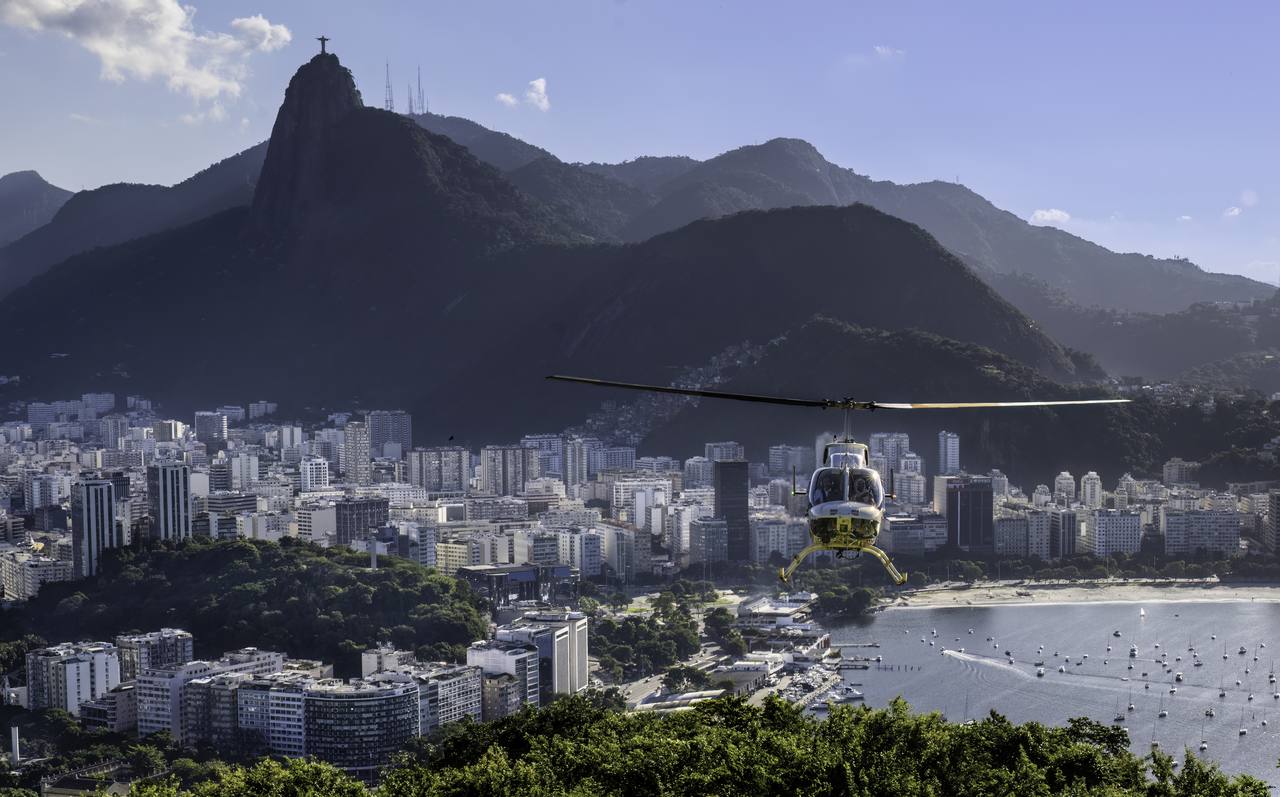
The photograph accompanying this report shows a Bell 206L-4 LongRanger in flight because it illustrates the type of private helicopter common in civil aviation and Quebec's wider rotorcraft history. It is not a photograph of the aircraft that crashed. No reliable public source reviewed by Signal Post News had identified Saturday's helicopter as a Bell, a 206 or any other model. The image must not be treated as evidence about the accident aircraft.
What investigators will try to establish
The first task is to identify the aircraft through registration marks, data plates and ownership records. From there, investigators can reconstruct the flight's intended route, examine fuel and loading information, and determine whether any mechanical discrepancy or maintenance issue had been reported. They will compare the recovered components with the aircraft's technical history.
Weather will be assessed at the time and location of the flight, including wind, visibility, cloud, precipitation and any localized conditions. Investigators will also review the pilot's licence, ratings, recent experience and medical validity, while avoiding the common error of treating any single factor as causal before the entire sequence is understood.
The reported distress shortly after takeoff will receive close attention, but it remains preliminary information. It does not establish an engine failure, loss of control, weather encounter or any other mechanism. In an accident investigation, the timing of a distress call is a clue to be tested against physical and electronic evidence, not a conclusion.
What happens next
Police are expected to release identities only after confirmation and family notification. The TSB may publish an occurrence record or preliminary information in the coming weeks if enough verified detail is available, but that is a general expectation, not a promised deadline for this case. A final investigation can take 12 to 24 months, and complex cases can take longer.
The most important near-term developments to watch are confirmation of the aircraft's registration and type, the point and purpose of departure, weather and flight-path data, and any recorded emergency communication. Those facts will define the scope of the inquiry far more reliably than photographs or speculation circulating online.
If investigators identify a systemic risk, the response could include recommendations to an operator, manufacturer, regulator or broader aviation community. Recommendations may address maintenance procedures, training, equipment, emergency response or regulatory oversight. None should be assumed before the evidence is analyzed.
Bottom line
The confirmed facts are stark but limited: a helicopter crashed near Sainte-Brigide-d'Iberville after an emergency report, the aircraft burned, and all four people aboard died. The victims' identities, the exact aircraft, its journey and the cause remain unknown. The responsible course is to let the SQ complete its forensic work and the TSB follow the technical evidence wherever it leads.
Sources
- Reuters — Helicopter crash kills four in Quebec
- New York Post — Helicopter crash near Montreal kills all four people aboard
- CBC News — Video report on the Quebec helicopter crash
- CTV News report, republished by Europe Says — Four dead after South Shore helicopter crash
- The Canadian Press — Four people dead in a helicopter crash in Quebec
- BBC News report, syndicated by VENUS MAG — Four killed in helicopter crash near Montreal
- Bell Textron Canada — Mirabel operations and Bell 206 history
- Wikimedia Commons — Bell 206L-4 LongRanger file photograph by Wilfredor (CC0)
Verification note: Signal Post News cross-checked the confirmed toll, location, emergency-call time, fire and TSB deployment across multiple reports. The aircraft's identity and the cause were not established in the sources reviewed as of September 26.
Related coverage
- Russian helicopter briefly enters Polish airspace during Ukraine mission
- RAF Hawk T2 crashes at Anglesey after pilots eject
- Miami airport investigation after shots reported