War · Ukraine · Royals
In Lviv, on his fourth visit to Ukraine since Russia’s full-scale invasion, the Duke of Sussex told The Telegraph’s Ukraine: The Latest podcast that he is ‘100%’ ready to serve again if called upon — and argued that the American public’s support for Ukraine is far stronger than the position of the administration in Washington.
Track it live: Ukraine war map — live Ukraine war map · War tracker — live war tracker
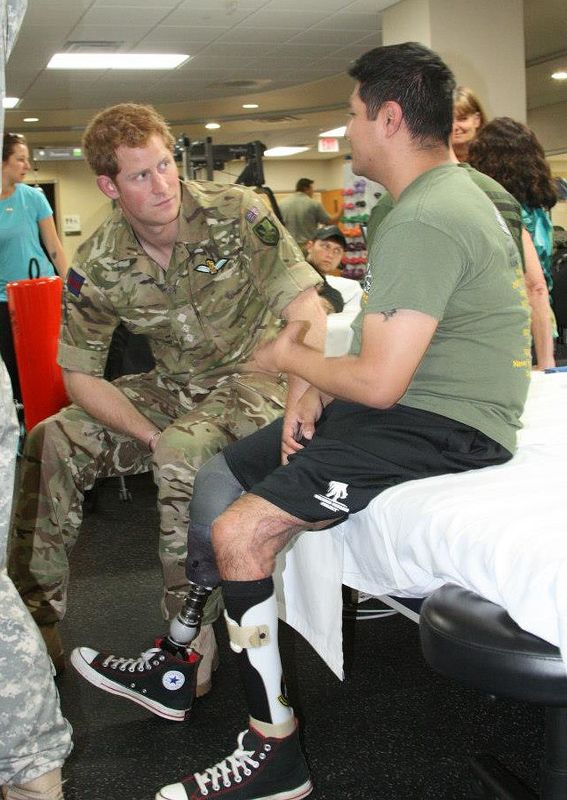
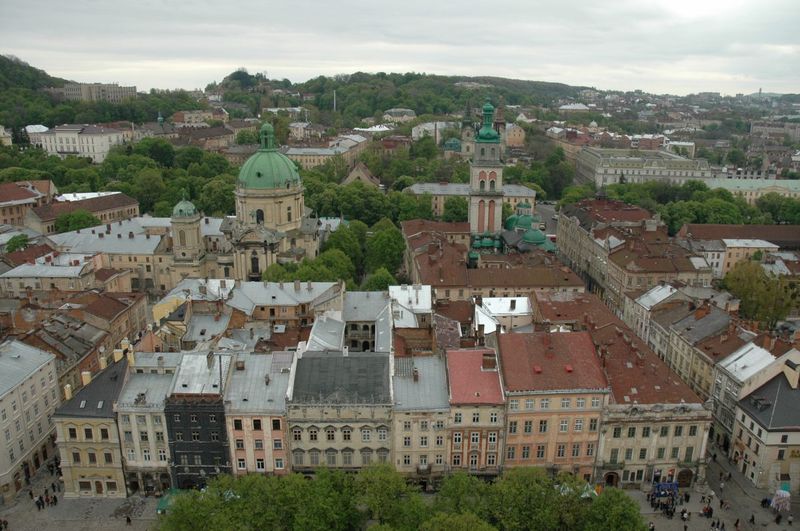
LVIV, November 19, 2026 — Prince Harry made the remarks to The Telegraph’s Ukraine: The Latest podcast during a visit to Lviv last weekend — his fourth trip to Ukraine since Russia launched its full-scale invasion in 2022. Excerpts from the interview were released on Wednesday, November 18, and the full podcast was released on Thursday, November 19, according to Associated Press reporting from London and coverage by The Telegraph, the BBC, The Independent and Page Six. In Lviv he met athletes preparing for the 2027 Invictus Games and wounded Ukrainian service members, and he pledged the Invictus movement’s support for Ukraine to host the Games when the war ends.
What he said in Lviv
Asked whether he would return to military service if Britain went to war with Russia, Harry said he would ‘100%’ rejoin the Army if he were asked. The pledge was conditional — readiness if called upon, not an enlistment, a recall or an application — and he has not rejoined. But the framing around it was unusually stark for a member of the royal family, even a non-working one. He said Britain has effectively been in conflict with Russia for the past decade, and that the Russian threat has been present for around 15 years. People and governments, he argued, should be prepared.
His message to allies was about the present war, not only a hypothetical future one. Europe, he said, has ‘woken up to the threat’ from Moscow, and now is the time for Britain and its allies to double their support so that Ukraine defeats Russia. The comments were made in a city that has become a hub for Ukraine’s wounded and for the rehabilitation sport movement Harry founded: Lviv, in western Ukraine, hosts training and recovery programmes for injured service members, and Ukrainian athletes are preparing there for the 2027 Invictus Games. Harry pledged that the Invictus Foundation would support Ukraine hosting the Games once the war is over — a promise that ties his best-known cause directly to the country’s post-war future.
The ‘big separation’ — in full
It was his assessment of the United States that carried the interview across the Atlantic. Harry did not name President Donald Trump at any point. What he described instead was a gap between the American public and its government:
‘I think there’s been a big separation between what American society feels regarding support for Ukraine, which I think is incredibly high and always has been, compared to a certain group — or in this case an administration that was perhaps thinking about it differently.’
He then pointed to January, when the Democratic majorities elected in the 2026 midterms are due to take control of the House and the Senate: ‘As of January, things are going to change, so I think we should all be looking forward to that.’ That was an expectation, stated as his own reading of the politics, not a prediction presented as fact. And he closed the thought with Europe: ‘Europe has a united front, and it would be fantastic to have more American support for that as well.’
Read together, the three remarks form a single argument: that support for Ukraine in the United States is broad and durable at the level of public opinion, that the current administration’s more sceptical stance is the exception rather than the reflection of that opinion, and that the change of control in Congress will narrow the gap. Whether Congress’s new majorities translate that into appropriations and policy is a separate question — one the interview raises but cannot answer.
Why this matters
A royal steps outside the neutrality convention
Working members of the British royal family observe a strict convention of political neutrality: they do not publicly assess a foreign government’s policy, still less forecast the consequences of another country’s elections. Harry is not a working royal — he stepped back in 2020 — and that status is precisely what makes comments like these possible. But he remains the King’s son and a former serving officer, and his words are heard abroad with a weight no ordinary commentator carries. When a duke says an allied administration is out of step with its own public, foreign ministries notice, even when protocol requires them to say nothing.
The veterans’ question behind the pledge
The ‘100%’ answer also lands in a live British and NATO debate: what role former service personnel would play if a war with Russia ever moved from planning assumption to reality. Britain’s armed forces are small by historical standards, and discussion of reserves, recall and mobilisation has intensified across Europe as governments reassess the Russian threat — the same threat Harry dated back some 15 years. A 42-year-old former Apache co-pilot will not decide that debate. But a prominent veteran stating, on the record and in a war zone, that he would go back if asked shifts the terms in which the debate is conducted in public.
Transatlantic politics after the midterms
The January remark is the interview’s most consequential political claim, because it speaks directly to Kyiv’s central uncertainty: how much American support survives contact with Washington’s politics. Ukraine’s president has been making his own case to American audiences and leaders in recent days — see our coverage of Zelenskyy’s argument that one meeting of the US, Russian and Chinese leaders could end the war if they wanted it ended. Harry’s intervention adds a different kind of pressure: not a head of government lobbying, but a British royal veteran telling American listeners that their own instincts on Ukraine are better than their government’s.
The soldier behind the statement
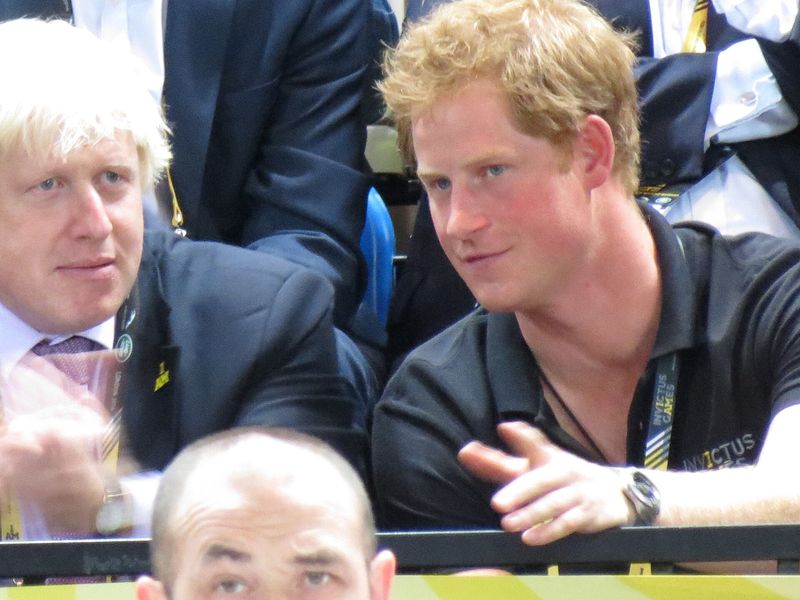
Harry’s authority on the subject, such as it is, rests on a decade in uniform. He commissioned from Sandhurst into the Blues and Royals, served a first tour in Afghanistan in 2007–08 as a forward air controller — a deployment cut short when his presence was revealed — and returned in 2012–13 as an Apache helicopter co-pilot and gunner, serving under the name Captain Wales. He left the Army in 2015. In 2014, drawing on what he had seen of wounded personnel’s recovery in Britain and at the US Warrior Games, he founded the Invictus Games for wounded, injured and sick service personnel and veterans. Ukraine has fielded Invictus teams, and Harry’s four visits since 2022 have centred on wounded service members and the rehabilitation community rather than on front-line diplomacy.
His personal circumstances have also changed. He returned to the UK from California in August 2026 with Meghan and their children, after six years in the United States — a move that has placed him back inside the British media and royal orbit from which these comments now come, and which shapes how they are received on both sides of the Atlantic.
Supporters, critics and the Earthshot timing row
Supporters heard the interview as a veteran speaking plainly: a man who has served, who has spent a decade working with the wounded of several nations’ wars, saying that Ukraine deserves more backing and that he would not exempt himself if his own country called. In Kyiv, the remarks are useful regardless of their constitutional awkwardness in London — another prominent Western voice, with a military record, arguing that support should double rather than fade, and promising Ukraine a place at the centre of the Invictus story when the fighting stops.
Critics heard something else: a royal commenting on an ally’s domestic politics and an election outcome, in terms that however carefully unnamed point in one direction. The release also drew online criticism over its timing: the podcast trailer appeared minutes before the Prince and Princess of Wales were due at the Earthshot Awards in Mumbai, and some commentators accused the Sussex operation of competing with a set-piece royal event. That is criticism as reported — a claim about optics and timing circulating online — and no evidence about intent accompanies it. The two things can be true at once: the interview’s substance is serious, and its rollout was always going to be read through the family’s internal rivalries.
What Kyiv gains, and what Washington hears
For Ukraine, the gain is narrative. Kyiv’s case in Washington depends on sustaining the distinction Harry drew: between an American public that polling has consistently shown to be broadly sympathetic to Ukraine and supportive of aiding it, and an administration whose policy has been more transactional and more sceptical. That distinction — qualitative, but persistent across years of surveys by multiple pollsters — is the ground on which Ukraine’s supporters in the incoming Congress will argue for renewed appropriations in January. Harry’s quote will be used in that argument, because it states the case in a single sentence from an unaligned-by-party source.
In Washington, the administration is unlikely to respond to a podcast — and Harry’s care not to name the president gives it no direct provocation to answer. What officials will register is the direction of travel: a British royal, recently returned from six years living in America, publicly betting that January changes the politics of Ukraine support. Allies are making similar calculations as they plan their own packages — Britain among them, as in its recent pledges of 1,000 long-range strike drones for Ukraine and more than 1,000 air-defence missiles in a £240 million winter package.
What happens next
The full podcast’s release on Thursday will extend the interview’s reach beyond the excerpts, and any further remarks on the United States, on Russia or on his own readiness to serve will be parsed as closely as the first. Three things will decide whether the Lviv interview becomes a footnote or a marker. First, the January handover in Congress: if the new Democratic majorities move quickly on Ukraine funding, Harry’s expectation will look prescient; if they do not, it will look like a guest’s misreading of a host country’s politics. Second, the reaction of other veterans and public figures in Britain: a single royal’s pledge is a story; a pattern of senior former officers echoing it becomes a debate about national readiness. Third, Ukraine’s Invictus future: the promise that the Games will one day be hosted by a Ukraine at peace is the part of the visit most fully within Harry’s own power to keep.
For now, the verified record is narrow and should be kept narrow. A former soldier who founded the Invictus Games went to Lviv for the fourth time, met the wounded and the athletes, and said he would serve again if his country asked — and that America, in his reading, feels more warmly toward Ukraine than its administration does. He did not enlist, he was not recalled, and he did not name the president. The rest is January’s business.
Related coverage: Zelenskyy says war could end in one Trump-Putin-Xi meeting if the leaders want it · Britain pledges 1,000 long-range strike drones for Ukraine in £260 million Berlin package · UK air defence missiles for Ukraine: Britain pledges 1,000 more missiles in a £240 million winter package
Sources
Sources: Associated Press, London, November 18–19, 2026 — reporting that Prince Harry, on his fourth visit to Ukraine, travelled to Lviv to meet athletes preparing for the 2027 Invictus Games and wounded Ukrainian service members, pledged Invictus support for Ukraine hosting the Games when the war ends, said he would ‘100%’ rejoin the British Army if asked to fight Russia, and described a ‘big separation’ between American public support for Ukraine and the administration’s approach, without naming President Trump — apnews.com. The Telegraph, Ukraine: The Latest podcast, November 2026 — the original interview, recorded in Lviv last weekend; excerpts released Wednesday, November 18, and the full podcast released Thursday, November 19, including the ‘big separation’ and ‘as of January’ remarks and the assessment that Britain has effectively been in conflict with Russia for a decade — telegraph.co.uk. BBC News, November 2026 — corroborating coverage of the Lviv visit and the rejoin pledge — bbc.com. The Independent and Page Six, November 2026 — coverage of the interview’s release, the Earthshot Awards timing criticism online, and the Sussexes’ August 2026 return to the UK from California — independent.co.uk and pagesix.com. Analysis in this article — on royal neutrality, veterans’ mobilisation and post-midterm transatlantic politics — is Signal Post News’s own and is distinguished from the reported facts above.