65 Million People, One Emergency Order — and No Blackout Warning
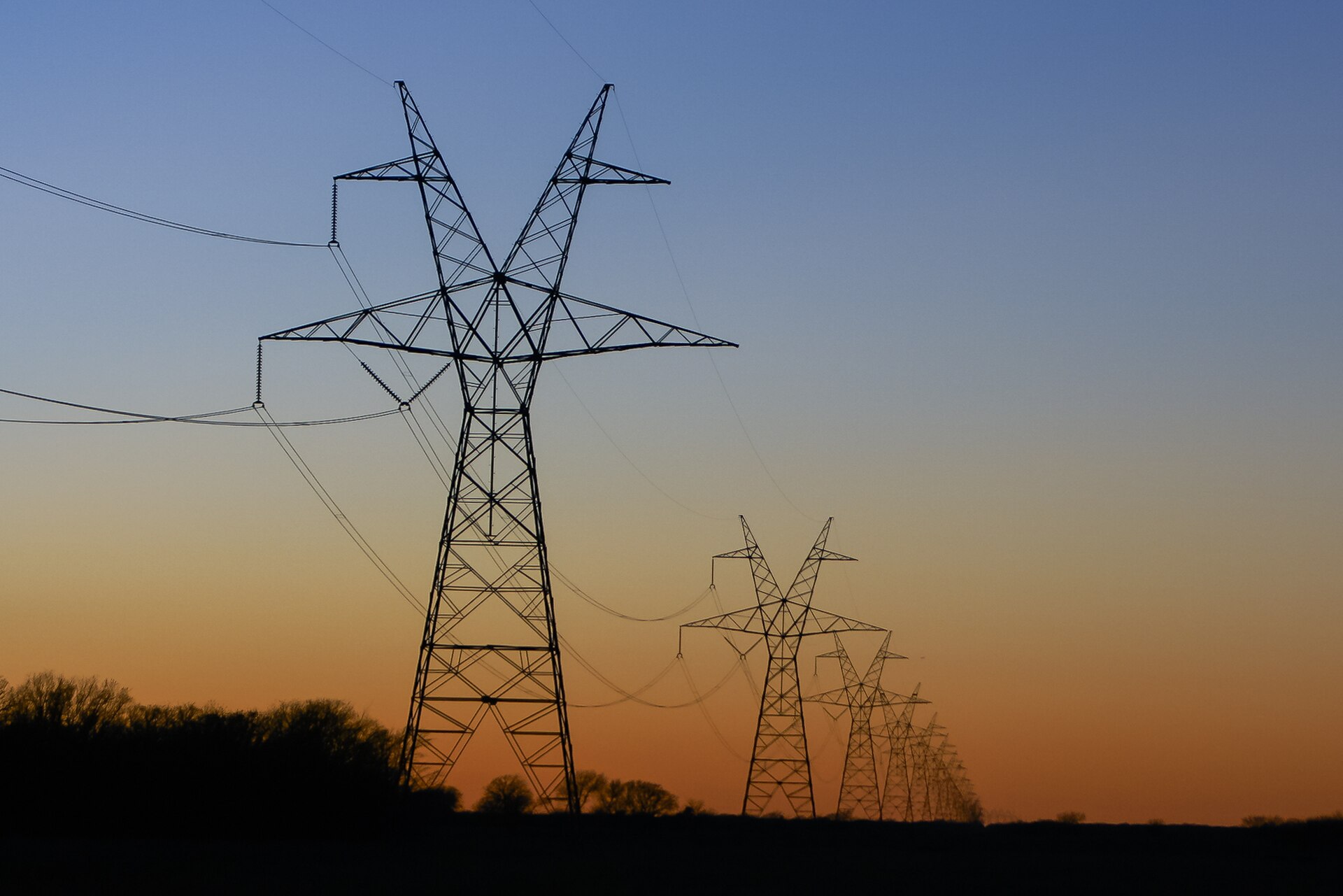
WASHINGTON, October 15, 2026 — The largest power grid in the United States is operating this week under a federal emergency order. The Department of Energy issued Emergency Order No. 202-26-50 on October 12, under Section 202(c) of the Federal Power Act, after PJM Interconnection — the operator that moves electricity for more than 65 million people across all or parts of Delaware, Illinois, Indiana, Kentucky, Maryland, Michigan, New Jersey, North Carolina, Ohio, Pennsylvania, Tennessee, Virginia and West Virginia, plus Washington, D.C. — applied on October 11 for emergency authority. The order runs from October 13 through October 16, and it exists because of an unglamorous collision: an October heat wave arrived in the same week that a large share of the region’s power plants were shut down for autumn maintenance.
Track it live: Markets tracker — live indexes, energy and commodity prices.
What the order actually does
The order gives PJM room to reach for megawatts it ordinarily cannot touch. PJM may dispatch the specified generating units named in the order and require them to operate as needed to keep the grid stable. It may call on transmission owners and distribution companies across its footprint for support. And as a last resort — before or during an Energy Emergency Alert 3, the most serious alert level in PJM’s emergency procedures — PJM may direct backup generation to run, including the backup generators installed at data centers and other large facilities. The order also gives specified units limited flexibility on certain environmental limits, to the maximum extent practicable, and in return PJM must file daily reports with the Energy Department on how much it relied on the emergency authority.
Two features of the order are worth underlining. First, the backup-generation provision is explicitly a last resort, sequenced behind conventional emergency steps — it is a tool PJM may use if the alert level reaches its highest rung, not a switch that has been flipped on the region’s data centers. Second, the environmental flexibility is bounded: it applies to specified units, only as needed, and the daily reporting requirement means Washington will know, day by day, how far past normal limits the grid had to go.
How the margin got this thin
The physics of the week are simple to state and were hard to avoid. Temperatures in the 70s and 80s across the Ohio Valley and the Mid-Atlantic kept air conditioners running weeks after the season when they normally stop. At the same time, autumn is the industry’s traditional maintenance window — the shoulder season between summer peaks and winter cold, when plants shut down for repairs. PJM forecast demand of roughly 111,500 megawatts for October 13, a figure later updated to about 112,447 megawatts, while some 61,591 megawatts of generation was out of service. On October 14, the reserve margin — the cushion of spare capacity above expected demand — was projected to come within roughly 900 megawatts.
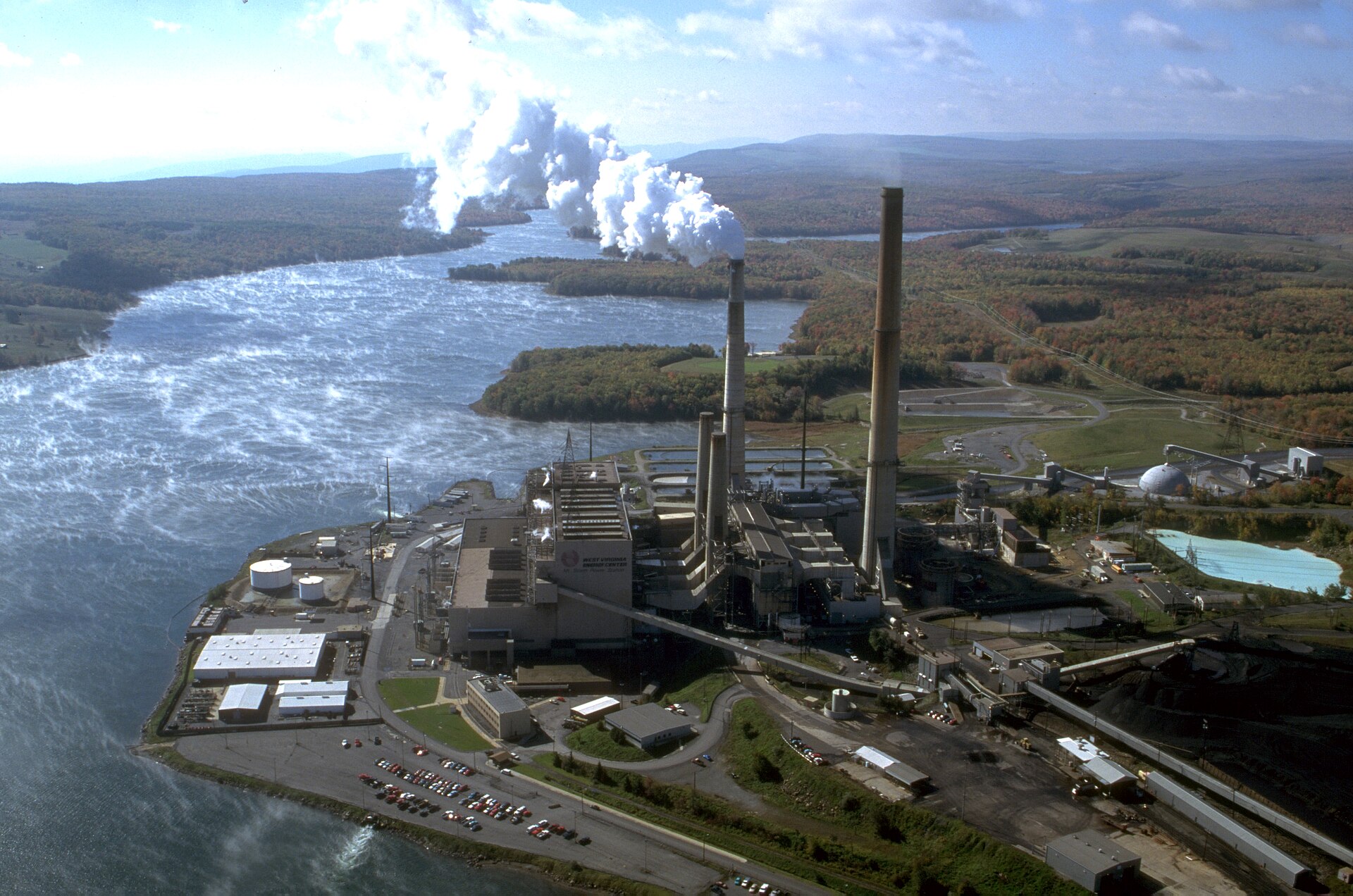
Put that cushion in proportion: 900 megawatts is less than 1 percent of a peak of about 112,000 megawatts — roughly the output of a single large power plant. One unexpected plant trip, one transmission fault, one hotter-than-forecast afternoon, and the arithmetic of the week changes character. In its application to the Energy Department, PJM flagged acute concerns in the service territories of Baltimore Gas and Electric, Pepco and Dominion — the utilities serving Baltimore, Washington and much of Virginia. For October 13, PJM issued a Maximum Generation Alert and a Load Management Alert, the formal steps that put every available resource on notice.
What the order is not
It is not a blackout warning, and everyone involved has been careful to say so. PJM said customers were not being asked to do anything — no conservation appeals, no thermostat requests — and that it did not expect customer impacts. No widespread outages have been reported. An emergency order under Section 202(c) is best understood as pre-positioning: it removes legal and commercial friction in advance, so that if the margin tightens further, the operator can act in minutes rather than negotiate in hours. The fact that Washington issued the order on the strength of a forecast, rather than in the middle of a failure, is the system working the way the statute intends — the emergency powers arrive before the emergency, or they do not arrive in time.
Why this matters
The deeper story is that this nearly happened in October. Grid stress in the PJM region used to be a story of the hottest week of July or the coldest snap of January. A shoulder-season squeeze — caused not by extreme weather but by ordinary warmth landing on a maintenance calendar — suggests the slack in the system has thinned to the point where routine conditions can combine into an emergency application. PJM itself has been warning of the underlying arithmetic for some time: demand is growing faster than new generation is arriving, driven substantially by data centers and broader electrification, while older plants continue to retire. This week is what that warning looks like when it stops being a projection.

The backup-generation provision deserves attention beyond this week, because it quietly formalizes a precedent: the fleets of diesel and gas backup generators sitting behind the region’s data centers are, in a declared emergency, part of the public grid’s reserve. For the data-center industry, that is both a vindication and an obligation — the facilities whose power demand is driving the region’s growth become, at the margin, one of the tools that keeps the lights on. For the communities around those facilities, the same provision raises the other side of the ledger: backup fleets running at scale, and power plants operating with relaxed environmental limits, concentrate their air-quality costs locally, while the reliability benefits spread across 65 million people. The order’s daily reporting requirement is the one mechanism that will show, after the fact, how that trade was actually struck.
Two readings of the same week
The administration’s reading is that the order demonstrates the system responding: Energy Secretary Chris Wright has presented it as making added generation — including backup capacity — available when it is needed, and he has blamed past policies he describes as “energy subtraction” for leaving the grid with too little margin to begin with. The critics’ reading is that an emergency order in mid-October is itself the indictment: a grid that needs federal intervention to survive a warm week and a maintenance schedule is a grid whose capacity planning, transmission build-out and retirement pace have fallen behind its load growth. Both readings can be true at once. The order is a competent short-term tool; the need for it is a long-term warning. Who wins and who loses breaks along familiar lines — residents keep reliability they never notice, generators and backup-fleet owners gain a new role in the market, and ratepayers across the region will ultimately fund whatever new capacity this week is used to justify.
What happens next
The order expires on October 16, and the immediate question is mechanical: whether temperatures ease and maintenance outages roll off fast enough for PJM to retire the emergency posture without ever reaching for its last-resort tools. The daily reliance reports PJM owes the Energy Department will show how close the region actually came. The larger fight resumes immediately after — over capacity-market rules, transmission, and how quickly new generation can be built against data-center demand that is still rising. October’s lesson is narrow but hard to argue with: the margin was about 900 megawatts, the season was the mild one, and the calendar ahead holds a winter.
Sources: U.S. Department of Energy, “Federal Power Act Section 202(c) — PJM Interconnection, LLC, Order No. 202-26-50,” Oct. 12, 2026; USA Today Network (Lansing State Journal and NorthJersey.com), Oct. 13–14, 2026; tED Magazine, Oct. 2026. Related on Signal Post News: Memphis data-center moratorium vote ends in chaos, Finland halts Google data-centre expansion and Bouquet Fire and the Southern California heat wave.