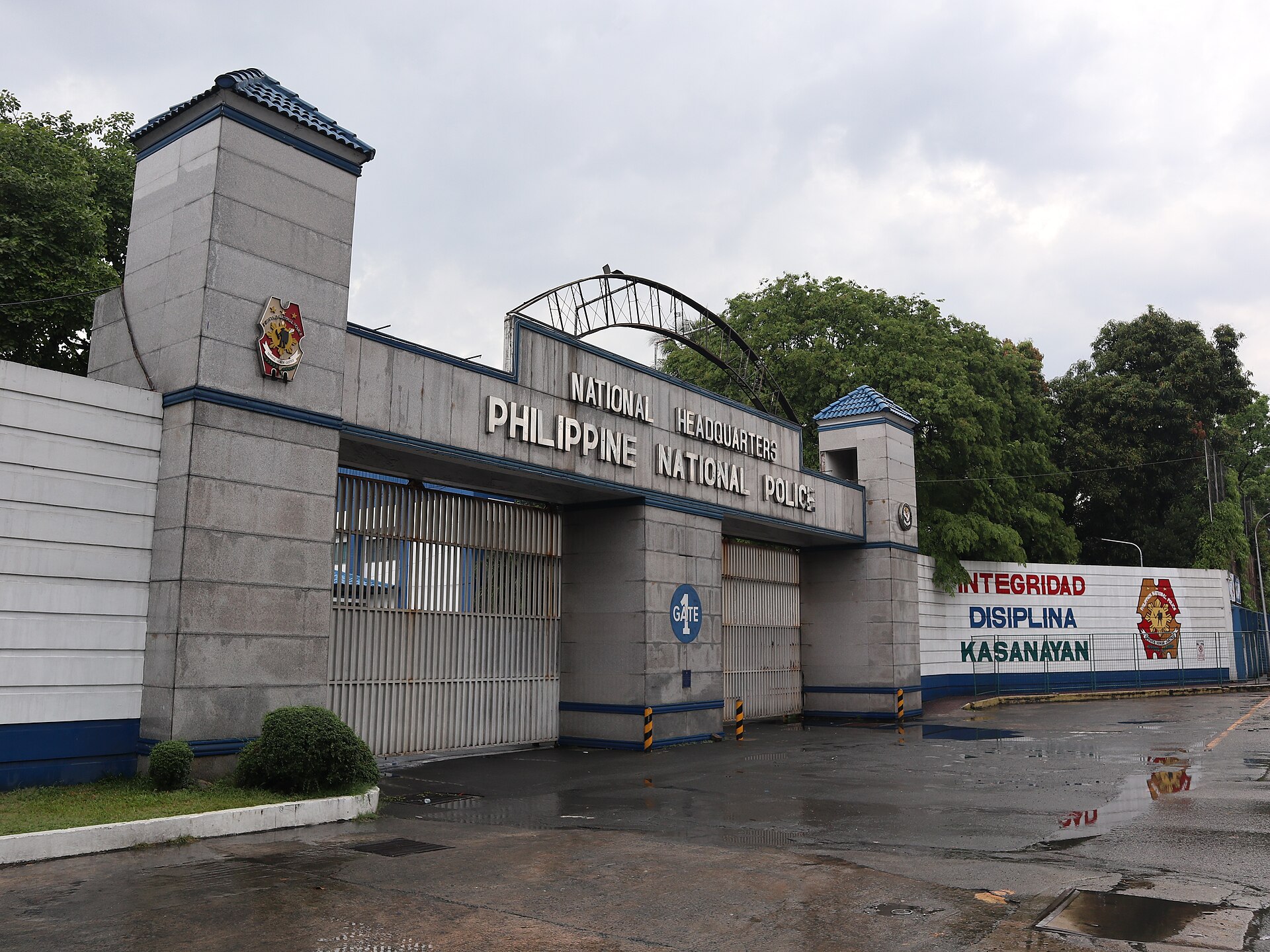
World / Philippines — The Bato dela Rosa bounty became official on Friday, October 23, 2026, when Interior Secretary Jonvic Remulla stood up at Camp Crame, the Philippine National Police headquarters in Quezon City, and put a price on a sitting senator: P50 million, about $786,000, for information leading to the capture of Senator Ronald “Bato” dela Rosa, the former police chief wanted by the International Criminal Court over the Duterte administration’s drug war. Dela Rosa, 64, was declared “armed and dangerous,” a dedicated task force was named to hunt him, and the police chief gave him one week to surrender. The senator’s lawyer answered with two words: “No comment.”
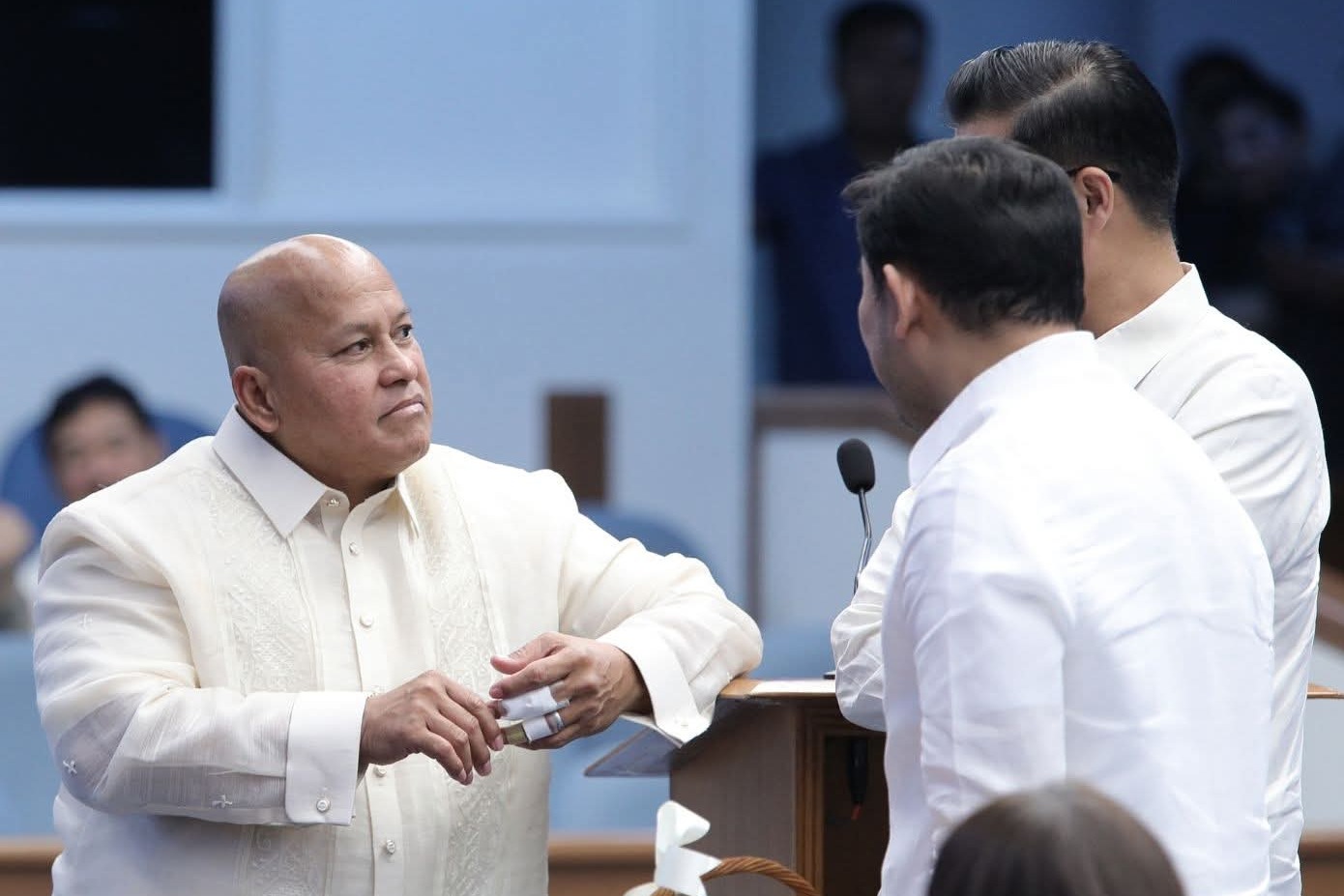
A bounty is what a state offers when persuasion has failed, and Remulla said the quiet part out loud. “We have given him all the courtesy that can be afforded as a senator of the Republic of the Philippines, but he showed nothing but cowardice by going into and remaining in hiding,” the interior secretary told reporters at Camp Crame, in remarks carried by GMA News Online, the Inquirer and other Philippine outlets. “Senator Bato mistook my gesture of negotiation as a sign of weakness.” Then the sentence that will lead every bulletin: “As of today, Senator Bato will be considered armed and dangerous. We are placing a bounty of P50 million for his capture.” The reward, Remulla said, will be drawn from the intelligence funds of the Department of the Interior and Local Government and the Philippine National Police. “It’s time for the gloves to come off,” he added. “It’s time to give justice to his victims.” In a later text message, he said law enforcement would show “no mercy” if dela Rosa did not turn himself in.
Consider what has to be true for that press conference to happen. The man being hunted is not a militia commander or a crime boss. He is a sitting senator of the Republic, a former chief of the very police force now tasked with arresting him, and for six years the operational face of former President Rodrigo Duterte’s war on drugs — the campaign the International Criminal Court says amounted to murder as a crime against humanity. The Philippines is now paying its own citizens, out of intelligence funds, to help it find one of its own lawmakers, because the lawmaker has spent five months proving that the ordinary machinery of arrest does not reach him.
One week to surrender, and a task force with one job
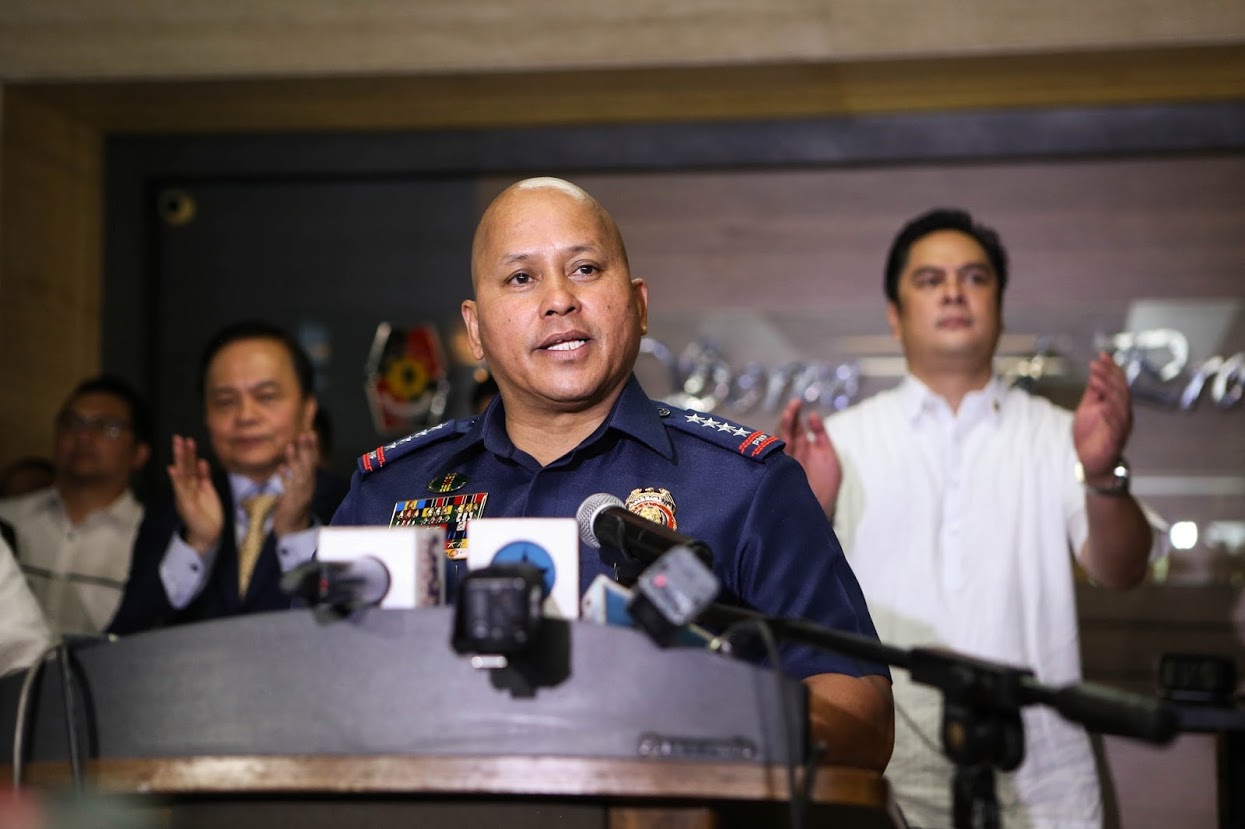
Police chief General Jose Melencio Nartatez Jr. gave dela Rosa one week to surrender, according to SunStar Philippines and DZRH, both of which quoted him directly; ABS-CBN reported the same one-week window. “Sen. Bato dela Rosa has one week to surrender,” Nartatez said in the DZRH account. “We will continue our operation with or without ultimatum, with or without reward.” GMA News Online reported a 10-day window in its account, a figure it did not attribute; the one-week deadline is the version the police chief stated on the record in three other outlets, and it is the one this article uses. Nartatez also corrected the week’s vocabulary: “We are not negotiating. We are giving him the option to surrender,” he said, per GMA. A peaceful surrender, he said, remained the preferred outcome — “The PNP is always ready for that, whether peaceful or it will come to an armed confrontation.”
The hunt itself has a name and a chain of command now. A task force headed by Wilson Lopez, a senior police general named by the Tribune and the Inquirer, has been formed with the sole objective of locating and arresting the senator. Operatives are deployed across Western and Eastern Mindanao, Bicol, Central Luzon, Metro Manila and Southern Tagalog, Nartatez said, checking leads drawn from dela Rosa’s relatives, friends, former colleagues in the police and the armed forces, and his wider circle of contacts. Anyone proven to be sheltering or protecting him, Nartatez warned, will face legal consequences. The manhunt is not starting from cold: in September the PNP said it was “almost there,” and reported that 91 of dela Rosa’s firearms remained unaccounted for — a detail that sits behind Friday’s “armed and dangerous” designation, and behind the Justice Department’s earlier move to subpoena Senator Robin Padilla over dela Rosa’s escape from the Senate.
Three days earlier, the government was talking about 10,000 deaths
The sharpest measure of Friday’s turn is what Remulla was saying on Wednesday. Three days before the bounty, the interior secretary told reporters the senator was in Mindanao under the protection of a heavily armed and well-funded group, that the government was talking to that group rather than moving in, and that a forced operation could kill as many as 10,000 people. That figure was Remulla’s own worst-case characterisation, not a police estimate, and it should be read as a measure of how the government itself priced the risk of a raid: a sitting senator, guarded, in the region where he built his career, with the state publicly unsure it could take him without a bloodbath. By Friday the negotiation language was gone from his remarks entirely. What replaced it was a bounty — an instrument that does not require storming anything. It asks the people around the protectors, and around the senator himself, to do the arithmetic instead: every driver, landlord, cousin and former subordinate in the chain now knows there is P50 million on the table and a task force checking their names.
That is the bounty’s real function, and it cuts both ways. A reward this size does not usually produce a tip from a stranger; it corrodes the trust inside a protection network, because no one in it can be sure who else has done the same arithmetic. But it also raises the danger of the endgame. A man officially labelled armed and dangerous, who believes surrender means a cell in The Hague, and whose protectors have just been told they face prosecution, has fewer reasons to come quietly than he had on Thursday. Nartatez’s insistence that a peaceful surrender is still the preferred outcome is not boilerplate; it is the sound of a police chief who knows the ultimatum and the confrontation are now on the same clock.
The case in The Hague: co-perpetrator, not bystander
The warrant behind all of this was issued by the International Criminal Court nearly a year ago and unsealed on May 11, 2026. In it, the court says there are reasonable grounds to believe dela Rosa is criminally responsible for murder as a crime against humanity, as an indirect co-perpetrator of the killings carried out under the anti-drug campaign — first in Davao, where Duterte was mayor and dela Rosa his police chief, and then nationwide from 2016, when Duterte took the presidency and dela Rosa took command of the Philippine National Police. He is named among eight alleged co-perpetrators in the case. Duterte himself was arrested in Manila in March 2025 and transferred to The Hague, where he has been detained since; his trial on charges of murder and attempted murder as crimes against humanity is scheduled to open on November 30, a little over five weeks from now. Both men have denied the allegations, and dela Rosa is entitled to the presumption of innocence; nothing in Friday’s announcement changes his legal status from accused to convicted of anything. His camp’s only public response to the bounty and the ultimatum on Friday was a statement from his lawyer, Israelito Torreon, telling everyone requesting comment: “No comment.”
The chronology of the flight explains the government’s frustration. Dela Rosa resurfaced on May 11, the day the warrant was unsealed, appearing in the Senate to vote for Senator Alan Peter Cayetano as Senate President, and was placed under the Senate’s protective custody. He left the building before dawn on May 14, hours after a shooting incident on the chamber’s premises; SunStar Philippines reported that he left with Senator Robin Padilla. He has not appeared in public since. A senator used the Senate itself as a shield for three days, walked out of it in the dark, and vanished into the protection of an armed group in Mindanao — while his seat, his title and his courtesies remained intact. Remulla’s line about courtesy was aimed at exactly that: the state extended the privileges of the office for five months, and got a fugitive in return.
Why this matters
Start with the institution doing the hunting. The Philippine National Police is offering a fortune for the capture of its own former chief — the man who personified the drug war’s first, bloodiest years, and whose portrait hangs in the institution’s own history. Whatever dela Rosa’s guilt or innocence, which only a court can settle, Friday formalised something no Philippine government has ever done to one of its own senior officials at this level: it priced him. That act will outlast the manhunt. Every future Philippine official weighing whether to execute a violent campaign for a president now knows the state that applauded him may, under a successor, put a bounty on his head; every future president knows the same machinery can be turned. Accountability and deterrence are two names for that lesson, and so, depending on where you sit, is betrayal.
Then there is the ICC dimension, which is why a domestic manhunt in Mindanao is a world story. The Philippines withdrew from the Rome Statute in 2019, yet the court retained jurisdiction over alleged crimes committed while the country was a member, and Manila has in practice cooperated — it was Philippine authorities who arrested Duterte and put him on a plane to The Hague. Dela Rosa’s capture, if it comes, would put the second-most prominent accused in the same detention centre weeks before the first one stands trial, and would do so through the most politically explosive method available: not a negotiated surrender brokered by senators, but a bounty, an ultimatum and a task force. For the court, which has no police of its own and lives or dies on state cooperation, a Philippine government willing to spend intelligence funds and political capital to deliver a fugitive senator is the strongest evidence in years that its arrest warrants still have teeth. For dela Rosa’s supporters, who frame the case as foreign interference in a sovereign state, the same facts prove the opposite point — that Manila is doing The Hague’s work against its own elected lawmaker. Both readings were available on Friday; what changed is that the government stopped trying to satisfy both.
The numbers tell the smaller, harder story. P50 million is roughly $786,000 — an extraordinary sum in a country where the police intelligence funds paying it are themselves a perennial audit controversy, and where no formal instrument beyond the secretary’s press-conference announcement has yet been published. The bounty exists so far as a figure stated at Camp Crame, funded from combined intelligence funds rather than an appropriated line. That informality is worth watching: rewards announced at podiums have a way of becoming disputes later, over who tipped what, and whether the state pays. And the week on Nartatez’s clock is not a legal deadline with a defined consequence; it is pressure, stated publicly, by a police chief who in the same breath said operations continue with or without it.
What happens next
Watch the calendar first: the one-week surrender window runs to about October 30, and Duterte’s trial opens in The Hague on November 30, which gives every actor in this story a date to bargain against. Watch, second, whether the formal reward instrument is published, and from which fund the money is actually drawn. Watch, third, the protection network in Mindanao: arrests or charges against anyone sheltering the senator would signal that the task force is working inward from the edges, the classic pattern before a high-value capture. And watch the Senate, which sheltered him for three days in May and has yet to reckon publicly with that. Signal Post News has followed the Hague case throughout, including the court’s ruling allowing prior recorded testimony from a witness known as P-1100 in the Duterte trial, and the domestic backdrop against which the manhunt is unfolding, from the largest POGO raid in Philippine history, with 244 arrests in Zamboanga, to Manila’s maritime dispute with Beijing. If dela Rosa is taken, the next fight starts immediately — over whether, like Duterte, he is put on a plane, and over who in the Senate answers for May.
Sources
Agence France-Presse reporting via Arab News and international syndication, October 23, 2026 — Philippine officials announced a bounty Friday for the capture of a senator ordered arrested by the ICC for an alleged crime against humanity in connection with the anti-drug crackdowns; dela Rosa, 64, named an indirect co-perpetrator; Duterte’s November 30 trial date. GMA News Online, Inquirer, ABS-CBN, SunStar Philippines, DZRH, Tribune and Manila Times reporting from the Camp Crame press conference, October 23, 2026 — Remulla’s “armed and dangerous” declaration and P50 million bounty quotations; intelligence-funds sourcing; Nartatez’s one-week surrender ultimatum (GMA’s unattributed 10-day figure is noted in the body); the Wilson Lopez task force; search regions; warnings to anyone sheltering the senator; the 91 unaccounted firearms and the Padilla subpoena context; the May 11–14 Senate chronology. Dela Rosa’s counsel Israelito Torreon, statement of October 23, 2026 — “No comment” on the bounty and ultimatum. Background on the ICC warrant (issued nearly a year earlier, unsealed May 11, 2026; eight alleged co-perpetrators; Duterte arrested March 2025 and detained in The Hague) is drawn from the same reporting; both Duterte and dela Rosa deny the allegations, and dela Rosa is presumed innocent unless convicted.