Politics · Israel · West Bank
A Palestinian woman killed in the West Bank, a village that changed hands in the night, and two accounts that cannot both be true. Fadwa al-Fahidat, 72, was shot in the head outside her home in al-Duyuk al-Tahta, west of Jericho. Her neighbours say settlers opened fire on Palestinian homes; the Israeli military says Israelis fired after coming under attack. What is not disputed is that she is dead — less than two weeks after settlers moved into eight houses in her village.
Track it live: Live Israel war map and tracker
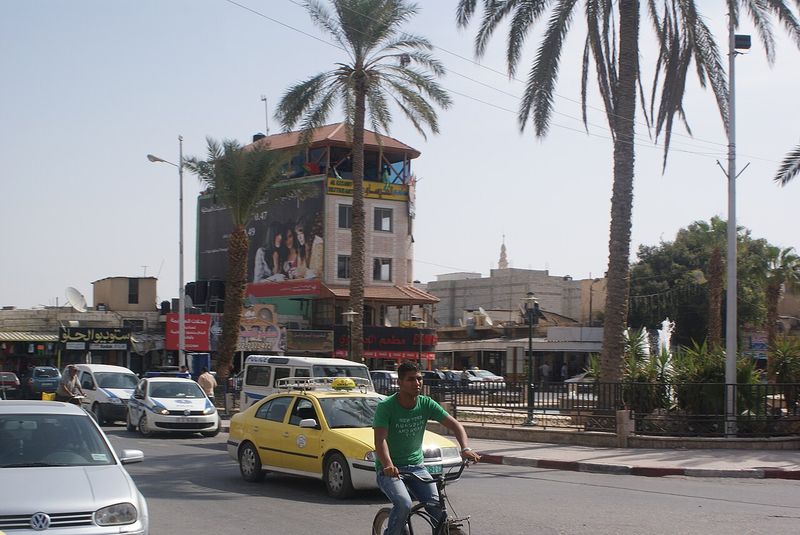
JERICHO, West Bank, November 17, 2026 — Fadwa al-Fahidat, 72, was shot in the head outside her home in the village of al-Duyuk al-Tahta, west of Jericho, in the early hours of Tuesday, and died of her wound. Doctors at Jericho hospital confirmed the head wound, Reuters reported, and her funeral was held on Tuesday. The Palestinian health ministry's rendering of her name, as carried by Reuters, was "Fadha Wadha". Everything beyond those facts — who fired, at whom, and why — is contested, and this article attributes each version to the people who gave it. No account of who fired first is established, and none is presented here as settled.
Two accounts of one night
The eyewitness account comes from Ahmed Aref, 62, the dead woman's brother-in-law. He told reporters that settlers began shooting outside the family home, that more settlers arrived and fired at Palestinian homes, and that a bullet struck al-Fahidat in front of her house. Reuters journalists who reached the village on Tuesday morning saw at least five rifle rounds on the ground. Palestinian official television reported that about 10 people were wounded by gunfire it attributed to settlers.
The Israeli military's account is a different sequence of events. According to the IDF, Palestinians rammed an Israeli vehicle; Palestinian reports say the vehicle involved was her son's, rushing to the scene, and that it collided with an empty, parked Israeli vehicle. The IDF said the occupants then got out carrying weapons and attacked Israelis, that rocks were thrown, and that Israelis fired "to remove the threat". The military's statement did not mention the woman's death. It said forces were pursuing suspects; no arrests had been reported by Tuesday.
Read side by side, the two accounts agree on almost nothing except the presence of gunfire and a collision involving a vehicle. They disagree on the order of events, on who was the aggressor, and on the central question of how a 72-year-old woman standing outside her home came to be shot in the head. Neither Reuters nor the BBC, both reporting from the ground and from official statements on Tuesday, resolved that disagreement — and any version of this story that does resolve it, in either direction, is going beyond the evidence currently public.
The November 4 takeover
The shooting did not land in a quiet village. On November 4, settlers moved into eight houses in al-Duyuk al-Tahta, in what they described as a secretive purchase. The village is meant to be under full Palestinian Authority control — the category of West Bank land where, under the Oslo framework, Palestinian self-rule was supposed to be most complete. The Israeli human rights group B'Tselem says the village has been subjected to a prolonged campaign of settler attacks, intimidation and land seizures. Israeli troops are stationed nearby to secure the new settlement presence.
That sequence — a contested move into houses inside a Palestinian-administered village, soldiers posted to protect the newcomers, and then a night of gunfire a fortnight later — is the context in which residents say they no longer believe official reassurances, and in which the military says its forces and Israeli civilians came under attack. Both framings were in place before a single shot was fired on Monday night.
The wounded, and a second incident in Tuqu
Al-Fahidat was not the night's only casualty, on the Palestinian telling. Palestinian official television put the number wounded by gunfire at about 10, a figure attributed to settlers' shooting; the IDF statement did not address those wounded. Separately, on Monday evening in Tuqu, south of Bethlehem, eight Palestinians were injured when they were hit by a vehicle driven by an Israeli settler, according to Palestinian officials and the Red Crescent, as reported by the BBC. No Israeli account of the Tuqu incident was included in the reports published on Tuesday.
Two incidents in one evening, in two different parts of the West Bank, described by Palestinian sources as settler attacks and largely unaddressed in the Israeli statements carried so far: that pattern is itself part of the story, because it is the pattern Palestinian officials cite when they argue that settler violence operates with impunity, and the pattern Israeli officials dispute when they describe a security environment in which Israelis are also attacked. Signal Post News has covered that argument before, including Washington's pressure on Israel to crack down on settler violence and the killing of a Palestinian man in Yasuf.
Britain sanctions settlement companies as the E1 deadline looms
The same day the funeral was held, Britain moved on the economic machinery of settlement. London sanctioned eight Israeli settlement construction companies — among them Har Hevron Development, Hemdat Shomron and S.A.G. Velvel Construction — along with an activist group accused of blocking aid to Gaza. The measures impose asset freezes and director disqualifications. Reuters, reporting the sanctions, noted their timing: they landed just before tender deadlines for the E1 settlement project, the long-contested plan east of Jerusalem that would bisect the West Bank and cut it off from East Jerusalem.
A day earlier, on Monday, Israel's Civil Administration allocated more than 28 square kilometres in the northern Jordan Valley to nine settlers for grazing, according to the Israeli organisation Peace Now, as reported by the BBC. Grazing allocations of that kind have become one of the quieter mechanisms of territorial change in the Jordan Valley: no houses, no headlines, but land Palestinian herders say they can no longer use.
Why this matters
Start with the map. Al-Duyuk al-Tahta is not a remote hilltop outpost dispute; it is a village in the Jericho area that is meant to sit under full Palestinian Authority control. A settler move into eight of its houses, secured by nearby troops, tests the most basic premise of the Oslo geography — that there are places in the West Bank where Palestinian authority is not nominal. If that premise fails in Jericho's hinterland, it is hard to say where it holds.
Then the accountability gap. A woman is dead, a family and a village eyewitness describe an attack on homes, journalists found rifle rounds on the ground, and the responsible military's public statement does not mention her death at all. Whatever an investigation eventually establishes about the sequence of the collision and the shooting, the absence of the dead woman from the first official account is the kind of omission that hardens into its own fact on the ground: each side's public will believe its own version, because each side's institutions have already chosen one.
Finally, the timing. Britain's sanctions were aimed at construction companies and timed against the E1 tender — an attempt to raise the cost of the settlement project's next step rather than to relitigate its existence. Whether asset freezes in London change behaviour in the Jordan Valley is an open question; the companies sanctioned build for a domestic market and a supportive government. But the direction of travel among Israel's Western partners is toward naming the settlement economy, company by company, and Tuesday's list was the longest yet. The winners and losers, for now: the settlement movement loses a measure of financial privacy and gains a grievance; the British government gains a lever it may or may not use again; and the residents of al-Duyuk al-Tahta gain nothing measurable at all, which is rather the point of the B'Tselem campaign claim — that pressure on the village is cumulative, and so far unanswered.
Context: a valley at the heart of the map
Israel captured the West Bank in 1967, and Jericho and the Jordan Valley have sat at the centre of every map drawn since. Under the Oslo vision, this valley — the West Bank's agricultural depth and its only border with Jordan — was envisaged as the heartland of a Palestinian state. Settlement expansion in the valley, whether by housing, by outpost or by grazing allocation, is therefore never only local: each dunam is a down payment on a final-status argument. The sharp rise in settler attacks across the West Bank forms the backdrop against which Palestinian officials frame Monday night, and against which Israel's government — itself in transition, with President Herzog having tapped Gadi Eisenkot to form a government — must decide how much of its authority to spend restraining its own citizens in places like al-Duyuk al-Tahta.
What happens next
The IDF says its forces are pursuing suspects; whether that produces arrests, and whether any investigation addresses the death of Fadwa al-Fahidat directly, is the first test. The E1 tender deadlines that Britain's sanctions were timed against will show whether the financial measures bite or merely register. And in al-Duyuk al-Tahta, the eight houses remain occupied and the troops remain posted, which means the conditions that preceded Monday night remain in place for the next one. Signal Post News will update this article as the military's account, and any investigation, develops.
Sources
Reuters, November 17 (Pesha Magid and Ali Sawafta) — reuters.com. BBC, November 17 (Yolande Knell and David Gritten) — bbc.com/news.