Politics · Israel · Middle East
The Eisenkot to form government race ended its first act on Saturday night: President Isaac Herzog announced that opposition leader Gadi Eisenkot — not Benjamin Netanyahu — will get the first chance to build Israel’s next governing coalition, after recommendations from Knesset factions ran 67 to 46 in the former military chief’s favour. Netanyahu, whose Likud won the most seats in the October 27 election, stays on as caretaker prime minister while his rival tries to assemble the 61 seats that neither camp won.
Track it live: Live Israel war map and tracker
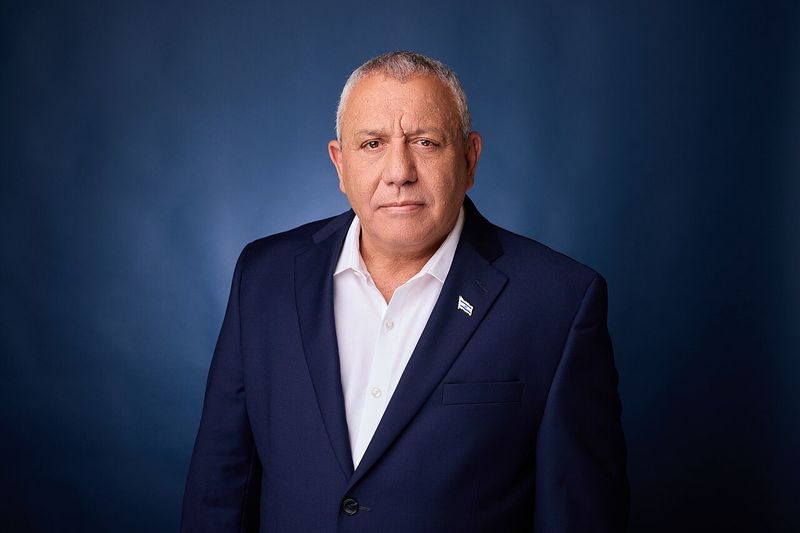
JERUSALEM, November 7, 2026 — Israeli President Isaac Herzog announced on Saturday night that he is giving opposition leader Gadi Eisenkot the first opportunity to form a governing coalition following the October 27 election — a direct setback for Prime Minister Benjamin Netanyahu, Israel’s longest-serving premier, whose party finished first but whose bloc fell short of a majority. Herzog’s office said the formal mandate ceremony will take place on Sunday at 5 p.m. local time at the president’s residence in Jerusalem, where Eisenkot will formally receive the task of building a government.
The announcement came a day earlier than the expected Sunday timeline, and its timing carried a message of its own. It landed shortly after Netanyahu publicly called for a “national unity government” in a video statement and warned against “hastily swearing in a government with terrorist supporters” — an apparent reference to the Arab-led parties whose recommendations helped put Eisenkot in front. Herzog, who accepted the certified election results on November 4 and spent two days consulting every faction elected to the Knesset, chose not to wait. The question that has hung over Israeli politics for eleven days — who will be Israel next prime minister — now has a provisional answer, and it is not the man who currently holds the job.
How Herzog decided: 67 recommendations against 46
Under Israel’s system, the president does not simply hand the mandate to the leader of the largest party. He consults every Knesset faction and tasks the lawmaker he judges most likely to assemble a coalition of 61 in the 120-seat parliament. By that scoreboard, the week was not close. Factions representing 67 lawmakers recommended Eisenkot; 46 recommended Netanyahu; and 7 — the ultra-Orthodox United Torah Judaism — recommended no one, breaking with the party’s past practice of backing Netanyahu after election after election. It was the strongest recommendation showing for a single candidate since 2015.
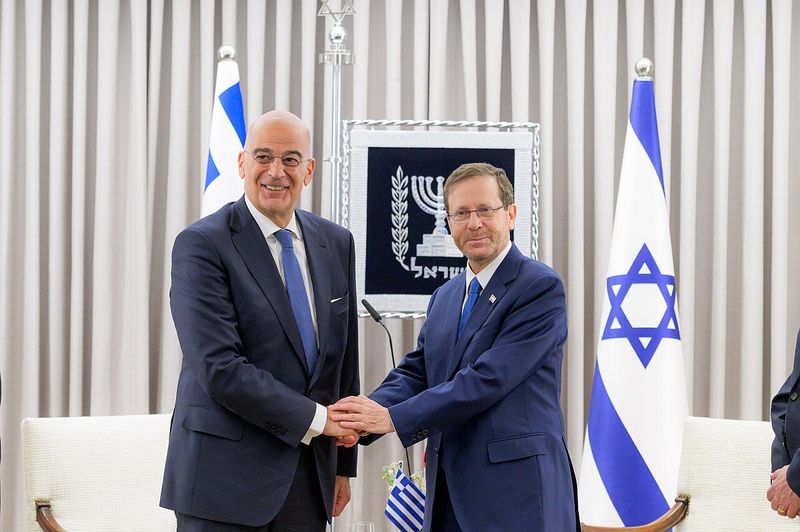
The composition of Eisenkot’s 67 matters as much as its size. His own four-party opposition bloc accounts for 48 of them. The other 19 came from the two Arab-majority parties — the Joint List, with 11 seats, and Ra’am, with 8 — which recommended Eisenkot without committing to join his coalition. That distinction, recommend but not join, is the hinge of everything that follows: it was enough for Herzog to give Eisenkot the mandate, and it may not be enough for Eisenkot to use it. The UTJ abstention, meanwhile, was the week’s decisive swing. As Signal Post News reported on November 5, UTJ withheld its support from Netanyahu over the stalled ultra-Orthodox draft-exemption law, leaving the prime minister’s recommendation count stuck at the 46 lawmakers of his own camp — Likud, Shas, Religious Zionism and Otzma Yehudit — while Eisenkot climbed past him.
The numbers: an election nobody won
Start with the certified result of October 27, an election held on turnout of 77.7 percent. Netanyahu’s Likud won the most seats of any single party, 27. The Gadi Eisenkot Yashar party — the centrist list the former IDF chief of staff founded on an anti-corruption and government-reform platform — won 21. Around those two anchors, the blocs sorted themselves into a parliament with no majority anywhere: Netanyahu’s religious-nationalist bloc holds 53 of 120 seats; the bloc backing Eisenkot holds 48; and the Arab-majority parties hold 19. A government needs 61. Netanyahu is eight short, Eisenkot is thirteen short, and the 19 seats neither man can straightforwardly govern with sit across every route either of them can draw — the deadlock the election-night count made visible within hours of the polls closing.
That arithmetic is why the recommendation count, not the seat count, drove Herzog’s choice — and why his choice, for all its clarity, settles so little. A recommendation is a statement about who should try first. It is not a promise to join a government, vote for its budget, or keep it alive. Eisenkot begins the Israel coalition talks 28 days from Sunday holding endorsements from a majority of the Knesset and firm coalition commitments from well under half of it.
Eisenkot’s plan: a “national emergency government,” sworn in fast
Eisenkot has not been coy about his route. He says he wants to form what he calls a “national emergency government” and hopes to swear in a minority government quickly — built on the four Jewish opposition parties that hold 48 seats together: his own Yashar; Together, led by former prime ministers Naftali Bennett and Yair Lapid; the left-wing Democrats, led by Yair Golan; and Avigdor Liberman’s Yisrael Beytenu. He has set conditions for any partner joining: recognising Israel as a Jewish, democratic, liberal and egalitarian state; commitment to the values of the Declaration of Independence; universal service — military, national or civilian — for all citizens; and recognition of Hamas as a terrorist organisation. The universal-service condition is aimed squarely at the ultra-Orthodox draft dispute that broke Netanyahu’s old coalition: it invites the Haredi parties in only on terms their leadership has spent years resisting.
Avigdor Liberman, the kingmaker Israel’s hung parliament produced
Eisenkot’s central obstacle sits inside his own camp. Avigdor Liberman — former defence, foreign and finance minister, and the leader of the secular-nationalist Yisrael Beytenu — has ruled out any government dependent on the Arab parties, arguing that a minority government resting on their support would be short-lived and would, in the long run, only strengthen Netanyahu. “We’ll have Netanyahu come back with 70 seats for another four years, and from there it’s a short road to annihilation,” Liberman wrote on X on Friday. Instead, in a striking reversal of his years-long veto on the ultra-Orthodox parties, he proposed a “maximum effort” to build a coalition of 61 with Shas and United Torah Judaism, without the Joint List and Ra’am — and signalled he is willing to compromise even on the military-conscription law he built his brand opposing, writing that ending the Netanyahu era would require “painful” compromises and that leaders must be ready to make them. Which of Eisenkot’s two arithmetics prevails — a 48-seat minority tolerated from outside, or a 61-seat majority negotiated with the Haredi parties — is now the central negotiation of Israel government formation 2026.
What each side says
Netanyahu and Likud argue that the voters’ verdict points the other way: Likud won the most seats, his bloc is the largest in the Knesset, and a “national unity government” — under his leadership — is the responsible answer to a country still at war. His warning against a government sworn in with “terrorist supporters” frames Eisenkot’s Arab-party recommendations as a disqualification rather than a credential. Netanyahu has also continued to question the election itself, alleging irregularities that the Central Elections Committee has said did not compromise the result — a dispute his critics call an attempt to delegitimise an outcome he dislikes, and his allies call a legitimate demand for scrutiny.
Eisenkot and Yashar answer with the consultation numbers: a majority of the Knesset — 67 of 120 lawmakers — told the president he should try first, the clearest instruction the system produces, and Herzog was right to follow it. They present his conditions as the reform mandate Yashar campaigned on: an end to draft exemptions, a government of national emergency rather than of survival deals, and a coalition open to any party willing to sign up to those principles — including, eventually, parties currently sitting with Netanyahu.
United Torah Judaism, whose seven abstentions made the week’s arithmetic, says its position is about the Torah students’ status, not about personalities: it will talk to whoever will settle the draft question in law. The Arab-led parties, for their part, say their recommendations were about removing Netanyahu and extracting influence for their constituents — Ra’am’s leadership has argued for years that Arab parties should trade endorsements for budgets and policy rather than sit in permanent opposition — and both have been careful to say that recommending Eisenkot is not the same as joining his government.
Why this matters
Netanyahu’s hold on power
For the first time since his return to office, the machinery of Israeli government formation is working against Benjamin Netanyahu rather than for him. He remains Netanyahu caretaker prime minister — running the country, chairing the cabinet, commanding its wars — and caretaker status has historically been his friend: Israel’s repeated elections between 2019 and 2022 all left him in the job while his rivals failed to replace him. But the recommendation count exposed something new. His oldest religious allies no longer endorse him by default; the president has formally judged another man more likely to build a coalition; and if Eisenkot succeeds, Netanyahu’s tenure ends not with an election defeat — Likud, after all, came first — but with an arithmetic one, assembled by parties that include his own former partners.
War and security policy under a caretaker
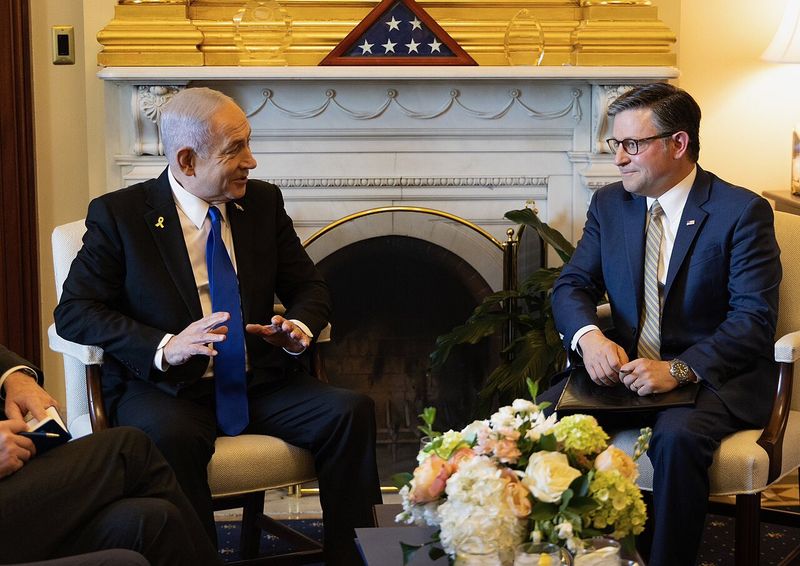
The formation fight is happening over a live war map. Israel’s conflicts and ceasefires — Gaza, Lebanon, the confrontation with Iran and the diplomacy around all three — are being managed by a caretaker government whose parliament has just declined to renew its majority, and whoever forms the next government inherits those files mid-crisis. Eisenkot is not an outsider to them: as IDF chief of staff from 2015 to 2019 and later as a member of the war cabinet formed after October 7, he has sat on the operational side of the decisions a prime minister must now own politically. A swift minority government would put those decisions in new hands within weeks; a failed mandate would return them, weakened, to the old ones; and a second election would leave them with a caretaker for months more.
Coalition politics has been repriced
The deeper shift is structural. Saturday’s decision completes a week in which every assumption of the old system inverted: the largest party’s leader was passed over; the ultra-Orthodox parties behaved as free agents rather than as Netanyahu’s furniture; Arab-majority parties, holding a record 19 seats on high turnout, became the hinge of a Jewish-majority state’s government formation without being offered a seat in the government; and Herzog gives Eisenkot mandate in hand, the president used the discretion the law gives him to follow the recommendations rather than the seat count — a precedent every future deadlocked election will now be argued against.
What happens next
The sequence from here is fixed by law and by the calendar Herzog announced. On Sunday at 5 p.m. local time, at the president’s residence, Eisenkot formally receives the mandate, and his 28 days begin; Herzog may extend that by up to 14 days, giving him until mid-December at the outside. On Tuesday, the new Knesset is sworn in — Eisenkot’s first test, when the parliament he must persuade takes its seats and elects its leadership. If he assembles 61, Israel has a new government and a new prime minister, likely within weeks. If he fails, the mandate can pass to another lawmaker — including Netanyahu, who would then get his own window to try the arithmetic from the other side. If no one succeeds, the Knesset can rally behind any member who gathers 61 signatures, and failing that, Israel votes again.
Three signals will tell the story early. The first is Liberman: whether he accepts a minority government as a bridge or holds out for his 61-seat alternative will decide which negotiation Eisenkot is actually running. The second is UTJ: any movement from abstention toward a named price, in writing, with either candidate, means the Haredi parties have opened their auction. The third is Netanyahu himself — whether the caretaker prime minister campaigns for a unity government he would lead, prepares for a second mandate of his own, or keeps pressing his challenge to the election’s integrity, a claim the elections committee has already rejected. Eleven days after Israel voted, the country still does not know who will govern it. It now knows who gets to try first — and that, on Saturday night, was the news.
Sources: Associated Press, “Israel’s president taps opposition candidate Eisenkot to form a government, in setback for Netanyahu” (November 7, 2026); CNN, “In setback to Netanyahu, rival Eisenkot to be tasked with forming next Israeli government” (November 7, 2026); and Signal Post News reporting on the consultations week, including United Torah Judaism’s refusal to back Netanyahu and the election-night seat count.