Science · Space · China & Pakistan
The China Manned Space Agency confirmed on Saturday that a Pakistani payload specialist will fly to Tiangong aboard Shenzhou-24 and come home aboard Shenzhou-23 — the first foreign astronaut ever to visit China’s station and the first joint crewed flight in China’s human spaceflight history. What Beijing pointedly did not say is who is flying, or exactly when.
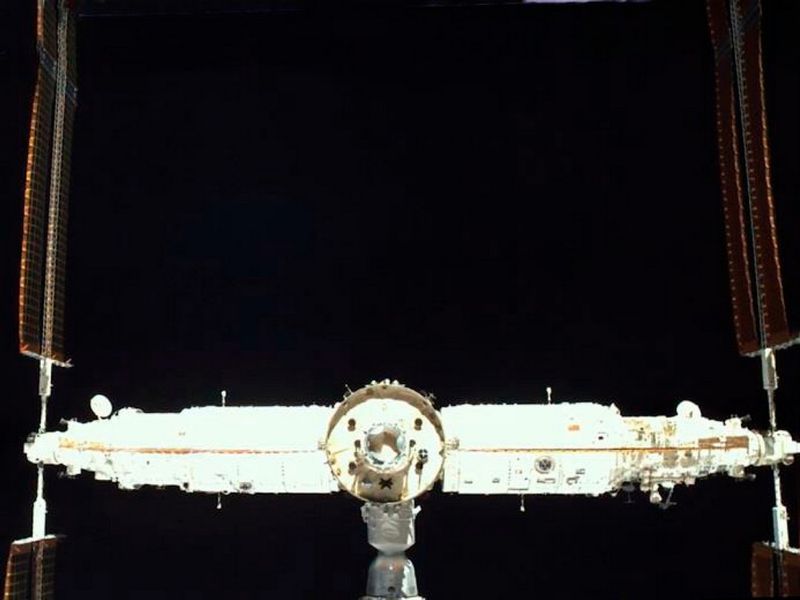
BEIJING, November 7, 2026 — A Pakistani astronaut will fly to China’s Tiangong space station aboard the Shenzhou-24 spacecraft, the China Manned Space Agency (CMSA) announced on Saturday, in the defining flight of the Pakistani astronaut China space station programme agreed between Beijing and Islamabad in February 2025. The astronaut, flying as a payload specialist, will make a short stay aboard the station and then return to Earth aboard Shenzhou-23, the spacecraft that has been docked at Tiangong since May. The mission will be the first time a foreign astronaut has visited Tiangong and the first joint Chinese-foreign crewed flight in the history of China’s human spaceflight programme, according to the agency’s statement, carried by the state news agency Xinhua and reported by the Associated Press and Reuters.
The announcement, made on Saturday, November 7, also carried the release of the Shenzhou-24 mission emblem — the kind of detail Chinese space officials usually unveil only once a flight is firmly on the manifest. Yet the statement was as notable for its silences as for its substance. CMSA did not name the astronaut. It did not give a launch date. It said, in effect, that the flight is real, that the seat is assigned, and that the rest will follow.
What is confirmed is the shape of the mission. The Pakistani astronaut will launch aboard Shenzhou-24 alongside Chinese crew members, dock with Tiangong, spend a short period aboard the station conducting the work of a payload specialist — the crew role centred on scientific experiments and equipment rather than on piloting the spacecraft — and then undock aboard Shenzhou-23 for the return to Earth. Shenzhou-23 has been attached to the station since May, when it carried a crew that included Lai Ka-ying, the first astronaut from Hong Kong to fly. The arrangement is a familiar one in China’s station operations: an incoming crew arrives on a fresh spacecraft and an outgoing crew leaves on the older one, so that a lifeboat is always docked. This time, for the first time, one of the people making that exchange will not be Chinese.
What we know — and what we do not
The confirmed facts are these. A Pakistani astronaut will fly as a payload specialist on Shenzhou-24. He will be the first foreign astronaut to visit Tiangong. He will return aboard Shenzhou-23 after a short stay. The mission is expected to take place by the end of 2026. CMSA also released the Shenzhou-24 mission emblem on November 7. Beyond that, the two most obvious questions remain officially unanswered.
First, the name. Two Pakistani candidates completed the selection and training pipeline: Muhammad Zeeshan Ali and Khurram Daud, both pilots. One will fly; the other will serve as backup. CMSA’s Saturday statement did not say which, and neither government has confirmed the assignment. Any report claiming to know which man is flying is, as of this weekend, ahead of the official record.
Second, the date. CMSA gave no launch day. Pakistan’s Planning Minister Ahsan Iqbal said at a ceremony in October that the mission would take place on November 25. That date has been widely repeated, but it is a ministerial statement, not a CMSA confirmation, and it should be read as unconfirmed: China’s manned space agency, which controls the launch manifest, has committed only to a flight expected by the end of the year. Crewed launch schedules also move for technical and weather reasons. Until CMSA names a day, November 25 is a suggestion on the record — plausible, reported, and not official.
Two pilots, three stages, one seat
The road to this weekend’s announcement began on February 28, 2025, when China and Pakistan signed a cooperation agreement in Islamabad between CMSA and Pakistan’s Space and Upper Atmosphere Research Commission, SUPARCO, covering the selection and training of Pakistani astronauts for flights to the Chinese station. It was, on paper, an extraordinary document: China, which has built its entire crewed programme indigenously and flown only its own nationals, formally agreed to open a station seat to a partner country.
Selection ran through three stages — preliminary screening, a second evaluation and a final selection — conducted under Chinese standards, the same gauntlet of medical, psychological and aptitude testing that China applies to its own astronaut corps. In April, the two candidates were named publicly: Muhammad Zeeshan Ali and Khurram Daud, pilots who then took up training in China, working alongside Chinese astronauts and learning to operate in a programme whose language, hardware and procedures are entirely Chinese. Pakistan’s Prime Minister Shehbaz Sharif met the pair and congratulated them, a signal of how much political weight Islamabad has placed on the flight.
The one-flies, one-backups structure is standard crewed-spaceflight practice, but it carries a particular weight here. The backup is not a spare part; he is a fully trained astronaut who will be ready to step in up to the final days before launch, and who becomes, in practical terms, the leading candidate for any second Pakistani flight. Between them, Ali and Daud have already made history of a quieter kind: they are the first foreign nationals ever admitted into China’s astronaut training system.
Why this matters
A door opens in China’s space diplomacy
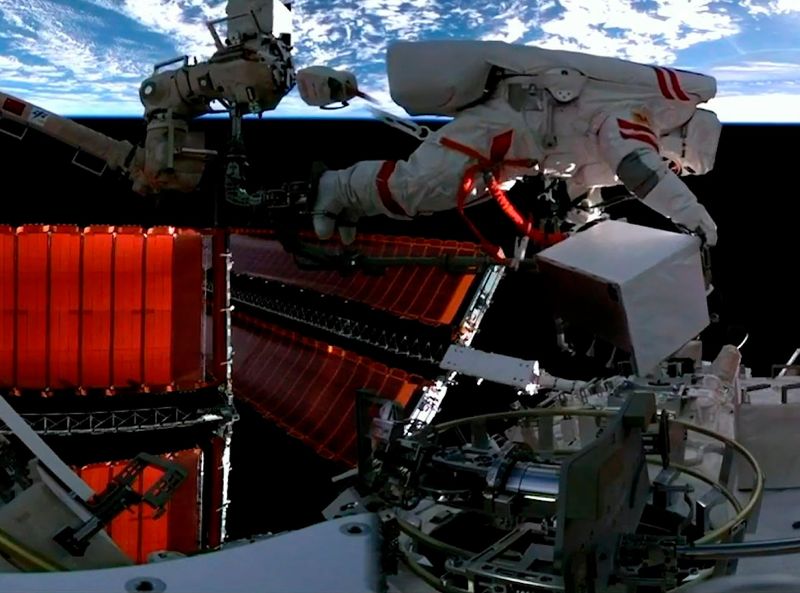
For more than two decades, China’s human spaceflight programme was a closed system: Chinese rockets, Chinese spacecraft, Chinese astronauts, Chinese station. That was partly a matter of capability-building and partly a matter of exclusion — United States law has long restricted NASA’s bilateral cooperation with China, which kept China outside the International Space Station partnership and pushed it to build Tiangong alone. Saturday’s announcement is the moment the closed system deliberately opens. A foreign astronaut on Tiangong is not a courtesy visit; it is China presenting its station as a platform other nations can fly to, on Chinese terms, under Chinese procedures, in partnership with Beijing rather than with the ISS consortium.
That has consequences well beyond one flight. Countries across Asia, Africa, the Middle East and Latin America that have no path to the ISS — or that find the queue, cost and politics of the Western-led programme daunting — now have a demonstrated alternative: train with China, fly with China. Every future negotiation over station access, lunar cooperation and the China-led International Lunar Research Station will be conducted in the shadow of the precedent Shenzhou-24 sets. Beijing is, in effect, beginning to build the partner network for its orbital infrastructure the way the ISS partners built theirs in the 1990s — one bilateral seat at a time.
The China–Pakistan partnership, at its highest altitude
That the first seat went to Pakistan is itself the message. The China–Pakistan relationship — the “all-weather” partnership that runs from the China–Pakistan Economic Corridor to joint fighter production — is Beijing’s closest strategic alignment, and space has become its newest layer. Pakistan gains something money alone has never bought it: a citizen in orbit, trained to a major power’s standards, flying a real station mission with real scientific work attached. For SUPARCO, founded in 1961 but long eclipsed in the region by India’s far larger programme, the flight is a generational moment — Pakistan will put a person in space through partnership decades after its first satellites, and in a way that builds domestic expertise rather than renting a joyride. Pakistani officials have already spoken of experiments to be conducted aboard the station, and Iqbal has paired the flight with longer ambitions, including a Pakistani lunar mission target of 2035 and a Pakistani rover slated for China’s Chang’e-8 lunar mission.
Two stations, two models
The contrast with the International Space Station is instructive, and it is not simply East against West. The ISS is a jointly owned condominium: five space agencies built it together, share its operation by treaty, and fly multinational crews as a matter of structure. Tiangong is something different — a nationally owned station that hosts guests. China controls the hardware, the manifest, the training pipeline and the invitation list. Shenzhou-24 shows that model reaching maturity: partnership as patronage, extended first to the partner Beijing trusts most. Neither model is inherently more “international” than the other; they distribute power differently. The ISS model shares authority and cost among equals. The Tiangong model concentrates both in the host — and lets the host decide, seat by seat, who joins. As the ISS ages toward its planned retirement around the end of the decade, the question of which model defines the next era of stations is no longer abstract. This autumn, as NASA’s Swift telescope falls toward an uncontrolled re-entry after a failed rescue effort, the contrast between an ageing Western orbital infrastructure and a young Chinese one opening its doors has rarely been sharper.
Background: the station, the record, and SUPARCO
Tiangong — the name means “Heavenly Palace” — was assembled in orbit between 2021 and 2022. Its Tianhe core module launched in April 2021, followed by the Wentian laboratory module in July 2022 and the Mengtian laboratory module that October, completing the T-shaped, three-module station. The station has been continuously crewed since 2021 through the Shenzhou rotation system, with crews typically serving about six months. Shenzhou-23, the spacecraft that will bring the Pakistani astronaut home, docked in May carrying a crew that included Hong Kong’s first astronaut, Lai Ka-ying — a reminder that Beijing has been widening the circle of who flies, step by step, first within China and now beyond it.
China’s crewed milestones frame how significant Saturday’s step is. Yang Liwei became the first Chinese astronaut in space in 2003, aboard Shenzhou-5, making China only the third country to launch humans independently. Zhai Zhigang performed China’s first spacewalk in 2008. The Tiangong-1 and Tiangong-2 precursor stations hosted crews in the 2010s, and the permanent station followed. Through all of it — more than twenty crewed flights — every single person launched on a Shenzhou has been a Chinese national flying a Chinese mission. Shenzhou-24 breaks a line that has held for twenty-three years.
Pakistan’s programme is older than many assume and thinner than its ambitions. SUPARCO was established in 1961, among the earliest space agencies in Asia, and Pakistan launched its first satellite, Badr-1, in 1990 — aboard a Chinese rocket, as it happens. Its modern programme leans heavily on the Chinese partnership: communications and remote-sensing satellites built and launched with Chinese support, and now, human spaceflight. What Pakistan has never had is an astronaut. That absence, in a country where India’s programme has flown astronauts and is preparing its own crewed spacecraft, has been a standing point of national comparison. Shenzhou-24 closes it — through Beijing’s door rather than an indigenous capsule, a trade-off Islamabad has plainly decided is worth making.
Who benefits — and who watches nervously
China gains the most, and in several currencies at once. It demonstrates that Tiangong is safe and mature enough to host guests; it converts a bilateral partnership into a flagship of its wider diplomacy just weeks after Beijing confirmed talks on a first-ever Xi–Trump–Putin meeting at APEC in Shenzhen; and it establishes the guest-seat precedent before the ISS retires and the market for station access is redrawn. Pakistan gains the astronaut, the training pipeline, the scientific programme and the prestige — plus a backup astronaut who anchors whatever comes second. SUPARCO gains institutional knowledge it could not have bought on the open market at any price.
The nervous watchers are not hard to identify, though none has said so in terms. India, whose space programme has historically measured itself against both China and Pakistan, will note that a Pakistani astronaut reached orbit aboard the station of the region’s dominant space power while India’s own crewed programme works toward its first flight. In Washington, the flight will be read as another data point in a familiar argument: that barring China from the ISS did not slow its programme and may have accelerated the construction of a parallel one, now with partners. And other countries quietly queuing for access to space — in the Gulf, in Southeast Asia, in Africa — will watch Shenzhou-24’s execution closely, because its success or failure prices their own future negotiations with Beijing.
The numbers and the timeline
Read as a schedule, the story is a study in patience. February 28, 2025: the Islamabad agreement. Three selection stages. April: two candidates named. Months of training in China, conducted alongside Chinese crews. May: Shenzhou-23 docks at Tiangong with Hong Kong’s first astronaut aboard — the very spacecraft that will fly the Pakistani visitor home. November 7, 2026: CMSA confirms the mission and releases its emblem. Ahead: a launch expected by the end of 2026, a short stay measured in days rather than the six-month rotations of station crews, and a landing aboard a spacecraft that will by then have spent the better part of a year in orbit.
The numbers underneath are equally telling. Tiangong’s three modules give it a fraction of the ISS’s volume, but it is twenty years younger than the oldest ISS modules and designed for a long life with expansion possible. China flies roughly two crewed Shenzhou missions a year, a cadence it has sustained since the station was completed. One seat on one of those flights, given to a partner, costs Beijing almost nothing operationally — the spacecraft flies either way — and buys a diplomatic asset no ground-based project can match. That asymmetry, cheap for the giver and priceless for the receiver, is precisely why analysts expect the guest seat, once proven, to be used again.
What happens next
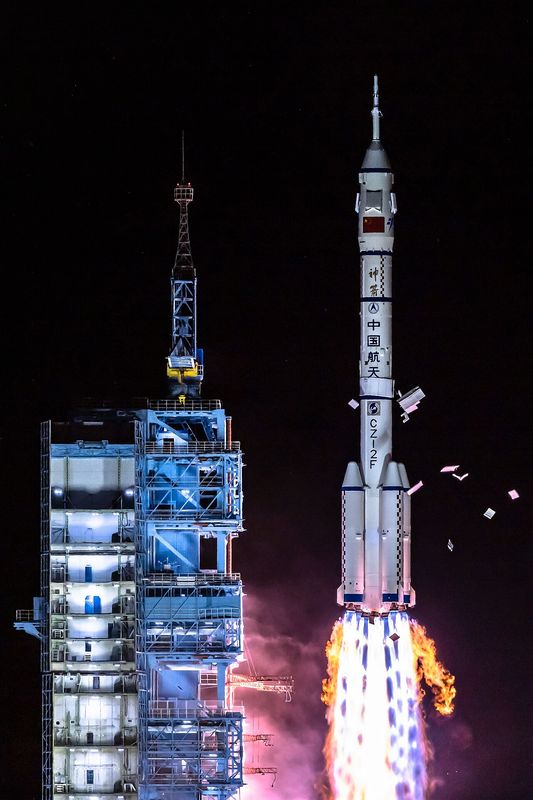
The next announcements are easy to predict even if their dates are not. CMSA will, at some point, name the flying astronaut and the backup, and set a launch date; the agency’s habit is to confirm crews close to launch, so the name may not come until the final stretch. Pakistan will detail the experiments its astronaut is to conduct — the payload specialist role exists to do science, and Islamabad will want the programme visible. Watch, too, for the formalities that surround a crewed launch from Jiuquan: the send-off ceremony, the crew press conference, and the moment a Pakistani flag patch appears on a Shenzhou flight suit.
Beyond the flight itself, the real follow-through questions are structural. Does a second Pakistani flight follow, with the backup stepping up? Do other partner countries begin astronaut selections under similar agreements, turning a single guest seat into a programme? And does the Tiangong guest model extend toward the lunar projects Beijing is assembling for the 2030s? None of that is announced, and none of it should be reported as planned. But Shenzhou-24 is the proof of concept on which all of it depends — which is why a short flight, by an astronaut whose name we do not yet know, on a date not yet confirmed, is one of the most consequential space missions of the year.
What do you think — will guest seats aboard Tiangong change who gets to go to space, or does real partnership require the shared ownership the ISS was built on? Follow Signal Post News for updates as CMSA names the crew and the launch date.
Sources
Sources: Xinhua, “First foreign astronaut to board Chinese space station” (November 7, 2026), via People’s Daily Online — the China Manned Space Agency announcement: a Pakistani payload specialist on Shenzhou-24, the return aboard Shenzhou-23, the three-stage selection and the February 2025 Islamabad agreement; Pakistan TV, “Pakistani astronaut to join China’s space-station mission” (November 7, 2026), reporting the CMSA statement and the selection of the two Pakistani reserve astronauts; CPEC Info, “Pakistan to launch first astronaut into space from China on Nov 25: Ahsan Iqbal” (October 19, 2026), reporting Planning Minister Ahsan Iqbal’s October statement — the November 25 date, which CMSA has not confirmed; and Associated Press and Reuters wire reporting of the November 7, 2026 CMSA announcement, as carried by international outlets. Photos: Wikimedia Commons, as credited in the captions.