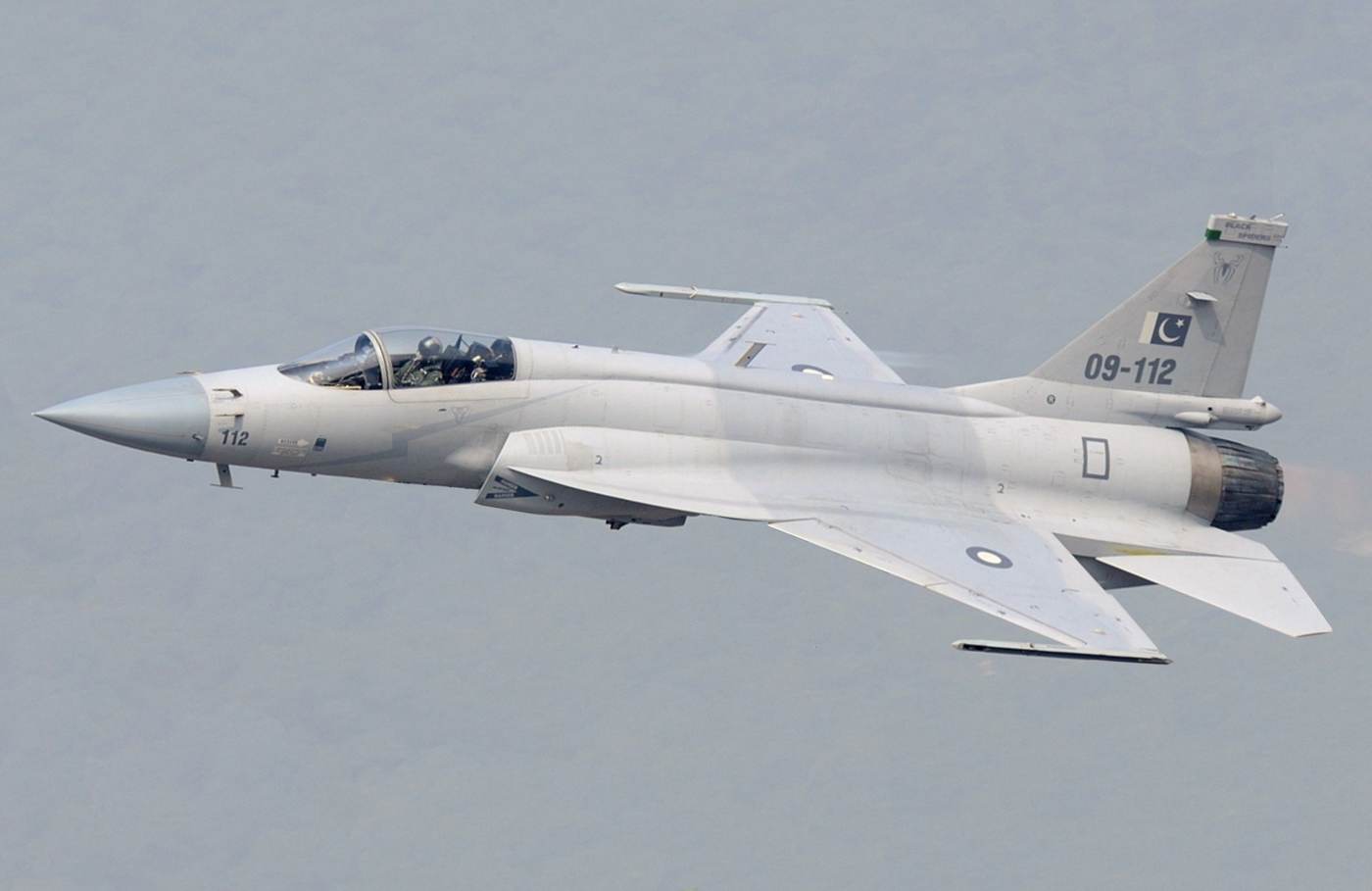
When Pakistan shoots down Afghan drones in the morning, responds with artillery by nightfall, and wakes up to another militant attack on a police compound, it is no longer an incident — it is a pattern. On Wednesday, September 23, Pakistani air defences intercepted eight drones that had crossed into its airspace from Afghanistan, according to Pakistani security sources cited by The News and Dawn. Four were brought down near the Torkham border crossing, the other four in the mountains near Kohat. It is the most direct aerial confrontation between the two neighbours since Pakistan's airstrikes inside Afghanistan two days earlier — and a sign that the cycle of retaliation neither side will acknowledge is now running on its own momentum.
What happened on Wednesday
Pakistani security sources said the armed forces' air defence system detected all eight drones in time and intercepted them, foiling what they described as an attempted intrusion aimed at public areas. Four were brought down in areas adjacent to the Torkham border — the busiest crossing on the Durand Line, where the N-5 highway meets the Khyber Pass — while the remaining four were shot down in mountainous terrain near Kohat. The wreckage of the downed drones is being recovered and taken into custody, the sources said.
According to the same sources, the incursion was launched under the supervision of the Afghan Taliban from posts in Afghanistan's Nangarhar and Paktia provinces. Pakistani officials framed it as further evidence of what they call the Taliban regime's "direct support and patronage" of militant groups operating against Pakistan.
There were no reports of Pakistani casualties from the drone incidents. The Afghan side has not acknowledged any losses either — because, officially, it says nothing happened at all.
The night battle in Kurram
The drone interceptions did not happen in a vacuum. Pakistani sources said security forces separately foiled an infiltration attempt by Tehreek-e-Taliban Pakistan (TTP) militants — whom Islamabad brands "Fitna al-Khawarij" — crossing from Afghanistan into the Kurram sector during the night. After the attempt was stopped, Afghan Taliban forces opened fire on Pakistani border posts with heavy weapons, mortars and other arms, the sources said.
Pakistani troops responded with small and heavy weapons, including artillery, targeting multiple Afghan Taliban border posts, mortar positions and defensive locations. Several Afghan Taliban personnel were reported to have fled their positions following the response. Frontier Post reporting separately noted Afghan shelling and Kabul's denial of the attack.
What matters here is not who fired first — neither claim can be independently verified, and both capitals have every reason to massage the sequence — but that the two countries' regular forces exchanged direct fire. That is a qualitatively different event from drone interceptions or proxy attacks. It is state-on-state violence, however brief.
Kabul denies everything
The Afghan Taliban government rejected Pakistan's account outright. Defense Ministry spokesman Sediqullah Nusrat told the BBC that Afghanistan had not launched any attack against Pakistan, that the Afghan Air Force had not carried out any drone attacks, and that Kabul would decide the timing and nature of any response. The denial is total: not a different interpretation of events, but a claim that nothing happened.
This is the classic fog of the Durand Line conflict. Both sides operate through unnamed security sources and spokesmen; independent journalists cannot freely access the border districts on either side; and both narratives serve domestic audiences. Pakistan needs to show it is striking back at a threat emanating from Afghanistan. The Taliban need to deny weakness without inviting escalation. The honest reading is that the truth lies somewhere between "eight drones repelled" and "nothing happened" — but the pattern of reciprocal claims over recent weeks suggests neither side is inventing from whole cloth.
How we got here — a week of escalation
The current spiral has a clear recent history. On September 20, Pakistan conducted what it called an intelligence-based ground operation in the Kohat and Hangu districts, killing nine militants, according to its information ministry. Then came one of the deadliest attacks of the year: a major assault on the old Police Lines in Kohat that killed 23 people, including security personnel and civilians, and injured around 100. Eight attackers were killed in the overnight clearance operation.
On Monday, September 21, Pakistan responded with "calibrated" airstrikes against what it described as terrorist hideouts and safe havens in Afghanistan's Kunar and Paktika provinces. Islamabad said more than 28 militants were killed and warned that "Afghanistan continues to remain a hub of terrorism." The Taliban government said the strikes killed at least three civilians, including women, and promised an "appropriate response" at a suitable time. Signal Post News' earlier report explains the two irreconcilable accounts and the evidence that remains missing.
Wednesday's drones — whether Taliban-launched or not — arrived exactly on that promised timeline. And Deputy Prime Minister and Foreign Minister Ishaq Dar was already carrying the file to the international stage, raising the issue at an OIC Contact Group meeting on Afghanistan on the sidelines of the UN General Assembly in New York on Tuesday.
This is not a new war. It is the latest chapter of a conflict that has been grinding for decades: Pakistan's long-standing demand that Kabul act against the TTP, whose fighters Islamabad says operate from Afghan sanctuary; Kabul's refusal to accept that demand; and a border — the Durand Line — that Afghanistan has never formally recognized.
Why this matters — analysis
Three things make Wednesday's events significant beyond the drone count.
First, the tempo. Ground operation on September 20, police-lines massacre and clearance operation on September 21, cross-border airstrikes the same day, drones and artillery on September 23 — four distinct violent episodes in four days, each one presented as retaliation for the last. This is the anatomy of an escalation ladder, and both sides are climbing it while insisting they are only responding.
Second, the drone dimension. Small drones have become the signature weapon of this conflict precisely because they are deniable, cheap, and effective at probing air defences. The Taliban's military lacks a fully functional air force — no fighter jets, a handful of helicopters — but small drones fill that gap. For Pakistan, which has invested heavily in air defence along the western border, every intercepted drone is both a tactical success and a strategic warning: the other side can reach into your airspace at will.
Third, the internationalization. Dar's move at the OIC on the UNGA sidelines shows Islamabad is building a diplomatic case, not just a military one. Pakistan wants the world — particularly the Muslim-majority states in the OIC — to see Afghanistan as a terrorism hub. Kabul, meanwhile, is betting that denial and the promise of a future response will keep its options open. The UNGA setting matters: this is the week the world's attention is available, and both sides are performing for it. Our UNGA diplomatic report tracks the wider regional agenda around those meetings.
Who benefits, who loses
The short-term winners: Pakistan's military, which gets to demonstrate vigilance — air defences working, infiltrations foiled, retaliation swift — at a moment of acute public anger after the Kohat police-lines attack. The TTP, perversely, benefits too: every Pakistani strike inside Afghanistan feeds its narrative that Islamabad is the aggressor, and every Taliban denial of drone attacks preserves the ambiguity the group needs.
The losers: the civilians of Khyber Pakhtunkhwa and the Afghan border provinces, who live under the drones, the artillery, and the suicide bombers; the already-fragile Pakistan-Afghanistan trade relationship — Torkham is a commercial lifeline, and every closure strangles both economies; and any near-term prospect of counterterrorism cooperation between the two capitals. Also losing: the Afghan civilians caught in Monday's airstrikes, whose deaths — three confirmed by Kabul, including women — Pakistan has not publicly addressed.
Nobody benefits strategically. That is the tragedy of this pattern: both governments are playing to domestic audiences while the underlying problem — militants operating across a disputed border — remains untouched by drones and artillery alike.
The numbers behind the spiral
- 8: drones Pakistan says it intercepted on September 23 — 4 near Torkham, 4 near Kohat
- 23: killed in the Kohat Police Lines attack, with around 100 injured — one of the deadliest attacks of 2026
- 28+: militants Pakistan says were killed in Monday's airstrikes in Kunar and Paktika
- 3: civilians, including women, the Taliban says were killed in those same strikes — a figure Pakistan has not addressed
- 9: militants killed in Pakistan's September 20 ground operation in Kohat and Hangu
- 8: attackers killed in the Kohat clearance operation
- 4 days: the span from ground operation to drone interceptions — the full escalation cycle
Context: The TTP has been waging an insurgency against the Pakistani state since 2007. Pakistan says the group's leadership operates from Afghan sanctuary; the Taliban government denies this while offering no verifiable action against the sanctuaries. Since the Taliban's 2021 return to power, cross-border attacks have risen sharply, and Pakistan has repeatedly carried out strikes inside Afghanistan — each one deepening the diplomatic freeze.
What happens next — three scenarios
Managed de-escalation through back channels
The most likely outcome, historically. Both sides have incentives to cool down after demonstrating resolve — Pakistan has shown its defences work, the Taliban have (in their telling) shown restraint or (in Pakistan's telling) taken a hit. Quiet contacts, possibly through Gulf intermediaries, could lower the temperature within weeks. The Dar-OIC move suggests Islamabad prefers the diplomatic track once the military point is made.
Continued tit-for-tat, each round slightly bigger
The Taliban promised an "appropriate response at a suitable time" after Monday's strikes; Wednesday's drones — if they were Kabul's response — suggest the response cycle is already running. The risk is that deniability, which keeps things small, eventually fails: a drone hits a populated area, an artillery shell lands on a village, and domestic pressure forces a response neither capital wants.
A larger Pakistani operation inside Afghanistan
If another mass-casualty attack like Kohat occurs, the pressure on Islamabad to act "decisively" will be enormous. Pakistan has done this before — limited cross-border strikes — but a bigger operation risks drawing in a Taliban regime that has shown it will fire back, as the Kurram artillery exchange demonstrated. That is the road to a genuine border war, and both sides' militaries know it.
The bottom line
Eight drones, one foiled infiltration, one artillery duel, and two capitals that cannot agree on whether anything happened. The Pakistan-Afghanistan conflict is not the world's most watched war — it lacks the cameras of Gaza or the geopolitics of Ukraine — but it is one of its most dangerous: two states, a disputed border, a resilient insurgency, and an escalation ladder with no agreed rules. Wednesday's events did not start this war, and they will not end it. But the tempo is quickening, and quickening tempos are how accidental wars begin.
Sources
- The News: Pakistan says eight drones were intercepted near Torkham and Kohat
- Dawn via TOB News: reporting on the drone interceptions
- Abb Takk: drone interceptions and the Kurram infiltration attempt
- Terror Monitor: Taliban denial reported by the BBC
- The Diplomatic Insight: Ishaq Dar's OIC diplomacy on the UNGA sidelines
Reporting cutoff: September 23, 2026 at 1:40 p.m. PDT. The drone, infiltration and battlefield accounts are attributed to Pakistani security sources; Kabul denies launching any drone attack. Neither account nor the sequence of cross-border fire has been independently verified. Analytical judgments are identified as Signal Post News analysis.