Pakistan Afghanistan airstrikes September 2026
Pakistan airstrikes Afghanistan has become a near-weekly headline in 2026, but Thursday's operation crossed a new line: retaliation explicitly framed as self-defense against drone attacks launched from Afghan soil. Pakistan's Information Minister Attaullah Tarar announced on Thursday that Pakistan had conducted "precision aerial and drone strikes" on 10 locations inside Afghanistan that Islamabad says were being used to launch and store drones — some of which had been used against Pakistan just a day earlier. It is the second time in four days that Pakistani munitions have landed inside Afghanistan, and it makes this the fastest tit-for-tat cycle in a border conflict that has been heating up all September.
What Tarar announced on Thursday
Speaking through an official statement and a post on X, Tarar said Pakistan's air defence systems had detected drones launched from Afghan territory on Wednesday, and that they were "tracked and neutralised before they could reach any of their intended targets." The retaliatory strikes that followed were, he said, "deliberate, precise, calibrated and proportionate," and "limited to identified military objectives" directly linked to the attempted attacks. He framed the operation as Pakistan's sovereign right of self-defense, condemning Wednesday's incursion as a violation of Pakistan's sovereignty and territorial integrity — an "act of aggression." And he closed with a warning: "Any further provocative act by Afghan Taliban will be responded with firm and resolute response."
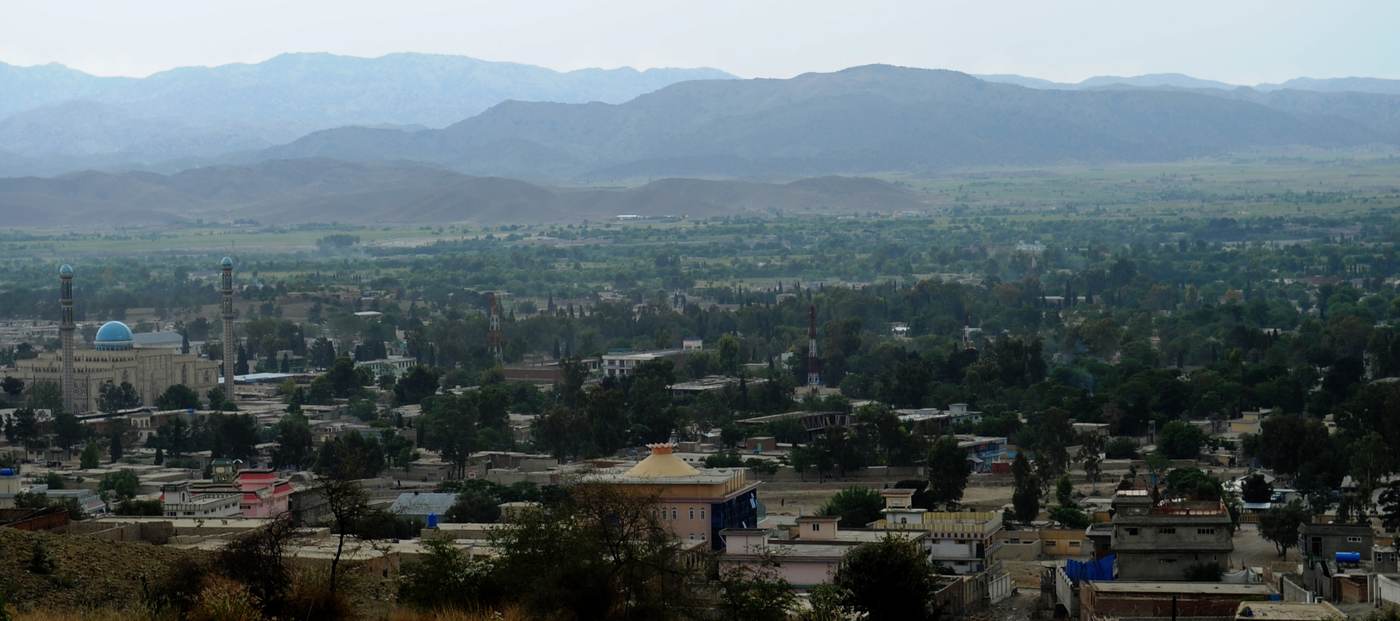
On the Afghan side, Mustaghfir Gurbaz, spokesperson for the governor of southeastern Khost province, confirmed the strikes hit several areas of the province — and said there were no casualties. That claim, like most claims in this conflict, cannot be independently verified: journalists on both sides of the Durand Line report through official spokesmen, and the border districts are effectively closed to independent access.
Wednesday's drone incursions — the trigger
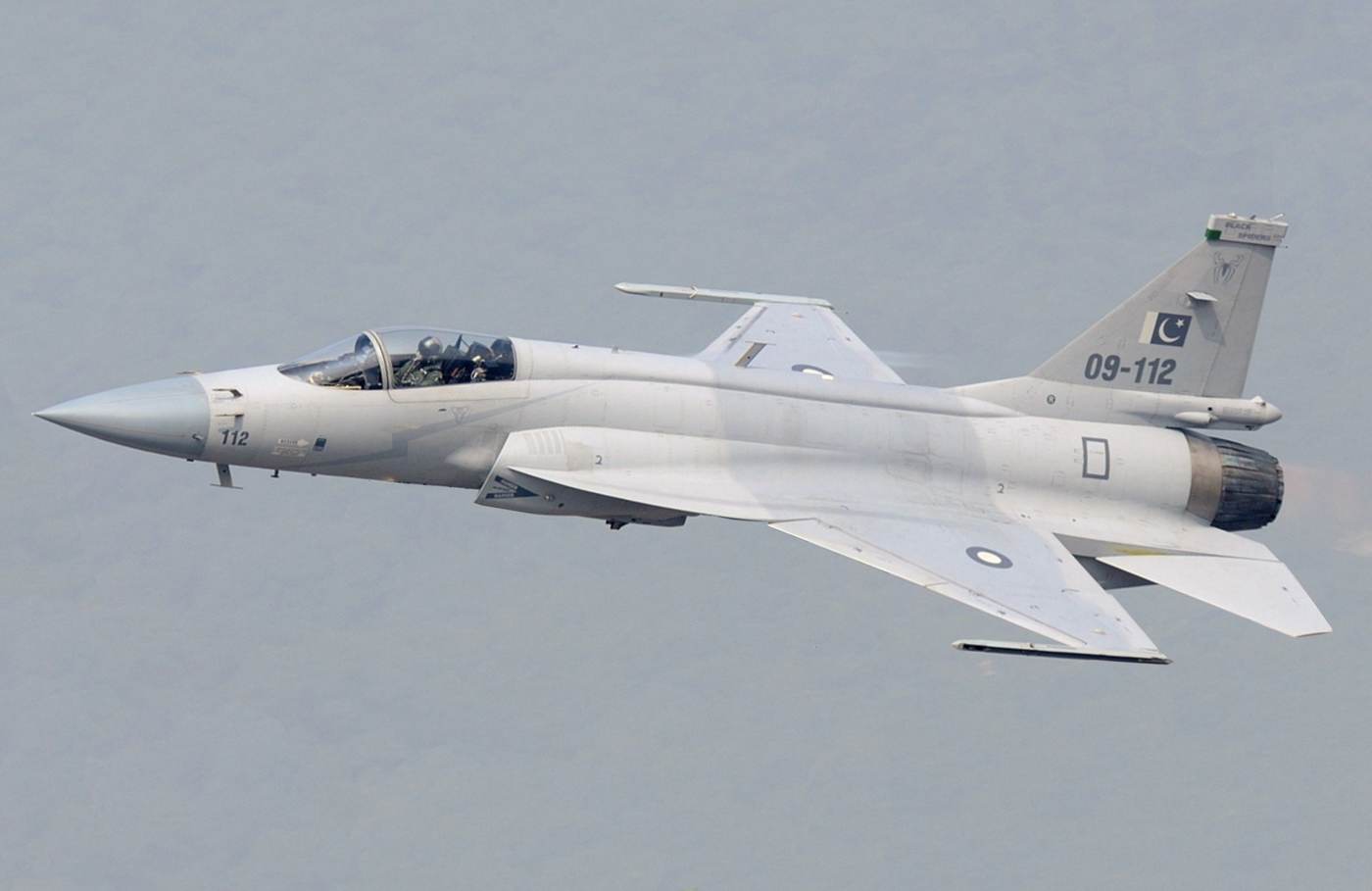
The trigger for Thursday's strikes was already reported by Signal Post News: on Wednesday, Pakistani air defences intercepted eight drones that had crossed into Pakistan's airspace from Afghanistan — four near the Torkham border crossing, four in the mountains near Kohat — with the wreckage recovered and taken into custody. Pakistani security sources said the drones were launched under Afghan Taliban supervision from posts in Nangarhar and Paktia provinces, and framed the incursion as evidence of the Taliban regime's "direct support and patronage" of militant groups operating against Pakistan.
Kabul rejected that account entirely. Afghan Taliban Defense Ministry spokesman Sediqullah Nusrat told the BBC that Afghanistan had not launched any attack against Pakistan, that the Afghan Air Force had carried out no drone attacks, and that Kabul would decide the timing and nature of any response. Two irreconcilable narratives — but the response on Thursday followed regardless. Islamabad did not wait for Kabul to acknowledge the drones; it treated its own detection as sufficient cause.
How we got here — September's escalation ladder
The current spiral is barely four days old, and each rung is documented. Last week, an attack on a police facility in northwestern Pakistan killed at least 24 people — the incident that reignited fighting after nearly three months of relative calm, according to Reuters. On Monday, Pakistan answered with "calibrated" airstrikes against what it called terrorist hideouts in Afghanistan's Kunar and Paktika provinces: Islamabad said more than 28 militants were killed; the Taliban government said the strikes killed at least three civilians, including women, and promised an "appropriate response" at a suitable time. On Wednesday came the eight intercepted drones and a foiled TTP infiltration attempt in the Kurram sector, where Pakistani sources say Afghan Taliban forces opened fire on border posts and Pakistan answered with artillery. On Thursday, the retaliatory strikes on 10 locations. Four days, four violent episodes, each presented as a response to the last.
The deeper history is longer and grimmer. Islamabad accuses Kabul of harbouring militants — chiefly the Tehreek-e-Taliban Pakistan (TTP) — who stage cross-border attacks; the Taliban government denies harbouring anti-Pakistani insurgents and says militancy is Pakistan's internal problem. The two countries' worst fighting in years came in February, and the Durand Line — the border Afghanistan has never formally recognized — remains one of the most volatile frontiers on earth.
Why this matters — analysis
Three things make Thursday's strikes different from the Monday ones.
First, the declared justification. Monday's strikes were framed as counterterrorism — hideouts and safe havens of militants. Thursday's were framed as state-on-state self-defense: a response to weapons launched from Afghan territory against Pakistani territory, with Islamabad explicitly invoking "sovereign right." That is a legal and diplomatic escalation, not just a military one. It positions Pakistan to argue, at the UN and elsewhere, that it is exercising a right every state claims — and it puts Kabul in the position of a state accused of aggression rather than mere negligence.
Second, the speed. Four days between Pakistan's two cross-border strike operations, with a drone incident and an artillery exchange in between. Retaliation cycles used to take weeks, allowing back-channel de-escalation to work. At this tempo, the diplomatic track cannot keep up — and both sides' statements are now public ultimatums rather than private warnings.
Third, the drone dimension. Small drones are deniable, cheap, and effective at probing air defences — and they are becoming the signature weapon of this conflict. Pakistan's willingness to answer drone incursions with cross-border airstrikes establishes a new rule of the game: drone probes will be met with kinetic retaliation, not just interception. That raises the stakes of every future incursion, whether or not Kabul actually ordered it.
Who benefits, who loses
The short-term winners are Pakistan's military and civilian leadership, who can show a domestic audience — furious after the police-facility attack and the Kohat police-lines massacre earlier this month — that provocations draw swift, forceful responses. Tarar's public, named statement is itself the message: no more anonymous security sources, this is official policy now.
The losers are the civilians of the border provinces on both sides, who live under drones, airstrikes, and artillery; the Torkham crossing's commercial lifeline, which strangles both economies every time tensions spike; and any near-term prospect of counterterrorism cooperation between Islamabad and Kabul. The TTP benefits perversely: every Pakistani strike inside Afghanistan feeds its narrative of Islamabad as the aggressor, and every Taliban denial preserves the ambiguity the group exploits.
Nobody benefits strategically. The underlying problem — militants operating across a disputed border, and two governments that cannot agree on the basic facts of what happens there — is untouched by airstrikes on either side.
The numbers behind the spiral
- 10: locations inside Afghanistan Pakistan says it struck on Thursday — drone launch and storage sites.
- 8: drones Pakistan says it intercepted on Wednesday — four near Torkham, four near Kohat.
- 28+: militants Pakistan says it killed in Monday's airstrikes in Kunar and Paktika.
- 3: civilians, including women, the Taliban says were killed in those same Monday strikes.
- 24+: killed in last week's police-facility attack that ended three months of relative calm.
- 0: casualties reported from Thursday's strikes, per the Khost governor's spokesperson — a claim that, like Pakistan's "precision" framing, cannot be independently verified.
- 4: days from Monday's strikes to Thursday's retaliation — the fastest strike-counterstrike cycle in years.
Context: Since the Taliban's 2021 return to power, cross-border attacks have risen sharply; Pakistan has repeatedly carried out strikes inside Afghanistan, and each round has deepened the diplomatic freeze rather than resolved the underlying dispute over militant sanctuaries.
What happens next — three scenarios
- Managed de-escalation through back channels. Historically the most likely. Both sides have now demonstrated resolve publicly — Pakistan with two strike operations in four days, Kabul with total denial and a promised "appropriate response" — and both have incentives to cool down before an accident forces their hands. Gulf intermediaries have played this role before.
- The cycle continues, each round slightly bigger. The Taliban promised a response after Monday's strikes; Wednesday's drones may or may not have been it, but Thursday's strikes demand a Kabul answer of some kind. The risk is that deniability eventually fails — a drone hits a populated area, a strike kills civilians on camera — and domestic pressure forces a response neither capital wants.
- A broader confrontation. If another mass-casualty attack like the Kohat police-lines assault occurs inside Pakistan, the pressure on Islamabad to act "decisively" inside Afghanistan will be enormous. Pakistan has the conventional military advantage by a wide margin, but the February fighting showed that Kabul can make any escalation costly. That is the road to a genuine border war — and Thursday's framing of "sovereign right to self-defense" suggests Islamabad is already building the legal case for it.
The bottom line
Ten locations, zero acknowledged casualties, and two capitals that cannot agree on the basic facts of what is happening on their shared border. Thursday's strikes are the clearest sign yet that the Pakistan-Afghanistan conflict has shifted from counterterrorism operations into something closer to state-on-state warfare — with drones as the trigger, "self-defense" as the justification, and an escalation ladder that is getting shorter with every round. The tempo is the warning: four violent episodes in four days is how accidental wars begin.
More on the conflict
- Pakistan says it shot down eight Afghan drones near Torkham and Kohat
- Monday's Pakistan-Afghanistan airstrikes and the competing casualty claims
- At the U.N., ceasefire diplomacy confronts another fast-moving war
Sources
- Reuters, “Pakistan says it launched air strikes on Afghanistan over drone attacks,” September 24, 2026
- The Diplomatic Insight, “Pakistan Carries Out Strikes at 10 Locations in Afghanistan After Drone Incursions”
Reporting basis: Strike details and casualty accounts are attributed to the named officials and sources. Independent access to the border districts is restricted, and Kabul denies launching the drones that Pakistan cites as the trigger.