Pakistan carried out airstrikes in eastern Afghanistan at about 3 a.m. local time on Monday, September 21, hitting locations in Kunar and Paktika provinces, according to accounts from both governments. Islamabad’s Information Ministry described the operation as calibrated and intelligence-based. Taliban officials called it an act of aggression. The two sides agree that strikes occurred; they sharply disagree about whom the strikes hit.
Pakistan’s Information Ministry said three locations linked to what it calls “Fitna Al-Khawarij”—its designation for the banned Tehreek-e-Taliban Pakistan, or TTP—and affiliated groups were targeted. It said one site was a suicide-bomber training center, weapons and ammunition were destroyed, and 28 militants, including several suicide bombers, were killed. Two Pakistani security officials gave the same militant death toll to The Associated Press. Pakistan said “maximum precautions” were taken to avoid civilian casualties.
The Taliban government gave a different account. Deputy spokesman Hamdullah Fitrat said a house in Patan village, Nurgal district, Kunar province, was destroyed, killing three civilians from one family—one woman and two men—and wounding four others, two women and two men. He said strikes in the Rakha and Tor Kundi areas of Barmal district, Paktika province, destroyed a shop and an unoccupied house but caused no casualties. Spokesman Zabihullah Mujahid condemned what he called a “crime and aggression” and said Afghanistan would give an “appropriate response.” TOLOnews, citing local sources, reported that Pakistani fighter jets carried out the strikes early Monday.
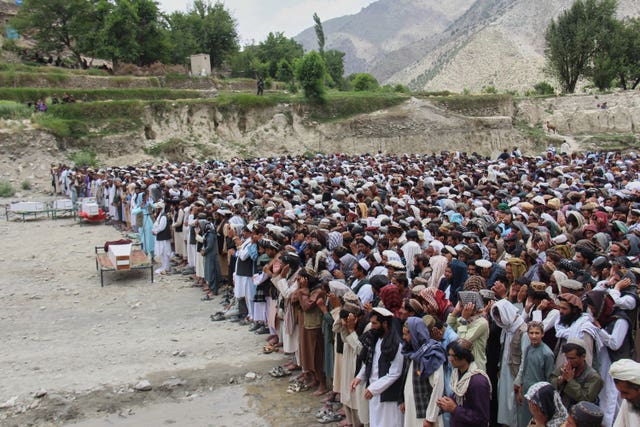
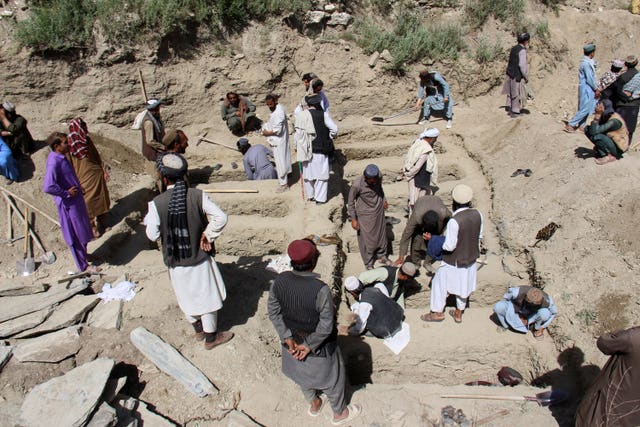
The central fact is uncertainty: no independent organization cited in the available reporting has verified Pakistan’s description of the targets or its claim that 28 militants were killed. Nor has an independent investigation confirmed the Taliban’s civilian casualty account. Images from earlier attacks illustrate the human setting but are not evidence of what happened on September 21.
Why this matters
The immediate casualties are only one part of the story. The strikes test whether Pakistan and Afghanistan are returning to a cycle in which militant attacks inside Pakistan produce cross-border military action, followed by Afghan retaliation or border clashes. That cycle reached its most dangerous point in years in February 2026, when Pakistan’s “Operation Righteous Fury” struck Kabul, Kandahar and Paktia and the two sides exchanged fire across the frontier. Hundreds were reported killed before the confrontation subsided.
Roughly three months of relative calm followed. Monday’s strikes do not by themselves mean that the February conflict has resumed, but they remove the assumption that the pause had become durable. Kabul’s promise of an “appropriate response” also raises the cost of restraint: Afghan leaders now have to defend sovereignty without allowing a limited exchange to widen.
The operation matters inside Pakistan as well. Islamabad is under pressure after two severe security incidents in Khyber Pakhtunkhwa. Pakistani authorities said at least 21 people were killed and more than 100 wounded when a suicide bomber struck a mosque inside a police compound in Kohat on Friday, September 18, followed by gunmen. On Sunday, September 20, six Pakistani security personnel, including two army officers, were killed in a clash in Hangu; Pakistan’s military said eight militants also died. The airstrikes therefore serve a domestic political purpose as well as a claimed counterterrorism one: they demonstrate visible action after losses to militants.
What happened in Kunar and Paktika
The Afghan account identifies three impact areas. In Kunar, the reported target was a house in Patan village in Nurgal district. In Paktika, the reported locations were Rakha and Tor Kundi in Barmal district, where Afghan officials said a shop and an empty house were destroyed. The Taliban reported no deaths in Paktika.
Pakistan’s account describes three militant-linked locations but does not publicly reconcile those target descriptions with the buildings identified by Afghan officials. Islamabad says the sites included a suicide-bomber training center and weapons storage. Kabul says the Kunar dead were civilians. Both claims can be stated; neither can responsibly be converted into an established fact without names, site evidence, geolocated imagery, hospital or burial records, and a fuller operational account.
That gap is not a minor technicality. Whether a destroyed house was a family residence, a militant safe house or both is central to judging the strike’s military value, civilian cost and legality. The available reports do not supply enough evidence to resolve it.
The trigger: Kohat, Hangu and a widening operation
Pakistan has placed the cross-border strikes within a larger counterterrorism campaign. Its Information Ministry said security forces conducted intelligence-based ground operations on Sunday in Kohat, Hangu and Thall, all in Khyber Pakhtunkhwa, killing nine militants and injuring others. Added to the ministry’s claim of 28 militants killed from the air, Pakistan reports 37 militants killed across the ground and air operations.
Those are government figures, not an independently verified battlefield count. They also describe different events: nine deaths in domestic ground operations and 28 in cross-border airstrikes. Combining them may communicate the scale of Pakistan’s campaign, but it should not imply that every person was killed at one site or on the same evidentiary basis.
The Kohat attack provided the immediate political trigger. A suicide bomber struck a mosque inside the police compound before gunmen continued the assault, according to Pakistani authorities. The Hangu clash the next day deepened the sense of an active militant campaign. Pakistan has not publicly presented evidence in the cited reporting proving that the people or facilities hit in Afghanistan directed either attack. Timing and government statements establish Pakistan’s stated rationale; they do not independently establish attribution.
How we got here
The dispute centers on the TTP, an armed group that attacks the Pakistani state and is distinct from, though historically aligned with, Afghanistan’s Taliban movement. Pakistan accuses the Taliban government in Kabul of allowing TTP leaders and fighters to operate from Afghan territory. Kabul denies harboring the group and says Pakistan is shifting responsibility for its domestic security failures.
Neither side has bridged that factual and political divide. Pakistan demands what it calls concrete and verifiable action against militant sanctuaries. Afghanistan rejects Pakistan’s evidence and the use of force on Afghan soil. Without a mutually accepted verification mechanism, every new attack becomes an argument not only about responsibility but about whose evidence counts.
The geography makes that dispute harder to contain. The neighbors share a roughly 2,600-kilometer frontier known as the Durand Line. Pakistan treats it as the international border; Afghanistan has long disputed the colonial-era boundary. Communities, trade routes and armed networks cross terrain that is difficult to monitor. A border whose legitimacy is contested is also a poor foundation for military deconfliction.
In February, Pakistan struck Kabul, Kandahar and Paktia under “Operation Righteous Fury,” and Afghan forces responded across the frontier. Reuters reported sharply conflicting casualty claims that it could not independently verify, as well as exchanges involving airstrikes, drones and artillery. The significance of September 21 is therefore not that one set of strikes is unprecedented. It is that a familiar escalation pathway has reopened after a pause without the underlying TTP or border disputes being settled.
Who benefits, who loses and what critics say
Pakistan’s government and military may gain short-term domestic support by showing that the state answered the Kohat and Hangu attacks. Supporters of the operation argue that a government cannot wait indefinitely when it believes armed groups plan attacks from across the border. If Pakistan’s target claims are accurate, destroying a training center, weapons and suicide-bomber capacity could disrupt future attacks.
The Taliban government can use the strikes to rally opinion around sovereignty, but it also faces pressure to prevent Afghan territory from being used against Pakistan. Retaliation may answer domestic demands while increasing the risk of a larger exchange; restraint may reduce that risk while appearing weak after civilian deaths alleged by its own officials.
Civilians on both sides carry the clearest losses. Families in Kunar report deaths and injuries; communities in Kohat and Hangu are burying victims of militant violence and security clashes. Border closures, artillery exchanges or further airstrikes would add displacement, lost trade and interrupted schooling to the immediate toll.
The TTP may benefit strategically if Pakistan and Afghanistan become less able to share intelligence, manage crossings or coordinate against armed networks. That is a risk, not a proven outcome. It should be evaluated through subsequent attack patterns, recruitment and movement rather than assumed.
Critics of Pakistan’s strikes argue that cross-border force violates Afghan sovereignty, exposes civilians to harm and has not produced a durable reduction in TTP violence. Supporters answer that sovereignty cannot protect groups that launch attacks into another country and that Pakistan has a right to defend its population. The decisive questions are factual: Was each site a lawful military objective? Was the intelligence reliable? Were feasible civilian precautions taken? Did the operation reduce a specific threat? The public evidence cited so far does not answer all four.
What the numbers imply
The reported totals illuminate the scale of the claims as well as their contradictions. Pakistan says 28 militants died in three airstrike locations—an average of more than nine deaths per site if distributed evenly, though the ministry did not provide a site-by-site count. Afghanistan reports three civilians killed and four wounded at one house in Kunar, and no casualties at two Paktika locations. Those accounts describe fundamentally different events, not a small disagreement at the margin.
Pakistan’s combined figure of 37 reported militant deaths includes nine from Sunday’s ground operations and 28 from Monday’s airstrikes. Against that, Pakistani authorities reported at least 21 killed and more than 100 wounded in Friday’s Kohat attack, while Sunday’s Hangu clash killed six security personnel and, according to the military, eight militants. The numerical sequence shows why leaders face pressure to act quickly. It does not show whether airstrikes will reduce the rate of future attacks.
The before-and-after comparison is sobering. February’s clashes killed hundreds according to reporting from the period; Monday’s Afghan-reported toll is far smaller. But February also began as a chain of bounded actions and counteractions. The important indicator is therefore not Monday’s number alone. It is whether the next 72 hours bring another strike, border fire, troop movement or diplomatic intervention.
What happens next: four paths
- A limited Afghan response. Kabul could answer with border fire or another calibrated action intended to demonstrate resolve without opening a sustained war. This would satisfy some domestic pressure but carries the greatest immediate risk of miscalculation.
- A tense pause backed by diplomacy. Both governments could issue hard public statements while allowing military activity to stop. China or another regional actor could encourage deconfliction. This contains the immediate crisis but leaves the TTP dispute unresolved.
- Further Pakistani strikes. Another major attack inside Pakistan, or intelligence that Islamabad presents as imminent, could lead to more cross-border action. Repetition would make the strikes a standing doctrine rather than an exceptional response.
- A return to February-scale fighting. This is not established as the likely outcome, but it becomes more plausible if retaliation kills soldiers, civilian casualty figures rise, or either side attacks major cities and military bases.
The most useful next evidence will be concrete rather than rhetorical: names and identities of those killed; geolocated imagery of the three sites; hospital and burial records; Pakistan’s target intelligence, to the extent it can be released; any Afghan military response; and statements from mediators. Until that evidence arrives, the responsible conclusion is narrow. Pakistan conducted the strikes. Both governments have described their effects. Their casualty and target claims remain contested and independently unverified.
Sources and reporting notes
- ThisDay / Associated Press: Afghan and Pakistani accounts, casualty claims and Hangu context
- The Diplomatic Insight: Pakistan Information Ministry statement on targets, precautions and reported deaths
- Khaleej Mag: cross-border strikes and competing accounts
- Particle: aggregated reporting on the Kunar and Paktika strikes
- Apna Ma TV: Taliban condemnation and promised response
- Reuters: February 2026 Pakistan–Afghanistan escalation and disputed casualty claims
- CNN: background on the February clashes
- Associated Press via Gazette & Herald: file-photo provenance from earlier 2026 strikes
Reporting cutoff: September 21, 2026 at 3:03 PM PDT. The article preserves the distinction between confirmed strike locations and unverified claims about targets and casualties. It is a fixed reporting snapshot and does not update automatically.