War · Middle East · Iran
Pakistan's military said on Friday that it is "cautiously optimistic" about its mediation between Iran and the United States, pointing to two trips to Tehran this month by army chief Field Marshal Asim Munir as evidence of "positivity" — and it declined to rule out Iran one day joining the three-country defence pact signed in Mecca in August.
Track it live: Middle East tracker, live — Signal Post News · Iran war tracker, live — Signal Post News · Live war tracker
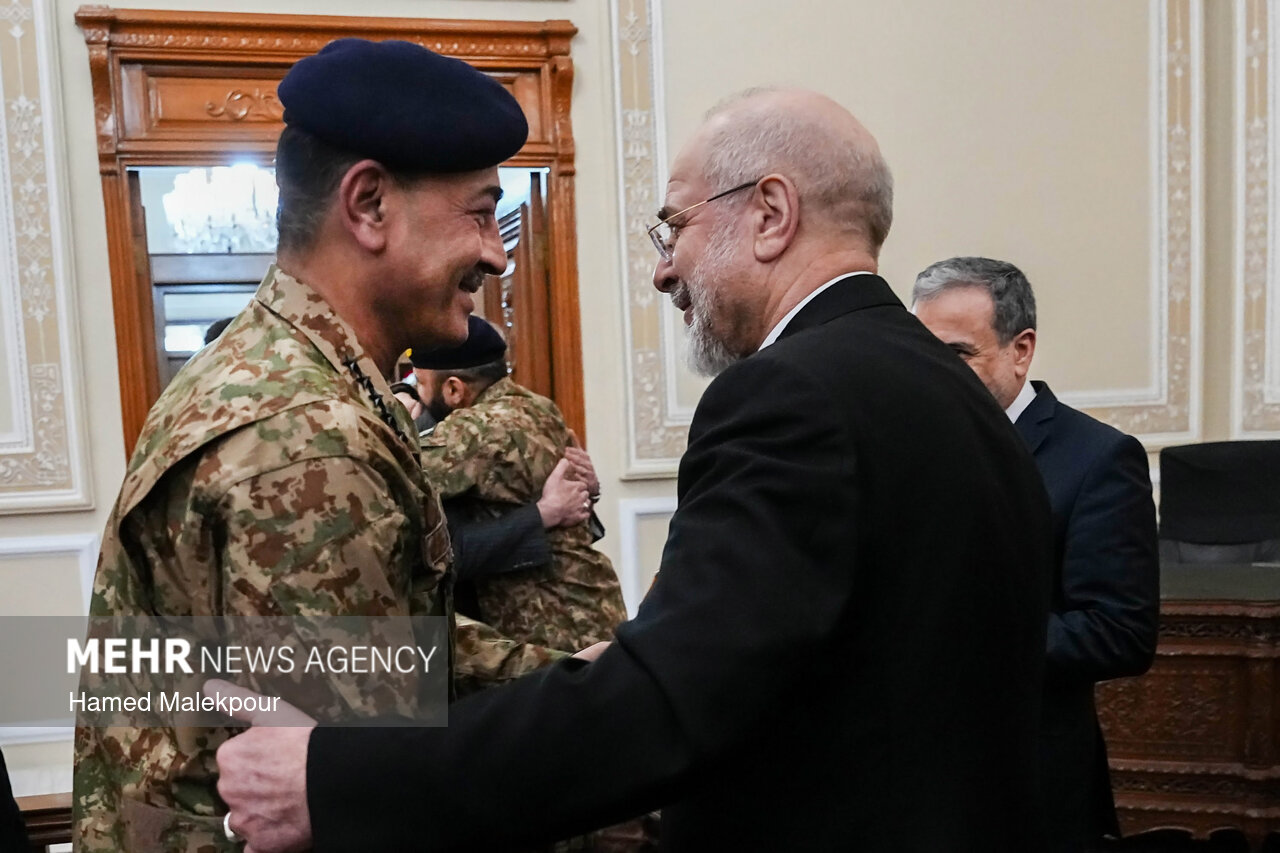
RAWALPINDI — Pakistan's military is "cautiously optimistic" about its mediation between Iran and the United States, its spokesman said on Friday, in the first interview he has given since a high-level delegation returned from Tehran this week — and he rested the case, in large part, on a travel schedule. Army chief Field Marshal Asim Munir, Pakistan's chief mediator for de-escalating the eight-month-old Iran war, has been to Tehran twice this month, most recently on Monday. Asked whether that traffic meant the mediation was working, Lt Gen Ahmed Sharif Chaudhry, the director general of Inter-Services Public Relations, gave Reuters the answer around which the whole interview turned: "Why would the Field Marshal be going twice if it is not for some positivity? So yes, of course."
"The word that we would use is always cautiously optimistic," Chaudhry said. It was a carefully weighted formulation — an affirmation and a hedge in the same sentence — and everything else in the interview was built to the same scale. The spokesman confirmed the tempo of the diplomacy, declined to describe its contents, warned that unnamed "powerful spoilers and detractors" were working against it, and, when asked whether Iran could eventually join the joint defence agreement that Saudi Arabia, Turkey and Pakistan signed in Mecca on August 7, answered that the pact's wording does not bar new members. Al Jazeera reported the same Friday remarks, including the warning about obstruction. No deal was announced, no ceasefire was claimed, and neither Tehran nor Washington has confirmed any new step. What Friday produced was something rarer in this war: a mediator saying, on the record and in his own name, that the channel he runs is alive.
The interview: measuring hope by air miles
The Ahmed Sharif Chaudhry Reuters interview matters first for its timing. It was the spokesman's first since Monday's delegation landed in Tehran — a visit that paired Munir with Saudi Defence Minister Prince Khalid bin Salman and Turkish intelligence chief Ibrahim Kalin, the two other capitals of the Mecca pact, in a joint appearance in the Iranian capital that we reported at the time in our coverage of the Mecca Pact officials' meeting in Tehran. A spokesman who wanted to lower expectations after such a visit had every opportunity to do so on Friday. Instead, he pointed at the calendar: two journeys by the army chief in a single month, the second of them at the head of a three-country delegation, and he invited the inference himself — a field marshal does not keep flying into a war capital for nothing.
Asim Munir Tehran mediation: two trips in a month
The Asim Munir Tehran mediation role is itself a fact worth pausing on. Pakistan's army chief is not a foreign minister, and mediation between a superpower and Iran is not a traditional brief for a soldier. But it is Munir whom Islamabad has placed at the centre of the effort to de-escalate the war, and it is his movements — not a communique, not a draft text — that his own spokesman offered on Friday as the evidence that something is moving. That tells its own story about how this channel works: it is personal, military-to-military and leader-to-leader, conducted in rooms whose contents neither side describes, and legible from the outside only through exactly the kind of signal Chaudhry sent on Friday — who travelled, how often, and in whose company.
Monday's company was the second signal. Munir did not arrive in Tehran alone. He came alongside the Saudi defence minister and Turkey's intelligence chief — the defence establishments of the two other signatories of the August pact — which presented the visit not as a bilateral Pakistani errand but as the Mecca partners appearing in Tehran together. For a mediation effort, that composition does two things at once: it tells Tehran that the channel carries more than one capital's weight, and it tells every other observer that the three pact members are coordinating their Iran diplomacy rather than freelancing it.
What was not said
For everything Chaudhry confirmed, the list of what he withheld is longer, and it is where the interview's real information sits. He declined to say what was discussed in Tehran. He declined to say whether the United States backed the trip — a question that goes to the heart of whether US Iran talks with a Pakistan mediator are a coordinated channel or a regional initiative Washington merely tolerates. And he gave no timeline, no agenda and no description of any document. A US Iran talks Pakistan mediator arrangement, in other words, was affirmed as an activity and left entirely undescribed as a negotiation: no terms, no text, no sequence of concessions was put on the record by the one official who spoke about it on Friday.
That silence is not necessarily evasion; it is also how live mediation usually sounds. Channels that are described in public tend to die in public, and both of the principals in this war have spent eight months demonstrating how quickly a published position becomes a fixed one. But the silence cuts both ways for anyone trying to judge Friday's optimism. The evidence for "positivity" consists of travel tempo and a spokesman's tone. The evidence about substance — what Iran was asked, what it answered, what Washington has authorised its intermediaries to offer — remains, after the interview, exactly as unknown as it was before it. Chaudhry's warning about spoilers belongs in the same column: he said "powerful spoilers and detractors" believe the conflict serves them and are working accordingly, but he named none of them, and this article attributes that warning to no country, government or group, because he did not.
The Mecca pact door
The interview's second news line concerned the pact that framed Monday's delegation. The Mecca Joint Defence Agreement, signed on August 7 by Saudi Arabia, Turkey and Pakistan, treats an attack on any one signatory as an attack on all — the region's first collective-defence commitment of its kind, built outside the Western alliance system. Asked whether Iran could join it, Chaudhry did not say yes, and he did not say no. He said the agreement's wording does not bar new members — a lawyer's answer that leaves the door standing open without anyone having walked through it.
Mecca pact Iran join: what the wording allows
The significance of a Mecca pact Iran join scenario is easier to see from Tehran's side of the table. Iran has fought this war as the region's isolated power: sanctioned, blockaded in its ports, and struck by the United States and Israel, while its neighbours armed, organised and — in August — signed a mutual-defence pact among themselves. An accession clause that does not exclude Iran converts that pact, in Iranian eyes, from a structure built around it into one it could conceivably enter — at a price, presumably, that would begin with ending the war the pact's members are now mediating. None of that was offered on Friday. Chaudhry described a possibility in a text, not an invitation in a negotiation, and Iranian officials have announced no interest in joining. But in a war where every capital's public words are weighed for signals, the Pakistani military's spokesman chose not to close the question when it was put to him directly, and that choice is the news.
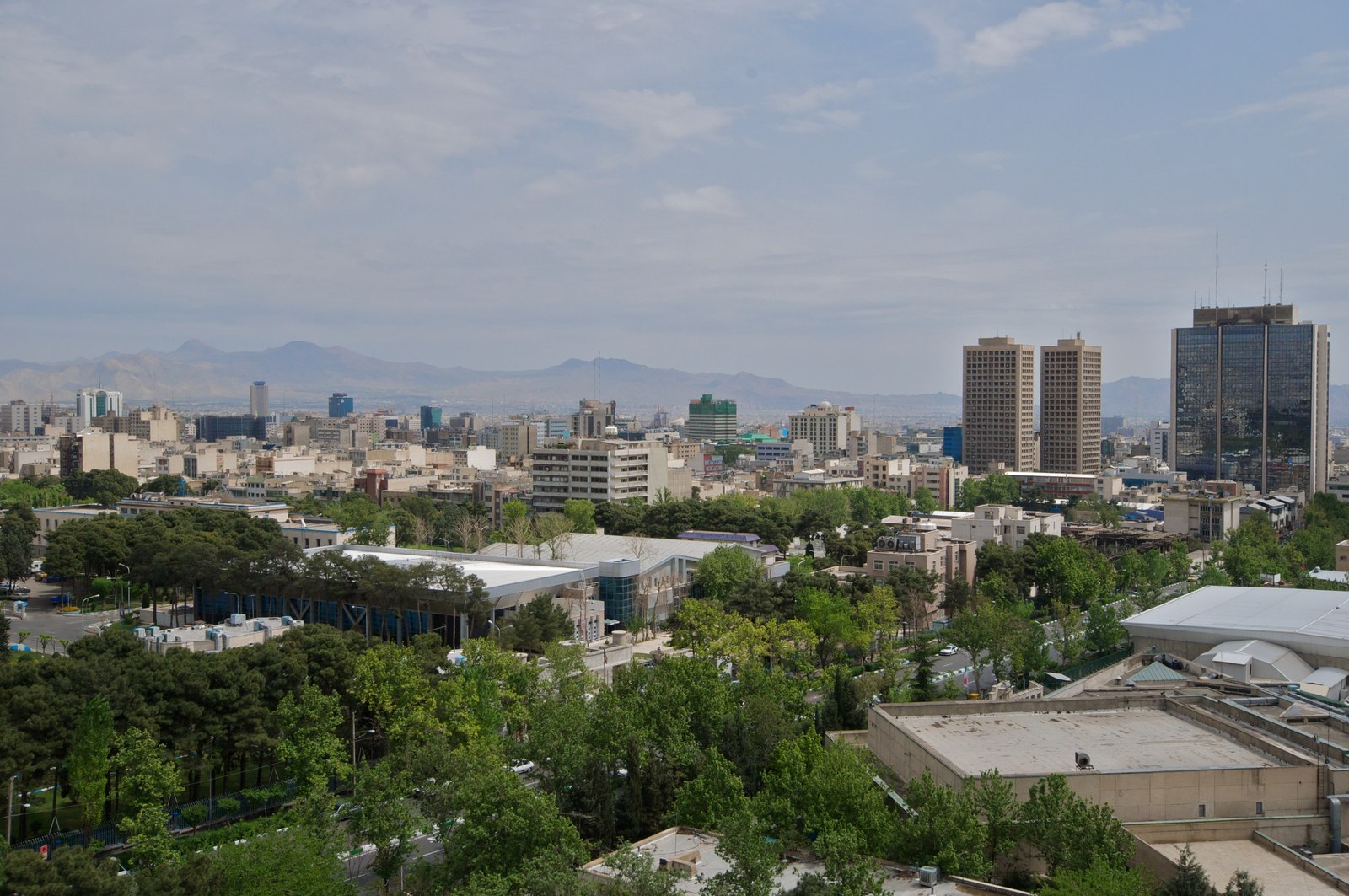
Why this matters
Strip the interview down to its data points and a pattern forms. The war is eight months old. In the last of those months, Pakistan's army chief has travelled to Tehran twice, the second time with the Saudi defence minister and the Turkish intelligence chief beside him. The pact the three visitors represent is eleven weeks old, signed August 7, and its members are already operating it as a diplomatic instrument, not merely a military one. And the mediator's public posture has shifted from process language to a directional claim: not "talks continue," but "positivity" — hedged, immediately, by "cautiously." Mediators do not usually spend credibility on directional claims they expect to be falsified within days, because their only asset is being believed by both sides. The claim is weak evidence about the state of the negotiation, but it is real evidence about the state of the channel: Islamabad believes the channel is producing something worth protecting, and it said so while warning that unnamed actors are trying to wreck it.
The stakes explain the effort. Pakistan shares a long border with Iran, hosts deep economic and sectarian exposure to the war's spillover, and has built its regional position this year on being the capital that can talk to everyone — Washington, Riyadh, Ankara and Tehran alike. A mediated end to the war would be the largest diplomatic achievement in Pakistan's modern history, and it would arrive, not incidentally, through its army chief. Saudi Arabia, for its part, has spent the autumn exposed on a second front, with Houthi attacks on Riyadh's airport drawing Pakistani troops deeper into the kingdom's defence — the subject of our report on Pakistan troops in Saudi Arabia amid the Houthi escalation. For Riyadh, a negotiated settlement in Tehran is also a route out of a two-front autumn. Turkey, the pact's third member, gains standing in every version of events in which the Mecca framework, rather than Washington alone, delivers the region's security architecture.
Set against that is the war's own momentum. In Washington on Friday, President Donald Trump was predicting in a radio interview that the war would be "wrapped up soon" — the subject of our report on Trump's 'wrapped up soon' remarks to KCMO — while his stated condition, a guarantee that Iran never obtains a nuclear weapon, remains the demand Tehran has refused to sequence first. Two capitals, Islamabad and Washington, thus spent the same Friday professing optimism about the same war's end, through different channels, on different evidence. Whether the channels are converging on the same document is precisely what neither side will say.
Background: from the April Islamabad talks to a collapsed ceasefire
Pakistan's mediator role was not improvised this month. In April, Islamabad hosted the war's most ambitious direct encounter: an American delegation led by Vice President JD Vance and an Iranian delegation led by parliament speaker Mohammad Bagher Ghalibaf — the same Ghalibaf whom Munir's Tehran visits have centred on — in talks held on Pakistani soil under Pakistani chairmanship. That April round did not end the war, but it established the architecture that has survived every subsequent collapse: Pakistan as host and courier, Qatar as the drafting intermediary, and the nuclear file as the question every other question waits on.
In June, the architecture produced its one concrete result — a ceasefire — and then lost it: the June ceasefire later collapsed, and the war resumed. That failure is the context in which every current initiative is priced. It is also the explicit target of the week's parallel diplomacy: Al Jazeera reported that Qatari mediators are in Tehran seeking to revive the June ceasefire, carrying a proposal whose reception by Iran is expected to set the next phase. A revived ceasefire would not settle the nuclear guarantee, the blockade or the sanctions — the disputes that collapsed the last one — but it would stop the shooting while those disputes are negotiated, which is why the Qatari channel and the Pakistani channel, running simultaneously into the same capital, matter more together than either does alone.
Revive June ceasefire Iran: the Qatari channel runs in parallel
The Qatari mediators Tehran proposal effort and Munir's visits are formally separate — different mediators, different capitals, different drafts — but they converge on the same Iranian decision-makers in the same week, and Tehran will read them together whether or not their authors coordinated them. The June precedent argues for humility about both: the last ceasefire was achieved and then lost, which means the obstacle to peace in this war has never been reaching a pause. It has been what the pause is for — the sequence in which the nuclear guarantee, the blockade and sanctions relief are exchanged — and on that question Friday's interview, for all its positivity, offered nothing new at all.
More than one angle: who gains, who is exposed, who might spoil
Every actor in Friday's story has a version of events in which mediation succeeds to its benefit, and the interview is best read with those interests on the table. Pakistan gains stature and security on its western border. Saudi Arabia gains relief on two fronts at once. Turkey gains a working example of its post-Western security diplomacy. Iran, if the channel delivers sanctions and blockade relief, gains an exit from an eight-month war without conceding the nuclear file first; the United States, if it delivers the guarantee, gains the war's stated objective without resuming strikes. And the unnamed "spoilers and detractors" of Chaudhry's warning gain, in his telling, from the conflict's continuation — a claim he made without names, evidence or examples, and which readers should hold as a mediator's framing rather than an established fact.
The risks are as concrete as the gains. Reuters noted, in its reporting around the interview, that fighting between Saudi Arabia and Yemen's Houthis has reignited — a second, live conflict that shares the same capitals, the same pact and some of the same commanders as the mediation itself, and that could poison the Tehran channel at any moment if Riyadh's war and Tehran's proxies collide. Domestically, Pakistan's mediation is being run by its military while its politics remain unsettled: Reuters also noted that the federal government suspended the Khyber Pakhtunkhwa provincial government on October 11 and detained its chief minister, Sohail Afridi, over an alleged failure to tackle militancy — context that underlines both why the army, rather than the civilian government, fronts the diplomacy, and how much else is competing for Islamabad's attention. None of that makes the mediation insincere. It makes it fragile, which is what "cautiously" was doing in the sentence all along.
What happens next
Three tests now follow Friday's interview, in order. The first is Tehran's answer to the Qatari mediators: whether the proposal to revive the June ceasefire draws acceptance, a counter-draft or a rejection will show whether the "positivity" Munir's spokesman described has an Iranian signature anywhere near it. The second is Washington: Chaudhry would not say whether the United States backed Monday's trip, and until Washington confirms — in words or in the visible coordination of its own channels — that the Pakistani track carries American authority, the mediation's ceiling stays unknown. The third is the calendar in Washington. Trump has said the United States will not strike Iran before the November 3 midterm elections; after them, by his own framing, every military option returns to the table, and a mediation that has not produced at least a ceasefire by then will be competing with a strike debate rather than with silence.
Beyond those tests sits the longer question Friday opened and did not answer: the pact. If the war ends through the Mecca partners' mediation, the argument that the August agreement is the region's new security core becomes very hard to resist — and the accession question Chaudhry left open, whether Iran could one day sit inside that structure rather than opposite it, moves from a spokesman's hypothetical to an actual agenda item. If the war resumes in force after November 3, the same pact reads the other way: as the alliance Iran was never going to be invited into. The wording, as Chaudhry took care to note, permits either future. The war will choose which one the wording means.
Conclusion
Pakistan's military chose its words on Friday with unusual precision, and they deserve to be taken at exactly face value — no more, and no less. "Cautiously optimistic" is not a promise of peace, and the spokesman who used the phrase paired it with a warning about spoilers, a refusal to describe the talks, and silence about Washington's role. But it is also not nothing. Eight months into a war that has absorbed a collapsed ceasefire, a blockade, reignited fighting on a second front and repeated predictions of both settlement and escalation, the mediator at the centre of the surviving channel has said, on the record, that the travel is happening because something is going right. The next evidence will not come from a spokesman. It will come from Tehran's answer to the Qataris, from Washington's willingness to own the channel, and from what does or does not happen after November 3. Until then, the most accurate description of the peace process is the one Islamabad supplied: positivity, cautiously held.
Sources
Reuters, "Pakistan military 'cautiously optimistic' on Iran-US mediation," Rawalpindi, October 30, 2026: reuters.com — the Chaudhry interview (the "cautiously optimistic" and "positivity" remarks, the refusal to describe the talks or confirm US backing, the unnamed spoilers warning, and the Mecca pact accession answer), the Monday delegation's composition, the reignited Saudi-Houthi fighting, and the Khyber Pakhtunkhwa context.
Al Jazeera's reporting of the same Friday remarks, including the obstruction warning and the Qatari mediators in Tehran seeking to revive the June ceasefire, as relayed by the Barbados Gazette: barbadosgazette.com.
Photos: Hamed Malekpour / Mehr News Agency (CC BY 4.0) and A.Davey (CC BY 2.0), both via Wikimedia Commons, as credited in the captions. Both are file photographs.