War / Middle East — The Mecca Pact Tehran meeting reported early on Monday is, on paper, a modest thing: a conversation about “regional coordination.” In context it is anything but modest. The three countries that signed a collective-defence pact in August — a pact whose first article treats an attack on one as an attack on all — are sending their most senior security figures to the capital of the state they hold responsible for the campaign now raining missiles and drones on Saudi Arabia. Alliances usually talk to an adversary like this for one of two reasons: to deliver a warning, or to find the edge of a deal. Monday’s meeting in Tehran is built to do both at once.
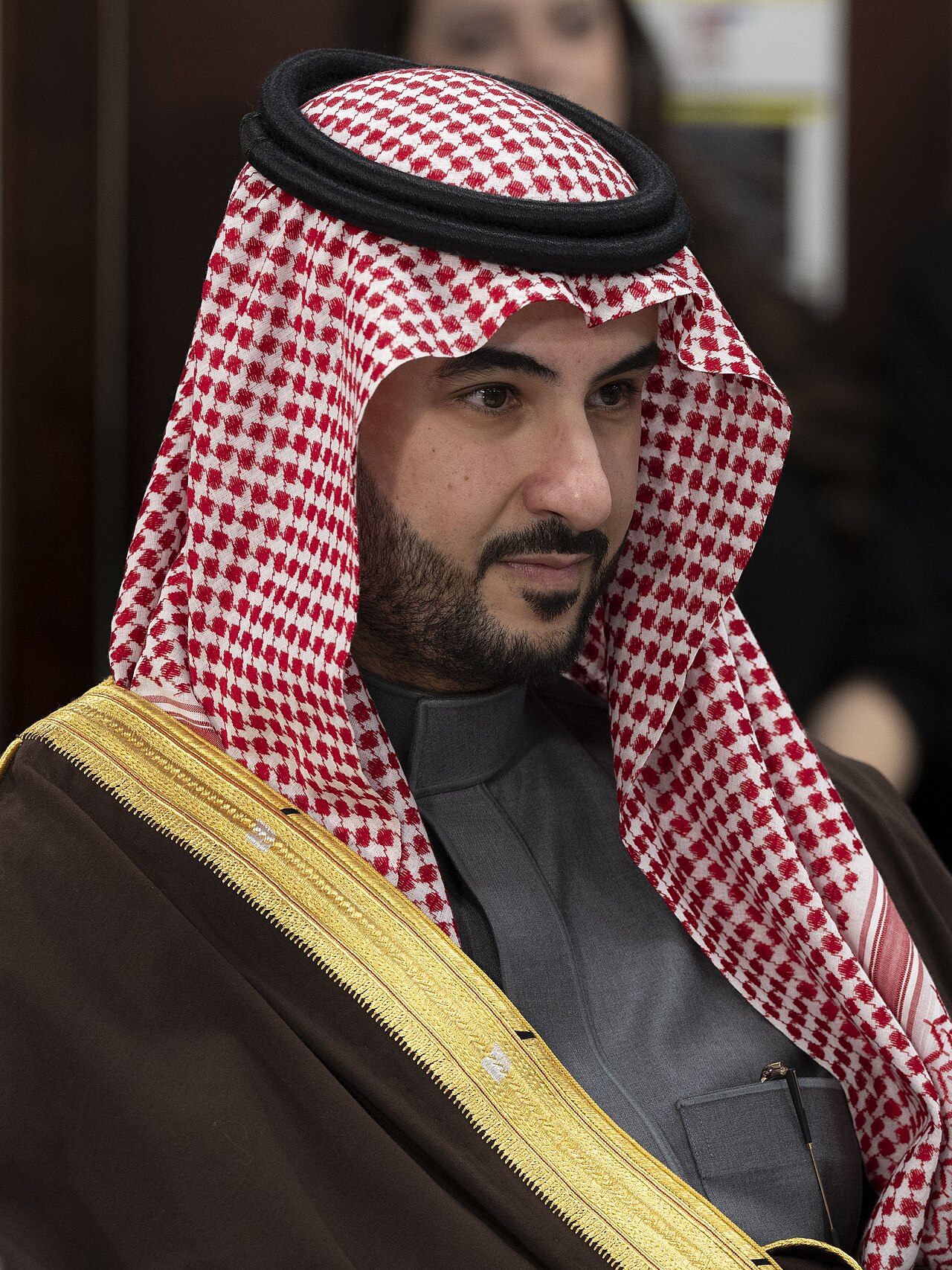
TEHRAN — Top officials from the Mecca Pact countries — Saudi Arabia, Turkey and Pakistan — are set to meet Iranian officials in Tehran on Monday to discuss regional coordination, two people with knowledge of the matter told Reuters, in a report published early on Monday, October 26 (Sunday night in the United States). Saudi Arabia will be represented by its defence minister, Prince Khalid bin Salman, and Pakistan by its army chief, Field Marshal Asim Munir, the people said, speaking on condition of anonymity. The Turkish head of intelligence will also join, one of the people said; Israeli reporting by Walla and Israel Hayom, relayed by NewsInIsrael, names him as National Intelligence Organization director Ibrahim Kalin.
Track it live: Middle East war tracker · Live Global Wars tracker
The planned talks would be the first high-level contact between Iran and all three members of the bloc since Saudi Arabia came under escalating attacks from Yemen’s Iran-aligned Houthis, Reuters reported. Neither government has confirmed the meeting publicly: the Saudi government media office and Pakistan’s military media wing did not respond to Reuters’ requests for comment. That silence is itself part of the story, and this article treats the meeting as what the sourcing supports — planned and reported by two independent chains, not yet acknowledged by any of the four governments involved.
What is confirmed, and what is not
Precision matters here, because a meeting like this invites exaggeration in both directions. What Reuters establishes is narrow: the participants, the city, the day, and the stated subject — “regional coordination.” What it does not establish is an agenda, an Iranian host by name, or any expected outcome. No communique has been promised. No Saudi, Pakistani, Turkish or Iranian official has previewed demands.
What can be said on the record around the meeting is considerable. Saudi Arabia intercepted another wave of missiles and drones on Sunday, Reuters reported, as fighting with the Houthis continued unabated. Ministers from the three pact countries held an emergency meeting in Riyadh earlier this month and agreed to ensure the “rapid deployment” of military forces and capabilities in Saudi Arabia. And the pact itself is no longer theoretical: Pakistan approved it last week, and Turkey’s parliament began efforts to ratify it last week, with that process still under way. The delegation flying to Tehran, in other words, represents an alliance in the middle of becoming real — which is precisely why Tehran has reason to receive it, and precisely why the three capitals have leverage worth testing in person.
A pact built for this war walks into the other capital
Saudi Arabia, Turkey and Pakistan signed the Mecca Joint Defence Agreement in August. Its first article, in a text seen by Reuters, says an armed attack on one member is considered an attack on all, and that the parties shall use “all necessary means” to eliminate threats to one another’s territorial integrity, sovereignty or internationally recognised borders. Signal Post News has tracked the pact from its first committee meetings in Riyadh — see our coverage of the Mecca defence pact’s Riyadh committee meeting — through Turkey’s move to put troops and a parliamentary mandate behind it.
The pact was widely read, including in this newsroom’s analysis, as a deterrent structure aimed at the Iran-aligned network pressing Saudi Arabia: above all the Houthis, whose missiles and drones have struck Saudi airports, ports and oil installations through the autumn, turning a U.S. ally into the pressure point of the wider U.S.-Israeli offensive against Iran. Our reporting on the Houthi strikes on Saudi airports and the Bab el-Mandeb offensive lays out that campaign in detail.
That is what makes Monday’s venue so striking. A collective-defence alliance does not normally make its first joint approach to the capital of the state behind its problem — unless the alliance has concluded that the military track alone is not closing the problem, or that the threat of the alliance is worth more spent in a room than held in reserve. Both readings are available on Monday’s evidence, and the honest analysis holds them together: the visit is a negotiation conducted in the shadow of a deployment. The emergency Riyadh meeting’s “rapid deployment” language is the stick; the flight to Tehran is the offer to talk before the stick is used further.
The three chairs: a prince, a field marshal and a spymaster
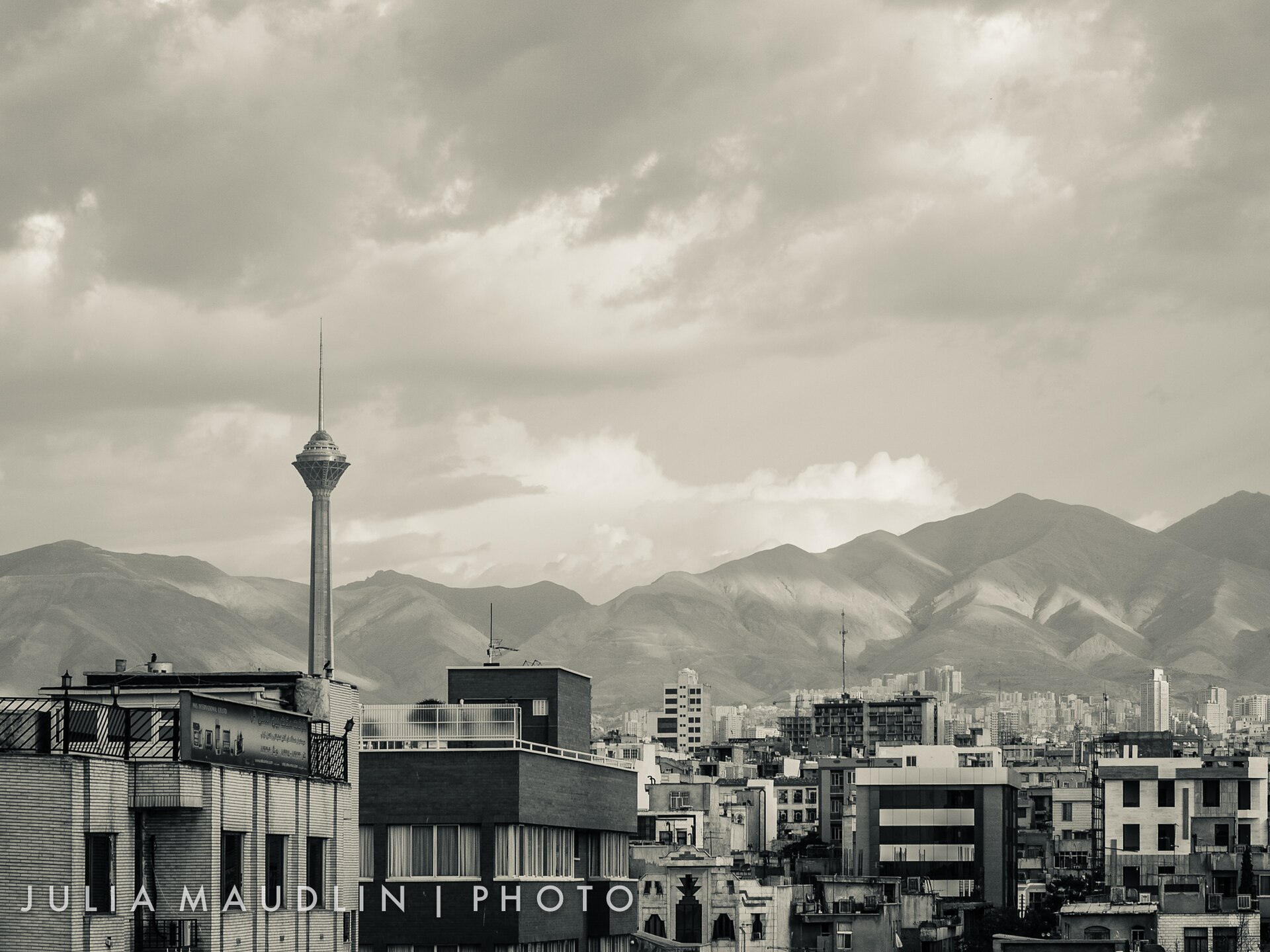
The composition of the delegation is the clearest signal of intent, because each capital is sending the official who owns a different part of the problem. Prince Khalid bin Salman is Saudi Arabia’s defence minister, a son of King Salman and younger brother of Crown Prince Mohammed bin Salman, in the post since September 2022 after serving as ambassador to Washington and, before that, as a Royal Saudi Air Force F-15 pilot who flew operations over Syria and Yemen. He is not a ceremonial envoy: he is the man responsible for the air defence of a kingdom that intercepted another wave of missiles and drones on Sunday, and his presence tells Tehran the conversation is about the attacks, whatever the public label says.
Field Marshal Asim Munir, Pakistan’s army chief, brings a different asset: a working channel. Munir was in Tehran only last week, in a mediation role between Iran and the United States, and left with a blunt answer — no talks with Washington until Tehran’s conditions are met, and no transfer of enriched uranium out of Iran, as we reported in Iran’s rejection of the uranium transfer in the Tehran talks. A mediator who has just been told “no” in that capital and returns within days, this time flanked by the Saudi defence minister and Turkish intelligence, is not repeating the same errand. The second visit changes the arithmetic of the first: what was a Pakistani request becomes a three-country position.
The Turkish chair is deliberately the quietest. Ankara is sending its intelligence chief rather than a minister — named in Israeli reporting as Ibrahim Kalin, who has run the National Intelligence Organization (MIT) since June 2023 after years as President Recep Tayyip Erdogan’s spokesman and senior adviser. Intelligence chiefs are sent when a government wants deniability, technical conversation — about missile supply lines, drone components, and who exactly orders a launch — and a channel that survives even if the public meeting fails. Turkey is also the pact member whose ratification is still moving through parliament, which gives Ankara a reason to demonstrate the pact’s value before its own lawmakers finish voting on it.
Why this matters
The deeper significance of the Mecca Pact Tehran meeting is that it marks the moment the region’s newest alliance stops being a statement about the war and becomes an actor in it. Since August, the pact has functioned as declaratory deterrence: a text, a committee, an emergency meeting, a deployment promise. A joint delegation to Tehran converts that paper into diplomacy with a deadline attached, because everyone in the room knows the deployment track continues whether or not the talks produce anything.
It also quietly reorders who negotiates with Iran. The United States and Israel are conducting the military offensive; Pakistan has been running a mediation channel to Washington’s account; but Monday’s table has no American seat. If the three pact countries can extract even a partial restraint on Houthi attacks — a pause on airport strikes, a stand-down around oil infrastructure — they will have demonstrated a regional security mechanism that works without Washington in the room, a claim Gulf and Turkish officials have made rhetorically for years without a test case. If they cannot, the failure is equally informative: it tells Riyadh that Tehran either cannot or will not move the Houthis, which strengthens the case for the collective military response the pact was written to authorise.
For Iran, the calculation is symmetrical. Receiving the delegation costs Tehran nothing and buys information: how united the three really are, what exactly they are asking, and what they are prepared to do. Refusing to receive it would have confirmed the pact’s founding premise. The risk for Tehran is precedent — a channel in which Houthi attacks are treated as an Iranian responsibility to answer for, which is precisely the framing Iran has resisted while describing the Houthis as an independent Yemeni actor.
Who benefits, who loses
Saudi Arabia gains either way, which is why Riyadh is sending its defence minister rather than a deputy. A successful talk lowers the missile tempo over its airports and oil sites without a Saudi concession anyone can photograph; an unsuccessful one legitimises the pact’s deployment phase internationally, because Riyadh will be able to say it went to Tehran first. Pakistan gains standing as the indispensable intermediary — the only capital talking to Tehran, Riyadh and Washington in the same week — though Munir also carries the risk of owning a failure twice in a fortnight. Turkey gains a ratification argument at home and a seat at a table from which it shapes, rather than watches, Gulf security.
The clearest loser, if the talks gain traction, is the Houthi leadership, whose leverage depends on being an uncontrollable variable. A patron who starts bargaining over your launch tempo is a patron pricing your campaign. The United States faces the most ambiguous outcome: a pact-brokered calm around Saudi Arabia would relieve pressure on oil routes and U.S. forces, but a durable Tehran channel that excludes Washington would complicate any American attempt to set the terms of a wider settlement — including the nuclear file on which Munir was rebuffed last week.
What happens next
Three scenarios cover Monday’s plausible range. The first is a managed statement: the meeting happens, both sides describe “frank” or “constructive” talks on regional coordination, and the test becomes empirical — the tempo of Houthi launches over the following week. Watch the sky, not the communique: a measurable drop in attacks on Saudi airports and energy sites would be the signature of an understanding, even one nobody signs.
The second is a warning delivered and rejected: the delegation presents the pact’s collective-defence terms, Tehran restates that the Houthis act independently, and the meeting ends without a second date. In that case the next move belongs to the deployment track agreed in Riyadh earlier this month, and the ratification votes in Ankara and the force movements into the kingdom become the story to follow.
The third, and in some ways most likely, is a channel kept open: no announcement beyond acknowledgment, a follow-up at intelligence level, and Munir’s shuttle becoming a standing feature. That outcome would still matter. Wars widen through misread signals; a room in which the Saudi defence minister, the Pakistani army chief and the Turkish spymaster can put a proposition directly to Tehran is a structural change in how this war can be turned down — or, if the room empties, in how clearly responsibility for its widening can be assigned. Monday will not end the Houthi campaign. It will tell us who, exactly, Tehran expects to answer for it.
Sources
Reuters, October 26, 2026 — Top officials from Mecca pact countries to meet Iranian officials in Tehran on Monday, two sources say (participants, purpose, Sunday interceptions, Riyadh emergency meeting, pact text and ratification status; Saudi and Pakistani military media offices did not respond to requests for comment). Walla / Israel Hayom reporting, relayed by NewsInIsrael, October 26, 2026 — Senior officials from Saudi Arabia, Turkey and Pakistan to meet Iranian counterparts in Tehran (independent second chain; names the Turkish intelligence chief as Ibrahim Kalin). Background on the pact, the Houthi campaign and Munir’s October 20–21 Tehran mediation is drawn from Signal Post News’ own linked coverage above.