A Pakistan Afghanistan border clash erupted on Saturday in the Upper Kurram sector of Khyber Pakhtunkhwa, where Pakistani security officials say Afghan Taliban forces opened fire in the Taida sector and at Ghozgarhi to help militants cross into Pakistan, and Pakistani troops answered with artillery that destroyed the Taliban's Shipola base camp, hit the Topser border post, and killed several Afghan Taliban personnel near Ghozgarhi. The Associated Press reported exchanges of fire at several locations along the northwestern border. Kabul had issued no public response as of Sunday, and none of the casualty or damage claims from either military has been independently verified.
Pakistan / Artillery over the Durand Line again — a destroyed camp, an abandoned post, and a casualty count only one side is giving
Track it live: follow this conflict and every active war on the Signal Post News Live Global Wars Tracker.
PESHAWAR, Pakistan — A Pakistan Afghanistan border clash flared on Saturday along the frontier in Khyber Pakhtunkhwa province, with Pakistani forces and Afghan Taliban personnel exchanging fire at several locations, the Associated Press reported, as Pakistani security officials and state-run media said troops backed by artillery destroyed Taliban posts. According to the Pakistani account, carried by AP, PTI, Geo News and the state-run Associated Press of Pakistan, the firing began in the Taida sector of Upper Kurram and in the Ghozgarhi border area, where Afghan Taliban forces allegedly opened fire to facilitate the cross-border infiltration of militants into Pakistan. Pakistani officials also told AP that troops killed an unspecified number of Pakistani Taliban militants who were trying to cross into Pakistan from a remote area of eastern Afghanistan during the clashes.
What Pakistan says happened
The Pakistani version, attributed throughout to unnamed security sources, is specific about the reply. The army targeted two named positions in the Upper Kurram sector: the Afghan Taliban's Topser border post and its Shipola base camp. The Shipola camp, the sources said, was completely destroyed. Several Afghan Taliban personnel were killed in the retaliatory fire along the Ghozgarhi border, and Taliban personnel abandoned a border post as the exchange continued. Pakistan TV, summarising the same security-source briefings, added the caveat that matters most: the reported casualties, the destruction of the base camp and the withdrawal from the border post have not been independently verified. No Afghan Taliban statement on Saturday's clash had been published by Sunday, and Kabul has not confirmed any losses.
Islamabad frames the clash as self-defence inside a named campaign. Earlier this month, Pakistan's information ministry said its forces carried out what it called well-planned and calibrated airstrikes on militant hideouts inside Afghanistan on October 1, killing fighters it attributes to Fitna al-Khawarij — the government's term for the banned Tehreek-e-Taliban Pakistan (TTP) — as part of Operation Ghazab lil-Haq, launched in February 2026. The ministry presents Saturday's artillery response as the same policy applied at the border itself: fire that helps militants cross will be answered on the positions it comes from.
What is not verified — and the claims that conflict
Almost everything quantitative about Saturday remains single-sourced. The death toll exists only in the formulation "several" — several Afghan Taliban personnel killed, in the Pakistani telling — with no number, no names and no Afghan confirmation. AP's account, sourced to Pakistani security officials and state media, likewise gives no figure. Some Indian television channels went considerably further in the opposite direction, reporting that at least seven Pakistani soldiers were killed and that a projectile struck a residential area in Pewar, in Upper Kurram. Neither claim appears in the AP or PTI reporting, neither has been confirmed by Pakistani officials, and the Pewar report rests on local accounts relayed second-hand. They are recorded here because they are circulating, and flagged plainly: as of Sunday, they are unconfirmed, and they contradict the only on-record accounts, in which Pakistan reports inflicting losses and taking none that it has acknowledged. The Afghan Taliban, for their part, have historically rejected Islamabad's core allegation — that Afghan soil is being used by the TTP — and have given different accounts of previous Kurram exchanges, including the October 9–10 firefight, in which their 203 Mansouri Corps said Pakistani troops fired first and Taliban forces suffered no casualties.
The numbers behind the escalation
The clash lands on top of the worst month of militant violence Pakistan has recorded in more than a decade. Data compiled by the Pakistan Institute for Conflict and Security Studies (PICSS), an Islamabad-based independent think tank, counted 225 militant attacks across Pakistan in September 2026, up from 199 in August — a 13 percent rise, the third consecutive monthly increase, and the highest monthly total in 12 years. That trend line is the domestic backdrop against which Islamabad's patience argument is made: attacks have risen sharply in Khyber Pakhtunkhwa and Balochistan since the Afghan Taliban returned to power in Kabul in 2021, and the Pakistani state increasingly attributes the rise to sanctuaries across the border. The sequence since September has been one of shortening intervals. On October 1 came the cross-border airstrikes. On October 9–10, in the same Kurram sector, Pakistani forces said they broke up another infiltration attempt and killed 12 TTP and Afghan Taliban fighters, losing one soldier, Naib Subedar Hidayat Aman; the Taliban's corps-level account disputed both the initiation and the toll. Seven days later, the same sector produced Saturday's artillery exchange. A pattern in which each side's retaliation is the other side's provocation, recurring on a roughly weekly cycle in the same district, is how border wars stop being incidents and start being a front.
Why this matters
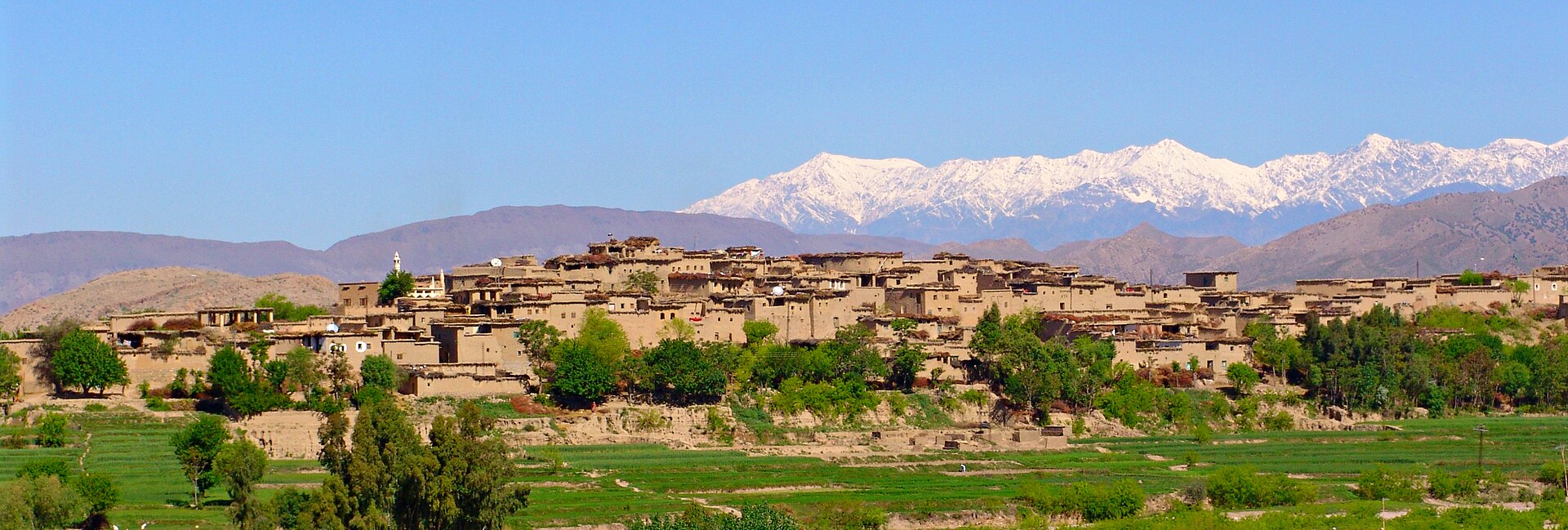
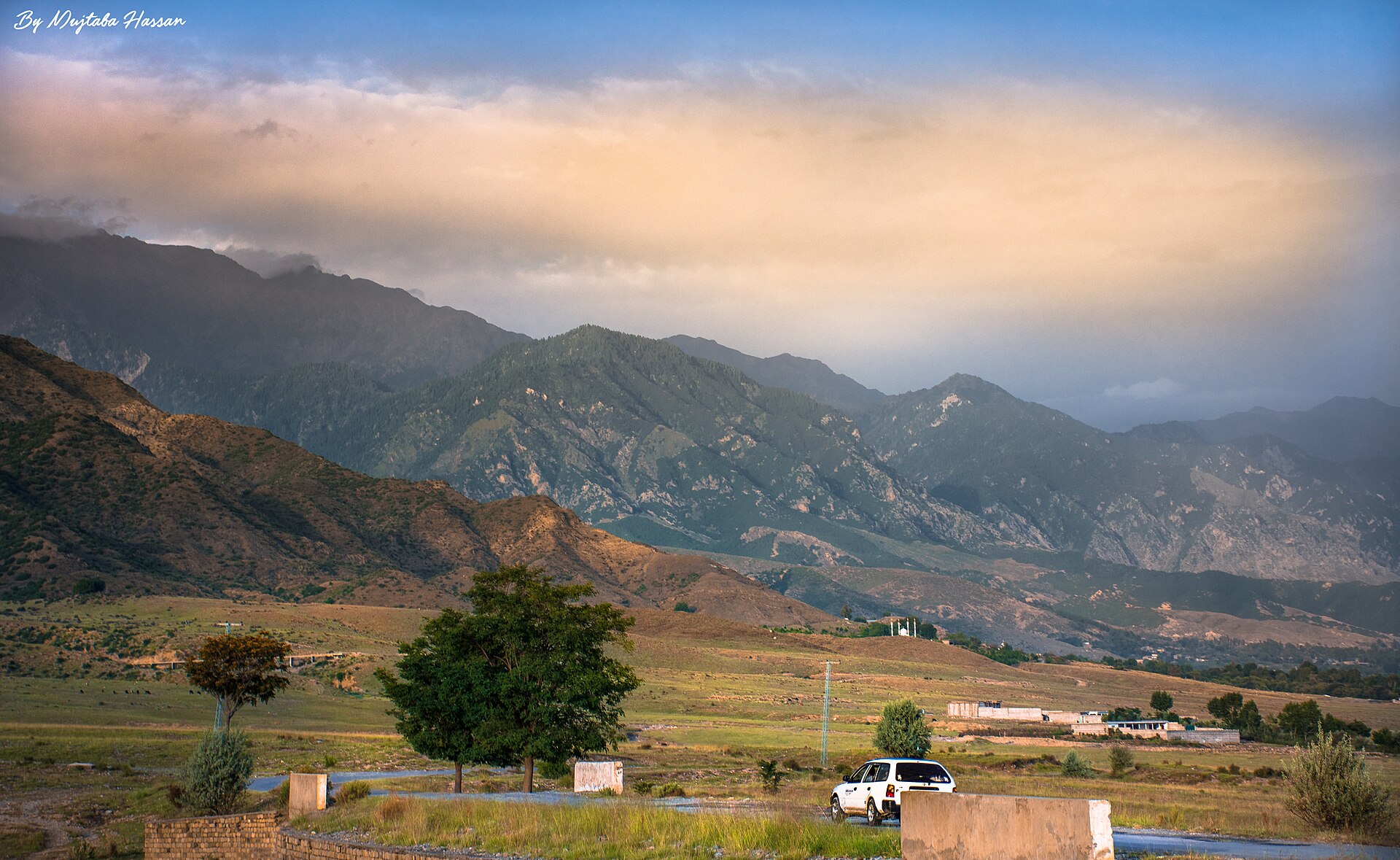
Kurram matters out of proportion to its size because of where it sits and what it connects. The district's administrative centre, Parachinar, lies about 110 kilometres from Kabul — the closest Pakistani city to the Afghan capital — on a neck of territory that juts into Afghanistan's Paktia, Logar and Nangarhar provinces. The Peiwar Pass, just west of Parachinar, is one of the historic invasion and trade routes between the two countries, and the Durand Line here was itself negotiated at a camp at Parachinar in 1893. A live artillery duel in this sector is therefore never only local: it is a signal, readable in both capitals, about how far each government is prepared to let the TTP dispute go. For Pakistan, every unanswered infiltration is read domestically as state weakness in a year of record attacks; for the Taliban, every Pakistani shell on an Afghan post is a sovereignty violation by a neighbour whose recognition of their government remains withheld in practice. Both governments have incentives to answer and incentives not to escalate — Pakistan's military is already stretched across internal counterinsurgency and its eastern border, and the Taliban cannot match Pakistani artillery and airpower in a sustained exchange. That asymmetry is precisely what makes the current pattern unstable: the weaker side's cheapest reply is to tolerate, or quietly assist, the very militant pressure that provokes the stronger side.
Background: a border neither side experiences the same way
The 2,600-kilometre Durand Line, drawn in 1893 between British India and the Emir of Afghanistan, is Pakistan's internationally recognised western boundary and a border no Afghan government has formally accepted — a disagreement that sits underneath every tactical dispute about posts and fencing. The immediate argument, though, is about the TTP: a Pakistani militant movement, ideologically allied to but organisationally separate from the Afghan Taliban, which Islamabad says operates from Afghan territory, and whose attacks inside Pakistan have climbed since 2021. Kabul denies harbouring it and counters that Pakistan's strikes kill Afghan civilians and violate Afghan sovereignty. The two governments agreed a ceasefire in October 2025 after clashes at several border points; Pakistan launched Operation Ghazab lil-Haq the following February anyway, and multiple rounds of talks since have failed to settle the militant-groups question, which both sides describe as the core of the dispute.
Who gains, who pays
The clearest beneficiary of each exchange is the TTP itself, whose strategy depends on keeping the two states that might jointly suppress it at each other's throats; every Pakistani shell that lands on an Afghan Taliban post makes Kabul's cooperation against the TTP less likely, not more. Pakistan's government gains a visible answer to a domestic public watching attack statistics climb, but pays for it in a second live front and in the steady conversion of a policing problem into a state-to-state conflict. The Taliban gain domestically from standing up to Pakistan — a popular posture in Afghanistan — while paying in destroyed infrastructure they cannot easily replace and in the growing precedent that Pakistan will strike Afghan positions at will. The people who pay without gaining anything are the residents of the border districts on both sides: Kurram's roughly 785,000 people, in villages where the posts being shelled stand within range of homes, schools and the roads to Parachinar's markets, and where an unverified report of a projectile in a residential street in Pewar was enough, on its own, to travel around the region's news channels within hours.
What happens next
Three things will decide whether Saturday was another entry in the ledger or a step up the ladder. The first is Kabul's response: silence, a denial, or return fire in another sector would each set a different tempo, and the Taliban's corps-level accounts of earlier October clashes suggest a statement disputing Pakistan's version is likely. The second is whether the mediation channels that produced the October 2025 ceasefire — regional governments with ties to both capitals — are reactivated before the next infiltration attempt, which on the current weekly rhythm is a matter of days. The third is the number neither side can spin: the October attack statistics inside Pakistan. If PICSS records a fourth consecutive monthly rise, Islamabad's incentive to demonstrate action across the border will grow with it, and the Kurram sector — where the posts, the passes and the grievances are all already in place — is where that pressure has been discharged every time so far.
Read more on this site: Pakistan's airstrikes inside Afghanistan · Pakistan shoots down eight Afghan drones as the border war escalates · Emergency rule in Khyber Pakhtunkhwa
Sources
- Associated Press: Pakistani forces, Afghan Taliban exchange fire after militants attempt to infiltrate Pakistan
- PTI via Indian White Paper: several Afghan Taliban personnel killed in alleged retaliatory action along border, Pakistan says
- The News / Geo News: Pakistan Army gives befitting response to unprovoked Afghan Taliban firing in Kurram — security sources, PICSS September data
- Pakistan TV: Army responds to Afghan Taliban firing — claims not independently verified