Pakistan airstrikes Afghanistan
KABUL — Pakistani aircraft struck homes in Afghanistan's Kunar and Helmand provinces overnight, killing nine Afghan civilians, including women and children, and injuring 11 more, according to Afghanistan's Taliban government. Taliban spokesperson Zabihullah Mujahid said three houses were destroyed. Reuters could not independently verify the casualty figures or the description of the targets, and Pakistan's military did not immediately respond to its request for comment.
The reported Pakistan airstrikes Afghanistan mark a sharp renewal of violence between the neighboring states after roughly three months of relative calm. They also reopen the central dispute that has driven the frontier crisis throughout 2026: Islamabad says militants based in Afghanistan launch attacks across the border, while Kabul denies harboring them and argues that Pakistan's militancy problem must be solved inside Pakistan.
What happened in Kunar and Helmand
Mujahid said on X that Pakistani aircraft bombed civilian homes in the Chogam area of Shaltan district in Kunar province and the Safar area of Garmsir district in Helmand province. His account put the combined toll at nine killed and 11 wounded and said the strikes destroyed three homes.
“We condemn this act as an aggression and crime in violation of all accepted principles,” Mujahid said. The language casts the strikes as an attack on Afghan sovereignty and civilians, not a counterterrorism operation. That is Kabul's account. Pakistan had not publicly supplied its own account of the targets, legal rationale, aircraft involved or battle-damage assessment when Reuters published.
Those absences matter. Early casualty figures in cross-border attacks often come from officials aligned with one side and can change as local authorities reach remote areas. No independently verified imagery or strike-site reporting was available in the source material reviewed for this report. The most accurate formulation, therefore, is that the Taliban government reports nine deaths, 11 injuries and three homes destroyed; it is not yet established independently that every victim was a civilian or that the buildings had no military use.
Why this matters
The immediate significance is geographical and political. Kunar sits along the mountainous eastern frontier where Pakistan has repeatedly alleged militant activity. Helmand is far to the southwest. A reported operation spanning both provinces would suggest a wider target set than a single hot-pursuit episode at the border. It would also demonstrate that distance from the frontier does not insulate a province from the Pakistan–Afghanistan security contest.
The strategic problem is that air power can punish or disrupt a suspected network without resolving the political conditions that sustain it. If Pakistan believes Taliban authorities will not act against the Tehrik-i-Taliban Pakistan, strikes offer a visible way to impose costs. But if civilians are killed, the same strikes strengthen Kabul's argument that Pakistan is violating Afghan sovereignty and give Taliban leaders both an incentive and a domestic obligation to answer.
That is why a limited operation can have consequences beyond the damage at two locations. Each side frames itself as responding to the other's failure: Pakistan points to cross-border militant attacks; the Taliban government points to Pakistani military action. When every move is described as defensive, escalation can proceed without either government declaring that it wants a broader war.
How the Pakistan–Afghanistan confrontation reached this point
Islamabad has long accused Kabul of harboring the TTP, the Pakistani Taliban movement that attacks security forces and civilians inside Pakistan. Afghan Taliban officials reject that charge and say militancy is Pakistan's internal problem. The disagreement combines intelligence claims, border control, sovereignty and the contested political meaning of the Durand Line.
During 2026, those arguments repeatedly moved from statements to force. Pakistan has reported operations against militant positions; Afghan authorities have disputed the character of the targets and reported civilian casualties; and both sides have traded claims after border clashes and drone incidents. Our earlier coverage documented competing accounts of earlier strikes in Kunar and Paktika, a disputed casualty toll after the Gulistan border clash, and Pakistan's claim that it struck Afghan drone launch sites.
Qatar and Turkey have helped mediate ceasefires, but the truces have proved fragile. Mediation can stop shooting for a period; it cannot by itself reconcile the core positions. Pakistan wants verifiable action against the TTP. Kabul resists demands it sees as dictated from outside and denies responsibility for violence across the border. Without an agreed mechanism to investigate attacks and monitor armed groups, each new incident returns the neighbors to the same cycle.
Who benefits, who loses and what critics say
Pakistan's security establishment may see coercive value. A cross-border strike signals that alleged militant sanctuary will carry a cost even when diplomatic pressure fails. It can also reassure a domestic audience angered by TTP attacks that the military is willing to act beyond the frontier. That benefit depends on the targets being credible and the operation reducing militant capacity; Pakistan had not released evidence on either point.
The Taliban government can convert the strike into a sovereignty case. Mujahid's condemnation presents Kabul as the defender of Afghan homes against external aggression. If the reported victims are confirmed as women and children, the political pressure on Taliban leaders to retaliate or harden their stance will grow. But a confrontation with Pakistan also exposes Afghanistan to additional strikes and economic pressure it is poorly placed to absorb.
Civilians bear the clearest risk. Families in the named districts face the immediate costs of death, injury and destroyed shelter. Communities on both sides of the frontier also face the longer-term consequences of closed crossings, disrupted trade and a larger military presence if the crisis expands. The people most exposed to the confrontation have the least control over the militant activity, intelligence judgments and retaliation decisions used to justify it.
Critics of the strike will focus on proof and proportionality. Kabul's claim that civilian homes were bombed cannot be accepted untested, but Pakistan's silence leaves no public target list or evidence against which to evaluate necessity. The analytical burden therefore runs in both directions: the Taliban government should permit independent access to the sites, while Pakistan should explain what it believed it was striking and what precautions it took.
What the numbers imply — and what they do not
The reported ratio is nine dead to 11 injured across three destroyed homes. If confirmed, that would indicate a concentrated human toll at residential structures rather than incidental damage far from an intended target. The inclusion of women and children in the Taliban account would sharpen questions about target verification, timing and precautions. None of those inferences proves what the buildings contained or who was present; they explain why independent evidence matters.
The two-province footprint is just as important as the casualty count. Kunar and Helmand are separated by a substantial span of Afghan territory, so the claims describe more than one localized blast. If both locations were part of a coordinated Pakistani operation, planners selected targets in distinct regions. If later evidence narrows or changes that account, the apparent scale of the operation would need to be revised accordingly.
There is also a meaningful zero: Pakistan had supplied no immediate public response. Silence is not proof that the strikes did or did not occur. It means the public record is one-sided at this stage, and any confident conclusion about military objectives, target identity or operational success would outrun the available evidence.
What happens next: three plausible scenarios
Managed de-escalation. The least damaging path would pair public condemnation with quiet contact through Qatari or Turkish mediators. Pakistan could provide a security rationale, Kabul could avoid an immediate military response, and both sides could revive a channel for investigating militant attacks. Previous ceasefires show this is possible; their fragility shows it would be a pause rather than a settlement.
Limited retaliation. Taliban forces or aligned actors could answer at a border post or through another calibrated action intended to restore deterrence without starting a sustained campaign. The danger is misreading. Pakistan might interpret a limited response as proof that stronger pressure is needed, producing another round of strikes and counterstrikes.
A broader cycle. If casualty evidence intensifies public anger, if the TTP mounts another major attack inside Pakistan, or if either side suffers military losses at the frontier, the crisis could expand beyond the two reported strike sites. Border closures, artillery exchanges and repeated air operations would then become more likely, while outside mediators would be trying to halt violence rather than address its cause.
The first indicators to watch are a formal statement from Pakistan's military, independently verifiable imagery or reporting from the two named areas, any change in the casualty toll, and whether Kabul announces a military response. Until those emerge, the established facts remain narrow: the Taliban government has made a detailed accusation, Reuters could not verify it independently, and Pakistan has not yet put its version on the record.
Sources and reporting notes
- Reuters — Taliban government casualty and damage claims, locations, Mujahid's statement, Pakistan's lack of immediate comment and the three-month de-escalation context.
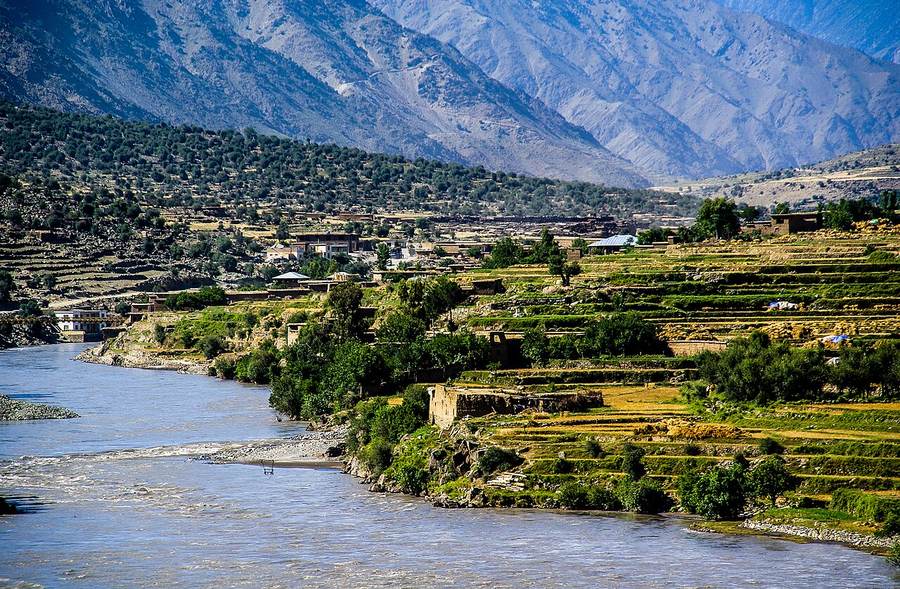
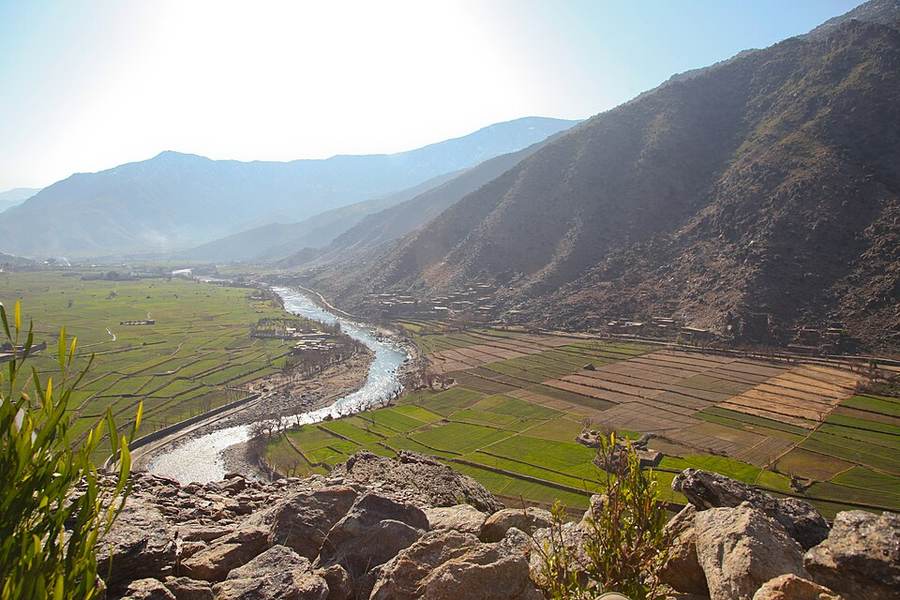
Reporting note: Signal Post News attributes the casualty and damage figures to Afghanistan's Taliban government because Reuters could not independently verify them. The two photographs are file images of Kunar Province and do not depict the strikes.
Signal Post News will update this report if Pakistan responds or independent evidence changes the account.
Back to all stories