Two missile types, one submarine: Pyongyang takes its deterrent underwater

SEOUL, October 15, 2026 — The announcement, carried by KCNA on Thursday morning, was short on technical detail and long on intent. The Missile Administration, Pyongyang said, had test-fired two types of submarine-launched strategic cruise missiles in the East Sea — the Sea of Japan — a day earlier. The stated purpose was threefold: to examine the operational readiness of North Korea's underwater combat systems, to improve the navy's ability to carry out strategic missions, and to demonstrate the reliability of the country's deterrent. KCNA added that the tests had no adverse impact on neighbouring countries.
Track it live: Live global wars and conflicts tracker
What KCNA said — and did not say
Two senior figures observed the launches, according to KCNA: Kim Jong-sik, a first vice department director of the Workers' Party Central Committee and a member of the Central Military Commission, and Jang Chang-ha, the head of the Missile Administration, joined by engineers specialising in the navy's underwater weapons. North Korea's leader, Kim Jong Un, was not reported to have attended — a notable absence that frames the event as a working trial by the organisations responsible, rather than a leader-centred showcase.
Just as notable was where the report appeared. It ran on KCNA, the external-facing state wire, but not in the Rodong Sinmun, the Workers' Party newspaper read inside North Korea. That pattern — announcing a capability to foreign audiences while saying nothing to the domestic one — is a familiar calibration in Pyongyang's signalling: the audience for this test, on the evidence of its own distribution, was in Seoul, Tokyo and Washington at least as much as at home. KCNA did not name the submarine, the missiles, their ranges or their flight times.
Seoul's response — and the submarine analysts identified
South Korea's Joint Chiefs of Staff responded in the measured form it reserves for this class of weapon. It said it was aware of the activity; the JCS does not normally announce North Korean cruise-missile launches at all, reserving its public alerts for ballistic missiles, which are banned under UN Security Council resolutions in a way cruise missiles are not. That distinction explains much of the muted official reaction: a submarine-launched cruise missile test is a significant military development that breaches no resolution on its face.
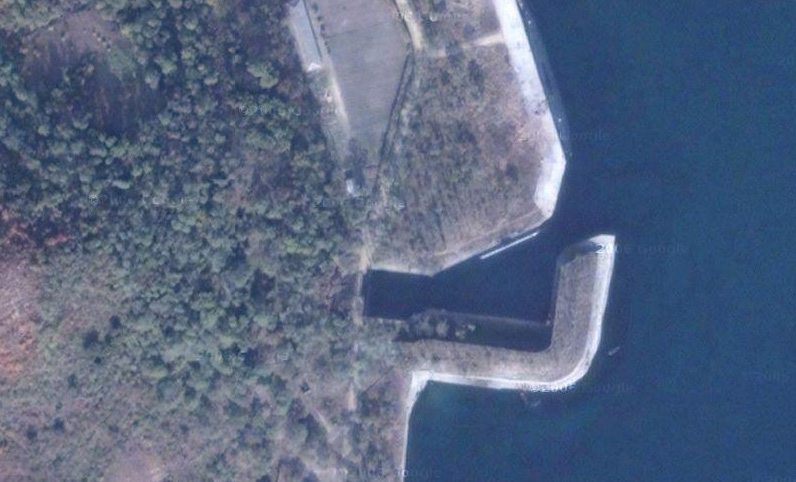
The identification of the launch platform is an analyst assessment, not a confirmed fact, and it should be read that way. Analysts cited by the Korea JoongAng Daily believe the launches came from the Hero Kim Kun Ok, the roughly 3,000-ton submarine unveiled in September 2023 as North Korea's first tactical nuclear attack submarine. If they are right, these were the boat's first public missile launches in the two years since its unveiling. The same assessments hold that the two missile types were fired from different parts of the submarine — one from vertical launch tubes and one from horizontal, or diagonal, tubes — and that the pair may have comprised a longer-range type and the Pulhwasal-3-31, a cruise missile North Korea has previously presented as nuclear-capable. None of that has been confirmed by Pyongyang or by Seoul.
Why low and slow is hard to stop
Cruise missiles pose a different problem from the ballistic missiles that dominate headlines about North Korea. A ballistic missile arcs high into space on a predictable trajectory, bright on radar from the moment of launch. A cruise missile flies low — at around 100 metres, according to the reporting on this test — powered, manoeuvrable and tucked beneath the radar horizon for much of its flight. Ground-based radars see it late; interceptors get a short engagement window; and a launch from a submarine removes even the warning that a known land launch site provides. Firing two types, potentially with different ranges, speeds and approach paths, compounds the problem for any defender trying to allocate interceptors in real time.
That is the technical core of this test. North Korea already fields land-launched cruise missiles. Moving them onto a submarine — and demonstrating two launch methods from the same hull — is about survivability and surprise: a deterrent that can be hidden at sea is harder to destroy pre-emptively, and a weapon that arrives low and late is harder to intercept. Whether the Hero Kim Kun Ok is yet an operational warship, rather than a trials platform working up toward service, is the open question analysts will now debate; a submarine photographed launching missiles is a milestone, but it is not the same thing as a deployed patrol capability.
Context: a crowded October on the peninsula
The test did not arrive in a quiet month. On September 21, a landmine explosion near the Demilitarized Zone injured three South Korean soldiers. Last week, South Korea test-fired its first domestically developed hypersonic missile. Earlier in October, North Korea announced a test of an intermediate-range hypersonic missile, covered by Signal Post News here. And on the same day as the submarine launches, US reconnaissance aircraft were tracked over the peninsula, according to AJP. Each side, in other words, is currently demonstrating capabilities at the other, in sequence.
The submarine test also lands in the middle of a live argument about South Korea's own underwater future. Seoul has been debating nuclear-powered submarines — the subject of our report on President Lee's Armed Forces Day remarks, here — and Pyongyang's message in putting cruise missiles to sea is aimed at that debate as much as at any fleet: that the underwater competition on the peninsula is already under way, and North Korea intends to be seen competing in it. It follows this month's volley of ballistic missiles, which flew some 900 kilometres and which we reported here.
Why this matters
Sea-based weapons change deterrence arithmetic because they change what an adversary must assume. Land-based missiles sit at known coordinates; a submarine at sea has to be found before it can be struck, and finding submarines is among the most resource-intensive tasks in warfare. If North Korea can pair that concealment with cruise missiles able to fly low beneath radar coverage, the warning time available to South Korean and Japanese defenders shrinks from tens of minutes to, in the worst case, very little. That does not require the Hero Kim Kun Ok to be a finished, quiet, ocean-going deterrent patrol boat today. It only requires the programme to be visibly progressing — which is what a two-type, two-launch-method test, announced on the external wire, is designed to show.
There is also a diplomatic read. A report issued only through KCNA, stressing that neighbouring countries were unharmed and that the purpose was readiness and deterrence, is a signal built to be noticed abroad and deniable in tone — firm, but carefully short of provocation theatre like a leader-attended launch or a missile flown over Japan. Pyongyang is advertising a capability while keeping the escalation dial in its own hand.
What happens next
Expect the assessment battle to come first: South Korean, Japanese and US analysts will mine KCNA's photographs for the submarine's identity, the missile types and the launch geometry, and Seoul may say more once that work is done. Watch, too, for further cruise-missile firings to certify the system — and potentially tests of submarine-launched ballistic missiles from the same platform, which would raise the stakes considerably. And watch the Rodong Sinmun test: if a future launch is reported to North Korea's own public, the signalling will have shifted from foreign deterrence to domestic mobilisation. For now, the verified core is narrow — two types of submarine-launched cruise missiles, fired on October 14, announced on October 15 — and the significance lies in what was demonstrated: North Korea's deterrent is learning to swim.
Sources: Korean Central News Agency report, Oct. 15, 2026, via Aju Press (AJP) and Korea JoongAng Daily (Yonhap), Oct. 15, 2026; France 24 / AFP, Oct. 15, 2026. Related on Signal Post News: North Korea fires multiple ballistic missiles 900km · South Korea's nuclear-powered submarine debate · North Korea's intermediate-range missile test from Wonsan.