South Korea nuclear-powered submarines
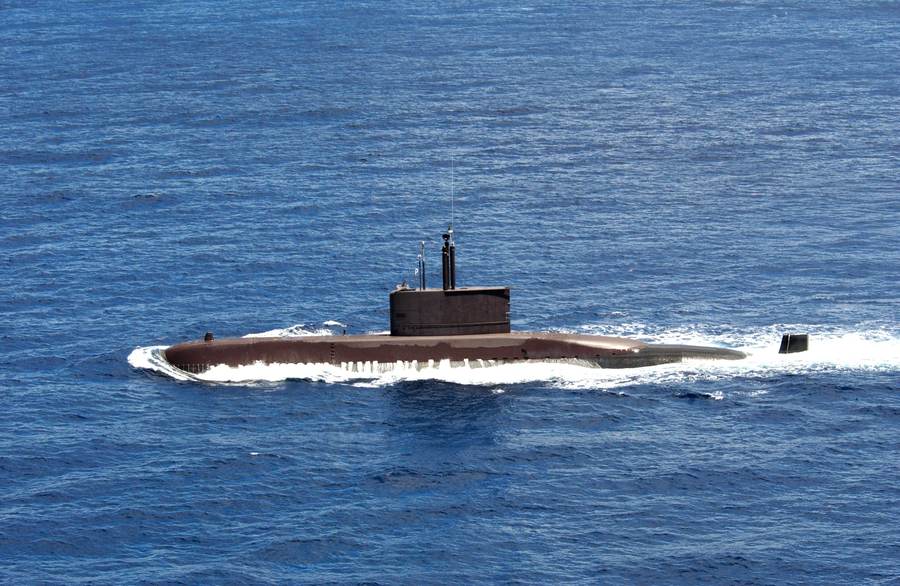
South Korean President Lee Jae Myung used Armed Forces Day to make two promises that sound contradictory but form one strategy: he invited North Korea back to dialogue and committed Seoul to building nuclear-powered submarines with domestic technology by the mid-2030s. The first Jang Bogo N boat is expected to become operational late in that decade. In the same address at the military headquarters in Gyeryong on Thursday, October 1, Lee renewed his push for South Korea to regain wartime operational control from the United States and sketched a force built around artificial-intelligence command systems, laser interceptors and a stronger three-axis defense.
The speech was not a retreat from deterrence disguised as diplomacy, or a weapons announcement padded with conciliatory language. It was a statement of how Lee wants South Korea to operate: strong enough to make independent military decisions, technologically capable enough to watch North Korea from beneath the sea, and politically confident enough to offer talks without looking as if it were asking from weakness.
The speech: dialogue and deterrence in one address
Lee's message to Pyongyang was direct. “I hope that the North joins us now on the path of restoring trust and resuming dialogue, following a long interruption,” he said, according to Reuters. He also called for “practical measures to reduce military tensions.” The invitation came with no suggestion that Seoul would slow its defense buildup while it waits for an answer.
Lee pledged that South Korea would build nuclear-powered submarines “with our own technology” by the middle of the next decade. He said the military would become a “smart, elite and strong military,” supported by AI-based command-and-control, high-energy laser systems capable of intercepting missiles and an upgraded three-axis architecture designed to detect, pre-empt and retaliate against North Korean attacks.
The other sovereignty theme was command. Lee called the transfer of wartime operational control, or OPCON, a “half-century dream.” South Korean forces remain under a U.S.-led combined command in wartime, even though Seoul regained peacetime command in 1994. By invoking Park Chung Hee's call to “begin with even a single rifle with our own hands” and former President Roh Moo-hyun's emphasis on military self-reliance, Lee placed the submarine program inside a longer political argument: an alliance can remain essential without making autonomy permanently conditional.
Why this matters
If Seoul completes the project on its present schedule, it would set a first-of-its-kind precedent for a state without nuclear weapons: operating indigenously built, nuclear-powered submarines while remaining under international safeguards. Australia's future AUKUS boats are expected later. Brazil has pursued its own nuclear-submarine program for years. South Korea's compressed timetable and alliance-based fuel arrangement make its case especially consequential for the non-proliferation system.
Nuclear propulsion is not the same as nuclear armament. Seoul says these boats will carry conventional weapons. Their strategic advantage is endurance: unlike diesel-electric submarines, a nuclear-powered boat does not need to surface or snorkel frequently to recharge batteries. It can remain submerged for months, move quickly over long distances and attempt to shadow North Korean ballistic-missile submarines from the moment they leave port. That does not make detection easy; it makes persistent pursuit more plausible.
The combination of olive branch and arsenal sends two messages. To Pyongyang, Lee is saying that talks are available but time will improve South Korea's ability to hold North Korean forces at risk. To Washington, he is saying the alliance should enable a more capable partner rather than preserve dependence as an end in itself. OPCON transfer is the sharper test. It would change command arrangements at the moment a war begins, touching planning, intelligence, force posture and the political burden of escalation. Calling it a dream does not resolve those operational questions, but it makes delay politically more expensive.
How we got here: from Project 362 to Jang Bogo N
The idea is older than the current crisis cycle. Under Roh Moo-hyun in 2003, South Korea explored a nuclear-submarine requirement under the secretive Project 362. The effort was interrupted, revived and debated for more than two decades as governments weighed cost, reactor design, alliance concerns and nuclear safeguards. On May 26, 2026, Seoul formally launched the Jang Bogo N program, according to USNI News.
The reactor plan matters as much as the hull. South Korea intends to use low-enriched uranium containing less than 20% uranium-235, not the weapons-grade fuel used in U.S. and British naval reactors, which is generally enriched above 90%. Washington approved support for fuel under the two countries' 2015 Atomic Energy Agreement on peaceful uses. That choice narrows proliferation risk but does not erase it: naval fuel arrangements can remove material from normal inspection for long periods, so the safeguards model will be watched far beyond Korea.
On September 29, South Korea's Cabinet approved a special act for the program and sent it toward a National Assembly vote expected this year. President Donald Trump had said after meeting Lee in Gyeongju that a South Korean nuclear submarine would be built at Hanwha Philly Shipyard in Philadelphia. Seoul's emphasis on domestic technology and construction now puts the division of work at the center of alliance talks: a political announcement about Philadelphia is not yet a shipbuilding plan.
The immediate security backdrop was unusually sharp. The previous day Lee attended the launch of the ROKS Daeho Kim Jong Seo, South Korea's sixth Aegis destroyer. A mine blast in the Demilitarized Zone the previous week wounded three South Korean soldiers. The United Nations Command concluded that an armistice violation occurred; Kim Yo Jong rejected the findings as fabrication and warned of retaliation. Signal Post News has separately covered the initial South Korean-UN investigation and Pyongyang's rejection of the armistice finding.
Who wins, who loses
The Republic of Korea Navy is the clearest winner. Nuclear propulsion would add a layer of undersea persistence its current fleet cannot match. Korean shipbuilders and reactor specialists also gain a generational industrial program, with knowledge that could spill into naval engineering, sensors and advanced manufacturing. The Korea JoongAng Daily described the announcement as part of Lee's broader self-reliant-defense push.
The trade-offs begin inside the alliance. U.S. officials who want South Korea to carry more of the regional defense burden may welcome the capability, while alliance managers could worry about an autonomous platform whose patrols, targeting and crisis signaling require exceptional coordination. The argument will not be simply “more capability is good” versus “autonomy is bad.” It will be about which decisions are integrated, which are sovereign and what happens when those categories collide in a fast-moving crisis.
North Korea will read the program as escalation regardless of Seoul's conventional-warhead pledge. Kim Yo Jong's warning after the mine inquiry showed how quickly a technical finding can become a retaliation threat. A quieter loser may be strategic ambiguity: once a South Korean nuclear-powered boat begins patrols, Pyongyang and Beijing will plan around it, and Seoul will have to explain missions clearly enough to reduce miscalculation without surrendering operational secrecy.
Non-proliferation experts will scrutinize fuel production, accounting and inspection. Japan will watch for both military and industrial reasons. Tokyo faces the same North Korean missile threat, operates a sophisticated conventional submarine fleet and has deep civilian nuclear expertise. Even without copying Seoul, it will reassess what South Korea's program changes in Northeast Asia.
What the numbers say
South Korea now operates 21 conventional submarines: nine KSS-I Jang Bogo-class boats, nine KSS-II Son Won-il-class boats and three KSS-III Dosan Ahn Chang-ho-class boats. The newest KSS-III submarines carry vertical launch systems for Hyunmoo submarine-launched ballistic missiles. Jang Bogo N does not replace that fleet overnight; it creates a new class at the top of it.
The schedule is ambitious. A May 2026 program launch and a first operational boat in the late 2030s imply roughly nine to 12 years from formal start to service, depending on the delivery date. That span must cover reactor engineering, fuel qualification, detailed design, construction, harbor testing, sea trials, crew certification and safeguards arrangements. The figure is a warning against treating a presidential pledge as a near-term capability.
The enrichment thresholds also clarify what this is and is not. Fuel below 20% uranium-235 is low-enriched uranium. Weapons-grade material is generally above 90%. The gap is enormous, but naval propulsion still creates a sensitive stock and a monitoring challenge. Australia's AUKUS pathway relies on sealed reactor units and is expected to field its domestically built SSN-AUKUS boats later than Seoul's target. Brazil, another non-nuclear-weapons state with a long-running nuclear-submarine effort, illustrates how technically and institutionally demanding the journey can be. The comparison is less a race than a reminder that schedules are strategy until steel, reactors and trained crews make them real.
What happens next
The first test is legislative. The National Assembly must consider the special act this year, defining funding, oversight and institutional authority. A program measured in decades needs protection from annual budget turbulence, but the same protection can weaken scrutiny if lawmakers treat national prestige as a substitute for cost control.
The second test is international. Seoul, Washington and the International Atomic Energy Agency will need a safeguards arrangement that allows legitimate naval operation while providing credible assurance that fuel is not diverted. Details of U.S. fuel support — enrichment, fabrication, custody, replenishment and accounting — will determine whether other countries view the agreement as a disciplined exception or a template to exploit.
The third test is North Korea's response. Pyongyang could reject talks and accelerate its own submarine, missile or mine operations; issue demonstrations without changing its force posture; or separate military condemnation from limited diplomatic contact. The recent DMZ blast makes a rapid confidence-building breakthrough unlikely, but not impossible. Practical tension-reduction steps could begin with notification, hotlines and clearer border procedures rather than a grand summit.
Lee's wager is that self-reliance gives diplomacy weight. That can be true, but only if capability is paired with disciplined signaling. Nuclear propulsion will not by itself make the peninsula safer, and an invitation to dialogue will not by itself make a massive naval program less threatening. The success of this strategy will depend on whether Seoul can turn both halves of the speech into policy: stronger enough to deter, transparent enough to reassure, and patient enough to keep an exit from escalation open.
Sources: Reuters; Korea JoongAng Daily; USNI News; Yonhap Infomax.