Indonesia Prabowo protests: Jakarta deployed about 9,500 police officers across the capital on Tuesday, October 20, as students from at least nine universities marched to mark exactly two years since President Prabowo Subianto took office — with a new SMRC poll putting his approval at 44.5 percent, its lowest level yet, down from 81.2 percent in November last year.
World / Students gave the anniversary a verdict of their own — five demands, a Greenpeace banner over the Bundaran HI, and a president whose poll numbers have halved
What happened in Jakarta on Tuesday
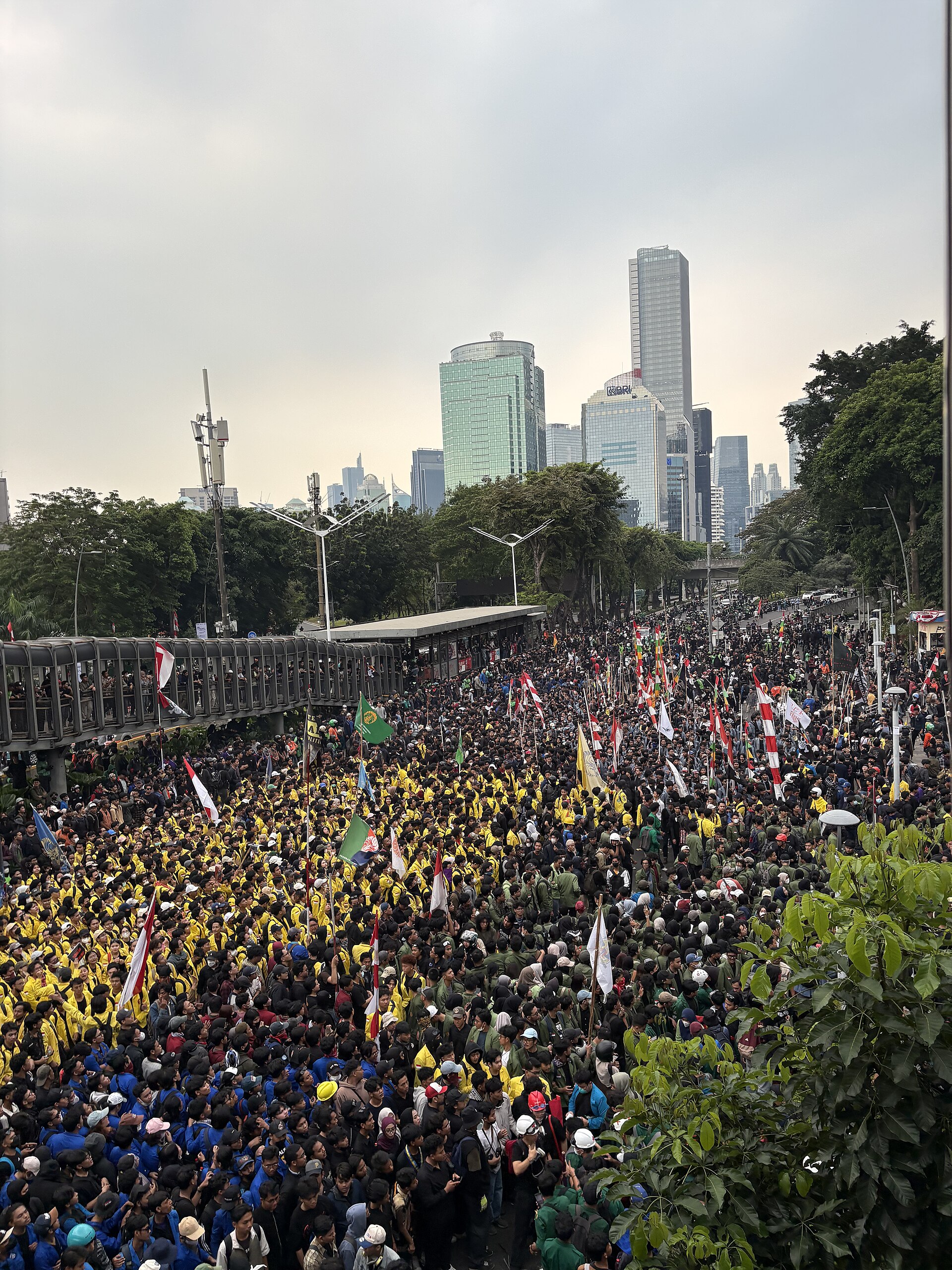
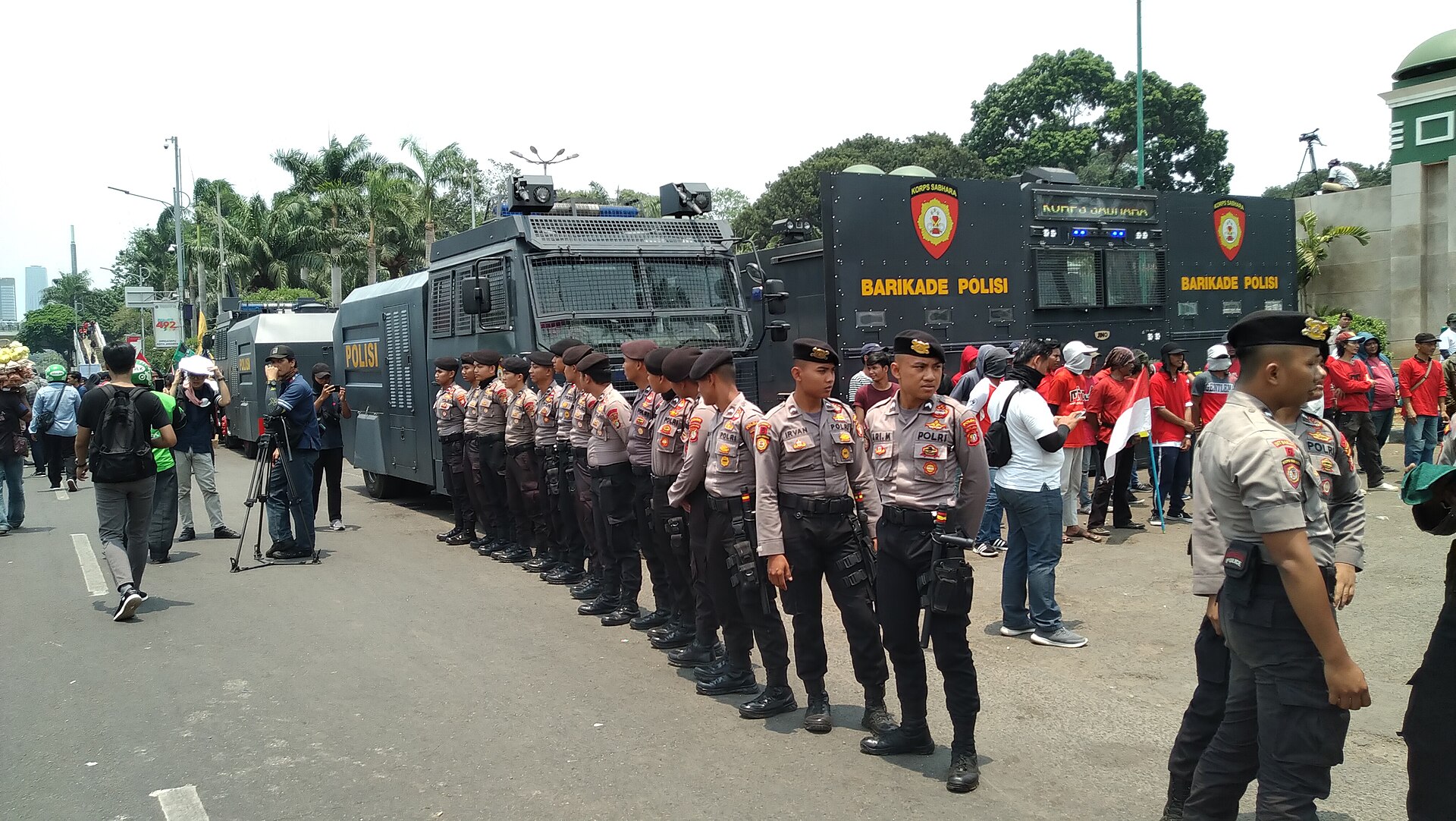
More than 9,000 police officers — about 9,500 in the Jakarta police's own count — were deployed across the capital on Tuesday to handle protests marking Prabowo's two years in power, city police spokesperson Budi Hermanto told reporters. Students from at least two universities were confirmed by police to be staging actions at several spots in Jakarta; the organising alliance put the participating campuses at nine or more, including the University of Indonesia, the Bandung Institute of Technology, Padjadjaran University, Diponegoro University, Gadjah Mada University and Airlangga University.
The actions, organised by a student alliance calling itself Komite Sadar (Selamatkan Daulat Rakyat — "Save the People's Sovereignty"), began in the morning around the Proclamation Monument and the Farmers Monument in central Jakarta, with the State Palace and the DPR/MPR parliament complex as the announced destinations. Jakarta traffic police under Senior Commissioner Firman Darmansyah prepared situational diversions around Monas, the Sudirman–Thamrin corridor and the parliament area, warning of congestion as far as Senayan and Semanggi and urging commuters onto alternative routes.
Greenpeace activists added the day's most photogenic moment, draping a banner on a major Jakarta monument — reported at the Bundaran HI statue in the city centre — reading "deal with the climate crisis, lower cost of living," while joint police, military, fire and public-order officers stood guard at the site.
The five demands
The alliance published five demands, and their spread is the story: this is no longer a protest about one policy. First, declare the forest and land fires — and the floods — a national disaster, guarantee and restore the health of affected residents, and prosecute the companies blamed for the burning while revoking their permits. Second, fix economic governance and restore market confidence, after a stock-market rout and a weakening rupiah that the University of Indonesia's student body called a signal of "the national economy's fragility." Third, end restrictions on freedom of expression. Fourth, eradicate corruption, collusion and nepotism. Fifth, cut the cost of education, health care and public services and make access fairer.
The language from the campus leadership was unusually final. "Why evaluate two years of a failed government?" the University of Indonesia student executive chair, Yatalathof Imawan, said in confirming the action would go ahead alongside other universities and civil-society coalitions. "We are acting because there is no hope left." Police, for their part, framed the day in the language of service: Hermanto said officers were there for "those expressing their aspirations" as well as everyone else, under a "Police Together with the Community" banner, and reminded the public that expressing opinions is a right protected by law.
Why this matters
Start with the arithmetic of decline. Prabowo won the presidency with a huge majority and, by SMRC's surveys, held an approval rating of 81.2 percent last November — the kind of number that lets a government spend political capital almost at will. The same pollster now records 44.5 percent, the lowest of his presidency, after a steady fall since late last year. A drop of nearly 37 points in eleven months is not drift; it is a verdict forming. And the grievances are converging from directions that rarely align: students angry about fires and free expression, investors rattled by a market rout — Indonesia's stocks have already suffered an MSCI-driven panic and an 11 percent plunge covered on this site — and households squeezed by the cost of living that Greenpeace wrote across the Bundaran HI.
The deployment itself is a data point. A government confident in its standing does not need 9,500 officers for an announced student march; a government scarred by memory deploys them anyway. Indonesia's last major protest wave, in August, ended with hundreds detained. The year before, nationwide protests erupted after a police vehicle killed a motorcycle taxi driver, and several people died in the unrest. Every actor on Jakarta's streets on Tuesday — students, police, a palace watching its poll numbers — was behaving in the shadow of those two precedents, determined for opposite reasons that this anniversary would not become a third.
Context: two years of Prabowo
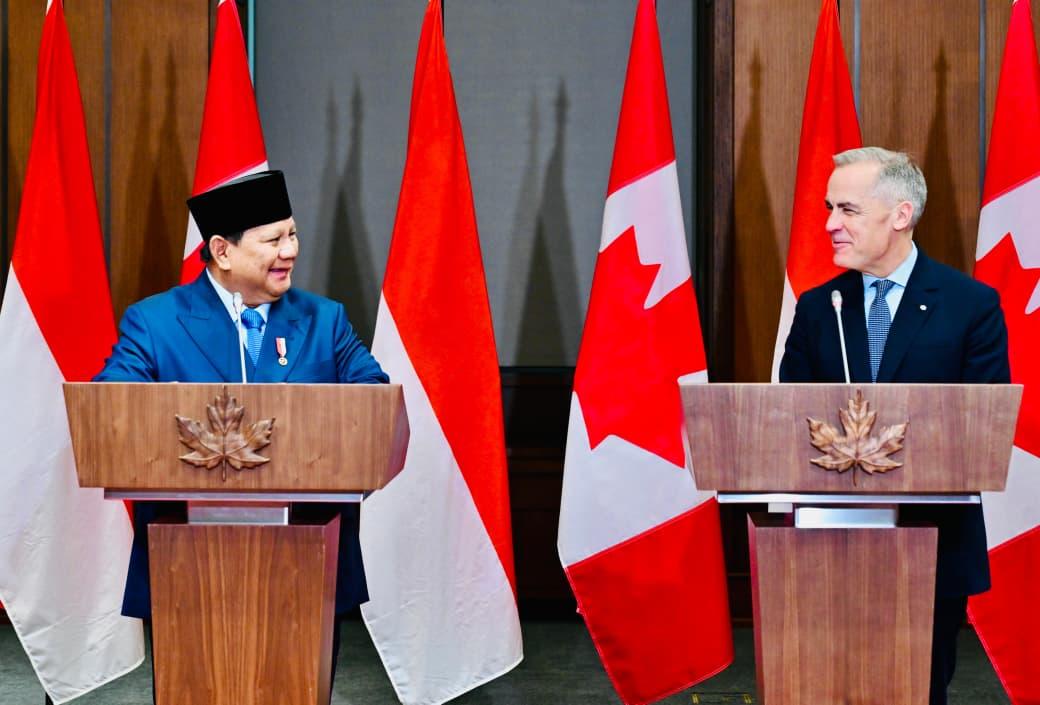
Prabowo, a retired general, was sworn in on October 20, 2024, after winning the election outright. His programme has been ambitious and populist: signature social spending such as free nutritious meals, alongside food and energy self-sufficiency drives, industrialisation and an insistence that natural-resource wealth benefit Indonesians first. Abroad, he has been an energetic salesman — the Ottawa trade deal with Canada, a first between Canada and an ASEAN member, is one example. What has eroded is the domestic cushion: the fires and haze that have choked parts of Sumatra and Kalimantan and drifted into Malaysia and Singapore, the market turmoil that has made the economy feel fragile even to students, and a cost-of-living squeeze that turns abstract approval ratings into street politics.
Who gains, who loses — and what critics and defenders say
The student movement gains a platform and a deadline: anniversaries concentrate cameras, and Komite Sadar used this one to broaden a campus protest into a five-point national indictment, borrowing environmental language from Greenpeace and market language from the very investors the government courts. The opposition in parliament gains a poll number — 44.5 percent — that will be quoted in every budget fight this autumn. The government loses the anniversary itself: instead of a two-year celebration of programmes delivered, the palace spent the day as the object of a security operation. Its defenders make two fair points. First, the deployment kept an announced protest orderly and the police publicly affirmed the right to demonstrate. Second, approval mid-term, in a cost-of-living squeeze felt across the region, is not the same as an election — Prabowo's coalition remains large, and no rival figure yet commands the street or the polls. Both things can be true: a presidency can be institutionally secure and politically diminished at the same time, and Tuesday looked like exactly that combination.
What happens next
Watch three things. First, whether Tuesday's turnout stays a student action or pulls in labour, drivers and the broader public, as the 2025 wave did — breadth, not volume, is what turned that protest into a crisis. Second, the palace's response: a government that answers the five demands point by point, especially on fire prosecutions and living costs, defuses the alliance's coalition; one that answers only with deployments feeds it. Third, the next SMRC reading and the rupiah: the students have explicitly tied their case to market fragility, so every bad week on the Jakarta exchange now arrives pre-translated into protest language. Two years in, Prabowo still holds the office, the coalition and the initiative in lawmaking. What he no longer holds is the assumption — his own, most of all — that the country is still applauding.
Related coverage: Indonesia's stocks plunge 11% after the MSCI downgrade shock and the haze crisis that closed schools in Malaysia and shadowed Singapore's Grand Prix.
Sources
Reuters, October 20, 2026 — Jakarta deployment of more than 9,000 / about 9,500 officers (police spokesperson Budi Hermanto), student protests at several sites, University of Indonesia statement on forest fires, the stock rout and the rupiah, Greenpeace banner text, SMRC approval falling to 44.5 percent from 81.2 percent, and the August / 2025 protest background. AsiaToday (Indonesia), October 20, 2026 — Komite Sadar alliance, at least nine participating universities, the five demands in full, and BEM UI chair Yatalathof Imawan's remarks. Tribun News / BEM UI coverage, October 19–20, 2026 — 9 a.m. start at the Proclamation and Farmers monuments, State Palace and DPR targets, and traffic director Firman Darmansyah's diversion plans. IndonesiaNow, October 20, 2026 — Greenpeace at the Bundaran HI statue, joint officers on guard, and Hermanto's "Police Together with the Community" statement.