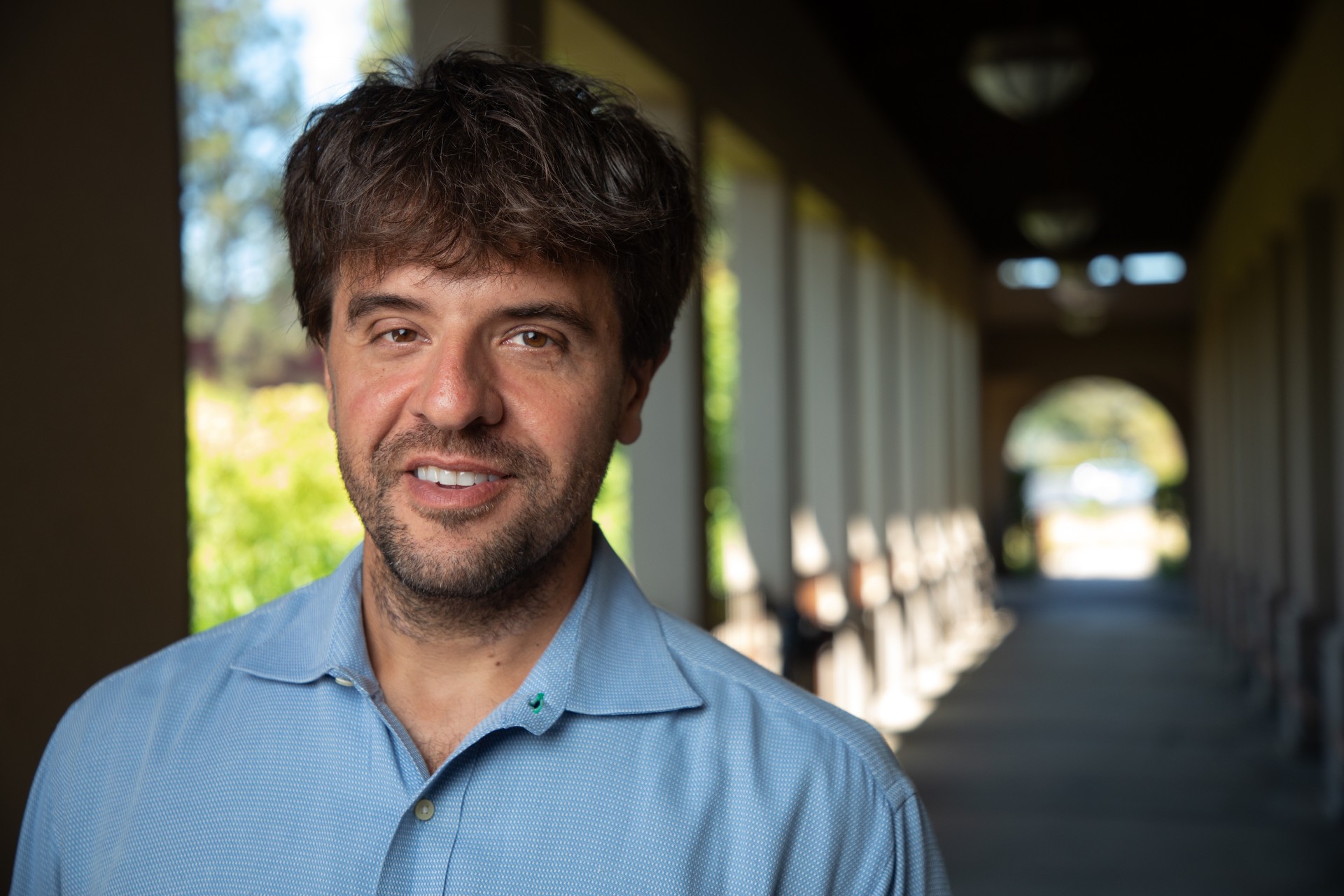
STOCKHOLM— The Nobel Assembly at the Karolinska Institute announced Monday that Deisseroth, a 54-year-old American scientist at Stanford University, will share the 12 million Swedish kronor prize with German researchers Hegemann, 71, of Humboldt University of Berlin, and Nagel, 73, of the University of Würzburg. Their citation recognizes “discoveries concerning light-gated ion channels and optogenetics.” The three will receive their medals from King Carl XVI Gustaf in Stockholm on December 10.
The announcement rewards a chain of curiosity that began not with a human brain, but with a single-celled green alga swimming toward light. Hegemann and Nagel established how a protein called channelrhodopsin converts blue light into an electrical opening in a cell membrane. Deisseroth then showed that the same molecular switch could be installed in neurons and used to control their firing. The result gave neuroscience something it had long lacked: a way to move from watching the brain to testing it.
Why this matters: neuroscience gained a causal tool
Brain imaging changed medicine by revealing which regions become active when a person remembers a face, feels fear or prepares a movement. But an fMRI image is fundamentally a correlation: one area lights up while something happens. It does not by itself prove that the area's activity caused the behavior, nor does it cleanly distinguish one cell type from its neighbors.
Optogenetics changed the question. Researchers can use genetic targeting to make a selected population of cells responsive to light, deliver a timed pulse, and observe what changes. If activating one circuit makes a mouse approach a previously feared space, or silencing another interrupts a movement, the experiment can expose causation with millisecond precision. Nobel committee member Anna Wedell described the shift as “a completely new dimension of understanding of the function of the brain.”
That is why this award is more than recognition for a clever laboratory technique. It honors an instrument of discovery. Microscopes opened worlds too small to see; X-rays opened the body without a scalpel; gene editing made DNA directly alterable. Optogenetics did something comparable for circuitry: it made a living neural pathway experimentally addressable.
What is optogenetics? The alga-to-neuron chain
Peter Hegemann Nobel Prize roots: why an alga swims toward light
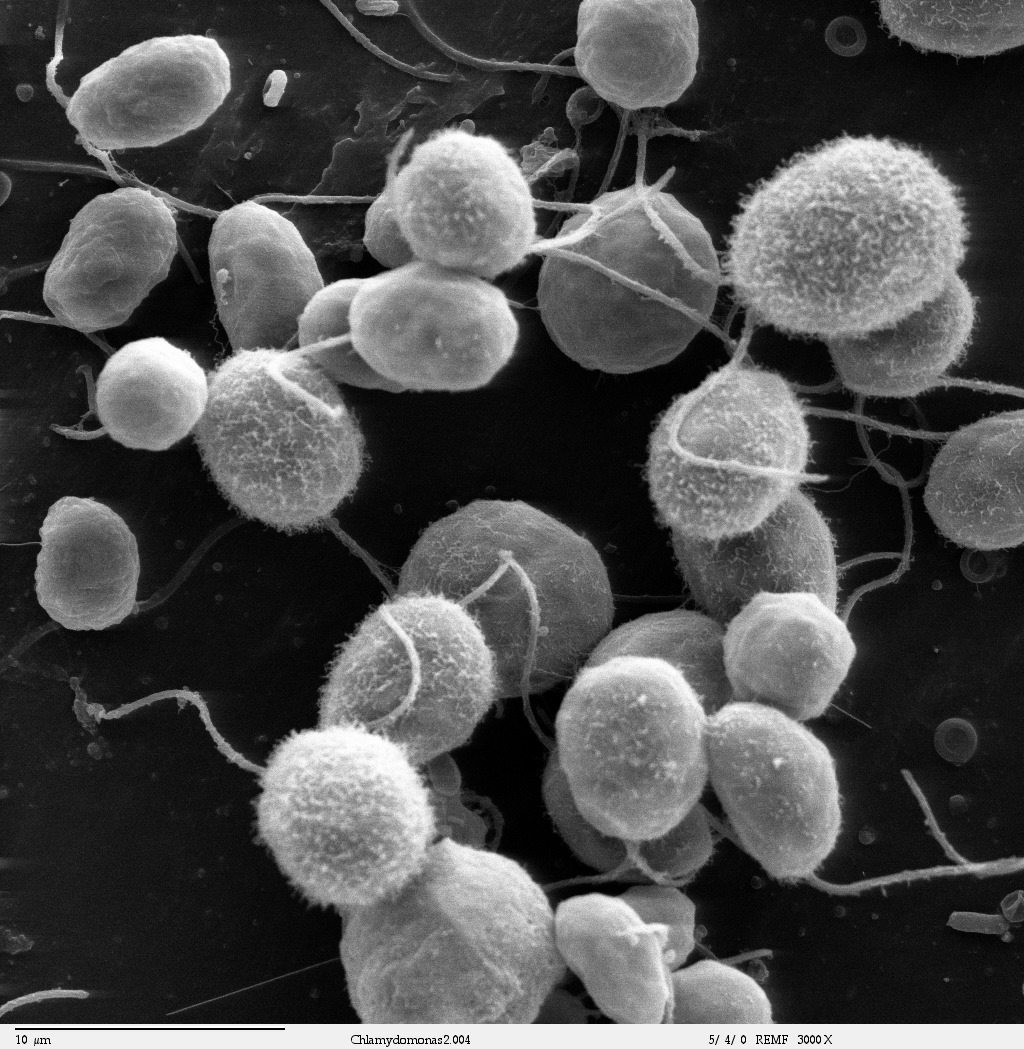
In the 1990s, Hegemann was studying Chlamydomonas, a microscopic alga that navigates toward or away from light. The behavior looked simple. Its mechanism was not. For the cell to steer, it needed a molecular sensor that could detect photons and quickly convert that signal into movement.
That basic-science question was the hinge. It had no guaranteed medical payoff and did not begin as a plan to control mammalian brains. It was an attempt to understand how a primitive organism perceives its environment. The lesson is familiar in major scientific advances: applications often arrive only after curiosity has uncovered a mechanism precise enough to reuse.
Channelrhodopsin light-gated ion channels: the molecular switch
In the early 2000s, Hegemann and Nagel showed that channelrhodopsin acts as a light-gated ion channel. When blue light strikes the protein, the channel opens. Electrically charged ions move across the cell membrane, changing the cell's voltage. In a neuron, that voltage change can trigger an action potential—the electrical pulse by which nerve cells communicate.
The elegance lies in the conversion: light becomes electrical activity without a conventional electrode touching each cell. Genetic instructions determine which cells make the protein; the light pulse determines when they respond. Biology supplies the target and optics supplies the timing.

Karl Deisseroth optogenetics experiments crossed the decisive line
In 2005, Deisseroth and colleagues introduced the channelrhodopsin gene into cultured rat nerve cells. Blue light made those neurons fire. Two years later, his laboratory demonstrated the approach in the brains of living mice. The components now formed a working method: a microbial protein, genetic targeting and precisely delivered light.
The technique was named optogenetics because it joined optics with genetics. It could turn neurons on and, with other light-responsive proteins, turn them off. Researchers could ask which circuit encodes fear, which pathway initiates movement, which cells reinforce an addictive behavior and which network helps consolidate a memory. The Nobel Assembly said the laureates “laid the foundation for a new era in neuroscience.”
Why the optogenetics Nobel Prize took about two decades
The 21-year interval between the landmark 2005 experiment and the 2026 Nobel decision is not a delay in the ordinary sense. It is the evidence period. A method must prove that it can be reproduced, generalized and used to answer important questions by researchers beyond the founding laboratories.
Publication data show that diffusion clearly. A 2023 bibliometric analysis in Frontiers in Neuroscience screened 8,458 records from 2002 through 2022 and retained 6,824 research articles and reviews. It found 52.82% annual growth after 2010, with 922 publications in 2021 alone. Those figures do not mean every paper produced a breakthrough. They do show that an experiment first demonstrated in a small number of neurons became an international research platform.
The time lag also protected the Nobel from confusing novelty with permanence. In the years after 2005, laboratories created faster opsins, inhibitory switches, red-shifted proteins, wireless light-delivery systems and methods for combining stimulation with neural recording. The prize recognizes not only the first spark but the durable architecture built from it.
Who benefits—and who is disrupted
Optogenetics brain research moves beyond the brain scan
Neuroscientists are the immediate winners because optogenetics can separate neighboring cell types that conventional electrical stimulation activates together. Psychiatrists and neurologists gain clearer maps of disease circuits. Drug developers gain experimental tests of whether a proposed pathway actually changes symptoms rather than merely correlating with them.
That precision disrupts older models of the brain as a set of broad regions with single jobs. A named structure can contain interwoven cell populations that push behavior in opposite directions. It also pressures research built mainly on observational imaging: a compelling map is no longer the end of the argument when a circuit can be activated, inhibited and tested.
Patients with Parkinson's disease, epilepsy and blindness are potential beneficiaries, but the timelines differ. Vision is the nearest clinical target because light can reach the retina more easily than a deep brain structure. Human studies have already reported partial restoration of visual function in some people with severe retinal degeneration, and later-stage programs are testing gene therapies designed to make surviving retinal cells light-sensitive. That progress is meaningful, but it is not the same as restoring ordinary sight.
Parkinson's and epilepsy: promise meets anatomy
In Parkinson's disease and epilepsy, researchers hope that circuit-specific control could improve on electrical deep-brain stimulation, which affects mixed populations of nearby cells. In principle, an optical treatment could target only the neurons driving pathological rhythms. In practice, deep tissue is hard to illuminate, gene delivery must be controlled, implanted hardware carries risk and foreign light-sensitive proteins must remain safe for years.
The most responsible reading of the Nobel is therefore not “brain diseases are solved.” It is that researchers now possess a causal map-making method that can identify better targets and, in selected tissues, may itself become therapy. Laboratory success and clinical readiness are different milestones.
The critics' case: brain control, animal research and hype
The phrase “switching the brain on and off” invites science-fiction fears. In laboratory animals, researchers have used optogenetics to influence fear, reward, feeding and movement. Those experiments raise legitimate questions about agency, mental privacy and the boundaries of any future human intervention. A treatment that can alter a disease circuit may also affect mood, motivation or identity in ways a patient did not intend.
Yet the popular image of a remote-control mind outruns the technology. Optogenetics generally requires cells to be genetically modified and light to be delivered to the target tissue. Reaching deep brain regions can require surgery or implants. The same barriers that slow clinical translation also make casual or covert “mind control” an implausible description of present-day use.
Animal-welfare concerns are more immediate. Much of the field's knowledge comes from genetically modified rodents fitted with optical fibers and subjected to behavioral tests. Advocates argue that precise, reversible stimulation can reduce ambiguity and the number of animals needed for an answer. Critics counter that invasiveness, engineered disease models and behavioral manipulation still impose burdens that must be justified. Organoids and advanced cell systems may replace some animal experiments, but they cannot yet reproduce an intact organism's behavior.
The hype problem cuts both ways. Overselling imminent cures can mislead patients and distort funding. Underselling the research because the clinic is difficult misses how basic tools change medicine indirectly: by revealing targets, falsifying weak theories and improving the design of drugs or devices even when the light switch itself never enters routine care.
What comes next: clinical trials and brain-machine interfaces
The next phase will be less about proving that optogenetics works in principle and more about engineering around its constraints. Researchers are developing proteins that respond to red or infrared-shifted light, which can travel farther through tissue; smaller and wireless implants; and closed-loop systems that record abnormal activity and deliver light only when intervention is needed.
Those closed-loop designs overlap with brain-machine interfaces. An interface that can both read a neural pattern and write a precisely targeted response could become more selective than today's one-way stimulators. But every additional capability expands the safety task: device security, long-term gene expression, heat management, immune reactions and informed consent must be treated as design requirements, not afterthoughts.
Clinical progress is likely to remain uneven. The retina offers direct optical access and a clear functional endpoint. Deep-brain disorders demand harder delivery, more invasive hardware and greater certainty about which cells to modify. Parkinson's and epilepsy may first benefit through targets discovered with optogenetics and treated by other means. A Nobel can accelerate investment, but it cannot repeal anatomy.
The Nobel Prize winners 2026—and the week ahead
Medicine traditionally opens Nobel week. Physics, chemistry, literature, peace and economic sciences follow in the coming days, extending the annual debate over which discoveries and ideas have endured long enough to merit science's most visible prize. Monday's choice establishes a theme: Nobel committees often reward the tool that lets an entire field ask sharper questions, not only the answer to one disease.
The medals will be presented on December 10, the anniversary of Alfred Nobel's death. Last year's medicine prize went to Mary Brunkow, Fred Ramsdell and Shimon Sakaguchi for discoveries about the immune system's regulatory “security guards.” This year's turn toward neuroscience connects another biological control system to human health—one built not from immune restraint, but from light, genes and electricity.
The larger lesson of the 2026 Nobel Prize in Medicine
The decisive insight was not that the brain resembles a machine with a literal switch. It was that a mechanism evolved in algae could become a precise question asked of a mammalian nervous system. Hegemann and Nagel uncovered the light-sensitive channel; Deisseroth made it useful in neurons; thousands of scientists then tested, refined and expanded the method.
Optogenetics has not delivered effortless brain repair. It has delivered something science needs first: a disciplined way to distinguish cause from coincidence. That is why the award matters now, two decades after the first blue-light pulse made a neuron fire. The switch did not solve the brain. It made the brain more answerable.
Sources and reporting notes
- Reuters: Deisseroth, Hegemann and Nagel win the 2026 Nobel medicine prize
- CNN: 2026 Nobel Prize in Medicine recognizes optogenetics
- New Scientist: Nobel Prize for medicine goes to optogenetics trio
- The Wall Street Journal: Trio awarded Nobel for neuroscience discoveries
- Nobel Prize: official press release
- Nobel Prize: the science of light-gated ion channels and optogenetics
- Frontiers in Neuroscience: bibliometric profile of optogenetics