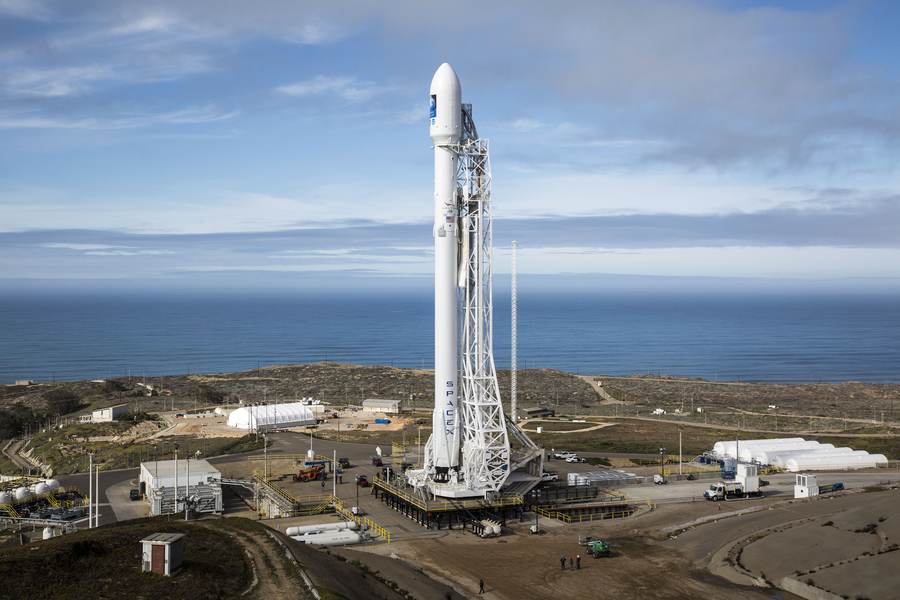
CAPE CANAVERAL, Florida — The SpaceX Crew-13 ISS launch lifted off at 11:10 a.m. EDT Thursday, carrying four astronauts toward a same-day rendezvous that NASA said would be the fastest trip to the International Space Station by a U.S. spacecraft. Falcon 9 rose from Cape Canaveral Space Force Station with Crew Dragon Grace, beginning a six-month science mission and another test of how routine commercial crew flight has become.
The capsule was scheduled to dock at about 7 p.m. EDT, putting the journey under eight hours. That speed does not come from a radically faster rocket. It comes from launch timing and orbital geometry: mission planners target a window that places Dragon close to the station's path, reducing the number of Earth orbits needed before rendezvous. A faster trip limits time in the capsule and demonstrates tighter coordination between launch operations, flight software and the station program.
The Crew-13 astronauts and the mission profile
Commander Jessica Watkins, 38, is a geologist making her second spaceflight. NASA identifies her as the first agency astronaut to fly twice aboard Crew Dragon. Pilot Luke Delaney, 47, a former test and fighter pilot, is making his space debut. Canadian Space Agency astronaut Joshua Kutryk and Roscosmos cosmonaut Sergey Teteryatnikov complete the international crew.
Grace is also on its second flight. The spacecraft first flew in 2025 on Axiom Mission 4, so the launch combines a reused capsule with a crew that spans first-time and experienced flyers. Reuse is central to the economics of SpaceX's model, but each mission still depends on inspection, refurbishment and validation of propulsion, thermal protection, parachutes and flight software.
Falcon 9 Crew-13 launch time followed a repaired leak
The flight had been delayed after engineers found an oxidizer leak in Dragon's propulsion system. NASA and SpaceX repaired the problem before clearing Grace to fly. Weather added another constraint: forecasters put the probability of conditions preventing launch at 45%, with October 2 held as a backup opportunity. The successful Thursday departure therefore reflected both technical closeout and a usable gap in the weather, not an automatic countdown.
That matters because schedule pressure is unusually visible in crewed flight. Crew-12 is expected to return roughly a week after the new arrivals, and the handover period allows experienced station residents to brief their replacements in orbit. Once Crew-13 docks, the station's population is expected to reach 11 people representing NASA, the Canadian and European space agencies and Roscosmos.
Why the fastest ISS docking by a U.S. spacecraft matters
A record is useful only if it improves the system. Here, the planned Crew-13 docking time is evidence that NASA and SpaceX can refine a mature route rather than merely repeat it. Shorter transit reduces exposure to motion sickness and the operational burden of supporting a crew in a relatively confined spacecraft. It can also simplify consumables planning and give controllers more flexibility during a handover.
But speed should not be confused with haste. Docking remains a staged process: Dragon approaches through controlled waypoints, checks navigation data and keeps abort options available. The meaningful achievement is that a disciplined sequence can be completed in less time, not that safeguards have been skipped.
The mission is the 13th long-duration crew SpaceX has flown for NASA since the first operational era began in May 2020. That cadence is the larger story. Commercial Crew was designed to restore U.S. launch capability after the shuttle's retirement while buying transportation as a service. Six years of repeated flights have turned Dragon from a disruptive entrant into the station's primary U.S. crew vehicle.
Six months of research, not just a fast arrival
The planned expedition will study human health and performance, including how prolonged microgravity changes the body and affects work. Research using stem-cell-derived tissues will examine heart disease and Parkinson's disease. Other investigations target blood-flow abnormalities, medical diagnostics and crop production. These projects address both terrestrial medicine and the practical limits of keeping people healthy during longer missions.
Crop research is especially important for exploration beyond low Earth orbit, where resupply becomes slower and less dependable. Diagnostic work can help crews identify problems without immediate access to a hospital. Cardiovascular and neurological studies use the space environment as an accelerated stress test, while NASA also learns which countermeasures protect astronauts who must remain productive for months.
ISS Expedition 75 as an international operating system
The 11-person complement after arrival underlines that the station is more than a laboratory. It is a continuously occupied international operating system whose crew changes, cargo schedules and national programs must mesh. Crew-13 includes American, Canadian and Russian participants at a time of sustained geopolitical tension, showing how the ISS partnership still separates day-to-day safety from many disputes on Earth.
Dragon vs. Starliner is still an unfinished competition
SpaceX's reliability has also exposed the imbalance in NASA's two-provider plan. Boeing's Starliner was meant to provide redundancy, yet its next crewed flight is not expected before 2028 at the earliest. NASA may purchase more Starliner missions, but the agency must weigh the value of a second system against delay, certification work and cost.
Redundancy is not an abstract procurement preference. If Dragon encountered a fleet-wide problem, NASA would have limited domestic alternatives for rotating station crews. A functioning Starliner would reduce that single-provider risk. At the same time, buying flights before the vehicle is ready cannot manufacture redundancy; it can only fund the work needed to reach it.
The contrast is sharper after SpaceX's record-setting July 2026 initial public offering and Starship's 14th test flight days before Crew-13, which included its first commercial satellite deployment. President Gwynne Shotwell has said SpaceX is not retiring Dragon “today” while the company transitions toward Starship. The phrasing captures the balance: Starship represents the future architecture, but Dragon is carrying the operational burden now. Our analysis of Starship's first orbital flight explains why the larger vehicle remains a development program even as Dragon performs scheduled service.
Who wins and who remains exposed
NASA wins operational confidence. A rapid launch-to-docking profile and another long-duration rotation strengthen the commercial model. SpaceX wins proof of durability. The company can point to a 13th NASA rotation while investing in a much more ambitious successor. The astronauts and researchers win time: less transit and six months of access to a unique laboratory.
Boeing remains under pressure because every smooth Dragon flight makes Starliner's absence more conspicuous. NASA also remains exposed to concentration risk, while station planners must manage an 11-person handover without allowing schedule efficiency to crowd safety. The oxidizer leak is a reminder that mature systems still produce defects requiring engineering judgment.
What happens next
Controllers will monitor Grace through approach and docking, then conduct leak checks before opening the hatches. Crew-13 will begin its handover with Crew-12 and move into the station's research and maintenance schedule. Crew-12 is expected to depart about a week later, subject to weather and spacecraft readiness.
Beyond this mission, the policy questions are larger: how long NASA extends ISS operations, whether Starliner becomes a dependable second provider, and when Starship can take over missions now assigned to Dragon. Related work is already stretching computing beyond Earth; Google's Project Suncatcher proposal shows the growing commercial interest in orbital infrastructure, while the Nvidia-OpenAI infrastructure buildout illustrates the capital scale reshaping advanced technology on the ground.
The immediate test is simpler: reach the station safely, complete the handover and turn a record transit into six months of useful science. If Crew-13 does that, the under-eight-hour dash will matter less as spectacle than as another sign that U.S. human spaceflight has become repeatable.