is there a plague vaccine
When news broke that a lab worker had died and 200 people were placed under observation after a suspected plague accident in Irkutsk, Siberia, one of the first questions readers asked was the most natural one: is there a plague vaccine? Could the contacts simply get a shot and go home? The answer is blunt: no. There is no licensed plague vaccine available to the general public — not in the United States, not in Europe, not anywhere in the West. Russia maintains a live vaccine for a narrow circle of high-risk workers, but its effectiveness is not fully established and it is not offered to the public. And public-health authorities say a widely available vaccine is unlikely to arrive soon.
That absence is strange on its face. Plague is one of humanity's oldest killers. Its bacterium, Yersinia pestis, has been grown in laboratories for more than a century. Scientists have been trying to vaccinate against it since 1897 — longer than for almost any other disease. This is the story of why that effort keeps falling short, what the science actually solved along the way, and where the quest stands now.
1897: the doctor who tested the vaccine on himself
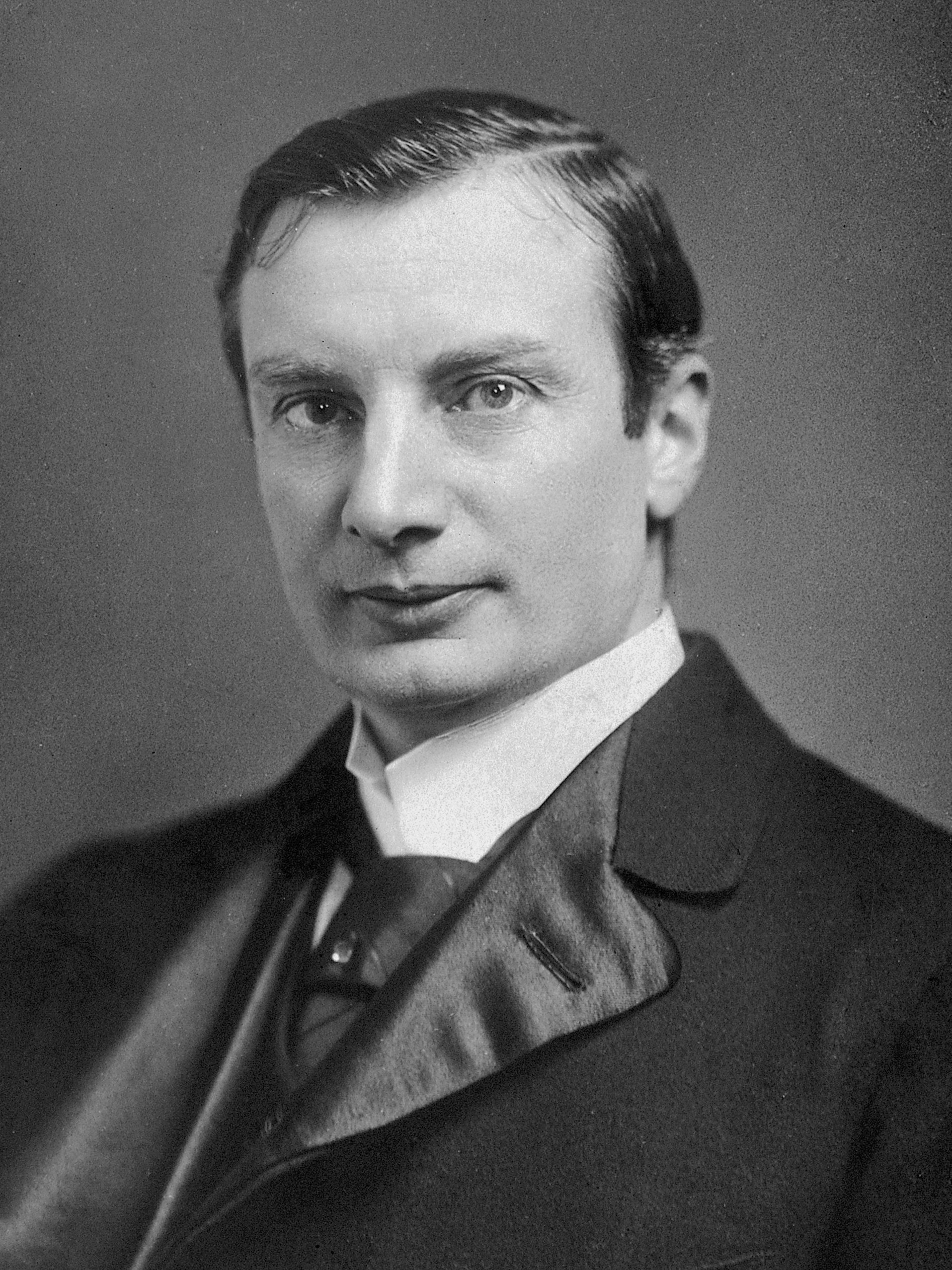
In 1896, plague reached Bombay (now Mumbai) as part of the third plague pandemic, and it tore through the crowded city. Waldemar Haffkine, a Russian-born bacteriologist working under British colonial administration, set himself a deadline that sounds reckless today: he developed a killed whole-cell vaccine in roughly three months of relentless work. With no framework for modern clinical trials and an epidemic raging outside his laboratory door, Haffkine did what the era allowed — on January 10, 1897, he injected himself first, then began inoculating volunteers.
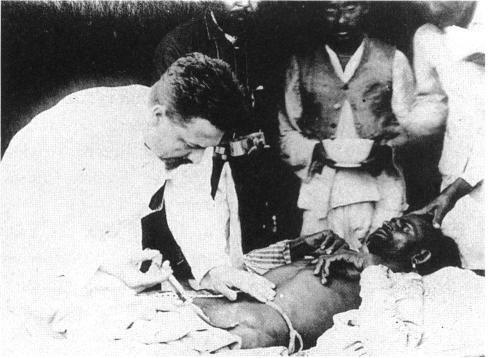
The campaign that followed was enormous. Millions of people were eventually inoculated across India, and the vaccine cut plague incidence substantially among the vaccinated. But it was crude by any modern standard: it required large doses, caused significant fevers and local reactions, and protection faded without repeat shots. Still, Haffkine had proved the central point — immunity against plague could be induced. The photograph from the period, showing vaccinations being administered in Karachi in 1898, captures how quickly the idea spread from one man's self-experiment to a public-health campaign.
The American century: a vaccine that worked — halfway
The United States built its own killed whole-cell vaccine, licensed from 1946 and given to military personnel, laboratory workers, and others judged at risk — including American troops serving in Vietnam, where plague was endemic. For decades it was the West's answer. Then, in 1999, its sole manufacturer stopped producing it, the license lapsed, and America has had no plague vaccine since.
The discontinuation was not an accident of the market alone; the vaccine had two deep flaws. First, it was reactogenic: roughly one recipient in ten developed malaise, headache, and local reactions, and protection required repeated boosting. Second, and decisively, it protected against bubonic plague but not against the pneumonic form — the fast, airborne variant that kills in hours and is the form that terrifies public-health officials. A vaccine that cannot stop pneumonic plague is a vaccine that cannot stop the nightmare scenario.
The reason for that failure turned out to be molecular, and understanding it took decades. Killed whole-cell preparations deliver the F1 capsular antigen in quantity but little or no V antigen — the LcrV protein, part of the bacterium's type III secretion system, the microscopic syringe Yersinia pestis uses to inject toxins into immune cells and paralyze the host response. Protection against pneumonic disease appears to require antibodies against both antigens. The old shots were aiming at half the target, and nobody knew it at the time.
EV76: the live vaccine the West abandoned
There was always another path. In the 1930s, Gaston Girard and Jean Robic in Madagascar developed EV76, a live attenuated strain of Y. pestis missing the pigmentation (pgm) locus the bacterium needs to scavenge iron from its host. Because it is alive, EV76 presents the immune system with the full antigenic repertoire — including the V antigen the killed vaccines lacked. In animal studies it protects against both bubonic and pneumonic plague.
EV76 and its derivatives are still used in humans in Russia, Mongolia, and China, including for laboratory workers — the very population at the center of the Irkutsk incident. But the West never licensed it, for reasons that remain valid: it is highly reactogenic, and there are documented safety concerns in certain populations, notably people with hemochromatosis, an iron-overload condition in which a live iron-hungry bacterium is a particular risk. A vaccine that is itself a gamble was never going to pass a Western regulator.
The F1/V breakthrough: aiming at the whole target
Modern vaccinology converged on the two-antigen insight the old era missed: combine the F1 capsule with the V antigen in a single recombinant shot. The leading candidate, rF1-V, developed by DynPort Vaccine Company, earned the FDA's Orphan Drug designation and completed Phase 2b clinical trials — further than any modern plague vaccine has ever gone. In nonhuman primates, F1/V formulations have shown strong protection, and in small human trials the shots were well tolerated with dose-dependent immune responses.
How thin the human evidence still is became clear in a 2023 systematic review: screening 75 studies, the reviewers found only two randomized controlled trials of plague vaccines in humans — both of subunit vaccines, enrolling 240 and 60 participants respectively. Both shots were safe and immunogenic, but the data were far too limited to quantify real-world efficacy or long-term safety. After 130 years, the total randomized human evidence for plague vaccines fits in a small conference room.
Where the science stands now
The pipeline, at least, is busy. A 2024 review counted more than 21 candidate vaccines in preclinical development across every modern platform: refined subunits, live-attenuated strains, viral vectors, DNA vaccines, and mRNA. Researchers are chasing needle-free delivery, single-dose regimens, and formulations stable without deep-freeze cold chains — the practical details that decide whether a vaccine can ever reach the remote foci where plague actually circulates.
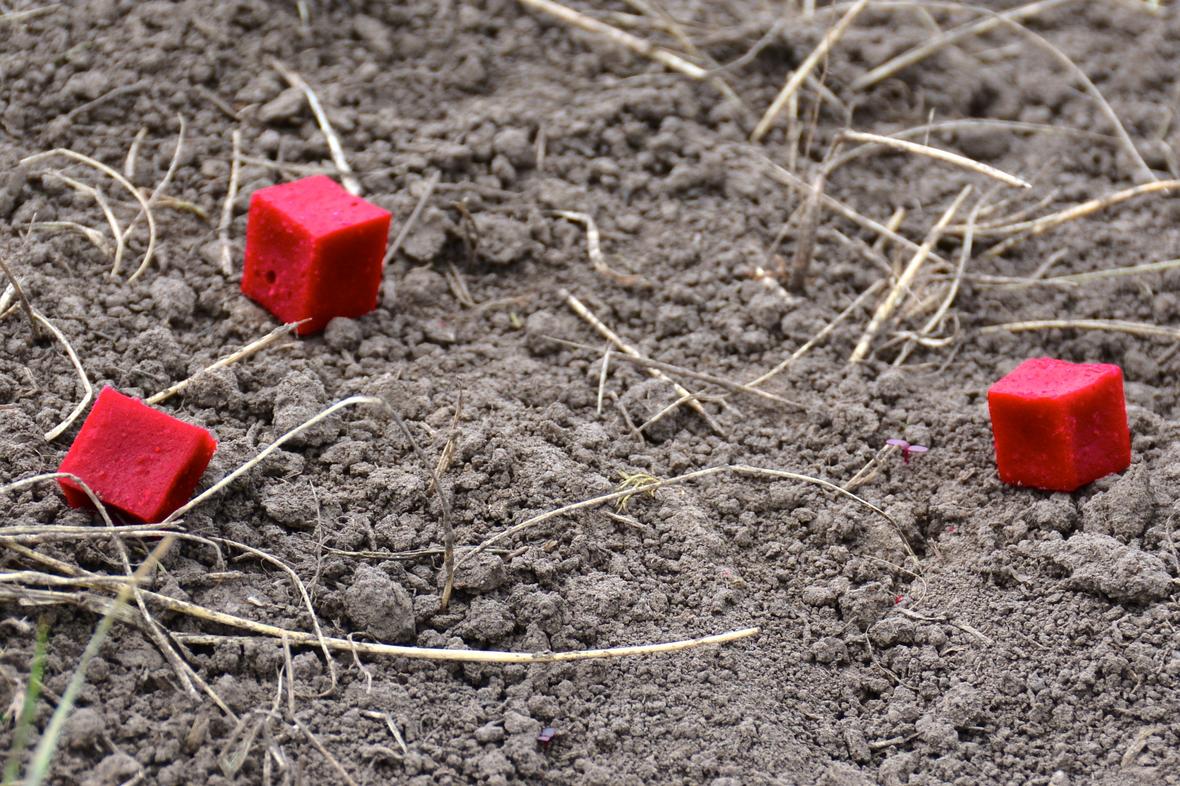
One of the most striking programs isn't aimed at humans at all. The U.S. Geological Survey's sylvatic plague vaccine — peanut-butter-flavored baits laced with vaccine, distributed across prairie-dog towns in the American West — immunizes the rodents that anchor plague's wild cycle, protecting both the prairie dogs and the endangered black-footed ferrets that depend on them. It is a reminder that "plague vaccine" already exists as a concept in the field; the missing piece is specifically a human one proven to work.
The deepest obstacle is structural, not scientific. Plague is too rare in wealthy countries to run a conventional Phase 3 efficacy trial — you cannot vaccinate 30,000 people and wait for enough natural cases — and deliberately exposing volunteers to Yersinia pestis is unthinkable. Any future approval would likely travel the FDA's "Animal Rule," licensing on the basis of animal efficacy plus human safety data. That path exists precisely for threats like this, but it is slow, expensive, and commercially thankless: no company gets rich vaccinating against a disease the rich world considers history.
Who actually gets a plague shot today
Almost no one. In the United States, the CDC's guidance for exposed contacts is post-exposure antibiotics — doxycycline — not vaccination, because there is no vaccine to give. Russia's live EV76-derived vaccine goes to a narrow circle of laboratory and field workers. There is no travel vaccine, no military stockpile shot, no pharmacy shelf. If you are reading this in the general public, anywhere in the world, there is no plague vaccine with your name on it.
What this means for Siberia
The Irkutsk anti-plague institute historically manufactured Russia's plague vaccine — which makes the unanswered question sharper: was the worker who died vaccinated? No official statement has said. But the American experience offers a sobering caution even if the answer were yes: the old-generation vaccines never reliably stopped pneumonic plague, the form that kills within hours of symptoms. For the 200 people under observation, the protection that matters is the one that actually exists — rapid antibiotics within the treatment window, daily monitoring, and isolation at the first sign of fever — not a shot that, for the public, does not exist.
The bottom line
One hundred and thirty years after Haffkine injected himself in Bombay, the plague vaccine remains science's great almost. The biology is understood, the key antigens are identified, and candidates sit in freezers awaiting the trials that may never come. What is missing is not knowledge but the final proof — and the commercial and political will to finish the job for a disease the wealthy world files under history. Until that changes, the answer to "is there a plague vaccine?" stays what it has been for a generation: no — and here is exactly why.
For the questions a vaccine cannot answer — how plague spreads, what the symptoms look like, and whether it can be cured — see our companion guides: Is Plague Contagious?, Siberia Plague vs COVID, and Can Plague Be Cured? For the developing story in Siberia, follow our main outbreak coverage.
Sources: npj Vaccines — next-generation plague vaccine review (no FDA-approved vaccine; rF1-V Phase 2b; EV76 use outside the US); Systematic review of plague vaccine trials (Cochrane methods, 2023); Progress review of plague vaccine R&D (21+ preclinical candidates, 2024); Saudi Ministry of Health — plague FAQ (no vaccine currently; unlikely soon). Historical vaccine facts checked against peer-reviewed literature, October 4, 2026.