how is plague diagnosed
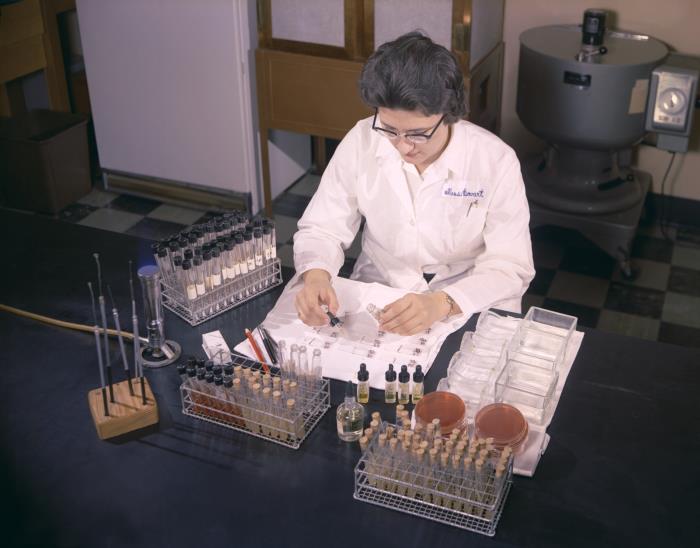
When a patient arrives with a sudden high fever, agonizingly swollen lymph nodes, or a cough producing bloody sputum in a region where plague circulates, doctors face one of medicine's most urgent diagnostic challenges: how is plague diagnosed quickly enough to save a life? The answer involves a carefully sequenced playbook — clinical evaluation first, laboratory samples second, rapid molecular tests for early answers, and culture for definitive confirmation — all while treatment begins before the final results arrive.
This question has taken on fresh urgency with the death of a lab worker in Irkutsk, Siberia, where roughly 200 people were placed under observation after a suspected plague incident. In that scenario, health authorities needed to determine rapidly who was actually infected, who merely needed monitoring, and who could be cleared — decisions that hinge entirely on how quickly and accurately plague can be diagnosed.
The First Step Is Clinical: What Doctors Look For
Before any blood is drawn or any sample reaches a laboratory, plague diagnosis begins at the bedside. The U.S. Centers for Disease Control and Prevention (CDC) emphasizes that clinicians should consider plague when a patient presents with compatible symptoms and a plausible exposure history — recent travel to endemic areas, contact with rodents or fleas, handling of wild animals, or occupational exposure in a laboratory setting.
The clinical picture differs by plague form. Bubonic plague announces itself with the sudden onset of fever, chills, headache, and the hallmark bubo — a grossly swollen, exquisitely tender lymph node, most often in the groin, armpit, or neck. The bubo is the body's battleground: lymph nodes filtering Yersinia pestis bacteria become inflamed masses that can reach the size of a chicken egg.
Pneumonic plague, the most dangerous form, presents as a rapidly progressing pneumonia: fever, cough, chest pain, and difficulty breathing, often with bloody or watery sputum. Septicemic plague — infection of the bloodstream — can cause fever, chills, abdominal pain, and in late stages, the tissue necrosis that historically gave the "Black Death" its name.
But clinical diagnosis alone is never enough. Many of these symptoms overlap with other serious infections — severe influenza, bacterial pneumonia, tularemia, even COVID-19 in its early stages. That's why the CDC's guidance is explicit: obtain laboratory specimens immediately, but do not delay treatment waiting for results.
The Three Critical Samples
Once plague is suspected, doctors collect specimens based on the clinical presentation. The CDC recommends three primary sample types, each targeting where the bacteria are most concentrated:
Blood: The Universal Sample
Blood cultures are collected in virtually every suspected plague case, regardless of form. In septicemic plague, Yersinia pestis circulates directly in the bloodstream. Even in bubonic and pneumonic cases, bacteremia — bacteria in the blood — is common, especially as the disease progresses. Two sets of blood cultures drawn before antibiotics are started give the laboratory its best chance of growing the organism.
Bubo Aspirate: The Smoking Gun
For bubonic plague, the most diagnostically valuable specimen comes from the bubo itself. Using a needle and syringe, clinicians aspirate fluid from the swollen lymph node. This fluid is typically teeming with Yersinia pestis — under a microscope, the bacteria appear as distinctive bipolar-staining rods, often described as having a "safety pin" appearance. A skilled microscopist can sometimes make a presumptive identification within minutes of receiving this sample.
Sputum: The Respiratory Window
In suspected pneumonic plague, sputum — coughed-up material from the lower respiratory tract — is the critical specimen. Because pneumonic plague spreads through respiratory droplets, the sputum of an infected patient contains enormous quantities of bacteria. This sample is both diagnostically crucial and biologically hazardous, requiring stringent precautions during collection and handling.
PCR: Answers in Under Two Hours
The fastest reliable laboratory answer comes from polymerase chain reaction (PCR) testing. PCR works by detecting the DNA of Yersinia pestis directly in clinical specimens — no waiting for bacteria to grow. Modern real-time PCR assays can deliver preliminary results in under two hours from the time the sample reaches a capable laboratory.
The CDC and state public health laboratories use PCR assays targeting specific genetic markers of Y. pestis, most notably the pla gene (encoding plasminogen activator, a key virulence factor) and the caf1 gene (encoding the F1 capsule antigen). Detecting these genes provides strong presumptive evidence of plague infection.
However, PCR has limitations clinicians must understand. A positive PCR is considered presumptive rather than confirmatory — it indicates the presence of bacterial DNA but doesn't prove the bacteria were alive and capable of causing disease. False positives, while uncommon with well-validated assays, can occur through laboratory contamination. And a negative PCR early in illness doesn't definitively rule out plague, particularly if the sample was collected after antibiotics were started.
Despite these caveats, PCR has revolutionized plague diagnosis. In outbreak settings — like the current Siberia situation with 200 people under observation — rapid PCR screening allows health authorities to quickly identify who needs immediate treatment and isolation versus who can safely continue monitoring.
Culture: The Gold Standard
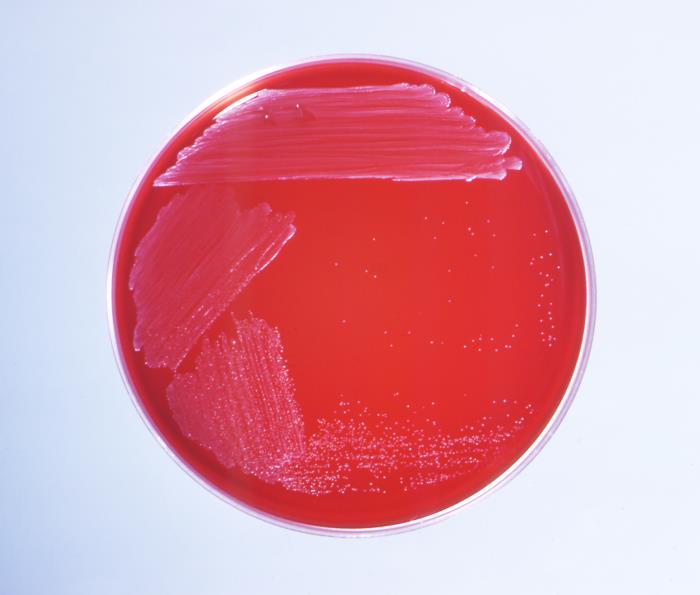
While PCR provides speed, culture remains the definitive confirmatory test for plague. Growing Yersinia pestis from a patient specimen in the laboratory provides unequivocal proof of infection — and, crucially, yields a living isolate that can be tested for antibiotic susceptibility.
The process works like this: clinical specimens are inoculated onto specialized growth media, including blood agar and brain-heart infusion broth. Y. pestis grows optimally at 28°C (cooler than human body temperature, reflecting its adaptation to flea vectors), forming characteristic small, translucent colonies. Definitive identification typically requires 24 to 48 hours, though preliminary growth may be visible sooner.
Once isolated, the bacteria undergo biochemical testing and sometimes phage lysis assays — Y. pestis is susceptible to a specific bacteriophage that causes the colonies to dissolve, providing an elegant confirmatory test. The isolate is then forwarded to reference laboratories, including the CDC's Division of Vector-Borne Diseases, for definitive characterization.
The antibiotic susceptibility testing performed on cultured isolates has direct clinical importance. While Y. pestis remains broadly susceptible to first-line antibiotics, drug-resistant strains have been documented — most notably a multidrug-resistant isolate from Madagascar in 1995. Knowing the susceptibility pattern ensures patients receive effective therapy.
Serology and Antigen Tests: Supporting Players
Beyond PCR and culture, several additional tests support plague diagnosis. Serologic testing detects antibodies against the Y. pestis F1 antigen in patient blood. Because antibodies take 7 to 10 days to develop, serology is primarily useful for retrospective confirmation rather than acute diagnosis — but paired acute and convalescent samples showing a fourfold rise in antibody titer provide strong evidence of recent infection.
Rapid diagnostic tests (RDTs) detecting F1 antigen have been deployed in field settings, particularly during Madagascar's plague outbreaks. These lateral-flow assays work similarly to rapid COVID or pregnancy tests, delivering results in about 15 minutes. While less sensitive than PCR, their speed and simplicity make them valuable for initial triage in resource-limited outbreak settings.
Direct fluorescent antibody (DFA) testing, in which fluorescently labeled antibodies bind to Y. pestis in clinical specimens, can provide rapid presumptive identification within hours. The CDC has historically used DFA as a key rapid diagnostic tool.
Inside the Lab: Biosafety and Procedure
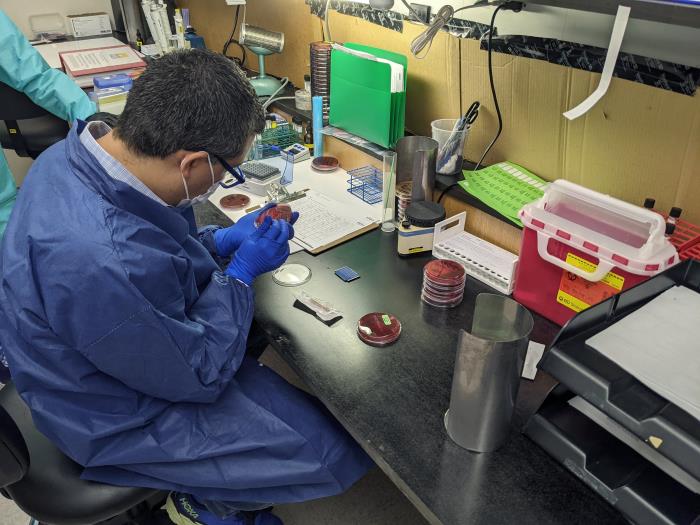
Diagnosing plague isn't just a technical challenge — it's a safety challenge. Yersinia pestis is classified as a Tier 1 select agent by the U.S. government, meaning it is regulated as a pathogen with the potential to pose a severe threat to public health. Laboratories handling suspected plague specimens must follow stringent biosafety protocols.
Clinical specimens from suspected plague cases are processed under Biosafety Level 2 (BSL-2) conditions with BSL-3 practices — including work inside biological safety cabinets, use of respiratory protection when aerosol-generating procedures are performed, and strict decontamination protocols. Once Y. pestis is confirmed or strongly suspected in culture, all further work moves to full BSL-3 containment.
This is why plague diagnosis typically involves a tiered laboratory system. Hospital and commercial labs perform initial specimen collection and may run rapid tests. State public health laboratories handle PCR and preliminary culture. Definitive confirmation and characterization occur at reference centers, principally the CDC. Each tier has the facilities, training, and regulatory authorization appropriate to the risk.
The biosafety requirements also explain why diagnosis can be logistically complex in remote outbreak settings. Transporting potentially infectious specimens to capable laboratories requires specialized packaging, cold chain maintenance, and compliance with infectious-substance shipping regulations — all of which add time to an already urgent process.
Why Treatment Starts Before Confirmation
Perhaps the most critical principle in plague diagnosis is this: doctors do not wait for laboratory confirmation to begin treatment. The CDC's guidance is unambiguous on this point, and the reason is stark mathematics of mortality.
Untreated pneumonic plague is virtually 100% fatal, often within 24 to 72 hours of symptom onset. Every hour of delay in starting antibiotics reduces the chance of survival. Even the fastest PCR test requires time for specimen transport, laboratory processing, and result reporting — time a critically ill patient may not have.
The standard approach is therefore: collect specimens first (blood cultures, bubo aspirate, sputum as indicated), then immediately start empiric antibiotic therapy with drugs effective against Y. pestis — typically gentamicin or doxycycline. Laboratory results then serve to confirm the diagnosis, guide public health response, and allow therapy to be refined — but they never gate the initial life-saving treatment decision.
This "treat first, confirm second" paradigm is standard for many life-threatening infections, but it carries special weight for plague because of the disease's extraordinary speed and the public health implications of a confirmed case, which triggers contact tracing, prophylaxis for exposed individuals, and potentially broader containment measures.
The Siberia Case: Diagnosis Under Pressure
The ongoing situation in Irkutsk illustrates every diagnostic challenge simultaneously. When a lab worker died and approximately 200 contacts were placed under observation, health authorities faced a cascade of diagnostic questions: Was the death actually caused by plague, or by something else? Among the 200 observed individuals, who had been meaningfully exposed? Who was developing early symptoms? Who could be safely released?
Laboratory-acquired infections present particular diagnostic complexities. The exposure may involve unusual routes or doses. The worker may have been handling attenuated strains or virulent ones. And in the early hours, before laboratory results return, authorities must make consequential decisions — quarantine, prophylactic antibiotics, facility lockdowns — based on clinical assessment and epidemiological reasoning alone.
The White House monitoring of the situation, as reported in October 2026, underscores how a single diagnostic question — is this plague? — can escalate to international significance when the answer determines the scale of response.
What This Means for You
For most readers, plague diagnosis will never become personally relevant — the disease remains rare, with only a handful of cases annually in the United States and concentrated endemic zones worldwide. But understanding how diagnosis works matters for several reasons.
First, it explains why public health authorities respond so aggressively to suspected cases. The diagnostic timeline — clinical suspicion triggering immediate treatment and specimen collection, rapid PCR for early answers, culture for confirmation — drives every quarantine and contact-tracing decision.
Second, it highlights the critical role of clinical awareness. Because plague is rare, the most common diagnostic failure is not a laboratory error but a clinician who doesn't consider the diagnosis. The CDC continually reminds healthcare providers — particularly in the southwestern United States where plague is endemic in wildlife — to keep plague on the differential diagnosis for compatible presentations.
Finally, the diagnostic playbook for plague exemplifies a broader principle of infectious disease medicine: the best test is sometimes the clinician's judgment, the fastest treatment is the one started before certainty, and the laboratory's role is to confirm, refine, and guide the public health response that follows. In the race against one of humanity's oldest killers, that combination of speed and science is what saves lives.
Sources: U.S. Centers for Disease Control and Prevention (CDC) plague diagnosis guidelines; CDC Public Health Image Library; WHO plague fact sheets; Clinical Microbiology Reviews on Yersinia pestis diagnostics.
Keywords: how is plague diagnosed, plague diagnosis, plague test