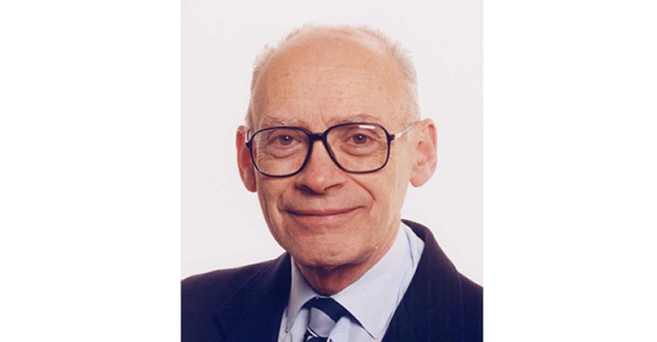
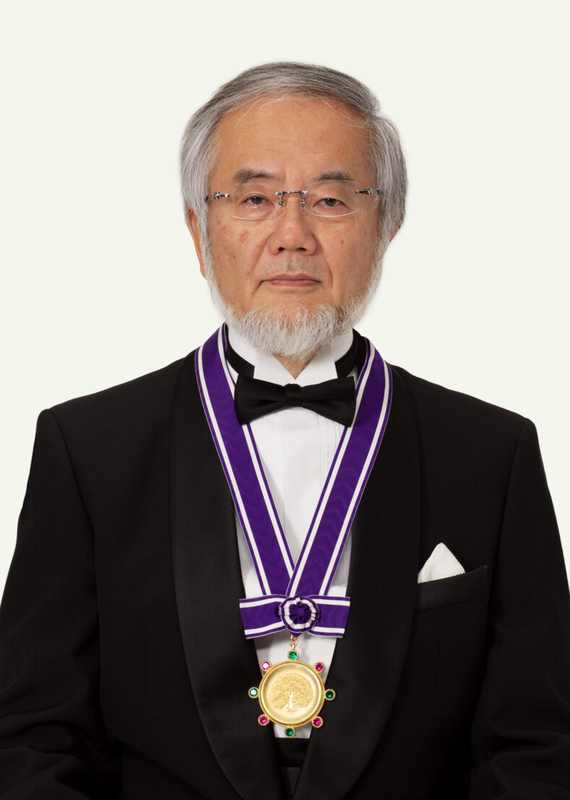
STOCKHOLM— The Royal Swedish Academy of Sciences awarded the 2026 Nobel Prize in Chemistry to French chemist Henri B. Kagan and Japanese chemist Kenso Soai on Wednesday, recognizing their discovery of non-linear effects and autocatalysis in asymmetric organic synthesis. Kagan, 95, is affiliated with Université Paris-Sud in Orsay; Soai, 76, works at Tokyo University of Science.
The two laureates will divide 12 million Swedish kronor, about $1.2 million. The announcement completed the scientific half of Nobel week after Monday's medicine prize for optogenetics and Tuesday's physics prize for Francis Halzen and IceCube neutrino science. Literature follows Thursday, peace Friday and economics Monday.
What the chemistry Nobel rewarded
Chirality chemistry explained: molecules can have a left and a right hand
Some molecules exist in two arrangements that contain the same atoms and bonds but cannot be laid over each other, much as a left hand cannot be perfectly superimposed on a right hand. Chemists call those mirror-image forms enantiomers and the property chirality. The distinction can be decisive in biology because receptors, enzymes and proteins are three-dimensional structures that may accept one molecular hand far better than the other.
A conventional laboratory reaction can produce a 50-50 mixture of both versions, called a racemic mixture. Living systems are strikingly different. Amino acids in proteins and sugars in genetic material overwhelmingly favor one handedness, a condition known as homochirality. That asymmetry is essential to the orderly chemistry of cells, yet its emergence from a world that should initially have had no preferred hand has challenged scientists for more than a century.
Henri Kagan asymmetric synthesis: a small imbalance stops behaving linearly
Kagan's early-1980s work showed that the relationship between a catalyst's handedness and a reaction's product was not always proportional. A catalyst mixture with only a modest excess of one form could deliver a much larger excess of one product, or in other circumstances a weaker result than a simple calculation predicted. His decisive 1986 work made the non-linear effect a powerful clue rather than a laboratory curiosity.
The underlying lesson was that chiral catalyst molecules could associate with one another and behave differently depending on which hands met. That offered chemists a diagnostic window into reaction mechanisms and, more importantly, demonstrated that a small initial bias did not have to remain small.
The Soai reaction: autocatalysis turns a whisper into a chorus
Soai pursued the more demanding half of the problem: a reaction in which the product helps make more of itself. His group published the first asymmetric autocatalytic reaction in 1995. In the process now carrying his name, a chiral alcohol acts as the catalyst for producing more alcohol with the same handedness. Each round therefore reinforces whichever hand gained the earliest advantage.
By 2003, the group had demonstrated the full amplifying behavior with a reaction that could take a minute initial excess and drive the final mixture to more than 99% of one enantiomer. The chemistry gave experimental substance to a model physicist Charles Frank had proposed in 1953: self-replication plus inhibition of the opposite hand could convert near-symmetry into homochirality.
Committee chair Heiner Linke described the reactions as “spectacular” and said the laureates had solved a chemical mystery more than a century old. Soai's reaction does not recreate early Earth, but it proves a physically plausible mechanism by which almost nothing can become a dominant molecular preference.
Why it matters for medicines
Chiral drug manufacturing is about biological fit, not cosmetic purity
Mirror-image molecules can interact differently with the body. One enantiomer may fit a target receptor and produce the intended treatment; its mirror image may be less active, act somewhere else or create unwanted effects. The practical goal is not to declare one universal hand “good” and the other “bad.” It is to manufacture the particular configuration shown to be effective and safe for a specific compound.
Kagan's work helped make asymmetric catalysis a disciplined strategy: use a small amount of a chiral catalyst to guide many molecules toward the desired form. Compared with producing a mixture and separating it afterward, selective synthesis can reduce waste, simplify purification and improve consistency. Soai's amplification mechanism is less widely used as an industrial recipe, but it changed how chemists think about detecting and magnifying tiny enantiomeric excesses.
Pharmaceutical manufacturers, fine-chemical producers and catalyst designers benefit from that intellectual toolkit. A process that delivers the correct enantiomer at high yield can lower solvent use and manufacturing steps while making dose and impurity controls easier to manage. Those advantages matter most when a therapy is complex, expensive or produced at large scale.
The origins-of-life angle—and what remains unresolved
Homochirality is a necessary feature of life as we know it, but necessity is not the same as a complete origin story. The Soai reaction shows that spontaneous symmetry breaking can be amplified under laboratory conditions. It does not establish which compounds, catalysts, surfaces, temperatures or environmental cycles actually operated before biology emerged on Earth.
Researchers still debate where the first bias came from. Possibilities include polarized light in space, chiral mineral surfaces, random statistical fluctuations and physical effects that make one hand ever so slightly more stable. An amplification mechanism can begin with any of those seeds, but scientists still need to connect the seed, the chemistry and the transition to self-sustaining biological systems.
That is why the prize should not be read as a declaration that life's origin has been solved. It recognizes a convincing answer to one central subproblem: chemistry possesses a route for turning an extremely small asymmetry into an overwhelming one. The historical pathway used by early Earth remains open.
From Pasteur to modern asymmetric catalysis
Louis Pasteur's 1848 separation of mirror-image tartrate crystals helped establish molecular handedness before chemists could directly see molecular structures. Through the next century, stereochemistry became essential to understanding how molecules react and how organisms distinguish them.
The pharmaceutical stakes became impossible to ignore as drug development matured. Chemists learned to separate enantiomers, borrow chiral starting materials from nature and design catalysts that create one hand preferentially. The 2001 chemistry Nobel recognized William Knowles, Ryoji Noyori and Barry Sharpless for catalytic asymmetric synthesis. Kagan's omission from that award prompted disappointment in France, where his contributions were already regarded as foundational.
Other milestones followed. The 2021 chemistry prize honored Benjamin List and David MacMillan for asymmetric organocatalysis, which uses small organic molecules rather than metals or enzymes. The 2026 decision fits that lineage but rewards a more fundamental question about amplification: how a modest or almost undetectable asymmetry can become dominant.
Why a fundamental-method prize stands out
Chemistry Nobels often sit at the junction of method and application. A new reaction can look abstract on announcement day, then become the route by which thousands of laboratories make medicines, materials or probes. Kagan and Soai are being recognized not for one commercial drug but for a principle that changed the possibilities available to other chemists.
Such awards can be difficult to communicate because the payoff is distributed. There is no single patient, factory or product that captures the whole achievement. The evidence lies in the field's behavior: asymmetric synthesis is now standard practice, enantiomeric purity is a central part of drug development, and the Soai reaction remains a benchmark for experiments on spontaneous symmetry breaking.
The prize also emphasizes how long science can take to mature. Kagan's non-linear effects date to the 1980s; Soai's first autocatalytic paper appeared in 1995; the fuller demonstration arrived in 2003. Nobel recognition came only after the mechanisms had been scrutinized and their importance absorbed across chemistry.
Who gains, who faces pressure, and where the debate goes next
Academic chemists gain visibility for mechanistic work that can be overshadowed by immediately marketable discoveries. Drugmakers gain renewed attention on efficient single-enantiomer processes. Universities and governments may direct more support toward chiral catalysis, prebiotic chemistry and analytical methods sensitive enough to measure extremely small imbalances.
The pressure falls on anyone tempted to turn the prize into a promise it does not make. A laboratory reaction using carefully selected reagents is not evidence that the same pathway created life. Nor does an award eliminate industrial challenges such as expensive catalysts, metal contamination, difficult scale-up or the environmental footprint of solvents and purification.
Future work will test broader families of autocatalytic reactions, explore systems compatible with water and plausible early-Earth conditions, and connect amplification to networks that can evolve. In manufacturing, the focus is likely to be catalysts that are more selective, recyclable and tolerant of complex molecules.
A Nobel phone call during an ordinary shopping trip
The announcement carried a human contrast to the decades of specialized chemistry. Soai said he was shopping when the prize call reached him and described the day as one of the most exciting of his life. For Kagan, the award arrives a quarter-century after the 2001 chemistry prize revived public debate over whether his role in asymmetric catalysis had been overlooked.
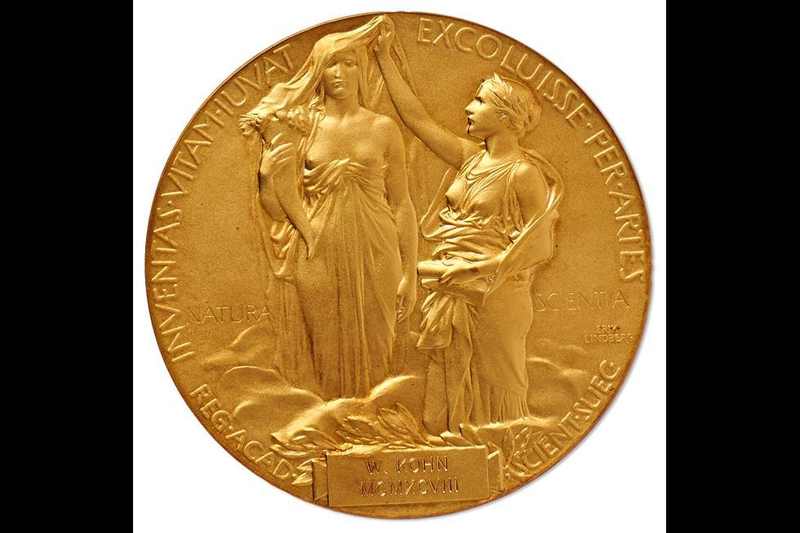
Both laureates are scheduled to receive medals and diplomas in Stockholm on December 10, the anniversary of Alfred Nobel's death. Attention will turn first to the remaining announcements of Nobel week, then to the laureates' December lectures, where chemists will listen for how each winner frames the boundary between a proven reaction and the much larger mysteries it illuminates.
The larger meaning of the Nobel Prize Chemistry 2026
The breakthrough is a lesson in scale. A molecule's left-right distinction is invisible to ordinary sight, yet it can determine whether a medicine fits its biological target. An initial imbalance can be nearly imperceptible, yet autocatalysis can magnify it until one form dominates. A decades-old experiment can become the conceptual bridge between an industrial process and a question about life's beginning.
Kagan showed that asymmetric reactions need not respond linearly to a catalyst's composition. Soai showed how a product can reproduce its own handedness and amplify chance into order. Together, those discoveries explain not every step toward life, but a mechanism powerful enough to make molecular preference emerge—and useful enough to change how modern chemistry builds.