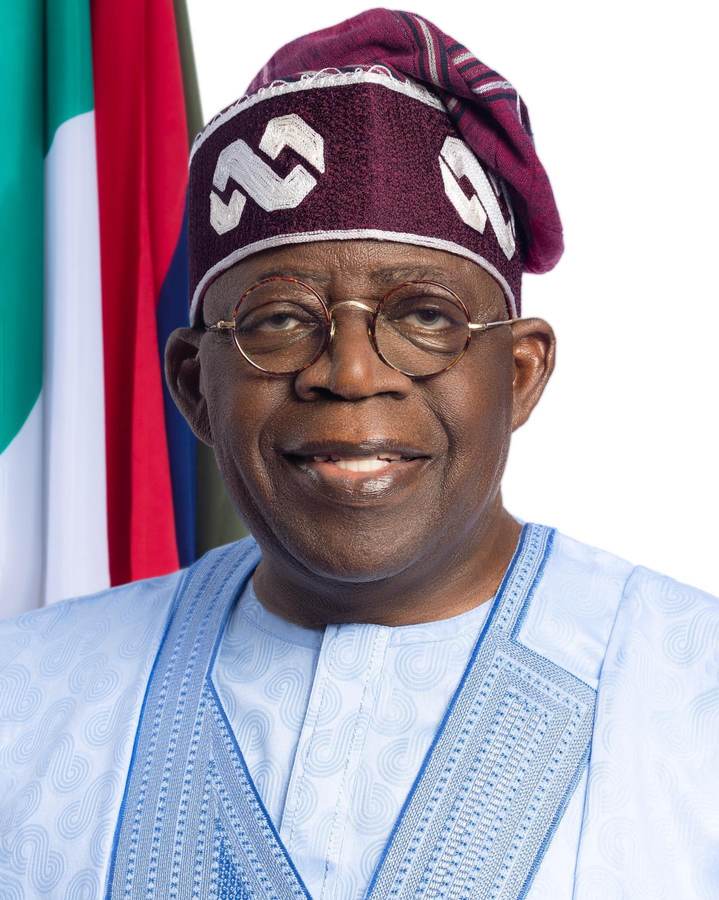
On Nigeria independence day 2026, Africa's most populous nation woke to a public holiday, a presidential broadcast, and a question that has trailed the country for decades: after 66 years of sovereignty, when does the promise finally arrive? President Bola Ahmed Tinubu addressed the nation at 7 a.m. on Thursday, October 1, delivering an Independence Day speech titled "From Reform to Prosperity" in which he insisted Nigeria's painful economic reforms are turning a corner — the nation, he said, has crossed its own Red Sea, and prosperity is next.
The address, broadcast across the Nigerian Television Authority and Federal Radio Corporation of Nigeria networks, was Tinubu's central set-piece for the 66th anniversary of the day the green-white-green flag was first raised over a free Nigeria on October 1, 1960. The Federal Government declared Thursday a national public holiday, with Interior Minister Dr. Olubunmi Tunji-Ojo congratulating Nigerians at home and abroad and urging citizens to use the occasion to demonstrate "unity, patriotism, peaceful co-existence and mutual respect."
What Tinubu actually said
The speech opened with the familiar cadence of independence oratory — "Sixty-six years ago today, our flag was raised, for the first time, over a free and sovereign nation" — before moving quickly to the harder material. Tinubu acknowledged what few leaders say plainly on a celebration day: "Our journey has not always been easy. In truth, it has generally been too hard for too many."
He listed the country's scars in a single breath — "war, military rule, economic crises, insecurity and political upheaval" — and argued that Nigeria has endured them all through the resilience of ordinary people: the farmer who rises before dawn, the trader who opens her shop each morning, the teacher, the young entrepreneur, and the men and women of the Armed Forces "who place themselves in harm's way so that the rest of us may live in peace."
Then came the line dominating headlines across Nigerian media: the country has passed through its own Red Sea, and prosperity is next. The biblical framing was deliberate — a nation delivered through trial into promise — and it set the thesis of the entire address: the reforms of the past three years were the crossing; the reward is now due.
Tinubu also reached back to the founding generation, arguing that independence carried "a larger promise" than a flag and an anthem — "that Nigerians would have the freedom to shape their own destiny and build a nation capable of providing opportunity, dignity and a better life." Sixty-six years on, he said, it is this generation's responsibility to deliver it, and past choices that "postponed difficult decisions" had allowed "deep economic distortions" to grow — a clear defense of the subsidy removals and currency reforms that defined his presidency's first years.
A holiday, a homecoming, and a broadcast
The choreography around the speech was as telling as its content. Tinubu delivered the address from Lagos, where he arrived on Tuesday after a three-week working vacation abroad — one week in London, then Paris, where he held a private dinner with French President Emmanuel Macron. He was received at Murtala Muhammed International Airport by Lagos State Governor Babajide Sanwo-Olu and other dignitaries.
The presidency said Tinubu would use his Lagos stay for strategic meetings with political leaders and associates ahead of the 2027 general elections — a reminder that the independence address was never only ceremony. With the next presidential contest now barely a year away, every claim of economic turnaround doubles as campaign groundwork, and every admission of hardship is a line the opposition will quote back.
Why this matters
Independence Day speeches are easy to dismiss as ritual, but this one landed at an unusually consequential moment. Nigeria is the hinge of West Africa: its population — well past 230 million and still growing fast — makes it the continent's largest domestic market and its largest exporter of people, culture, and, increasingly, anxiety. When its president declares the reform pain over, markets, migrants, and militants all listen.
The "Red Sea" claim matters because it is a testable promise. Tinubu is not saying reforms were necessary — that argument was settled, brutally, in 2023 — he is saying the suffering they caused has an expiry date. If prices stabilize, the naira steadies, and growth reaches households over the next twelve months, the speech will read as the moment the corner was called. If hardship deepens instead, "prosperity is next" becomes the opposition's most effective slogan of 2027.
There is also a regional signal. Nigeria's weight in ECOWAS and African Union diplomacy has wobbled under the strain of domestic crises — from the bandit insurgency in the northwest to the separatist and jihadist pressures that have tested the military for over a decade. A president confident enough to declare victory over reform pain is also telling the continent that Abuja intends to reassert itself. Whether the security situation cooperates is another matter: just last month, armed bandits kidnapped 80 farmers across Zamfara and Niger states, a reminder that large parts of the northwest remain outside the state's full control.

Sixty-six years in context
Nigeria's independence story is one of the great what-ifs of the post-colonial world. At independence in 1960, the country held democratic promise, agricultural wealth, and — discovered just a few years earlier — oil. What followed instead became a cautionary syllabus: a civil war (1967–1970) that killed over a million people, decades of military rule punctuated by coups, the oil boom and bust cycles that taught the economy to depend on a single commodity, and a democratic era since 1999 that has delivered stability of form without yet delivering the prosperity of substance.
The historical parallel Tinubu is implicitly invoking is the reform moment of the mid-1980s and early 2000s — previous attempts to liberalize that collapsed under political pressure or were captured by elites. His argument is that this time the reforms went further and hurt more precisely because they were real: the fuel subsidy, which consumed vast public funds to keep petrol cheap, is gone; the naira's multiple exchange rates were unified. Economists largely agree these were necessary corrections. The open question — the one that will define both Tinubu's legacy and the 2027 election — is whether the pain purchased anything for the farmer, the trader, and the teacher he praised in his speech.
What the numbers say — and what they don't
Nigeria's economic data tells a story of a country in the middle of a structural adjustment, not at the end of one. The central bank's decision to cut interest rates in September 2026 was read by analysts as a signal that policymakers believe the worst of the inflation surge has passed — a data point that supports Tinubu's "crossed the Red Sea" framing. But rate cuts also reflect a gamble: that inflation will keep falling without the crutch of high borrowing costs, and that growth can resume while the currency finds its level.
The honest reading of the numbers is mixed, which is why the speech's confidence is itself the story. Population growth continues to outpace the economy's ability to absorb young workers; food inflation has eased from its peaks but remains punishing for households; and the government's own revenue position, while improved by subsidy savings and better oil receipts, has yet to translate into the visible infrastructure and services that change daily life. Tinubu's promise is essentially a forward contract: trust the trajectory. Voters in 2027 will audit it.
Who wins, who loses, what the critics say
The winners in Tinubu's telling are the reformers and the patient: investors who bet on a liberalized Nigeria, the treasury that no longer bleeds on subsidies, and — eventually — ordinary Nigerians, once cheaper capital and a stable currency feed through to jobs and prices.
The losers so far are easier to name: households that absorbed the full shock of subsidy removal and devaluation, small businesses crushed between input costs and weak demand, and the millions for whom "reform" has been an abstraction and the hardship entirely concrete. Citizen reaction to the anniversary has been notably mixed, with many Nigerians greeting the celebrations with skepticism about what, exactly, is being celebrated.
The critics make three arguments. First, that the reforms, while directionally correct, were sequenced brutally — subsidy and currency shocks landing together maximized pain. Second, that the savings have not visibly reached the public: where are the schools, hospitals, and roads the subsidy billions were supposed to fund? Third, that insecurity — the bandit economy of the northwest, the mining-crisis deaths in Niger State, the farmer-herder conflicts — undermines every economic gain, because no prosperity narrative survives contact with a kidnapping epidemic.
The administration's answer, embedded in the speech, is that postponing hard decisions is what created the distortions in the first place, and that the alternative to reform was not comfort but collapse. It is a serious argument. It is also, now, a dated one: three years in, "we inherited a mess" has an expiry date, and Tinubu's Red Sea metaphor effectively sets it — the crossing is over, so the promised land must now materialize.
What happens next
Three things will determine whether this speech ages well. First, prices. If food and transport costs keep falling through the end of 2026, households will start to feel the recovery Tinubu claims is underway. Second, security. The northwest bandit crisis and the Niger mining unrest are the fastest way to puncture any prosperity narrative; the military's performance in the coming months matters as much as the central bank's. Third, politics. The strategic meetings Tinubu is holding in Lagos ahead of 2027 will shape whether the ruling party can convert "reform to prosperity" from a speech theme into a campaign story — or whether the opposition seizes the gap between the promise and the lived experience.
Sixty-six years after the flag first rose, Nigeria remains what it has always been: the African giant whose potential is matched only by the scale of its disappointments. Tinubu's gamble is that this time the potential finally cashes in — and that Nigerians will feel it in their pockets before they feel it in a ballot box. The Red Sea, in the biblical story, was the easy part. The desert came after.
Sources and reporting notes
- Federal Ministry of Information and National Orientation: October 1 public holiday declaration
- Voice of Nigeria: Independence Anniversary public holiday
- The Sun Nigeria: 66th Independence anniversary holiday
- The Leader Nigeria: Full text of “From Reform to Prosperity”
- West Africa Democracy Radio: Nigeria marks 66th anniversary amid mixed reactions
Reporting note: The broadcast text, public-holiday declaration and public reaction are drawn from the cited official statement and reporting. Political, economic and historical interpretation is Signal Post News analysis.
Signal Post News will update this report as official economic data and 2027 campaign positions develop.
Back to all stories