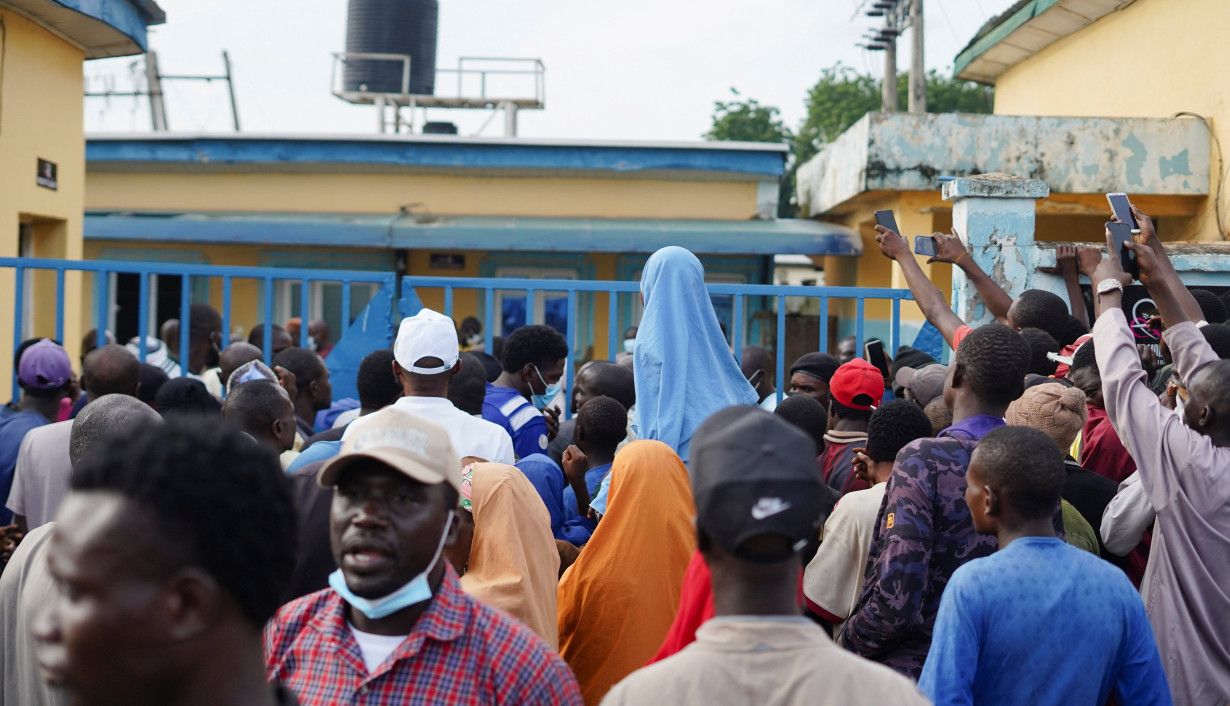
Nigeria is confronting one of its deadliest reported mass custodial-death incidents in years after Niger State authorities confirmed that 37 suspected illegal miners died following detention by the Nigeria Security and Civil Defence Corps in Minna. Reuters journalists filmed 33 bodies at General Hospital on September 17; the state later put the toll at 37. Governor Mohammed Umaru Bago said many of those who died were aged 14 to 18—young people he said should have been in school, not working at mines.
The detainees had been arrested on September 15 and 16 during NSCDC raids on suspected illegal gold-mining sites in the Wushishi–Lukoto area west of Minna. By the evening of September 17, families were burying the dead under Islamic practice and anger was spilling into the streets. Protests continued on September 18, security forces fired live rounds, and the state imposed an overnight curfew. Reuters reported seeing one body on a Minna street; some protesters tried to set government buildings alight in Tunga.
The central fact remains brutally simple, while the central medical question remains open: 37 people entered state custody alive and did not leave it alive. No completed autopsy or independent medical finding has yet established why they died.
September 15–22: how the crisis unfolded
- September 15–16: NSCDC personnel arrested more than 50 people in raids on suspected illegal gold-mining operations around Wushishi–Lukoto, according to agency and press accounts. The detainees had not been charged.
- September 17: Reuters filmed 33 bodies at General Hospital in Minna. Families began burials, and protests erupted as news of the deaths spread.
- September 18: Niger State confirmed the toll at 37. Demonstrators marched through Minna; security forces fired live ammunition, an overnight curfew was imposed, and Governor Bago announced three days of mourning and delayed the start of campaigning for January elections.
- September 19: Interior Minister Olubunmi Tunji-Ojo suspended Niger State NSCDC commandant Suberu Siyaka Aniviye and 20 officers and guards. He named a 10-member independent committee with a two-week deadline.
- September 22: survivor testimony sharpened public scrutiny, but the cause of death was still not medically established.
Two explanations, and no final cause
Families and survivors describe a custody environment in which air, space and time ran out. Abdullahi Dalhatu, the father of a survivor, told the BBC that detainees fainted in a crowded cell, knocked for help and received no response; he said his son survived because he was near a small window. The BBC said it could not independently verify that account. The Guardian reported another survivor describing a jam-packed room with inadequate ventilation. An intelligence report shared with Agence France-Presse also pointed to overcrowding and poor ventilation.
Reuters later reported allegations from three survivors that guards sprayed an unidentified substance inside the crowded room, kept the door locked and ignored pleas for help. Those allegations have not been independently proved, and Reuters said it could not determine the cause of death.
NSCDC initially mentioned suspected diphtheria or disease, then clarified that no disease had been medically confirmed and that the cause remained undetermined pending examinations. That reversal matters. An outbreak, suffocation, hazardous exposure and a combination of conditions require different evidence and imply different forms of responsibility. Until pathologists report, none should be presented as settled fact.
A mother’s allegation puts money and access at the center
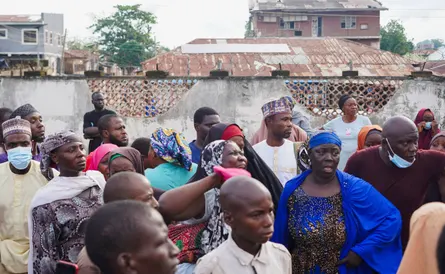
Shafa’atu Suleiman told Reuters that she saw her son Abdullahi in a cramped cell before his death. She alleged that relatives were prevented from bringing detainees food and that officials demanded 100,000 naira—about $75 at the conversion reported at the time—for release. NSCDC did not answer Reuters questions about those specific claims.
The amount is small only from a distance. For a household already depending on informal mining, a six-figure-naira demand can be prohibitive. If investigators substantiate the allegation, they will need to determine whether it was an authorized bail-related payment, an unlawful demand, or something else—and who knew about it. The distinction belongs to evidence, not assumption.
The artisanal gold economy behind the arrests
Niger State is rich in gold and other minerals, but much of the extraction takes place through informal or artisanal operations: shallow pits, hand tools, labor brokers and cash trading networks that sit outside effective licensing, taxation and safety oversight. Thousands of people depend on that economy. It offers income where formal jobs, schooling and public services are thin, while exposing workers to collapses, toxic substances, violence and exploitation.
That is the contradiction behind enforcement. Illegal mining can damage land, divert public revenue, finance criminal networks and put children in dangerous work. Yet a raid aimed at those harms can deepen them if it treats impoverished laborers as disposable while the financiers and buyers above them remain untouched. Bago’s statement that many victims were aged 14 to 18 forces the child-labor question into the open: who recruited them, who bought what they dug, and which public systems failed before the arrests?
NSCDC is an armed Interior Ministry agency charged with protecting critical national infrastructure and supporting enforcement against illegal mining. Those powers do not reduce its duty of care. Once people are detained—whether or not they were mining unlawfully—the state assumes responsibility for ventilation, water, food, medical attention, documentation and timely access to court.
Why 37 deaths change the accountability threshold
Nigeria has a long record of public allegations involving arbitrary detention, torture, extortion and deaths in security custody; the 2020 #EndSARS movement turned those accumulated grievances into a national reckoning. What makes Minna exceptional is concentration: 37 deaths connected to one detention episode, over a matter of days, under one federal paramilitary command.
The number is not merely a statistic. At a confirmed toll of 37, an explanation based on isolated individual illness becomes harder to accept without medical evidence showing how one detention cohort was affected. The reported ages—14 to 18 for many victims—raise separate duties involving children, schooling and safeguarding. The short September 15–17 interval narrows the window in which intake records, cell logs, guard rosters, medical referrals and surveillance footage should exist.
For President Bola Ahmed Tinubu, this is an institutional test rather than a messaging test. He ordered a full investigation and said suspected illegal mining does not extinguish a person’s right to life, dignity and humane treatment. The administration will be judged on whether evidence is preserved, whether witnesses can speak without intimidation, and whether administrative suspension leads—where evidence warrants—to prosecution, compensation and reform.
A federal response meets public mistrust
The government’s initial actions are substantial on paper. Tunji-Ojo suspended the state commandant and 20 connected personnel. The 10-member panel, chaired by retired Department of State Services deputy director-general Jonathan Kure, includes legal, medical, security, mining, traditional-institution and civil-society representation. It can inspect facilities and documents, visit locations, receive public memoranda and recommend sanctions, compensation and measures to prevent recurrence.
But public mistrust is not irrational resistance to process. Families heard an early disease suggestion before seeing a medical conclusion. Bodies were buried quickly, potentially complicating forensic work. Protesters saw security forces answer unrest with live fire. Twenty-four-year-old Allamin Adamu was reportedly shot while returning from a funeral for one of the miners—an account that also requires independent investigation. Administrative suspensions, while necessary to protect an inquiry, are not findings of criminal guilt and cannot substitute for them.
What the two-week panel must answer
The committee’s credibility will depend on specific answers, not a general promise of reform:
- Who was detained? Publish a verified list of all detainees, their ages, arrest locations, intake times and legal status.
- What were the cell conditions? Establish the room’s dimensions, rated capacity, ventilation, occupancy, temperature, sanitation and access to water.
- What happened medically? Reconcile hospital records, toxicology where possible, symptoms reported by survivors, the early diphtheria claim and any evidence of suffocation or chemical exposure.
- Who was on duty? Preserve guard logs, radio traffic, phone records, CCTV and orders given when detainees allegedly called for help.
- Were food and release payments blocked or demanded? Test Suleiman’s allegation and identify any financial trail.
- Why were minors detained in those conditions? Determine whether age screening, child-protection rules and family notification occurred.
- What happened during the protests? Account for every use of live ammunition, including the reported death of Adamu.
What comes next
The two-week deadline is short enough to preserve urgency but long enough for evidence to disappear if authorities delay. A public report, with protected annexes only where law requires, would help answer the suspicion that internal inquiries exist to absorb outrage. Families should be able to submit testimony safely and see how findings lead to compensation or charges.
There is also a security risk. Minna’s curfew contained immediate unrest, but silence is not resolution. If the inquiry appears closed, delayed or medically evasive, funerals and campaign events could become new rallying points. Bago’s postponement of January-election campaigning acknowledged that politics could not proceed normally beside mass bereavement; once campaigning resumes, opponents and voters are likely to treat the government’s handling of the case as a test of competence and empathy.
Mining policy faces its own reckoning. Raids that net teenage laborers without dismantling financing and gold-buying networks will continue to reproduce the same cycle: poverty, dangerous work, detention and mistrust. The durable response is not to abandon enforcement, but to distinguish exploited workers from organizers, formalize viable artisanal operations, enforce child-labor protections and make custody standards as measurable as mining licenses.
Thirty-seven deaths demand more than a temporary suspension of officers. They demand a chain of evidence from the mine site to the cell, the hospital and the streets—and a public accounting of every point at which the state could have prevented the loss of life.
Source trail: Reuters’ September 18 report; CNN’s September 18 coverage; BBC News; The Guardian’s survivor report; Graphic Online’s report citing AFP intelligence material and BBC interviews; Reuters’ September 22 follow-up, syndicated by WIXX; and the official Interior Ministry statement published by Nigeria’s State House.