South Africa summons US ambassador
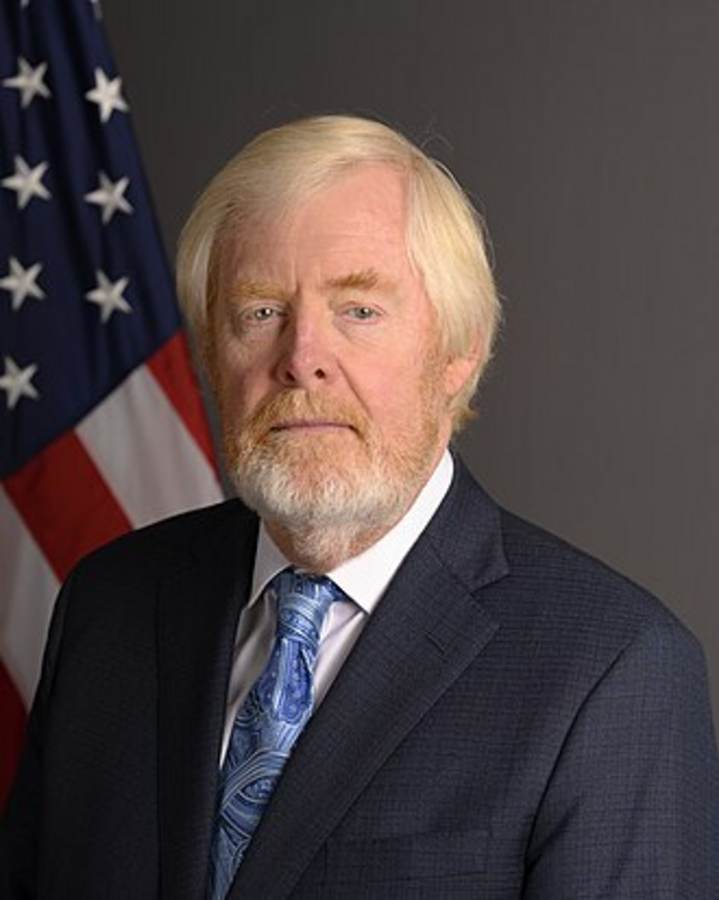
South Africa summons US ambassador L. Brent Bozell III again: the Department of International Relations and Cooperation called him in on Tuesday, September 29, over what a senior official described to Reuters as “undiplomatic conduct.” The official said this was the third démarche since Bozell began his duties about nine months ago. DIRCO did not identify the precise remark that triggered the latest protest.
A démarche is a formal diplomatic complaint delivered by one government to another. It is stronger than public displeasure and weaker than declaring an envoy persona non grata. That distinction matters because Pretoria and Washington are no longer arguing only about land, race, trade or foreign policy. They are arguing about how their argument is conducted.
What the DIRCO demarche establishes
Reuters reported direct confirmation from a senior DIRCO official: Bozell had been demarched for a third time during his tenure. The U.S. embassy in Pretoria did not immediately answer the wire service's request for comment, while the State Department said it would respond later. Channel Africa, citing SABC reporting, said a U.S. government official rejected “diplomatic manoeuvring” and said the ball was in South Africa's court.
South African reports connected the summons to Bozell's recent local-media interviews. He had criticized Pretoria's response to U.S. demands involving rural safety, investment security and wider strategic questions, expressed disappointment in President Cyril Ramaphosa's management of the relationship and warned that Washington had run out of patience. That reporting supplies context, not a confirmed trigger: the official who spoke to Reuters did not specify which comment prompted Tuesday's meeting.
Bozell demarche third time: a record and a warning
NovaNews described the three protests as a record for any U.S. ambassador to South Africa. Even without treating that historical claim as a formal government finding, three démarches in about nine months is an extraordinary concentration of official rebukes. The first came within weeks of Bozell's February arrival, after remarks DIRCO said disregarded South Africa's courts and historical setting. A cycle then formed: public criticism, a formal summons, partial repair and renewed escalation.
That is why the latest Bozell demarche third time episode matters. A démarche normally protects the relationship by moving anger into a controlled diplomatic room. Repeated use can mean the control mechanism is failing. Above it on the escalation ladder sit a recall for consultations, the withdrawal of an ambassador, or expulsion. None has been announced. But each repetition makes the next rung less theoretical.
Why this matters for South Africa US relations 2026
The relationship has become unusually personalized. The Cyril Ramaphosa Trump dispute is carried through presidential meetings, speeches, refugee policy and ambassadorial interviews rather than confined to technical negotiations. Bozell has said Ramaphosa did not meaningfully answer five White House demands set as conditions for a détente. Pretoria's answer is that it will negotiate but will not surrender authority over domestic choices.
For the L. Brent Bozell III ambassador posting, that creates a structural problem. An envoy's job is to present Washington's policy forcefully while preserving access to the government receiving him. Bozell's firmer media tone may please an administration that wants visible pressure. It can also narrow his usefulness if South African officials increasingly see his public statements as part of a campaign rather than a channel for settlement.
Trump South Africa claims, aid cuts and the refugee program
The current rupture began before this week's meeting. President Donald Trump repeatedly advanced false claims that white South Africans face persecution or genocide. His administration created a special refugee pathway for Afrikaners claiming discrimination, while Pretoria rejected the premise behind it. Signal Post News has separately examined the administration's plan for 17,500 South African refugee places in fiscal 2027.
Trump also halted assistance. NovaNews reported that U.S. foreign aid to South Africa totaled roughly $440 million in 2023 before the administration stopped it, citing objections to land policy and South Africa's case against Israel at the International Court of Justice. That is a real financial pressure point, not merely harsh language. It falls on programs and institutions that did not choose the diplomatic strategy.
The argument over land reform and black economic empowerment is equally resistant to compromise. Washington portrays parts of those policies as race-based discrimination and threats to investment. Pretoria says they address inequality created by apartheid and are matters of national sovereignty. Related domestic economic stakes can be seen in Signal Post News reporting on South Africa's delayed offshore-wind project, where policy certainty and investment confidence have practical consequences.
South Africa G20 ban and a summit without Washington
The South Africa G20 ban sharpened the symbolic break. South Africa hosted the November 2025 summit without a U.S. delegation; Trump later barred South Africa from the 2026 Miami gathering and halted U.S. payments or subsidies linked to its participation. The result is a dispute occurring inside institutions that are supposed to manage global economic differences.
That calendar supplies both leverage and a deadline. Washington can use access to the Miami summit as a visible reward or punishment. Pretoria can refuse concessions it sees as domestic-policy dictates and portray exclusion as evidence that the forum is being politicized. Every month without de-escalation makes it harder for either leader to compromise without appearing to retreat.
US visa restrictions South Africa: pressure moves from words to access
The US visa restrictions South Africa policy announced about two weeks before the summons moved the dispute from statements to individual consequences. Bloomberg, republished by Moneyweb, reported that Bozell threatened further escalation after Secretary of State Marco Rubio announced restrictions on South African policymakers. A travel restriction aimed at unnamed officials is narrower than broad economic sanctions, but it tells Pretoria that Washington is willing to attach personal costs to the disagreement.
Some online searches describe this as an “undemocratic conduct diplomatic protest.” That is not DIRCO's wording. The ministry's stated phrase was undiplomatic conduct, and the distinction is important: the complaint concerns diplomatic behavior, not an announced finding about the United States' democratic system.
Who benefits, who loses and what critics say
Trump's political base can benefit from a confrontation that reinforces the administration's account of endangered white farmers, resistant foreign elites and a president using American leverage. Each South African objection can be presented to supporters as proof that pressure is necessary.
Pretoria's government can benefit domestically by defending sovereignty against external demands. The African National Congress can rally supporters around land reform and black economic empowerment rather than debating only the slow pace or uneven results of those policies. A public rebuke of a U.S. envoy is a visible way to show that defense.
The losers are less theatrical. South African exporters face uncertainty if the fight moves into trade preferences or tariffs. Diplomats on both sides lose room to test compromises privately. Businesses cannot easily price a relationship in which visa rules, aid, summit access and market access may all become bargaining chips. Civil-society and public-health programs absorb the effects of aid cuts.
Critics of Washington say the five demands reach too deeply into domestic law and that false genocide claims distort South Africa's crime and inequality debates. Critics of Pretoria say sovereignty cannot be a blanket answer to rural safety, investment risk or inflammatory political speech. Both critiques can be true at once. The mistake is treating a complex relationship as if victory requires the other government to validate an entire political narrative.
What happens next
Scenario one: managed de-escalation through the US embassy Pretoria
The least damaging path is quiet diplomacy through the US embassy Pretoria and DIRCO: define which statements crossed the line, separate negotiable bilateral issues from non-negotiable domestic law, and produce a limited package both leaders can describe as progress. DIRCO says the differences remain under discussion and that both sides are committed to resolving outstanding matters. That is thin reassurance, but it is still an opening.
Scenario two: trade and AGOA pressure
Washington could escalate through trade, including a review of South Africa's benefits under the African Growth and Opportunity Act, tougher investment conditions or additional visa measures. The threat would be economically credible, but the costs would not fall neatly on the politicians conducting the dispute. Exporters, workers and regional supply chains would bear much of it.
Scenario three: recall, expulsion or prolonged diplomatic frost
If public confrontation continues, either government could recall an ambassador for consultations; Pretoria could go further and declare Bozell persona non grata. Expulsion would be dramatic but would remove a channel at the moment it is most needed. A more likely near-term outcome is a prolonged frost: the ambassador remains, meetings continue, and every substantive disagreement becomes harder because neither side trusts the other's method.
The test before the 2026 Miami G20 is not whether Washington and Pretoria become friendly. It is whether they can restore enough discipline to keep disputes over land, race, trade and foreign policy from consuming the whole relationship. Three démarches in nine months say the margin for another avoidable escalation is narrowing.
Sources
- Reuters — DIRCO confirmation, third démarche, embassy and State Department response, earlier protest and visa-policy context.
- Bloomberg via Moneyweb — media-interview context, five demands and warning of further escalation.
- Channel Africa / SABC — U.S. official's response and both sides' stated positions.
- NovaNews — record claim, interview details, aid figure and wider diplomatic chronology.
Published as a September 30, 2026 snapshot. DIRCO did not specify the exact remark behind the latest summons; descriptions of the triggering interviews are attributed to South African media reporting.