Nigel Farage terror plot

LONDON — The Nigel Farage terror plot case announced Friday adds a terrorism allegation to one of Britain’s most disturbing political murder prosecutions. Joshua Kerry, 28, of Rotherham, has been charged with one count of preparing terrorist acts, including against Reform UK leader and Clacton MP Nigel Farage, the Crown Prosecution Service and Counter Terrorism Policing said. Kerry is already in custody accused of murdering former Conservative MP and Reform spokeswoman Ann Widdecombe at her Devon home in July.
The terrorism charge concerns alleged conduct between May 31, 2024, and July 8, 2026 — a span of more than two years that ends on the day Widdecombe was killed. Prosecutors have not publicly set out what Kerry is alleged to have done in relation to Farage, what stage any preparation reached, or whether other people or targets formed part of the investigation. Kerry has not entered a plea to the new count and is entitled to the presumption of innocence.
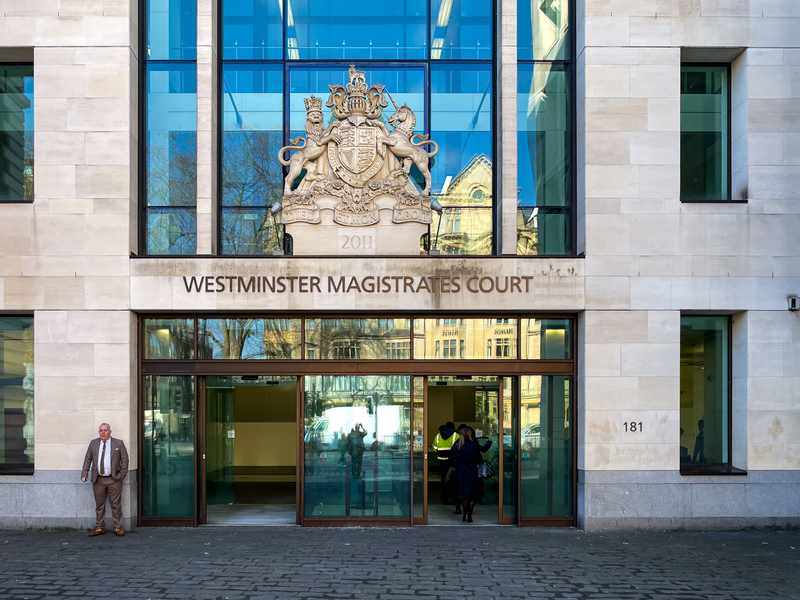
He is due at Westminster Magistrates’ Court on Wednesday, October 7. His murder trial has provisionally been set for June 8, 2027. Those dates create two parallel legal tracks: an immediate terrorism appearance in London and a much longer prosecution over Widdecombe’s death. Until evidence is tested in court, the charge is an allegation, not a finding of guilt.
What prosecutors and police say
Joshua Kerry charged with terror offences after a complex inquiry
The CPS said its Special Crime and Counter Terrorism Division authorized the charge under section 5(1)(a) of the Terrorism Act 2006 after reviewing police evidence. Chief Crown Prosecutor Frank Ferguson said prosecutors had concluded there was sufficient evidence to bring the case to court and would keep working with police as the investigation progressed. He also issued the legally important warning that proceedings are active and reporting must not prejudice a fair trial.
Deputy Assistant Commissioner Vicki Evans, the senior national coordinator for Counter Terrorism Policing, described the inquiry as “hugely intensive and complex.” She said detectives, analysts and forensic experts had pursued multiple lines of inquiry across the counter-terror network. The wording signals breadth and duration, but it does not disclose the underlying evidence. That distinction matters: investigators are describing the scale of their work, not proving the charge in public.
The counter-terror takeover did not begin with Friday’s announcement. Police said in July that specialists had assumed the inquiry after new information and evidence emerged. Kerry, who had already been arrested in the murder investigation, was re-arrested on suspicion of the commission, preparation or instigation of terrorism. Friday’s decision converts that suspicion into a formal count capable of being tested before a court.
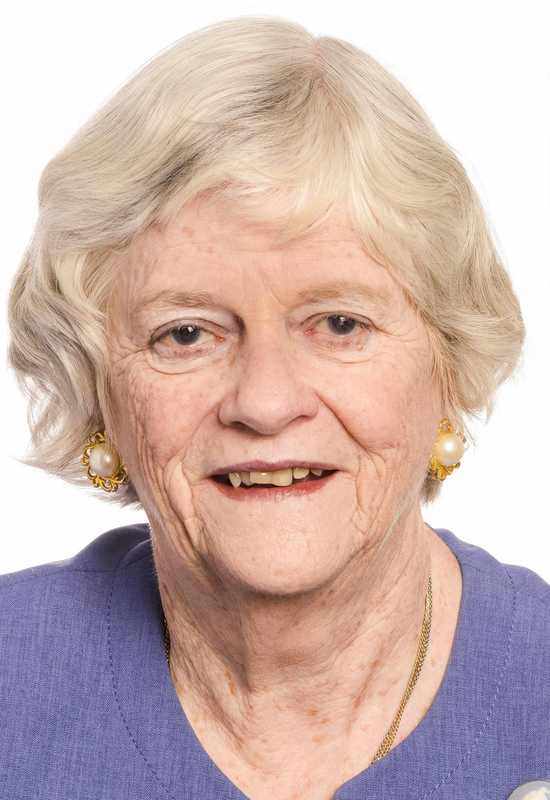
The Widdecombe murder case behind the new charge
Twenty-one blows, a 265-mile drive and an alleged two-minute attack
Widdecombe, 78, was found dead at her home in Haytor on Dartmoor after she failed to make a scheduled television appearance. At an earlier hearing, prosecutors alleged that Kerry drove roughly 265 miles from Rotherham to Devon, entered through her front door while she was eating lunch, struck her 21 times in the head with a hammer, took her wallet and left. The attack was alleged to have lasted about two minutes.
Those numbers are shocking, but their analytical value is in what they imply about the questions investigators must answer. A 265-mile journey points to planning and target selection rather than a chance encounter. A two-minute assault suggests speed and a narrow objective. Twenty-one strikes speak to extreme violence. Yet motive, preparation and intent remain questions for the trial; the prosecution must prove each element rather than invite the public to infer it from the brutality alleged.
Widdecombe’s political career makes the case nationally consequential. First elected as a Conservative MP in 1987, she served in government, including as prisons minister, and remained a recognizable public figure long after leaving the Commons in 2010. She returned to elected office as a Brexit Party member of the European Parliament and later became one of Reform UK’s most prominent spokespeople. Her killing therefore sits at the intersection of an individual murder prosecution and a broader threat environment surrounding British politics.
The alleged terrorism conduct began more than two years before her death. The May 2024–July 2026 window is consequently more important than any single headline: it implies investigators are examining a course of conduct, not merely attaching a label to the events of July 8. What links that course to Farage, and whether it also connects to Widdecombe, will be among the central issues as the case develops.
Why this matters
UK political violence has moved from exceptional to recurring
Britain has already buried two serving MPs murdered since 2016: Labour’s Jo Cox, killed during the EU referendum campaign, and Conservative Sir David Amess, killed at a constituency surgery in 2021. Widdecombe was no longer a serving MP, and the allegation concerning Farage is a preparation charge rather than an attack. The cases are legally and factually distinct. Taken together, however, they form a grim decade-long pattern: public service now carries a personal-security risk that cannot be dismissed as theoretical.
This is why the case matters beyond party loyalty. A threat to a Reform politician is not a Reform-only problem, just as the murders of Cox and Amess were not Labour-only or Conservative-only tragedies. Democracy requires visible, reachable representatives. Every security measure that protects them can also make them more distant from the people they serve. The policy challenge is to reduce lethal risk without turning constituency politics into a sequence of fortified, invitation-only encounters.
Home Secretary Shabana Mahmood captured that institutional problem in her response. Calling the new allegations “extremely concerning,” she said that “an attack on anyone in politics is an attack on us all” and promised to update Parliament on work to strengthen protections when it returns. Her use of the word “reset” raises the standard: ministers will now be judged not on another review alone, but on whether police, Parliament and parties can build a consistent system before the next threat becomes an attack.
The Farage security economy
Three hundred threats a month and a £5 million private gift
Farage said this summer that he receives more than 300 threats a month. Even if many are abusive messages rather than actionable plots, the volume creates a filtering problem: security teams must identify the one threat that combines intent, capability and proximity without drowning in noise. At 300 a month, that is roughly ten threats every day, each demanding some level of assessment.
His security arrangements are unusually political in another sense. Crypto billionaire Christopher Harborne gave Farage £5 million in April 2024, a gift Farage has said was for security. The donation offers resources beyond the normal parliamentary protection framework, but it also exposes a structural imbalance. Wealthy or well-connected politicians can buy layers of private protection that lesser-known MPs, candidates, councillors and campaigners cannot. A democratic security system cannot depend on whether an individual officeholder attracts a multimillion-pound benefactor.
That does not make the gift improper, nor does it prove public provision failed in this case. It does sharpen the questions Mahmood’s promised review must answer: Who assesses risk? What protection is guaranteed? How are threats shared between parliamentary security, local police, counter-terror specialists and privately employed teams? And what happens when the threatened person is outside Westminster, at a rally, on a high street or at home?
Reform UK’s response and the cross-party test
Security cannot become a partisan weapon
Reform UK deputy leader Richard Tice called the charges “terrifying.” The reaction is understandable: the case allegedly touches both the party’s leader and a prominent spokeswoman who was killed. Reform will press the government for answers about what was known, when the counter-terror network became involved and whether current protections match the threat.
The government, however, must resist two equal dangers. The first is minimization — treating threats as part of the rough and tumble of politics until violence occurs. The second is overreach — using a grave case to justify broad restrictions on protest, speech or access to elected representatives. Stronger protection should be intelligence-led, threat-specific and available across parties. It should not turn political criticism into suspicion or give powerful figures a special shield from scrutiny.
The most credible reset would start with common standards rather than exceptional favors: rapid threat triage, secure constituency venues when risk warrants them, consistent support for families and staff, interoperable reporting systems, and clear escalation from abuse to credible preparation. The system must also account for former officeholders and high-profile candidates, whose public exposure can outlast the formal protection attached to a parliamentary seat.
What happens next
Westminster Magistrates’ Court, a 2027 murder trial and a security review
Wednesday’s hearing will be procedural but important. The court will formally address the terrorism charge and determine the next steps for a case that is likely to move to a higher court because of its seriousness. The public may learn more about the alleged conduct, but disclosure could remain limited while police continue investigating and the murder prosecution proceeds.
The provisional murder trial date of Tuesday, June 8, 2027, means the legal process will run well into next year. Whether the terrorism count is ultimately tried alongside, ahead of or separately from the murder allegation will depend on judicial decisions and the relationship between the evidence. Prosecutors will have to protect both cases from prejudicial publicity; journalists and politicians will have to distinguish what has been alleged from what has been proved.
Parliament’s timetable may move faster. Mahmood has promised an update when MPs return, and parties will expect more than general reassurance. The key test is whether the review produces measurable changes: common threat-assessment thresholds, funded protection outside Westminster, faster information-sharing and transparent oversight so extraordinary security does not quietly become permanent political distance.
The new count changes the frame of the Widdecombe case, but it should not erase the discipline required in reporting it. Kerry stands accused of two exceptionally serious offences. Farage and his family have been told they were allegedly targeted. Widdecombe’s family faces a long wait for a murder trial. The state’s duty is now twofold: prove its case fairly in court and show, before the next crisis, that political service need not come with an unmanaged threat to life.
Sources
- Crown Prosecution Service — official charging decision, section 5(1)(a) offence, court date and fair-trial warning, October 2, 2026.
- Counter Terrorism Policing — official statement, alleged activity window and Deputy Assistant Commissioner Vicki Evans’s account of the investigation.
- Reuters — charge, custody status, police and prosecution statements.
- CNN — murder-case background, alleged 21 hammer strikes and Westminster Magistrates’ Court appearance.
- The Times — alleged 265-mile journey, security gift, threat volume, Mahmood statement and provisional 2027 trial date.
- Fox News — alleged two-minute attack, charging context and reactions.
Reporting basis: Charging details are grounded in the CPS and Counter Terrorism Policing statements. The murder allegations, security figures and political responses are drawn from the linked reporting. Analysis of parliamentary security, political access and the policy choices ahead is original Signal Post News analysis. Proceedings are active; allegations have not been proved.