UK prisoner early release scheme 2026
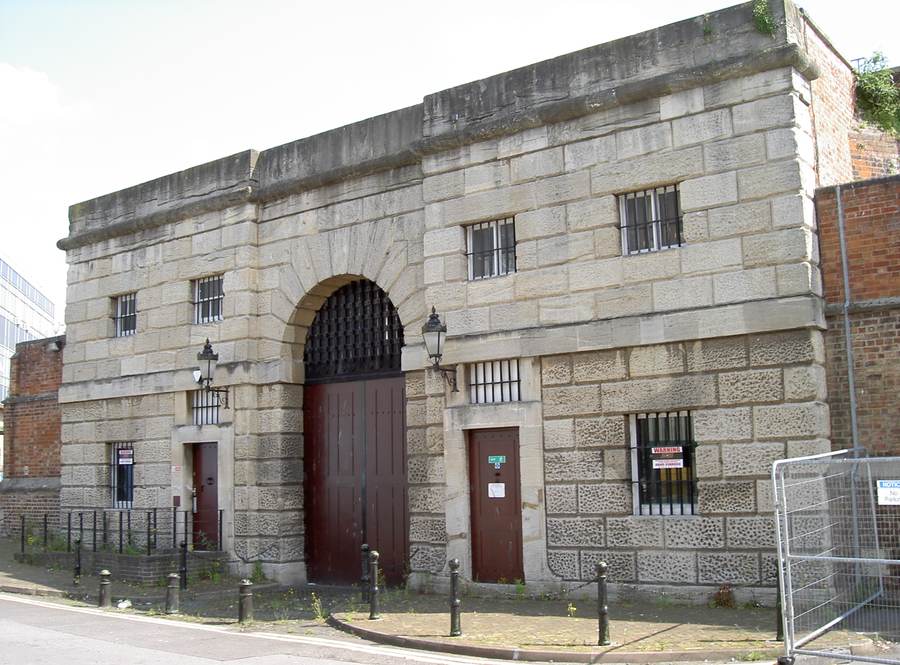
LONDON — Around 700 offenders walked out of prisons in England and Wales on Thursday as the most sweeping early-release scheme in British history came into force. Under “Earned Progression” — passed by Parliament as part of the Sentencing Act 2026 — eligible prisoners now leave jail after serving just one-third of their custodial term, down from the previous 40 to 50 per cent, in a bid to pull the prison system back from the brink of collapse.
Why this matters: release or collapse
The scale is what makes this different from every previous scheme. Roughly 700 are out today, around 650 more follow in mid-October — with the Ministry of Justice revising the October plan to 1,350 over a fortnight, according to The Times — about 2,550 before Christmas, and around 4,500 by next summer. It is the biggest coordinated release in the modern history of the English and Welsh prison system.
The government insists the alternative was unthinkable: prisons running at 97% capacity with a population of 87,499 against operational capacity of 89,055, leaving just 1,556 usable places in the entire system. When the usable margin falls below a few thousand, officials warn, courts can no longer function because there is nowhere to send a convicted offender.
Critics reply that the cure is worse than the disease: a probation service they say is already broken, victims learning of releases from the news, and tag-fitting delays of up to five months that turn electronic monitoring into what one watchdog called a “false sense of assurance.” A YouGov poll for The Times found 64% of the public opposed early release — a political millstone for the government no matter how the numbers turn out.
How Britain reached the October release
Britain has been here before — twice, recently. In September 2024 a Labour early-release scheme cut the release threshold to 40% of sentence; by the end of March 2026 it had released 70,066 offenders, and the celebratory photographs of inmates being collected in Bentleys and Rolls-Royces caused public fury. Before that, a Conservative scheme between October 2023 and September 2024 released 13,325.
The deeper cause is structural: a record prison population of 88,521 on September 6, 2024, in the wake of the Southport disorder, years of under-building, and sentences that have grown steadily longer. Prime Minister Andy Burnham, having inherited a system his government says the Conservatives hollowed out, made the Sentencing Act 2026 the centrepiece of his response — and personally intervened to exclude more than 1,000 additional offenders from eligibility after the backlash over the first draft.
Earned Progression explained: who goes and who stays
Earned Progression changes the release point for standard determinate sentences: eligible prisoners serve one-third of the custodial term in prison and the rest in the community, down from the previous 40% — and 50% for longer terms. Some offenders serving two-thirds terms can now leave after half.
Around 18,000 prisoners are excluded outright: those convicted of murder, manslaughter, rape, serious child sexual offences, grooming, indecent assault and death-by-driving offences, plus the 1,000-plus extra exclusions added at Burnham's insistence. Everyone released remains on licence and can be recalled to prison for breaching conditions, including missing probation appointments, committing a new offence or entering an exclusion zone.
The government says this is the largest expansion of electronic monitoring ever undertaken, backed by 1,300 extra probation officers and new AI case-management tools. That is the official safeguard. The harder question is whether staffing, housing and tagging capacity can absorb releases at this speed.
The domestic-abuse fault line
The single most explosive detail is who is not excluded. Offenders convicted of domestic abuse, stalking and coercive or controlling behaviour can qualify for early release. Women's Aid guidance for survivors confirms there is no blanket exclusion for those offences, while reporting has identified domestic abusers and stalkers among those eligible within the first six months.
Victim Support has launched a national Offender Release Helpline — 0808 168 9280, funded by the Ministry of Justice — for people affected by or worried about the release of an offender. The charity says the helpline offers emotional support and practical guidance, but it cannot provide information about individual offenders or case-specific release dates.
Ministers argue that the licence system, curfew tags and restriction zones protect victims; charities and police leaders call that a gamble with lives. This is not a side argument. It is the argument that will dominate the next six months of the scheme.
Who benefits — and who carries the risk
The government is the most immediate political beneficiary if the scheme works: capacity falls, courts keep functioning, and a slow-burn crisis does not become a catastrophic one. Prisoners who have complied with their regimes benefit directly, with months or even years of liberty returned.
The potential losers are more numerous. Victims and their families face fear and re-traumatisation. The probation service — whose union Napo warns of staff shortages, hostel-bed shortages and cases where released offenders have nowhere to go but the street — absorbs a surge it says it cannot handle. Nacro warns that homelessness on release is a direct route back to custody.
Police, whose superintendents' leader Nick Smart called the scheme “the most upsetting and lowest form of insult to every victim affected,” brace for more arrests as licence breaches mount. And a public that polls show is deeply opposed gets a policy it did not ask for and must live with. That does not make the policy wrong; it makes every preventable failure politically combustible.
The numbers in context
Put 700 in perspective: it is a fraction of the 70,066 released under the 2024 scheme, but that scheme unfolded over 18 months, while this one front-loads thousands through tightly spaced tranches. The 87,499 population figure is down from the 88,521 record of September 2024, but the 1,556-place spare margin is what matters. Prisons cannot run at 100% because intake is uneven; a single serious disorder can add hundreds overnight.
By historical standards, today's release is roughly equivalent to emptying two medium-sized prisons in a day. The tagging numbers should sober anyone relying on the technology: only 55% of location tags were fitted promptly and some offenders went untagged for five months, according to a joint inspectorate report cited by The Times. Promising “the largest electronic monitoring expansion ever” while the fitting system runs months late is the contradiction at the heart of the government's case.
What happens next
The second tranche of around 650 releases lands in mid-October, with further monthly phases through June 2027 as longer sentences become eligible — including fixed terms of more than 12 years, where offenders could serve half instead of two-thirds.
Three things will decide whether the scheme survives politically. First, recalls: every high-profile reoffending case will be front-page news, and the recall mechanism must work fast. Second, victims: the helpline will be judged by whether survivors feel warned and protected, not merely whether the phones are answered. Third, the prisons minister's own metrics: if the population does not fall meaningfully, the government will have paid an enormous political price for nothing.
The Conservatives, whom the government blames for the crisis, will be watching every failure. Burnham has bet his premiership's competence narrative on this scheme working. Today, 700 walked out. By Christmas, the country will know much more about whether that was the right call.
Sources and reporting notes
- The Times live coverage: first releases and YouGov polling
- The Times: revised release timetable and October tranches
- The Times: electronic-tagging delays and inspectorate findings
- Ministry of Justice: estimated Progression Model tranche volumes
- Ministry of Justice: Progression Model guide for victims
- BBC News reporting summary: how the new release scheme works
- The Guardian reporting summary: housing and probation concerns
- Victim Support: Offender Release Helpline
- Women's Aid: early release information for domestic-abuse survivors
- Nacro: release planning, housing and reoffending risks
- CNN: Napo warnings over probation workloads
Reporting note: Release totals, prison-capacity figures, offence exclusions and licence rules are drawn from the Ministry of Justice and the cited reporting. Polling and attributed criticism are identified by source. Judgments about political risk and institutional capacity are Signal Post News analysis.
Signal Post News will update this report as the next release tranche proceeds and the Ministry of Justice publishes recall, tagging and victim-notification data.
Back to all stories