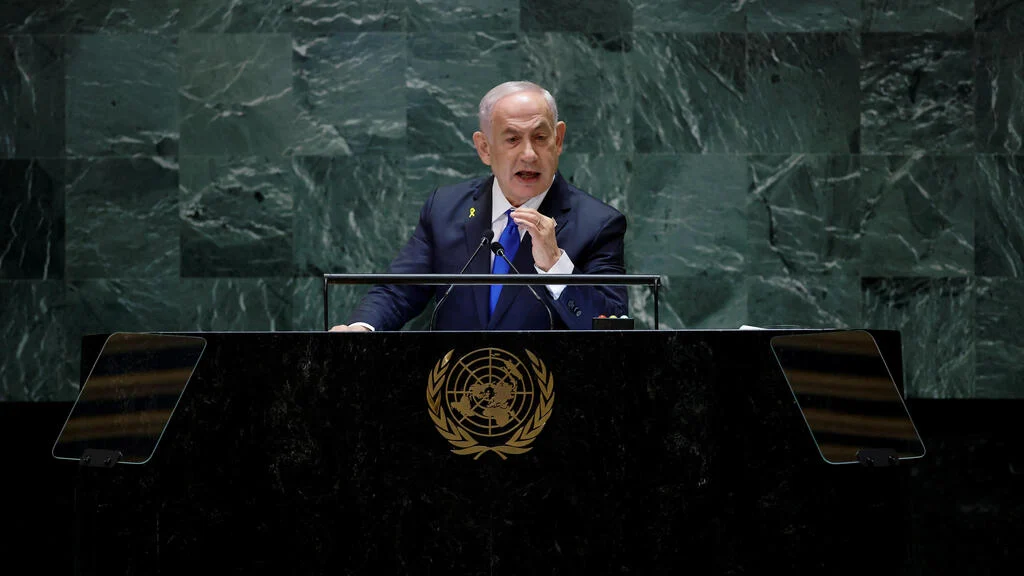
Netanyahu shortens UN trip is the headline, but the timetable tells the fuller story. Israeli Prime Minister Benjamin Netanyahu is expected to arrive in the United States on Thursday morning, September 24, travel from a New Jersey airfield to United Nations headquarters, deliver his General Assembly address at 2 p.m. Eastern time and depart for Israel that evening. A visit originally expected to run for several days has been compressed to roughly seven hours on American soil, with no overnight stay.
TBS News, citing The New Arab, reported the morning arrival, 2 p.m. speech and same-evening departure. Matzav, citing Israel's Channel 13, said senior security officials strongly recommended the abbreviated visit because of concrete warnings. Under the reported plan, the official “Wing of Zion” aircraft lands in New Jersey, the motorcade goes directly to Manhattan, and the prime minister returns to the airport soon after speaking.
The changes go beyond geography. Netanyahu canceled a Texas stop and a planned meeting with Elon Musk, even after an Israeli advance team had traveled there, according to Calcalistech, citing Ynet. Israeli journalists will not travel on the official aircraft. No meeting with President Donald Trump is planned because the latest schedules put Netanyahu in New York after Trump has left; a possible meeting with Secretary of State Marco Rubio remained under consideration but unconfirmed.
Why this matters: the itinerary is the argument
A national leader who reduces a multi-day visit to the United States to a few hours is communicating before he reaches the microphone. The Netanyahu New York visit security plan may be prudent in operational terms, but it also functions as a diagnostic of Israel's diplomatic position: protests are expected outside, a walkout is anticipated inside, an ICC arrest warrant shadows the trip, and the visiting delegation is stripped of the informal access that usually turns a UN speech into a broader diplomatic mission.
The speech may contain the words Netanyahu wants the world to hear. The route—from a New Jersey runway to the UN campus and back—shows the constraints under which he must say them. In the traditional choreography of high-level week, time is influence. Leaders hold side meetings, court editorial boards and diaspora groups, brief journalists, negotiate language and use hotel corridors as extensions of diplomacy. Here, the schedule has been pared to the one act that cannot be delegated: Netanyahu at the General Assembly rostrum.
That does not prove Israel is without allies, nor does it prove every schedule change is political. Security agencies are paid to minimize exposure, and specific warnings can justify an austere plan. Yet a visit this compressed is itself politically legible. The leader of a close U.S. ally is not making a normal New York swing with added security. He is making a protected dash through a hostile environment, in a country whose federal government rejects the ICC warrant but whose largest city is led by one of his most visible critics.
Netanyahu UN General Assembly address time and route
The reported Netanyahu UN General Assembly address time is 2 p.m. ET on Thursday, September 24, during the 81st UN General Debate. The current plan puts the prime minister in the United States for about seven hours, rather than the multi-day visit first envisaged. Thousands of NYPD officers are deployed across the city for General Assembly security, while the U.S. Secret Service and city police are expected to provide unusually heavy protection around Netanyahu.
The Netanyahu New Jersey JFK landing change is both practical and symbolic. Multiple Israeli reports say security planners chose New Jersey rather than John F. Kennedy International Airport amid concerns about parking the state aircraft in New York City and the public position of Mayor Zohran Mamdani. City Hall does not control federal aviation or foreign policy, and Mamdani has acknowledged that New York lacks independent authority to execute an ICC warrant. But the choice of runway reduces uncertainty and keeps the aircraft outside the jurisdiction most associated with the mayor's rhetoric.
No Israeli journalists are expected aboard the official aircraft, another departure from the usual ecology of a prime-ministerial trip. Fewer reporters means fewer opportunities for questions about why the route changed, what was dropped and how Netanyahu's office weighs the competing explanations—specific threats, protest risk, domestic politics and the regional security picture. It also means Israelis will experience more of the visit through the controlled frame of the speech itself.
- About 7 hours
- Expected time on U.S. soil, after a planned multi-day visit was sharply reduced
- 2 p.m. ET
- Scheduled Thursday address to the 81st UN General Debate
- 0 nights
- Netanyahu is expected to leave for Israel the same evening
- 54–52
- Channel 13 projection for Netanyahu-aligned parties versus the opposition bloc
- 52–51
- Kan projection for Netanyahu's bloc versus the opposition
- 61 seats
- Threshold required for a Knesset majority
Netanyahu cancels Elon Musk Texas meeting
The sentence Netanyahu cancels Elon Musk Texas meeting describes more than a diary adjustment. A Texas stop would have widened the trip beyond the UN and given Netanyahu a meeting with one of the world's most influential technology executives. Calcalistech reported that an advance team was already in Texas when it learned the stop was canceled, and that Netanyahu himself made the decision.
There was a logistical complication from the start: the official aircraft could not fly nonstop from Israel to Texas and would have needed a U.S. refueling stop. But logistics alone do not explain why the entire American visit was compressed. Once the Texas leg disappeared, the trip lost its second pole—the private, business-and-technology meeting that could have balanced the contentious multilateral scene in New York.
No Trump meeting will replace it. A senior U.S. official told The Jerusalem Post, in reporting summarized by Conservative Free Press, that Netanyahu's arrival would come after the president had left the city. The absence should not automatically be read as a rupture: Trump faced a General Assembly calendar involving nearly 130 heads of state, and the two governments remain closely coordinated. Still, summit weeks are measured partly by access. Netanyahu will have the global podium, but not the bilateral centerpiece that often supplies a visit's most consequential images and commitments.
How we got here: the ICC warrant and the Mamdani feud
The Netanyahu Mamdani ICC warrant confrontation began before this itinerary was written. The International Criminal Court issued arrest warrants in November 2024 for Netanyahu and former defense minister Yoav Gallant, alleging war crimes and crimes against humanity in Gaza, including the alleged use of starvation as a method of warfare. Israel rejects the allegations and disputes the court's jurisdiction. Neither Israel nor the United States is a party to the Rome Statute, and the Trump administration has sanctioned ICC personnel.
That legal architecture produces a divided travel map. ICC member states face treaty obligations that can make a visit by a person named in a warrant a legal and diplomatic test. Non-member states such as the United States are not bound in the same way. The result is not universal confinement but selective mobility: travel remains possible, while every destination, transit point and jurisdiction becomes a decision with legal and political meaning.
Mamdani told CNN on September 21 that he views Netanyahu as “a war criminal” and believes the warrant “should be honored.” He also acknowledged the decisive limit: New York City cannot independently enforce it. CNN previously reported that his administration was examining the issue, while Reuters documented Netanyahu's response: a “shame on you” video accusing the mayor of supporting Hamas and promising to answer him from the UN podium. Our earlier report examines that exchange in full: Netanyahu's “shame on you” challenge to Mamdani.
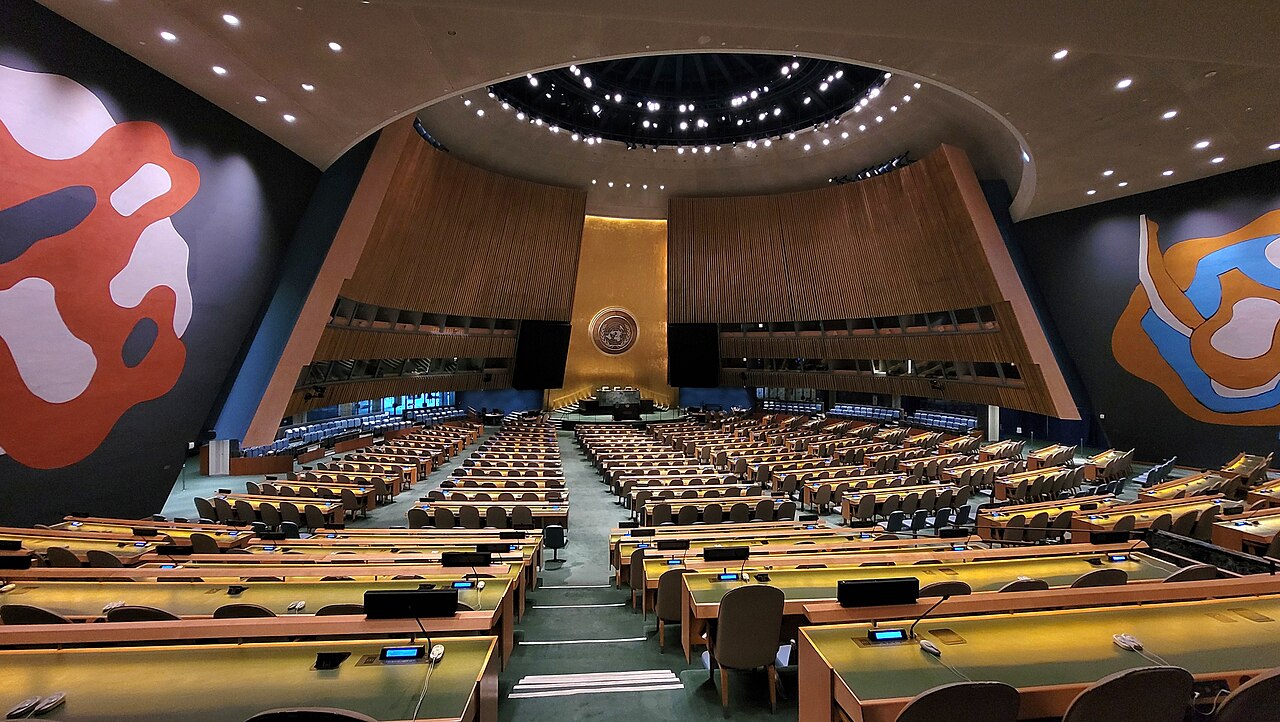
Last year's mass walkout during Netanyahu's General Assembly speech supplies the immediate institutional backdrop. Israeli officials expect delegates could repeat it. A walkout does not prevent the speech, and it does not erase the delegations that stay. It does, however, turn absence into a visual vote—one that can travel faster online than the substance of a long address.
Iran, war and the October election compress the calendar
The Netanyahu UNGA speech September 2026 arrives against an Iran-war backdrop and barely a month before Israel's October 27 parliamentary election. Newsmax reported that Netanyahu said Wednesday the address would contain “surprises,” with Iran expected to be a central theme. The remark is deliberately elastic: it could point to intelligence disclosures, visual material, policy proposals or simply a rhetorical reveal. Until the speech, “surprises” should be treated as a promise, not an event.
Iran gives Netanyahu a subject on which he can attempt to reposition the debate. Rather than answer only for Gaza and the ICC case, he can argue that Israel sits at the center of a wider confrontation involving nuclear capability, missiles and armed partners across the region. Related Signal Post News coverage tracks the other side of that argument, including Iranian President Masoud Pezeshkian's UN address and Trump's General Assembly warning to Iran.
The electoral arithmetic gives the speech a domestic audience as large as its international one. A Channel 13 poll put Netanyahu-aligned parties at 54 Knesset seats and the opposition bloc at 52. A Kan poll showed a 52–51 edge. Neither result reaches the 61 seats required for a governing majority. The movement may encourage Netanyahu's camp, but it also underlines the coalition problem: leading a bloc is not the same as being able to form a government.
This is why a short, controlled trip can serve a campaign. It minimizes unscripted exposure, puts the prime minister at a global podium, and lets him return quickly to the security command structure and the election contest. The same features that critics describe as evidence of isolation can be presented to supporters as discipline under pressure.
Why Netanyahu cut the UN trip short: security or isolation?
The strongest case for the security explanation is operational. Channel 13's report, as relayed by Matzav, describes concrete warnings and direct advice from senior officials. The Secret Service and NYPD must protect a leader facing intense hostility while safeguarding demonstrations and keeping the UN district functioning. Shorter exposure reduces motorcade movements, hotel vulnerability and scheduling seams. From that perspective, why Netanyahu cut UN trip short has a straightforward answer: professionals advised him to reduce risk.
The strongest case for the isolation explanation is cumulative. The visit has no overnight stay, no press contingent on the official plane, no Texas stop, no Musk meeting and no meeting with Trump. The aircraft is expected to avoid JFK, protesters will line the streets, and diplomats may walk out. Any one of those facts could be explained narrowly. Together, they depict a leader able to claim the podium but unable—or unwilling—to conduct the broader diplomacy surrounding it.
The two readings are not mutually exclusive. Diplomatic isolation can create security risk; security precautions can deepen the appearance of isolation. A responsible analysis should therefore resist both extremes: the trip is neither proof that Israel stands alone nor merely an ordinary schedule adjusted by cautious staff. It is a high-level visit stripped to its irreducible core by an unusual concentration of legal, political and physical-security pressures.
Who benefits, who loses
The security apparatus benefits from control. A seven-hour window, fewer stops and a direct airport-to-UN route reduce variables. Officials can concentrate personnel, intelligence and transport planning around a narrow sequence rather than protect a hotel, social events and multiple venues.
Netanyahu's campaign base benefits from the image of defiance. The prime minister can frame the trip as entering hostile territory, confronting critics and returning home without distraction. Expected protests, the ICC dispute and a possible walkout all reinforce a familiar political message: Israel is judged unfairly, and only a forceful leader will answer.
Diplomacy loses time. A speech can state a position; it cannot replace repeated private meetings, informal bargaining or the slow work of repairing relationships. If the schedule truly contains only a few hours, foreign counterparts have little room to test proposals or build confidence away from cameras.
Israeli journalists lose access. Excluding the traveling press limits direct questioning and reduces independent observation of the prime minister's movements and meetings. Security may explain the decision, but the democratic cost remains: the public receives more information through official staging and less through reporters accompanying the delegation.
Protesters still get their stage. The shorter visit does not make opposition disappear. It concentrates demonstrations around the arrival route and the UN speech, potentially sharpening the images Netanyahu's team hoped to avoid. Organizers lose time but gain a clearer focal point.
Historical comparison: from diplomatic campaign to protected transit
Netanyahu has long treated UN appearances as strategic campaigns rather than isolated speeches. Past visits often paired the General Assembly address with American political meetings, media appearances, diaspora engagement and presentations built for global replay. Even when relations with a U.S. administration were tense, time in New York or Washington created alternate channels of influence.
This visit is different in form. The abandoned multi-day schedule and canceled Texas leg matter because they remove the surrounding architecture. Compared with Netanyahu's own earlier UN travel, seven hours leaves almost no margin for serendipity or repair. Compared with travel by other leaders under ICC warrants, the pattern is familiar in a broader sense: destinations are chosen according to treaty exposure, federal guarantees and the host government's political posture. The warrant does not stop movement everywhere, but it changes the cost of every movement.
The United Nations itself creates a special setting. The headquarters agreement and federal control over foreign affairs make the trip different from an ordinary visit to a U.S. city. Mamdani's words have political force, but the mayor cannot independently convert them into an arrest. That legal reality is precisely why the route can be both safe in formal terms and fraught in symbolic ones.
What happens next: “surprises,” Iran and the campaign
The first test is the speech. If Netanyahu's promised “surprises” amount to new evidence or a concrete policy proposal, coverage will shift toward substance. If they are primarily rhetorical, the compressed itinerary itself may remain the more revealing story. Watch how much of the address is devoted to Iran, how directly it answers Mamdani, and whether Gaza and the ICC allegations are addressed with facts rather than slogans.
The second test is the hall. A significant delegate walkout would repeat last year's spectacle and underline the international opposition Netanyahu faces. A smaller or less coordinated departure would complicate the isolation narrative. Either way, attendance is only one measure; the reactions of major allies and regional governments after the speech will matter more than the first viral clip.
The third test is electoral. With Netanyahu-aligned parties at 54 seats in one poll and 52 in another, his campaign needs both momentum and coalition partners. A confrontational UN performance may consolidate supporters without solving the 61-seat problem. Opposition parties will argue that the seven-hour dash exposes the cost of his foreign policy; Netanyahu will argue that it proves the need for resolve.
Finally, watch what did not happen. If the Rubio meeting materializes, it will give the trip a second diplomatic node. If no senior bilateral meeting occurs, the visit will remain essentially a speech mission. And if security officials later disclose more about the warnings, the balance between prudent protection and political isolation may become clearer.
Conclusion: a few hours that measure a larger era
Netanyahu will have the UN microphone. That is not trivial: the General Assembly still offers a head of government a direct line to diplomats, voters and global media. But the difference between possessing a podium and conducting diplomacy has rarely been so visible. This journey is designed to land, speak and leave.
That is why the itinerary may outlast the address as the defining fact. It shows how an ICC warrant, a hostile mayor, expected protests, an anticipated walkout, regional war and an election campaign can compress the physical space of statecraft. The immediate question is what Netanyahu says at 2 p.m. ET. The larger question is what it means that saying it now requires a seven-hour corridor through New York rather than a full diplomatic visit.
Sources and reporting notes
- TBS News, September 23: shortened schedule, 2 p.m. address, no overnight stay, press arrangements, security and protest expectations
- Matzav, citing Channel 13: seven-hour visit, concrete warnings and direct New Jersey–UN route
- Calcalistech, citing Ynet: canceled Elon Musk meeting, Texas advance team and aircraft refueling constraint
- Newsmax, September 23: under-24-hour visit, promised “surprises,” Iran focus and Israeli election polling
- Reuters, September 22: Netanyahu's video response, Mamdani's remarks and the Gaza-war context
- CNN, July 18: Mamdani's legal review, the ICC warrant and limits on New York enforcement
- Conservative Free Press, citing The Jerusalem Post: no Trump meeting under current schedules
Reporting cutoff: September 24, 2026 at 1:33 a.m. PDT, before the scheduled address. The itinerary and meetings may change. ICC allegations remain allegations; Israel rejects them and the court's jurisdiction. Polls are snapshots, not forecasts.