War · U.S. Politics · Navy
Acting Navy Secretary Hung Cao came to the Senate Armed Services Committee on Tuesday to be confirmed as the Navy’s civilian chief. He left having disclosed that the Navy has fired expired Tomahawk missiles at Iran after recoding them to work, having defended eight suicide attempts aboard the carrier USS Abraham Lincoln as eight “suicide mitigations,” and having declined to say what the naval blockade of Iran costs or how badly Iranian attacks damaged the Navy’s Middle East headquarters.
Track it live: Iran war tracker — https://signalpostnews.com/tracker/iran-war — and the wars tracker — https://signalpostnews.com/tracker/wars — for carrier movements, blockade operations and the latest exchanges in the Strait of Hormuz.
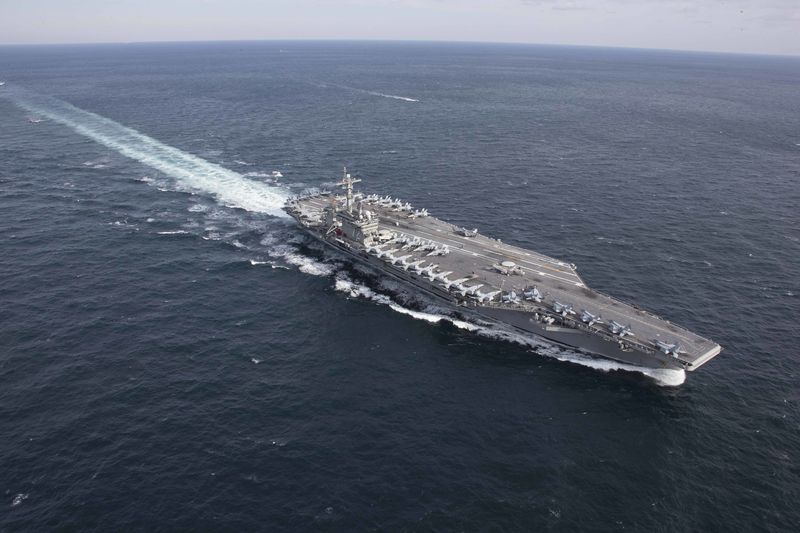
WASHINGTON, November 17, 2026 — The Hung Cao Navy hearing Iran war confrontation that unfolded before the Senate Armed Services Committee on Tuesday was, on paper, a confirmation proceeding: Hung Cao, the retired Navy captain who has served as acting secretary of the Navy, was asking a Republican-led Senate to make the job permanent in the chamber’s waning days. In substance, as Reuters reported, it became something else — a public audit of an eight-month war at sea, conducted by Democratic lawmakers who accused Cao of acting as a “yes man” for President Donald Trump and of downplaying what the war has done to the sailors fighting it. Cao pushed back throughout, defended the fleet’s care for its people, and made news of his own: the Navy, he testified, has been using expired Tomahawk cruise missiles in the Middle East because it does not have enough current ones.
The hearing matters beyond one nomination. The Iran war is in its eighth month, settled into a stalemate centered on the Strait of Hormuz, and a third U.S. aircraft carrier entered Middle East waters this week, expected to relieve one of the two already there. A Reuters/Ipsos poll released last week found that a majority of Americans want the incoming Democratic-majority Congress — the product of this month’s midterms — to act to end the war. Tuesday’s session, held while Republicans still hold the gavel, read like a preview of the oversight that begins in January, when Democrats take control of the committee and the questions Cao declined to answer on Tuesday will return with subpoena power behind them.
What happened at the Navy secretary confirmation hearing
Cao’s biography opened the hearing, and it is a genuinely American story that no senator disputed: his family fled Vietnam, he built a career as a Navy special-operations officer, retired as a captain in 2021, and was confirmed as Navy undersecretary in 2025 before stepping up as acting secretary. Because he retired fewer than seven years ago, he needs a congressional waiver to serve as secretary — a technical hurdle that, in a quieter year, would have been the day’s main business. It was not. Democratic senators moved quickly from the nominee to the war, and specifically to the human ledger of the USS Abraham Lincoln strike group, whose record deployment in support of Operation Epic Fury produced eight suicide attempts aboard its ships — attempts that, the record is clear, none of which succeeded.
The military press had been building this record for months. Military Times first reported in August that two Lincoln sailors had attempted to jump overboard; by September, Cao himself had acknowledged eight attempts, a disclosure Signal Post News covered at the time in USS Abraham Lincoln Strike Group Reports 8 Suicide Attempts at Sea. On Tuesday, that number — eight attempts, zero deaths — became the hearing’s central exhibit, and the fight over what to call it became the hearing’s central clash.
The expired Tomahawks admission
The day’s most consequential disclosure, as the Wall Street Journal’s account of the hearing emphasized, was about munitions, not personnel. Cao revealed that the Navy has been using expired Tomahawk cruise missiles in the Middle East because of a shortage of the weapon — that the service took Tomahawks whose certified shelf life had run out, “recoded” them, and fired them in Operation Epic Fury. Signal Post News attributes that account to Cao’s own testimony as reported by the Journal: this was not an allegation put to a reluctant witness but an admission volunteered by the acting secretary in open session.
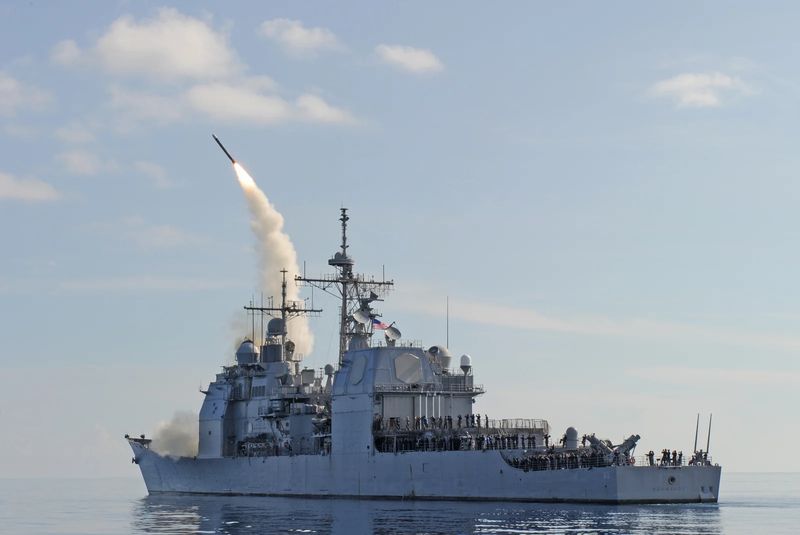
The admission lands on a stockpile already under strain. Signal Post News’ earlier coverage of the war’s opening phase counted some 450 Tomahawks launched in the war’s first salvos alone, and the missile — the Navy’s principal long-range land-attack weapon, bought in limited annual quantities — has been expended against Iran at a rate that peacetime procurement never anticipated. A service firing recoded, past-date missiles is a service managing scarcity in public. Cao presented the recoding as resourcefulness, and there is a fair version of that case: a recertified missile that flies true is better than an empty vertical-launch cell. But the reason the cells needed filling with expired rounds is the story — eight months of high-tempo strike operations have consumed the magazine faster than industry can refill it, and the Navy’s acting chief said so, in effect, on the record.
The “suicide mitigations” clash with Senator Gillibrand
If the Tomahawk disclosure was the hearing’s news, its defining exchange was about language. Cao repeatedly described the eight USS Abraham Lincoln suicide attempts not as attempts but as eight “suicide mitigations” — crediting the chaplains, deployment resiliency counselors and mental-health specialists embarked with the strike group, noting that none of the eight attempts succeeded, and offering the comparison he plainly regarded as exculpatory: a typical carrier strike group deployment, historically, sees about one or two suicides. Eight attempts against a baseline of one or two completed suicides is, in Cao’s framing, a prevention system that worked eight times.
Senator Kirsten Gillibrand of New York, who has pressed the Navy on the Lincoln deployment for months, rejected the framing outright, calling it insulting and a mental-health failure. The exchange sharpened over one sailor who went overboard from the carrier. Cao said the sailor was not trying to kill himself and had used a life preserver. Gillibrand’s reply, as Reuters reported it, was instant: “What was he trying to do? Swim to Guam?” The line captured the Democratic argument in a sentence — that a sailor going over the side of a carrier in wartime is a distress signal whatever the paperwork calls it, and that renaming attempts as mitigations converts a warning about conditions aboard into a commendation for the response.
Cao’s defense deserves to be stated in full, because it is not nothing. The eight sailors are alive. The strike group did embark an expanded mental-health apparatus — chaplains, resiliency counselors, specialists — precisely because commanders anticipated the strain of an open-ended combat deployment, and the interventions Cao described are the system working as designed at the moment of crisis. His critics’ counter is equally concrete: a prevention system that has to intervene eight times in one deployment is documenting the conditions that produced eight crises, and a Navy that counts those interventions as successes has no metric left that would tell it the deployment itself has become the hazard. Both readings use the same eight cases. The difference is whether the number measures the safety net or the fall rate — and on Tuesday, the committee’s two parties chose different ones.
Food, hygiene and plumbing: the Kelly exchange on sailors’ conditions
Senator Mark Kelly of Arizona brought the hearing down from terminology to conditions. Kelly told Cao that a parent had contacted him about a sailor who lost more than 45 pounds in six months because there was not enough food, and he pressed on reports of sailors lacking basic hygiene supplies during the deployment. Cao answered that Navy rations are “adequate,” and — as the Wall Street Journal reported — compared the complaints to children opening a refrigerator and saying there is nothing to eat. It was the hearing’s second viral sentence, and it cut the opposite way from Cao’s intent: a senator relaying a parent’s account of a sailor losing 45 pounds at sea was answered with a domestic metaphor about picky children.
Questions about plumbing and habitability ran alongside the food exchange — the unglamorous infrastructure of a 5,000-person warship on a deployment that has stretched far past its planned length. These details matter to the oversight argument because they are checkable in a way strategy is not: either sailors had adequate food, hygiene supplies and working heads, or they did not, and either the Navy’s acting secretary knows the state of his flagship deployment or he does not. Kelly’s intervention also widened the hearing’s frame beyond the Lincoln: if the fleet’s most scrutinized strike group is generating parent complaints about food, the readiness question extends to every hull rotating through the Hormuz mission — including the third carrier that arrived this week, whose deployment we covered in USS Theodore Roosevelt Middle East Arrival Puts Three US Carriers in the Region.
What Cao did not answer
Two of the hearing’s most important moments were non-answers, and precision requires reporting them as exactly that. Cao did not directly answer questions about the cost of the U.S. naval blockade on Iran — how much the months-long interdiction campaign has cost the Navy to sustain. No figure was offered, and none exists in the hearing record; any number attached to the blockade’s cost in coverage of this hearing would be invented, and this article does not supply one. Likewise, Cao did not directly answer questions about the damage done to the Navy’s headquarters in the Middle East by Iranian attacks. The extent of that damage was not stated on Tuesday, and it is not stated here.
Non-answers of this kind have a shelf life. A nominee before a friendly committee in November can defer; a confirmed secretary before a hostile committee in January, facing the same questions with document demands attached, will find the deferral harder to sustain. Democrats said as much in the hearing’s closing rounds: the blockade’s cost and the headquarters damage assessment are precisely the class of facts — money spent, damage absorbed — that the incoming majority intends to extract. Cao’s silence on Tuesday should therefore be read less as concealment than as a marker: two numbers the Navy will eventually have to produce, whose absence from the record is itself part of Tuesday’s story.
Accountability below decks: the USS South Dakota firings
Amid the defensive exchanges, Cao produced one disclosure that cut in his favor on accountability — and he plainly knew it. He revealed that the Navy had fired the top three leaders of the Virginia-class attack submarine USS South Dakota after what he described as a “near mishap,” as the Wall Street Journal reported. Relieving a submarine’s commanding officer, executive officer and senior enlisted leader together — the boat’s entire leadership triad — is among the strongest administrative sanctions the submarine force applies, and Cao offered it as evidence that his Navy enforces standards without waiting for a catastrophe.
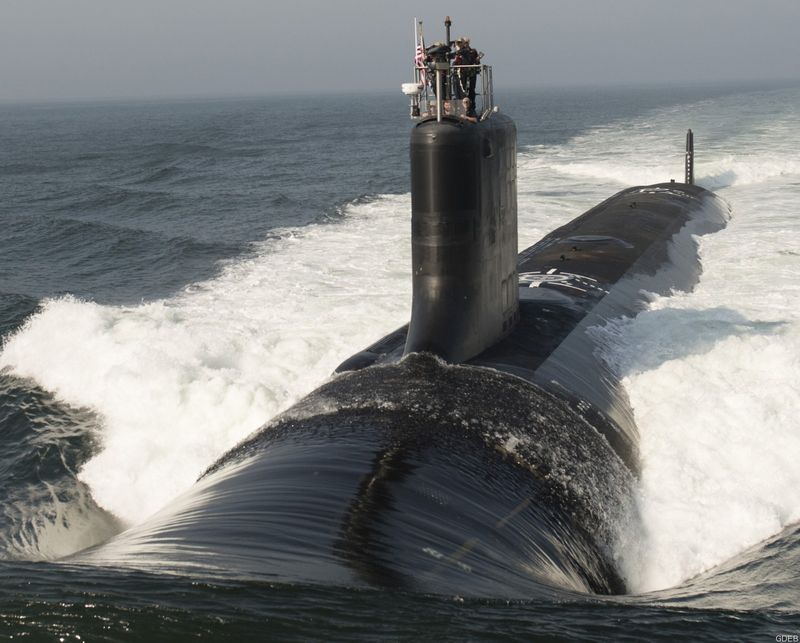
The disclosure’s limits are worth noting alongside its force. Cao gave the committee the outcome — three reliefs — without, in the public session, a full account of the mishap that produced them, and “near mishap” is his characterization, attributed here as such. Accountability announced is not the same as accountability explained. But in a hearing where Democrats charged the nominee with minimizing every problem put to him, the South Dakota reliefs were the one instance of Cao volunteering a failure and its consequences unprompted, and senators of both parties let it stand without challenge.
Why this matters
Munitions depth: the stockpile is now a Senate issue
The expired-Tomahawk admission converts an abstract think-tank concern — magazine depth — into a sworn fact. The Navy entered this war with a Tomahawk inventory sized for shorter campaigns, expended roughly 450 of the missiles in the opening phase alone by earlier counts in this site’s coverage, and is now, by its acting secretary’s testimony, recoding expired rounds to keep firing. Every element of the industrial question follows: production lines that deliver Tomahawks in the low hundreds per year cannot replace wartime expenditure at wartime speed, and a Navy managing scarcity in the Gulf is a Navy with fewer options everywhere else. Expect the January committee to treat munitions not as a procurement line item but as a war-sustainability question — how many more months of Epic Fury can the magazine support?
The human cost of record deployments
The Lincoln’s deployment is among the longest carrier deployments of the modern era, and Tuesday’s hearing was the moment its human cost acquired an official number in an official record: eight attempts, against a historical norm Cao himself put at one or two suicides per deployment. However the terminology fight resolves, the underlying operational fact is unchanged — sustained, open-ended combat deployments are consuming sailors’ resilience at a rate the fleet’s own baseline says is abnormal. The Navy can embark more counselors; it cannot embark more months. Rotation, relief and an end to the deployment are the only interventions that reduce the exposure itself, which is why the arrival of a third carrier — and the question of whether it relieves the Lincoln or merely adds a third hull to the rotation — is a mental-health fact as much as a strategic one.
Oversight politics flip in January
The hearing’s partisan geometry will invert in weeks. Republicans ran Tuesday’s session and will confirm or stall Cao under their own timetable; Democrats, who take the Senate in January after the midterms, used their minority time to build the record they will govern with — the unanswered blockade cost, the unanswered headquarters damage, the “mitigations” terminology, the refrigerator comparison. Even the day’s Republican news underlined the transition: Senator Roger Wicker, the committee’s Republican chairman, was blunt that steam catapults on future carriers are not happening despite President Trump’s stated preference, as the Journal noted — a reminder that the outgoing majority is already negotiating with the administration as a legislature, not a cheering section. And the politics outside the room point the same way: with a majority of Americans telling Reuters/Ipsos they want the incoming Congress to act to end the war, Tuesday’s hearing was the first session of an argument that January will formalize. The administration’s public line — reflected in our coverage of Vance Says Iran Will Not Become a ‘Forever War’ — Not Even a Two-Year War — is that this war ends on Washington’s terms and timetable. The committee’s incoming majority is preparing to contest both.
Context: how the Navy got here
The war began in the spring and hardened, by summer, into the Hormuz stalemate that still defines it: a U.S. naval blockade and interdiction campaign, Iranian attacks on shipping and on U.S. positions around the Gulf, and a carrier presence that has required hulls to stay on station far beyond planned rotations. The Lincoln strike group’s deployment stretched month after month; in August, Military Times reported the first overboard attempts; in September, Cao’s acknowledgment put the number at eight and Gillibrand’s correspondence with the Navy made the deployment a Capitol Hill issue. The war’s material tempo never slackened to match the personnel strain — strike operations under Operation Epic Fury continued, Tomahawk expenditure accumulated, and the blockade’s costs, financial and human, compounded quietly enough that a confirmation hearing became the first venue where several of them were demanded aloud. Tuesday was less an ambush than an invoice arriving.
Multiple angles: who gains, who loses
Cao and the administration leave the hearing with the nomination alive and two genuine disclosures to point to — the South Dakota reliefs as accountability, the Tomahawk recoding as candor about scarcity — but with a sound-bite problem: “suicide mitigations” and the refrigerator line are the phrases that will travel, and both were offered as defenses. Democrats leave with a record built for January: named non-answers on blockade cost and headquarters damage, a nominee’s terminology they can quote, and a poll majority behind congressional action to end the war. The Navy as an institution is the hearing’s ambiguous case — its prevention apparatus demonstrably kept eight sailors alive, and its acting chief said so; its readiness and stockpile strain are now Senate exhibits, and its secretary-designate declined to price its central mission. Sailors and their families, whose complaints — a parent’s call to a senator about 45 pounds — did more evidentiary work on Tuesday than any chart, gain a public record that conditions aboard are a congressional question now. What none of the parties gained is an answer to the underlying question the hearing kept circling: how long the current deployment model can run before the fleet, its magazines or its people reach the limit first.
The numbers: eight attempts against a one-or-two baseline
Strip the rhetoric from both sides and the hearing’s data reduce to a short ledger. Eight suicide attempts aboard Lincoln strike-group ships during this deployment, per Cao’s own acknowledgment, first partially reported by Military Times in August and confirmed by Cao in September. Zero of those attempts succeeded — the single most important number in the story, and the one both parties actually agree on. One to two suicides on a typical carrier strike group deployment, historically, per Cao’s testimony — his chosen baseline, offered as context for the prevention effort. More than 45 pounds lost by one sailor in six months, per the parent account relayed by Senator Kelly, unrebutted in its specifics on Tuesday. Roughly 450 Tomahawks launched in the war’s opening phase, per this site’s earlier coverage — the expenditure against which the expired-missile recoding must be read. And two numbers that do not exist in the record at all: the blockade’s cost and the headquarters damage assessment, both asked for, neither answered. The honest summary of Tuesday is that the Navy’s human and material ledgers are now partially public — and that the parts still missing are missing by the witness’s choice, which the incoming majority has noticed.
What happens next
Three tracks run from Tuesday. The nomination track is fastest: the Republican-led committee can advance Cao, waiver and all, in its remaining weeks, and the South Dakota disclosure plus Republican support may be enough — but every Democratic question left hanging is a reason the January Senate, if the nomination slips to it, will reopen the file rather than rubber-stamp it. The oversight track is the most predictable: expect the blockade’s cost and the Middle East headquarters damage assessment to headline the new majority’s first Navy posture hearings, with the Lincoln deployment’s conditions — food, hygiene, mental-health staffing, rotation dates — as the standing second item. The operational track is the one that will decide whether Tuesday’s hearing was a reckoning or a rehearsal: if the third carrier’s arrival actually relieves the Lincoln and the deployment’s human tempo falls, Cao’s “mitigations” framing gains the only vindication that would persuade his critics — fewer crises to mitigate. If the rotation merely sustains the same tempo into a ninth month, the next hearing will not need new questions. It will reuse Tuesday’s, with a larger number where the eight now stands.
Related coverage: USS Abraham Lincoln Strike Group Reports 8 Suicide Attempts at Sea · USS Theodore Roosevelt Middle East Arrival Puts Three US Carriers in the Region · Vance Says Iran Will Not Become a ‘Forever War’ — Not Even a Two-Year War
Sources
Reuters, November 17, 2026, Phil Stewart and Patricia Zengerle — reporting on the Senate Armed Services confirmation hearing: Democratic lawmakers accused acting Navy Secretary Hung Cao of being a Trump “yes man” on the Iran war and of downplaying the toll on sailors’ mental health after eight suicide attempts on an aircraft carrier; Cao did not directly answer questions on the cost of the U.S. naval blockade on Iran or on damage to the Navy’s Middle East headquarters from Iranian attacks; the Gillibrand exchange, including Cao’s statement that the sailor who went overboard was not trying to kill himself and used a life preserver, and Gillibrand’s reply, “What was he trying to do? Swim to Guam?”; the Reuters/Ipsos poll finding that a majority of Americans want the incoming Democratic-majority Congress to act to end the war; the war in its eighth month with a third U.S. carrier entering Middle East waters. The Wall Street Journal, November 17, 2026, “Five Takeaways” from the hearing — Cao’s disclosure that the Navy recoded and used expired Tomahawk missiles in Operation Epic Fury because of a shortage; the “suicide mitigations” framing and the chaplains, resiliency counselors and specialists Cao credited, with none of the eight attempts succeeding against a historical baseline of about one or two suicides per deployment; Senator Kelly’s account of a sailor who lost more than 45 pounds in six months and Cao’s “adequate” rations response and refrigerator comparison; the firing of USS South Dakota’s top three leaders after a “near mishap”; Senator Wicker’s remarks on steam catapults. Military press, including Military Times — first reporting in August that two Lincoln sailors attempted to jump overboard, and the September acknowledgment by Cao of eight attempts across the strike group’s ships. Signal Post News prior coverage as linked in the text: the September Lincoln suicide-attempts report, the third carrier’s arrival, and the administration’s “forever war” remarks. Precision note: all eight attempts are reported as attempts — none succeeded — and no cost figure for the blockade or damage figure for the headquarters exists in the hearing record; both were asked and not directly answered, and are reported here only as non-answers.