NATO Military Committee Kyiv visit
Admiral Giuseppe Cavo Dragone led all 32 allied military chiefs to Kyiv for talks on Ukraine's battlefield priorities and the lessons NATO is drawing from the war.
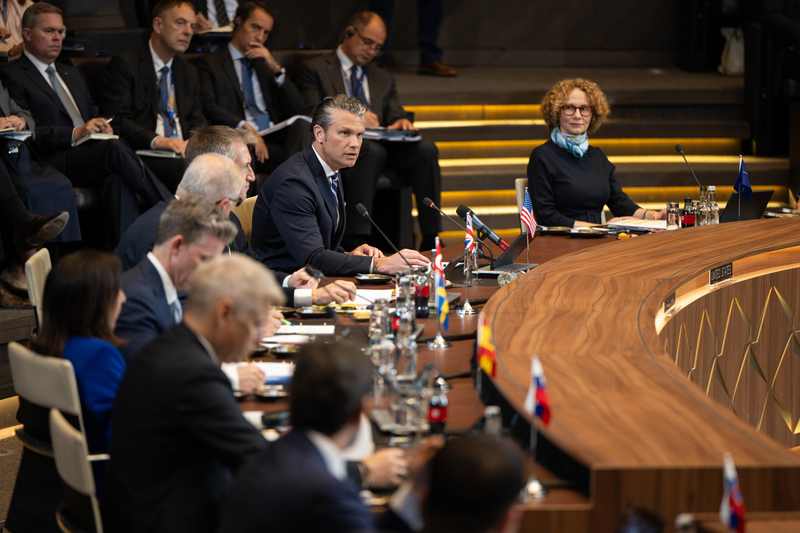
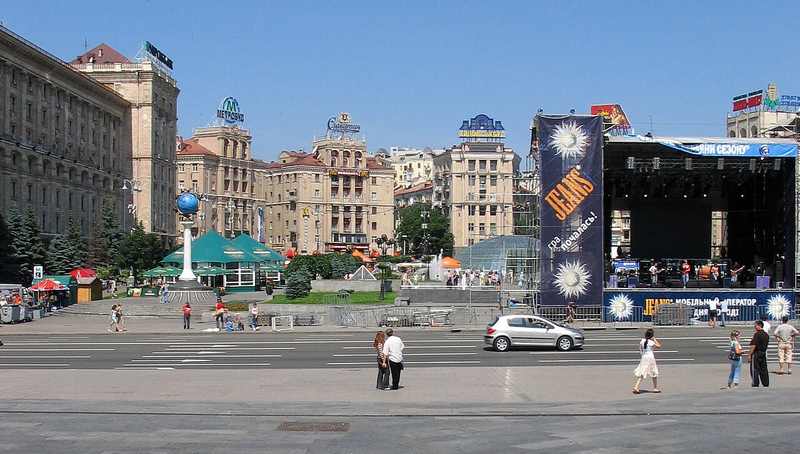
KYIV — The NATO Military Committee Kyiv visit on Tuesday brought the alliance's entire senior military leadership to Ukraine's capital — the first time the full Committee has traveled to Kyiv in eight years. Led by Chairman Admiral Giuseppe Cavo Dragone, the military representatives of all 32 allied nations met Ukraine's defence staff in the NATO-Ukraine Council format, held talks with Commander-in-Chief Mykhailo Drapatyi, and toured air-defence, drone-warfare and unmanned-ground-systems sites, according to NATO's official account of the trip published Wednesday.
Who came to Kyiv and who they met
Cavo Dragone led the Military Representatives of all 32 allied nations, meaning every member had its senior uniformed voice present in the delegation. They first met the Ukrainian Defence Staff through the NATO-Ukraine Council, or NUC, then engaged directly with commanders and their staffs alongside Drapatyi. The meetings made this a working military visit, not simply a sequence of ceremonial appearances.
The Military Committee is NATO's senior military authority. It is the alliance's principal source of military advice to the North Atlantic Council, the body in which ambassadors and ministers make political decisions. It also advises the Nuclear Planning Group and gives direction to NATO's two strategic commanders. In plain language, these are the officers who turn political guidance from allied capitals into military priorities, force requirements and operational advice.
That institutional role is what gave the gathering its weight. A defence minister can make a national pledge; a visiting general can exchange technical views; a summit can produce a communiqué. A full Military Committee visit brings the people responsible for reconciling 32 national militaries into one planning system. Each representative returns to a capital with the same set of observations, but also with the interests, constraints and questions of that capital. The conversation in Kyiv therefore had a built-in route back into national defence ministries.
NATO said the talks focused on what Ukraine needs now and on lessons that could improve allied readiness. Ukraine, meanwhile, received an opportunity to present its battlefield experience to the entire committee at once rather than repeating the case through a chain of bilateral meetings. That efficiency matters during a war in which procurement cycles, training schedules and tactical adaptation move at different speeds.
What they talked about
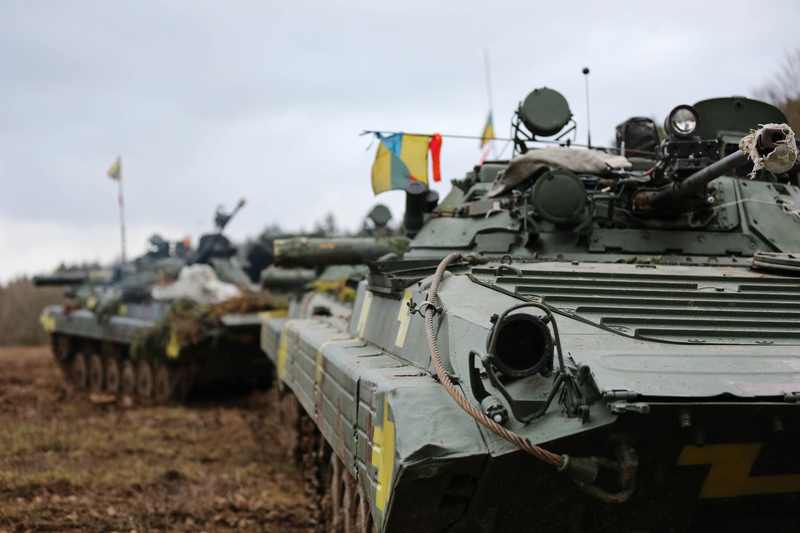
The stated agenda covered Ukraine's military priorities, lessons from new forms of warfare, and how those lessons could help the alliance prepare for future threats. The delegation visited sites connected to air defence, drone warfare and unmanned ground systems. NATO described the purpose as seeing the practical application of advanced skills by Ukrainian defence personnel firsthand.
Those three fields are closely connected. Air defenders increasingly face mixed attacks designed to exhaust expensive interceptors or force commanders to decide which targets can be protected. Drones conduct reconnaissance, carry weapons, relay communications and pressure troops at comparatively low cost. Unmanned ground systems can move supplies, evacuate casualties, scout dangerous approaches or carry explosives. The technology is evolving quickly, but the important lesson is organizational: units must shorten the time between detecting a threat, testing a response and spreading what works.
The delegation also attended a ceremony at the Wall of Remembrance of the Fallen for Ukraine. Cavo Dragone said the group paid its utmost respect there. He described the institutional purpose in direct terms: “We are here in full strength, sending a clear message: the bond between NATO and Ukraine is strong and unbreakable.”
In a second statement, the chairman said, “Despite Russia's unprovoked aggression against Ukraine and its reckless hybrid activities in NATO countries, we stand with Ukraine in the heroic defence of its sovereignty, its territorial integrity and the future of its people.” That wording reflects NATO's official position. Moscow rejects the alliance's account of the conflict and portrays NATO's military support and enlargement as threats to Russian security; NATO members say their assistance responds to Russia's invasion of a sovereign country. The visit did not reconcile those opposing narratives, but it made the alliance's position unmistakable.
Why this matters
The phrase “in full strength” was more than rhetorical decoration. NATO wanted the audience to notice the delegation's completeness. This was not one ally testing a diplomatic channel, nor a rotating commander making a courtesy call. It was an institution displaying itself: 32 national representatives arriving together, meeting through an established NATO-Ukraine format and examining the same military problems.
That difference is easy to underestimate. Routine staff talks are valuable precisely because they are routine; specialists can discuss logistics, doctrine or training without turning every exchange into a political event. A full-committee visit does something else. It creates common exposure. Officers from countries with different geography, threat perceptions, equipment and domestic politics hear the same Ukrainian briefing. They may draw different conclusions, but they cannot say the subject was filtered entirely through another ally.
The timing sharpened the message. NATO governments have reported sabotage plots, cyberattacks and airspace violations affecting allied states, and they attribute a range of hybrid activity to Russia. Moscow has denied or disputed many Western allegations and says NATO is using them to justify military expansion. Against that background, the trip functioned as a public signal of resolve: the alliance was willing to place its senior military body in Kyiv while tensions extended beyond the front line.
The most strategically interesting element, however, was not symbolism. It was the reversed flow of expertise. For much of the post-Cold War era, NATO members trained partners, exported doctrine and defined interoperability. In Kyiv, the alliance was also the student. Ukrainian forces have accumulated large-scale experience under persistent drone surveillance, electronic warfare, missile attack and contested logistics. NATO's challenge is to identify which lessons are universal, which depend on Ukraine's circumstances, and which should change allied doctrine before the next crisis.
This is where seasoned institutions can fail. They often admire innovation at the tactical edge while preserving procurement schedules and command structures built for an earlier era. A drone adapted in weeks can be obsolete before a conventional acquisition program clears its early reviews. The visit matters only if observations from Ukrainian units survive the journey through committee papers, national budgets and training calendars. Admiration is not adaptation.
The alliance has already faced reminders that deterrence is not a static inventory of aircraft, missiles and brigades. It is also the ability to learn faster than an adversary. Our earlier coverage of NATO jets scrambled over Poland and Romania showed how spillover risk can force immediate responses. The Kyiv trip addressed the slower but deeper question: whether the alliance can redesign systems before a tactical problem becomes a strategic surprise.
How we got here
The previous full Military Committee visit to Ukraine was in 2018. The eight-year gap spans a transformation in both the war and NATO itself: the alliance now has 32 members, Ukraine's armed forces have spent years adapting under combat pressure, and technologies once treated as specialist tools have become central to daily operations.
In August 2026, Ukrainian Defence Minister Yevhen Khmara announced the planned October visit after his first meeting with Cavo Dragone. According to the Ukrainian account, they discussed the situation on the front, air defence, long-range strikes and robotic systems. Khmara identified air defence as his priority — a predictable emphasis for a country facing recurring missile and drone attacks, but also a reminder that strategic statements eventually meet a finite supply of launchers, interceptors, sensors and trained crews.
Drapatyi also announced the visit, noting that Cavo Dragone had already traveled to Ukraine three times personally and understood conditions on the ground. That history matters because it separates the chairman's own familiarity from the novelty of bringing the entire committee. The trip scaled an individual line of contact into a collective institutional encounter.
Khmara's broader point was that Ukraine both receives assistance and shares unique combat experience. That is the conceptual core of the relationship in 2026. Ukraine needs weapons, training, intelligence cooperation and political support. NATO members need evidence about how modern militaries function under sustained attack and how inexpensive systems can threaten expensive platforms. Each side offers something the other cannot produce as quickly on its own.
The NATO-Ukraine Council provides the political and consultative format for that exchange. It was established as a forum where NATO members and Ukraine meet as participants to discuss security issues, crisis consultation and practical cooperation. The council is not membership, and it does not extend NATO's collective-defence guarantee to Ukraine. It does, however, give recurring cooperation an agreed structure rather than leaving every discussion to improvised bilateral channels.
That distinction frames the alliance's recurring debate. NATO Secretary General Mark Rutte's earlier warnings from Lithuania, covered in our report on NATO's posture toward Russia and support for Ukraine, emphasized deterrence and preparation. The Military Committee's presence in Kyiv turns part of that argument into professional contact, while leaving the political question of membership to allied governments.
Who gains, who loses, what the critics say
Ukraine gains a visible political signal and deeper military-to-military integration. The presence of every allied military representative validates Kyiv's argument that Ukrainian battlefield innovation is relevant to the security of the alliance, not merely to one national war effort. It also gives Ukrainian commanders a chance to present priorities without relying solely on public appeals.
NATO's members gain firsthand exposure to the drone-era battlefield. That exposure could shape purchases, force protection, training and doctrine for years. Smaller allies may see low-cost ways to strengthen resilience; larger militaries may confront uncomfortable questions about whether exquisite systems are available in sufficient numbers, repairable under pressure and protected from cheap drones.
Russia is the intended external audience of the “unbreakable bond” language. From NATO's perspective, unity is meant to raise the expected cost of waiting for Western support to fragment. From Moscow's perspective, the same unity reinforces its claim that Russia faces an expanding Western military bloc operating ever closer to its borders. The signaling works in both directions: reassurance for Kyiv can also be read as confirmation of threat in Moscow.
That is why critics and skeptics focus on what the visit did not deliver. A delegation is symbolism, not a membership timeline. The meeting did not itself create a new air-defence battery, manufacture an interceptor or announce a security guarantee. Ukrainian officials have repeatedly argued that air-defence deliveries lag behind needs and, in some cases, behind pledges. No ceremony changes the battlefield balance by itself.
The skeptical case deserves to be taken seriously. Alliances can confuse process with outcome: another council session, another visit, another declaration. The proper test is whether military learning produces different decisions. Do allies change exercise scenarios? Do they buy more electronic-warfare equipment, cheap interceptors and repair capacity? Do training programs reflect how rapidly tactics change? If not, the trip will remain an impressive photograph rather than a strategic inflection point.
There is also a risk of drawing lessons too literally. Ukraine's geography, mobilization system, industrial base and adversary are specific. A tactic developed for one sector of this front may not transfer neatly to the Baltic region, the High North or maritime operations. NATO's job is not to copy Ukraine. It is to identify underlying principles — dispersion, speed, redundancy, deception, software adaptation and the pairing of cheap systems with scarce high-end assets — then test them against allied missions.
What the numbers say
The verified figures are simple but revealing: 32 allied nations were represented; eight years have passed since the previous full-committee visit; and the Military Committee is the senior military authority of a 32-member alliance. The first and third numbers are the same, but they answer different questions. One describes attendance in Kyiv; the other describes the institution that attendance represented.
Those figures also explain why the visit was difficult to dismiss as an ordinary bilateral event. Full representation requires scheduling, security and political consent across an alliance that reaches from North America to the Baltic, the Black Sea and the Mediterranean. The number does not prove agreement on every weapon, funding line or future guarantee. It does establish that all members chose to be represented in the room.
The eight-year interval supplies historical scale without pretending that time alone measures progress. NATO in 2018 had 29 members. The alliance has since added three, while the character of the Ukraine war and the salience of drones have changed dramatically. A committee returning after eight years is not resuming the same conversation. It is encountering a different alliance, a different Ukrainian force and a different operational problem.
There is a temptation in war reporting to reach for large casualty, spending or aid totals because they create apparent precision. This visit does not need invented or loosely sourced magnitude. Its significance rests on verified institutional facts: complete allied representation, the length of the gap and the committee's place in NATO's command and advice structure.
What happens next
The immediate work will be less visible than the trip. Observations on air defence, drones and unmanned ground systems must move into NATO planning, exercises and national training. Staffs will have to decide which Ukrainian practices can be tested across the alliance and which requirements should be presented to political leaders and procurement authorities.
Cooperation will continue through the NATO-Ukraine Council and through bilateral channels. Follow-on meetings will show whether the Kyiv visit created a work program or merely summarized existing priorities. Watch for announcements on training, air-defence support, drone countermeasures, interoperability or exercises that explicitly cite lessons from Ukraine.
The long-term political question remains Ukraine's path toward NATO membership. The Military Committee can advise, plan and deepen practical cooperation, but membership decisions belong to the alliance's political authorities and require consensus. The visit signals closeness without settling that question. Treating it as an accession milestone would overstate what happened; treating it as empty ceremony would ignore the depth of military contact.
Russia's response will be another indicator. Moscow may condemn the trip as evidence of NATO's role in the war, intensify information operations around the alliance, or make no immediate operational change. Public rhetoric should not automatically be confused with military action. Analysts should watch subsequent deployments, strikes, exercises and official communications rather than infer escalation from language alone.
Finally, watch whether Ukraine's lessons alter allied behavior. Kyiv has also been refining its own doctrine, including the approach examined in our report on Ukraine's refinery strikes and evolving response doctrine. NATO's ability to absorb such experience will be measured not by how respectfully its representatives listened, but by what changes in the next exercise, budget and readiness review.
The visit's message was unmistakable; its consequence is not yet known. Thirty-two military representatives can carry a common picture home. The harder task is turning that picture into compatible national decisions before the lessons of this war are overtaken by the next version of it.