Business / Markets — The Nasdaq IPO market softening that bankers have whispered about for two months now has a name and a number: chief executive Adena Friedman told investors on Thursday that companies are re-evaluating the timing of their listings, as new Nasdaq debuts fell to 167 in the third quarter from 205 a year earlier.
Track it live: stock market and index data on the Signal Post News markets tracker.
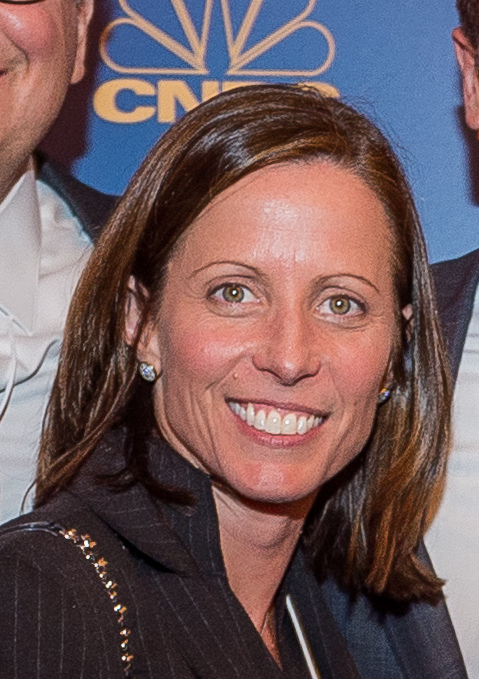
The Nasdaq IPO market softening is no longer just a banker rumour. Speaking on the exchange operator's third-quarter earnings call on Thursday, October 22, Nasdaq chief executive Adena Friedman said the market for initial public offerings has "softened modestly" after a wave of macroeconomic turbulence forced several high-profile companies to slam the brakes on their public debuts. Executives across specific sectors are suddenly "re-evaluating the timing of their IPOs," Friedman said, even as she insisted the long-term listings pipeline "remains robust" and that Nasdaq is well positioned for the diverse group of companies preparing to enter public markets.
The numbers behind her caution are already visible. Total new listings at Nasdaq fell to 167 in the third quarter, down from 205 in the same quarter last year — a drop of roughly 18 percent. In September, wearable health technology firm Oura postponed its planned Nasdaq debut, citing volatile market conditions. Nuclear equipment maker Holtec Nuclear withdrew its planned US listing altogether, blaming adverse sentiment in the equity markets and the nuclear sector. Reuters reported that a host of other companies delayed their offerings around the same time, effectively chilling the IPO window over the past two months.
An exchange doing well — except at the front door
The striking part of Thursday's story is that Nasdaq itself is thriving. In its third-quarter results, released the same morning via GlobeNewswire, Nasdaq reported net revenue of $1.5 billion, up 13 percent on the third quarter of 2025 and 14 percent on an organic basis. Solutions revenue rose 17 percent to about $1.2 billion. Annualised recurring revenue reached a record $3.4 billion, up 12 percent. Financial Technology revenue grew 16 percent to $529 million, and Index revenue jumped 39 percent to $286 million, with $141 billion of net inflows over the trailing twelve months, including $49 billion in the third quarter alone.
Profitability beat expectations as well. GAAP diluted earnings per share rose 31 percent to $0.96, while non-GAAP earnings per share climbed 18 percent to $1.04 — ahead of the $1.02 consensus estimate tracked by Zacks, which also noted revenue of $1.48 billion topped the $1.46 billion consensus. Nasdaq returned $173 million to shareholders through dividends and $323 million through share repurchases in the quarter. Investors took the results well: the shares were up 6.7 percent in morning trading on Thursday, according to Reuters.
In other words, the toll road is collecting record tolls — it is the on-ramp that has gone quiet. Listings are the one part of Nasdaq's business that depends on other companies' courage, and courage is what the macro environment has taxed away.
Why the window closed: war, oil, and the 30-year yield
Friedman's explanation, as reported by Reuters, runs through the same chain that has dominated markets all autumn. Escalating conflicts in the Middle East have triggered a wartime energy shock, reigniting global inflation fears and leading the US Federal Reserve to raise interest rates in response. With the 30-year Treasury yield sitting near two-decade highs, the cost of capital has risen dramatically — and that has altered the risk appetite of prospective issuers.
The mechanics matter. An IPO price is, at bottom, a bet on earnings years into the future. When the risk-free rate sits near twenty-year highs, those distant earnings are discounted far more heavily, and the valuation a growth company can command in a debut falls — sometimes below what its private investors paid in the last funding round. No chief financial officer wants to print a down-round IPO in public. Waiting, by contrast, costs little if the company has cash: private markets remain deep enough that large firms can raise billions without listing at all, as readers can see in this site's coverage of the very different reception for Jio Platforms' record-breaking listing — proof that the window is shut in New York, not everywhere.

Why this matters
An IPO market is not a casino sideshow; it is one of the main ways an economy recycles risk. Venture funds return money to pension funds when portfolio companies list. Employees turn paper wealth into spending. Retail investors get their first legal chance to own the companies reshaping their lives — usually after the steepest growth has already been captured privately. When the window closes for a year or more, all of that stalls: start-up hiring slows, early investors sit on illiquid paper, and the public shareholder base becomes older, larger and more concentrated in yesterday's winners.
There is a subtler cost, too. A frozen IPO market pushes growing companies toward three doors, none of them ideal for public transparency: staying private longer on mega-rounds from a handful of institutions, selling to a bigger incumbent, or listing abroad. Each route reduces the disclosure and broad ownership that a US listing imposes. When even a withdrawn deal like the Firmus Technologies $4.4 billion IPO withdrawal covered on this site becomes a pattern rather than an exception, the centre of gravity of growth finance shifts quietly away from public markets.
Who wins, who loses
The losers are easy to name: investment banks lose underwriting fees; growth-stage employees lose liquidity; retail investors lose access. The winners are less obvious. Listed incumbents benefit when fewer challengers can raise public growth capital. Private credit and sovereign funds benefit when great companies must come to them, on their terms. And exchanges like Nasdaq itself are partly insulated — its record recurring revenue shows a business model built to earn from indexes, data and software even when the listings desk is quiet, which is precisely why Friedman could afford her candour.
The Anthropic exception
Ask the market's professional gatekeepers what could reopen the window, and one name keeps surfacing. "Unless AI enthusiasm comes roaring back, we're not expecting a big rebound to close out 2026," Matt Kennedy, senior strategist at Renaissance Capital, told Reuters. "Plenty of companies are preparing IPOs to give themselves that optionality, but more and more are pencilling in 2027. At this point, the 2026 IPO market revolves around Anthropic and the biotech sector."
That is a remarkable sentence. A single AI company's filing decision now functions as a market-wide weather system: a strong Anthropic debut would re-price risk for every candidate behind it, while a postponement would confirm 2026 as a lost year and push the queue into 2027. This site has followed the run-up in its coverage of Tesla's third-quarter results and the wider AI spending trade, where the same pattern holds — enormous money still flows to AI, but public-market investors are demanding proof, not promises, before they underwrite new names.
What happens next
Three scenarios frame the next two quarters. In the first, energy prices ease, the Fed's hiking cycle is seen to be done, and long yields retreat: the queue of prepared filers — Kennedy's companies keeping their "optionality" warm — rushes the window in early 2027, and Friedman's "modest softening" reads in hindsight as a pause. In the second, yields stay high into the new year; postponements harden into a lost cohort, more Holtecs withdraw rather than re-file, and private mega-rounds become the default finish line for venture-backed growth. In the third, an Anthropic-scale debut forces the issue either way — a hit reopens the market on AI enthusiasm alone; a flop closes it for everyone else.
What to watch: the 30-year Treasury yield, which is the real IPO calendar; any formal Anthropic filing, which Kennedy's comments make the sector's bellwether; and Nasdaq's own fourth-quarter listings count, which will show whether 167 was a trough or a trend. Friedman's careful wording — modest, re-evaluating, robust pipeline — was chosen to soothe. The number underneath it, 167 against 205, was not.
Sources: Reuters (October 22, 2026, Pritam Biswas) reporting Friedman's earnings-call remarks, the listings figures, the Oura and Holtec delays and the Renaissance Capital assessment; Nasdaq, Inc. third-quarter 2026 results release via GlobeNewswire (October 22, 2026) for revenue, ARR, segment and earnings figures; Zacks Equity Research (October 22, 2026) for consensus estimates; Motley Fool investor guidance for Oura's postponed September listing.