Tesla Q3 earnings 2026 told two stories at once on Wednesday, October 21: a car business that has stopped growing, with revenue flat at $28.05 billion and operating income down 56 percent, and a cash machine still strong enough that Tesla could cut its full-year spending plan to about $20 billion from more than $25 billion and fund what remains mainly from its own operations.
Technology / EV Earnings — the beat was real, but it did not come from selling more cars
Track it live: follow Tesla and the major indexes on the Signal Post News markets tracker.
What Tesla reported on Wednesday
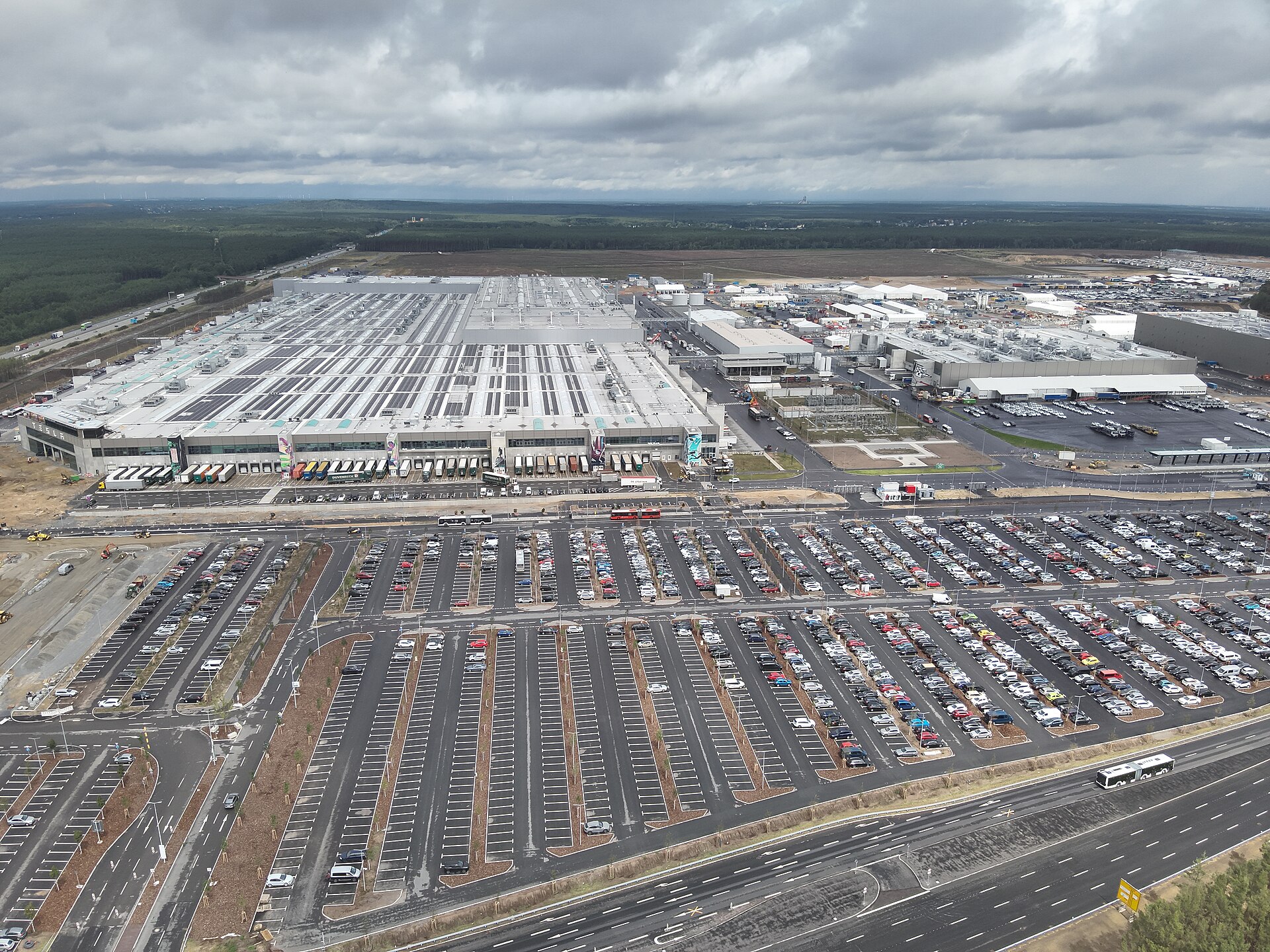
The headline figures, from Tesla’s own Q3 2026 update for the quarter ended September 30, describe a company holding its top line and losing its bottom line. Total revenue was $28.046 billion, flat year over year. Gross profit was $5.494 billion, for a total gross margin of 19.6 percent — up from 16.8 percent in the second quarter and 18.0 percent a year earlier. Income from operations fell 56 percent to $718 million, a 2.6 percent operating margin, down from 5.8 percent a year ago though double the second quarter’s 1.4 percent. GAAP net income attributable to common stockholders was $787 million, or $0.22 a diluted share, down from $1.373 billion, or $0.39, a year earlier. On the adjusted basis Wall Street trades on, earnings were $0.48 a share, ahead of the roughly $0.43 to $0.45 consensus reported by CNBC and LSEG, and down from $0.50 a year earlier.
The segment split is where the quarter’s real story sits. Automotive revenue fell 3 percent to $20.560 billion, from $21.205 billion a year earlier. Energy generation and storage revenue fell 16 percent to $2.881 billion, from $3.415 billion, even though Tesla deployed 13.7 GWh of storage in the quarter, up from 12.5 GWh a year earlier — more hardware, less revenue per unit. Services and other revenue jumped 33 percent to $4.605 billion, from $3.475 billion, and quietly did much of the work of holding the total flat. Operating expenses climbed 39 percent to $4.78 billion, with research and development up 69 percent to $2.76 billion as Tesla spends on what it now calls “Super Intelligence” compute, the Optimus robot and the Cybercab, according to Electrek’s reading of the filing. Reported profit also carried two mark-to-market swings in opposite directions: a $288 million unrealised gain on Tesla’s bitcoin holdings, partly offset by a $142 million unrealised loss on its SpaceX equity stake.
Cash told a better story than profit. Operating cash flow was $6.263 billion. Capital expenditure was $4.732 billion — more than double the $2.248 billion of a year earlier, but down from $5.789 billion in the second quarter. Free cash flow was a positive $1.531 billion, recovering from negative $1.092 billion in the second quarter, though still down 62 percent from a year earlier, as CNBC noted. Tesla ended the quarter with $45.447 billion in cash, cash equivalents and short-term investments, up about $1.9 billion in the quarter.
FSD, the 10 millionth car, and a backlog claim that cuts both ways
Operationally, Tesla delivered 486,532 vehicles in the quarter, down 2 percent from a year earlier on Tesla North’s reading of the update, and produced 464,391 — delivering about 22,000 more cars than it built, drawing down inventory. The company said it produced and delivered its 10 millionth vehicle during the quarter, and ended it with the largest passenger-vehicle backlog in four years, with record deliveries in Canada, Australia, Japan and Taiwan. On the call, Taneja framed that backlog as a production problem, not a demand problem: the main bottleneck, he said, was production capacity.
The software numbers were the quarter’s strongest growth line. Tesla said the attach rate for FSD (Supervised) passed 75 percent of new vehicle deliveries in North America, a jump of nearly 20 percentage points in a single quarter, and that active FSD subscriptions grew 67 percent year over year to 1.74 million. Since the end of the second quarter, Croatia, Slovenia, the Czech Republic and Slovakia have approved FSD, taking the total to nine European countries where, Tesla said, more than 100,000 customers have logged over 160 million kilometres. That matters financially as well as technologically: a subscription attached to three-quarters of new cars in Tesla’s most mature market is recurring, high-margin revenue arriving on top of a car sale that itself earned less than it did a year ago.
Semi, Cybercab and Optimus: the future products stopped being slides
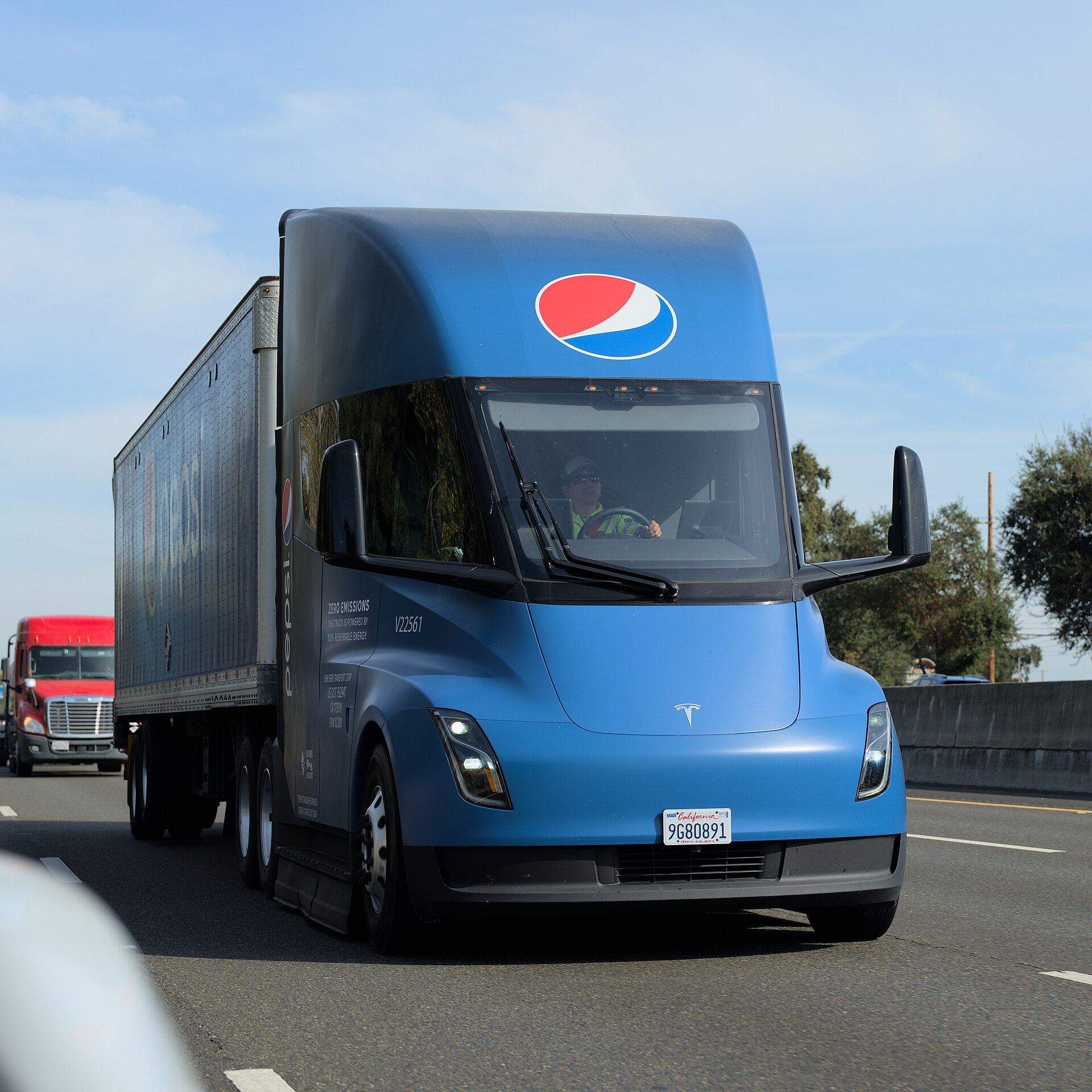
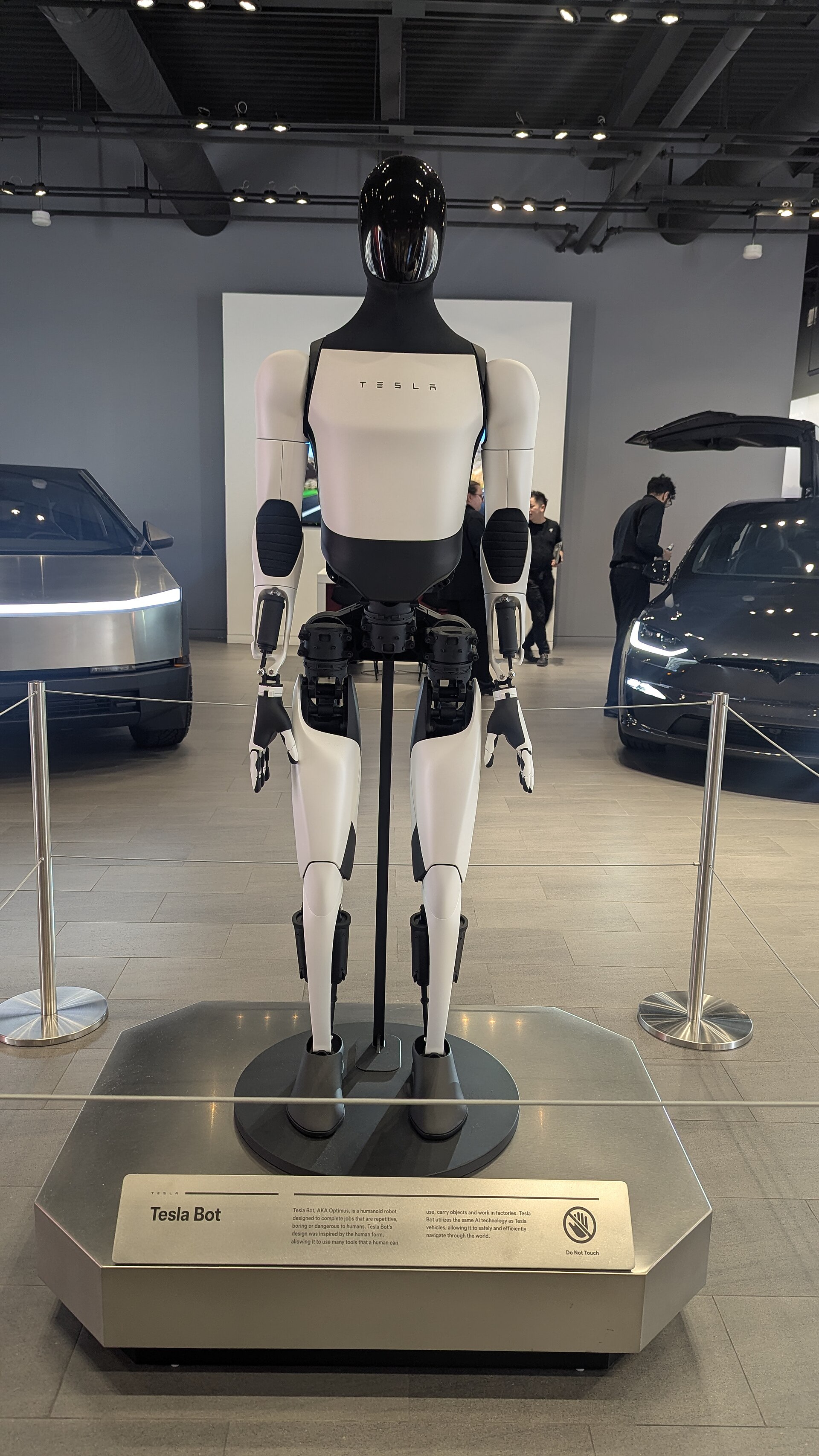
Three programmes that have lived for years in presentations acquired production language in this quarter’s update. Tesla said it has begun volume production of the Semi, its Class 8 heavy truck, in Nevada; the top variant, it said, can travel 500 miles at a full 82,000-pound gross combination weight at 1.7 kWh per mile — about a third of the energy, Tesla argues, of a comparable diesel truck hauling the same load. Cybercabs have begun deployment into the robotaxi fleet in Austin, where Tesla said it has reached nearly two million cumulative unsupervised miles, with operating hours now running from 6 a.m. to midnight. And production of the Optimus humanoid robot has started in Fremont, according to the company’s update as reported by The Circuitry.
The call added colour, and caution, to each claim. Musk said the Austin Cybercab fleet has increased about tenfold since it launched in early September, and AI chief Ashok Elluswamy said Cybercabs will launch in Dallas next month, Investor’s Business Daily reported. On Optimus, Musk predicted Tesla will make 20,000 units a week by the end of next year, said a unit able to perform tasks with complex AI rather than pre-programmed actions is one to two months away — and then, in the same appearance, said “I want to temper expectations,” citing the complexity of building the robots. On chips, he said the Terafab semiconductor plant, a Tesla–SpaceX joint venture, will make its first test chip next summer, with the first functional chip slated for the third quarter of 2028. None of these programmes yet contributes revenue at a scale that appears in the segment table; all of them appear, unmistakably, in the cost lines.
The capex cut: discipline, delay, or both
The single most consequential number of the evening was not in the update letter at all. It came on the call. “We’re revising our capex guidance to be approximately $20 billion for the current year as a result of managing our capital deployment efficiently,” Taneja said, in the transcript published by AlphaStreet and MarketBeat, adding that Tesla plans to fund the spending primarily from operating cash flow. Earlier this year Tesla had raised the target to more than $25 billion. Bloomberg reported the cut the same evening under the plain headline that spending had lagged estimates in the shift toward AI and robotics; MarketWatch noted Tesla has spent about $13 billion so far this year, leaving roughly $7 billion for the fourth quarter even under the reduced plan. Analysts had expected $7.95 billion to $7.96 billion of capex in the third quarter alone; Tesla spent $4.732 billion. The gap between the expected and actual spend is, arithmetically, a large part of why free cash flow came in positive $1.53 billion against expectations, in some previews, of a negative figure in the billions.
Tesla also disclosed financial headroom that cuts against any distress reading: during the quarter it secured capacity to borrow up to $30 billion, and Taneja said the company does not plan to draw on those facilities this year. The honest reading of the cut is therefore neither crisis nor pure efficiency. It is a schedule slip, financed comfortably: the factories, compute clusters and chip plant are being built more slowly than the plan announced earlier this year, by a company with $45.4 billion in cash that can afford the delay — and whose investors, on the evidence of the after-hours reaction, were still deciding which half of that sentence to price. Shares rose about 1.7 percent immediately after the release, Quiver Quantitative reported, before Investor’s Business Daily’s live coverage recorded the stock falling after the call as the capex cut and the tempered Optimus language landed.
Why this matters
Tesla’s quarter is a clean test of the thesis its valuation now rests on. At a market capitalisation around $1.5 trillion, Tesla is not priced as a car company that earned $787 million in a quarter; it is priced as the future owner of robotaxis, humanoid robots and the chips and compute behind both. Wednesday’s numbers show both halves of that bet in the same document. The legacy business is shrinking at the margin — automotive revenue down 3 percent, energy revenue down 16 percent despite record deployments, deliveries down 2 percent — while the spending meant to replace it pushed operating expenses up 39 percent and research and development up 69 percent, halving operating income and cutting net profit by 43 percent. Bulls will point, fairly, to what improved: gross margin recovered to 19.6 percent from 16.8 percent in a single quarter, automotive margin excluding regulatory credits rose to 18.1 percent, free cash flow swung back to positive, and the FSD attach rate above 75 percent is the kind of software penetration no rival carmaker can match. Bears will point, also fairly, to the capex cut: the company that insists the future is arriving on schedule just reduced the money it will spend building that future this year by a fifth, after underspending analysts’ quarterly expectation by more than $3 billion.
There is a wider signal here for the whole AI build-out, arriving the same evening Meta reported record revenue alongside its first negative free cash flow as a public company. Across the industry, the pattern of 2026 is now consistent: the cash engines are real, the spending is real, and the gap between announcement and deployment is where the risk lives. Tesla’s version of that gap is unusually visible because its future products are physical. A Cybercab fleet that has grown tenfold in a month, a Semi in volume production and an Optimus line that has started are checkable claims; so is a $20 billion spending plan against $13 billion spent with one quarter left. Musk’s five-million-cars-by-2030 target, set on the same call that cut this year’s capex, will be judged against exactly that arithmetic.
What happens next
The fourth quarter now carries three tests. The first is spending: roughly $7 billion of capex in three months would be Tesla’s biggest quarter yet, and anything materially less confirms the build-out has slipped into 2027 rather than merely been “managed efficiently.” The second is geography: a Cybercab launch in Dallas next month, on Elluswamy’s timeline, would show the robotaxi programme can replicate beyond Austin; a quiet delay would show the opposite. The third is the backlog: if production capacity really is the constraint Taneja described, deliveries should rise as capacity is added, and the four-year-high order book should convert into the revenue growth the top line has now lacked for a full year. Tesla ended the quarter with $45.447 billion in cash, a recovered margin, and a cheaper spending plan. What it has not yet produced is a quarter in which the new businesses grow faster than the old one shrinks. That remains the quarter the valuation is waiting for.
Related coverage
Tesla’s results landed in the middle of the busiest earnings day of the season: see our market wrap, Stock Market Today October 21 2026, for how the Nasdaq rose 1.1 percent on SpaceX’s first profit before Tesla and Meta reported after the close. The corporate link between Musk’s two companies is the subject of our report on the Tesla–SpaceX merger special committees — the same relationship that put a $142 million mark-to-market loss on Tesla’s SpaceX stake into this quarter’s profit line.
Sources
Tesla, “Q3 2026 Update” (company results release and investor deck, October 21, 2026), as reported in full by Tesla North and Teslarati: teslanorth.com, teslarati.com. Electrek, “Tesla (TSLA) releases Q3 2026 financial results: margins rebound, profit still falls” (October 21, 2026): electrek.co. Bloomberg Law, “Tesla Cuts Spending Target After Slower-Than-Expected Investment” (October 21, 2026): news.bloomberglaw.com. MarketWatch, “Tesla cuts its spending plans for the year” (October 21, 2026): marketwatch.com. Investor’s Business Daily, live earnings-call coverage (October 21, 2026): investors.com. Tesla Q3 2026 earnings-call transcript (Taneja capex-guidance remarks), via AlphaStreet / MarketBeat (October 21, 2026). Analyst consensus figures are as compiled by LSEG and reported by CNBC (via Tesla News Wire and Shattered). Segment, cash-flow and delivery figures are Tesla’s reported figures from its Q3 2026 update; where secondary reports differed on the revenue consensus (about $27.9 billion to $28.3 billion), the article carries the range rather than a single estimate.