War · Myanmar · United Nations
UN experts told the General Assembly that more than 100,000 people have died since the 2021 coup, most of them civilians — and that the killing of civilians is not collateral damage but the military’s strategy.
Track it live: Live war tracker — follow Myanmar and the world's active conflicts
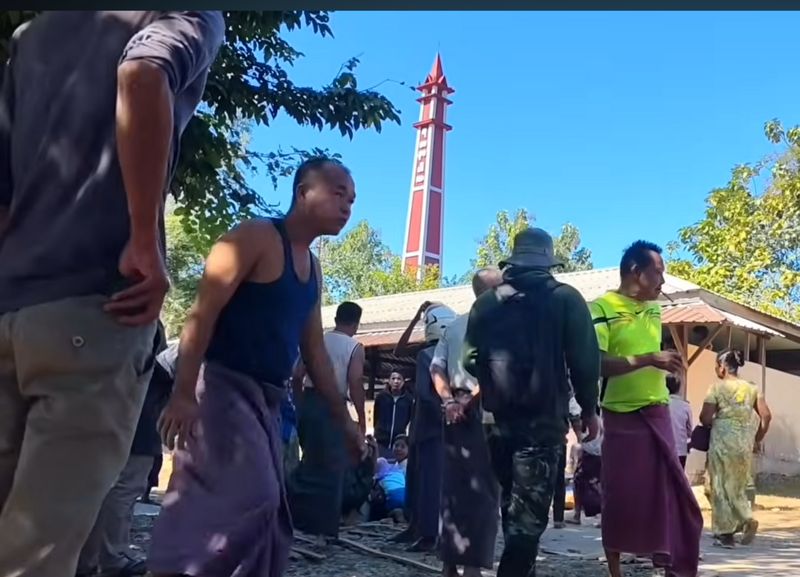
NEW YORK — The Myanmar civil war death toll has passed 100,000 since the military seized power in February 2021, United Nations experts told the UN General Assembly this week, with civilians making up the vast majority of the dead. The figure, presented to the Assembly’s Third Committee in New York between October 27 and 29, came with an accusation that goes beyond the scale of the killing: the UN’s special rapporteur on Myanmar said the military is deliberately attacking civilians — bombing schools, hospitals, markets and displacement camps — in order to terrorise the population into submission.
“These are not accidents,” Special Rapporteur Kelley Anne Eckels-Currie told reporters at a UN press briefing on October 29, describing the human rights situation in Myanmar as “catastrophic.” “This is intentional infliction of harm on civilian populations for the purpose of terrorising them and trying to force them into submission.” The army-backed government characterises its operations as targeting armed resistance and rejects international findings about its conduct.
What the UN experts told the General Assembly
Three UN voices addressed the Third Committee during its 81st session. Eckels-Currie presented a new report on the human rights situation; Special Envoy Julie Bishop also addressed the committee and called the Myanmar crisis a major test for the United Nations; and Nicholas Koumjian, head of the Independent Investigative Mechanism for Myanmar (IIMM), described the evidence his team continues to gather for future prosecutions. Together they described a war that has widened steadily since the February 2021 coup, in which the military has increasingly relied on airstrikes and artillery against places where civilians live, learn, receive medical care, worship, trade and shelter after fleeing earlier attacks.
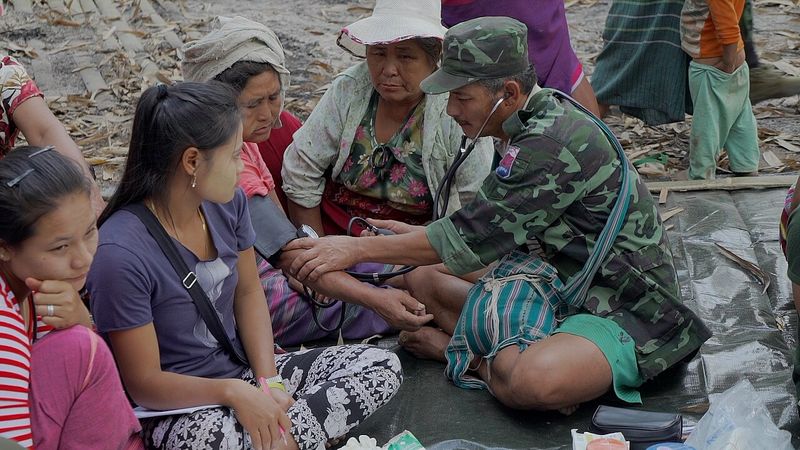
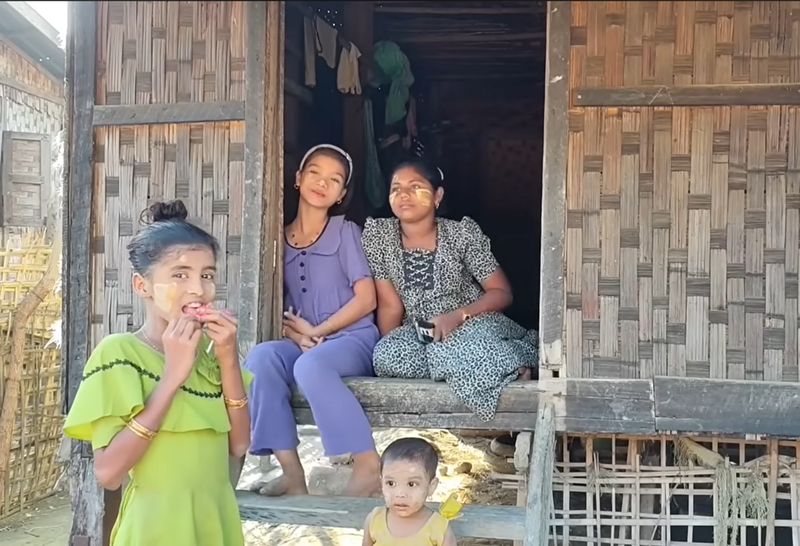
Currie’s report puts the UN’s documented civilian toll at at least 8,384 civilians killed by the military between the coup and September 15, 2026 — a case-by-case verified figure that is distinct from, and far lower than, the broader estimate of more than 100,000 total conflict-related deaths, which Reuters’ reporting on the war also cites. The displacement numbers are comparably stark: Reuters notes the war has displaced more than 3.5 million people, while UNHCR figures cited in coverage of the committee hearings put internal displacement above 4 million by September 2026, and more than 16 million people in Myanmar now need humanitarian assistance.
The IIMM’s own August 2026 report documented what it described as a pattern of deliberate airstrikes on homes, schools, hospitals and displacement camps. UN Human Rights Office reporting cited in coverage of the hearings underlines the trajectory: 982 civilians were killed in military airstrikes in 2025 alone, up more than 50 per cent on 2024. Signal Post News has reported the pattern from the ground this autumn, including junta airstrikes on displacement camps in Ponnagyun, Rakhine State, where the people under the bombs had already fled fighting once.
A ‘100-day peace plan’ that did not reduce the killing
The committee also heard a direct test of the regime’s own stated intentions. The military government promoted a “100-day peace plan” running from April 20 to July 31, 2026. According to Currie’s report, violence did not fall during that period: around 753 civilians were killed during the 100 days, and the military and paramilitary forces were responsible for 89 per cent of those civilian deaths. In other words, during the very window the authorities presented as a peace initiative, roughly nine in ten documented civilian killings were attributed to the side that announced it.
The repression behind the battlefield numbers continues in parallel. At least 15,000 political prisoners remain detained, according to the Assistance Association for Political Prisoners (AAPP) figure cited in coverage of the hearings.
‘Four Cuts’: the doctrine behind the aid blockade
Currie’s report describes the military’s long-standing “Four Cuts” doctrine — severing food, resources, humanitarian access and support networks from areas that resist the regime — as a driver of civilian suffering well beyond the front lines. Aid obstruction, she said, is deliberate and systematic: telecommunications blackouts that cut communities off, movement restrictions and checkpoints that stop supplies moving, and direct pressure on the people who deliver help. Aid workers have been harassed, detained, tortured and killed; in July 2026, three humanitarian workers were reportedly tortured and killed in Dawei.
Balance matters in the UN’s own account: Currie also noted violations by non-state armed groups, including forced conscription in Rakhine State, where resistance forces control much of the territory. The army-backed government, for its part, characterises its operations as targeting armed resistance rather than civilians. The UN experts’ conclusion, however, was that the documented pattern reflected a military strategy, with humanitarian access squeezed hardest in exactly the areas that resist it.
The conflict economy: the war now pays for itself
Perhaps the most consequential finding in Currie’s report is economic. Myanmar’s growing illicit economy — online scam centres, illegal mining, human trafficking and forced labour — is no longer just a consequence of the war, she told the committee; it has become a driver of it. Black-market profits finance weapons purchases, including from China and Russia, and sustain loyalty within the junta’s ranks, giving commanders and networks a financial interest in the conflict continuing. Chinese transnational criminal networks provide the “backbone” of most criminal enterprises, the report found, moving money and recruits through channels that include the Tether cryptocurrency and platforms such as TikTok, Meta and X.
Even the crackdowns cut both ways. Efforts to cut Starlink satellite connections to scam centres also cut off humanitarian groups and ordinary communities that depend on the same links — an illustration of how thoroughly the legal and illegal economies have become entangled. The economics also help explain the diplomatic stalemate: as Washington’s direct talks with Myanmar’s generals showed in October, outside governments are still searching for leverage over a regime whose war is increasingly financed from within.
The diplomatic track: ASEAN, the ICJ and a warning
While the experts spoke in New York, the regional track moved in Naypyitaw. Reuters reported on October 30 that Philippine Foreign Secretary Ma. Teresa Lazaro, serving as ASEAN’s special envoy, met Myanmar foreign minister Tin Maung Swe in the capital on October 28–29 to discuss the civil war and aid access. Myanmar’s government says it is implementing ASEAN’s five-point peace plan in line with its national interests and sovereignty; it said in August that there was no longer a need for an ASEAN special envoy at all. Lazaro also sought access to detained former leader Aung San Suu Kyi, whose release has been a standing ASEAN and UN demand.
Currie added two forward-looking warnings. She urged member states to watch for possible violence after the anticipated ruling of the International Court of Justice in the case concerning Myanmar, and she urged governments that engage the regime to demand concrete concessions — less violence, prisoner releases and inclusive dialogue — rather than normalising ties unconditionally. The movement of people displaced by the wider regional upheaval continues in the background, as in October’s transfer of Myanmar returnees arriving in Yangon on navy ships from Malaysia.
Why this matters
The two numbers in this story — 8,384 and 100,000 — are often confused, and the difference between them is itself diagnostic. The 8,384 figure is the UN’s documented count: individual civilian deaths, attributed to the military, that investigators could verify case by case up to September 15, 2026. It is a floor, built only from what monitors could confirm in a country where the authorities restrict access, cut telecommunications and obstruct aid and reporting alike. The 100,000 figure is the estimated total of conflict-related deaths on all sides since 2021 — combatants and civilians, across every armed actor, including deaths in places no investigator has reached. The gap between the verified floor and the estimated whole is, in large part, a measure of how much of this war happens where outsiders are not allowed to look.
Who gains and who loses follows from that structure. The clearest gainers are the networks of the conflict economy — scam operators, traffickers, illegal miners and the intermediaries who move their money — together with the arms suppliers, including in China and Russia, whose weapons the profits buy, and commanders whose loyalty the money secures. The losers are counted in the rest of the numbers: more than 4 million people displaced inside the country, over 16 million needing humanitarian assistance, at least 15,000 political prisoners, and a generation of children in camps like Myebon whose schooling now happens, if it happens at all, within range of the aircraft their parents fled.
Historically, Myanmar’s war is the product of a sequence that began on February 1, 2021, when the military overturned an elected government, detained Aung San Suu Kyi and shot the protesters who filled the streets. Armed resistance that began as local defence forces has since grown, alongside long-established ethnic armed organisations, into a nationwide war the military has been unable to win and unwilling to end — prosecuted, on the UN’s account, increasingly from the air, against the places civilians gather. That is why Bishop’s description of the crisis as a test for the United Nations matters: the institution’s experts can now document the strategy in detail, while its members remain divided over what to do about it.
What happens next
Three things will show whether this week in New York changed anything. First, the International Court of Justice ruling Currie flagged: she warned states to prepare for possible violence around it, which makes the court’s timetable a date to watch for anyone following the war. Second, the terms of engagement: Currie’s test — concrete concessions in exchange for contact, rather than unconditional normalisation — will be applied, or not, by every government that deals with Naypyitaw in the coming months, starting with whether ASEAN’s envoy gains the access, including to Aung San Suu Kyi, that Lazaro sought. Third, the numbers themselves: whether the civilian death rate, and the airstrike toll that rose more than 50 per cent in a year, bends at all. On the evidence presented to the Third Committee, nothing in the military’s current strategy is designed to bend it.
Sources
- UN News, “Myanmar’s illicit economy fuels escalating violence, with civilians bearing the brunt” (October 29, 2026).
- UN Media / UNifeed, UN-Myanmar human rights briefing (October 29, 2026).
- Reuters via LA Post, “ASEAN envoy meets Myanmar minister, discusses civil war and aid access” (October 30, 2026).
- UN Audiovisual Library, Third Committee, 29th plenary meeting (October 2026).