U.S. NEWS — The Moussa Diawara ICE deportation case is, on paper, a story about a flight that landed where it was supposed to land. A U.S. immigration judge ruled in 2012 that Moussa Diawara could be removed from the United States but not to Mali, where he said he would be persecuted. In July the government flew him to Ghana instead — a country he had never visited. Diawara says Ghanaian officials then held him under armed guard and, within days, forced him onto a second flight to Mali, the one country a judge had placed off limits. The Department of Homeland Security says he was flown to Ghana, not Mali, that Ghana gave diplomatic assurances for his safety, and that pieces of paper pointing to Mali were a contractor’s work and a clerical error. Between those two accounts sits the central question of the Trump administration’s third-country deportation programme: what is a protection worth if it binds only the first flight?
The account at the centre of this story comes from a five-month investigation by CBS News’ 60 Minutes, aired on Sunday, October 25, 2026, and it is worth stating plainly at the outset which parts of it are established and which parts are contested. Established, on the record of both sides: Moussa Diawara, 57, is from Mali; he lived for about 25 years in a Houston suburb with his wife Barbara, a registered nurse, and their two U.S. citizen children, Corey, 16, and Chloe, 12; he worked as an Uber driver on a work permit, paid taxes and, according to CBS, has no criminal record; an immigration judge granted him withholding of removal in 2012; ICE arrested him on July 11, 2026; and on July 31 he landed in Ghana. Contested: almost everything that happened next, starting with whether the United States knew — or should have known — where he would end up. Diawara’s version is that he did end up in Mali, against his will, and that American paperwork said he would. The government’s version is that the United States removed him lawfully to Ghana and that what Ghana did afterwards is Ghana’s affair, undertaken, DHS officials suggested to CBS, possibly with his consent. Ghana’s government declined to comment to CBS at all.

Twenty-five years, one ruling, and a night shift
Diawara’s American life began the way many immigration cases begin and few end: he arrived at 32 on a tourist visa and overstayed it. He later converted to Christianity and sought protection from removal, arguing he would be persecuted if returned to Mali, a Muslim-majority country fighting an Islamist insurgency. In 2012 an immigration judge agreed with enough of that claim to grant withholding of removal. The ruling’s terms matter to everything that followed, so they deserve precision. Withholding did not make Diawara a legal resident, and it did not cancel his removal order: he remained removable. What it did was fence off one destination. The United States could not deport him to Mali. It remained free, in principle, to remove him to a genuinely safe alternative country willing to take him. For fourteen years, no administration chose to do so, and Diawara lived in the space the ruling left him — working, driving for Uber, raising two children who are U.S. citizens.
That changed on July 11, 2026. According to CBS, Diawara was finishing a night shift when he arrived home to find ICE agents waiting for him. He says he then spent three weeks in ICE detention in Texas without being able to speak to his lawyer or a judge — that is his account, relayed by CBS, and the government has not publicly answered it in detail. “I cannot call my wife, I can’t contact my lawyer. I can’t talk to no one,” he told the programme, describing the detention that preceded his removal. On July 30, he was put on a charter flight with 62 other people. It stopped in Sierra Leone and the Central African Republic before reaching Ghana on July 31 — a country, CBS noted, he had never visited and where he knew no one. “I don’t have any connection,” he said. “I don’t know no one to Ghana.”
The second flight: what Diawara says happened in Ghana
What happened in Ghana is the heart of the dispute, and it rests, for now, on the word of the deportees themselves. Diawara says he and others were held in a hotel by armed guards and not allowed to make phone calls. Within five days, he says, Ghanaian officials forced him onto a flight to Mali. He says he was dropped there with no money and no identification papers. CBS first reached him in August, homeless and in hiding; in the programme he points to a bench and says it had been his bed for two weeks. After about three weeks in Mali, he says, local truckers helped him escape to another African country, which he asked CBS not to identify because he fears for his safety. “I still say to myself, ‘This isn’t real,’” he told the programme. “This is me?”
Diawara is not, on CBS’s reporting, an isolated case. The programme obtained the names of all 63 people on his flight and reached 19 of those sent to Ghana. Seventeen of the 19 told CBS the same thing Diawara did: that Ghana quickly transported them, against their will, to the countries U.S. immigration judges had ruled they should not be returned to. That figure — 17 of 19 reached — is CBS’s, gathered over a five-month investigation, and it is a sample of those the programme could contact rather than a census of the flight. But it is the pattern, more than any single story, that gives the Diawara case its weight: if the accounts are accurate, onward removal from Ghana to the protected country was not an accident that befell one man but the routine destination of the route itself. Immigration attorney Meredyth Yoon told CBS she believes the U.S. government was warned about Ghana’s conduct in a lawsuit last year and sent ten more flights there anyway — an allegation DHS’s general counsel, James Percival, disputed in substance, telling CBS he was not aware of cases in which Ghana sent people against their will to a country covered by a withholding order, and suggesting deportees may have consented to go home or that Ghana applied its own procedures consistent with international law.

The paperwork dispute: bag tags, a medical form and “that piece of paper”
Diawara supports his account with two artefacts, and the exchange they produced is the most concrete public evidence in the case. He showed CBS a medical form he says U.S. officials gave him on the deportation flight, with a small supply of his medication, listing his destination as “SHRC Mali” — SHRC standing for special high risk charter, the kind of flight he was on. His two DHS-issued bag tags, he says, also read “Destination: Mali.” “So they know 100% I’m going to Mali,” he told CBS. “It just says Mali.” Confronted with the document on camera, Percival answered: “Well, he wasn’t flown to Mali. He was flown to Ghana, but I can’t speak to why that piece of paper says that.” After the interview, DHS sent CBS a statement saying the bag tags were “produced by contractors” who “are not part of the process that determines the destination,” and that the medication form was a “clerical error.” DHS also told CBS that Ghana had provided the United States with “diplomatic assurances for his safety,” and questioned the credibility of his fear of persecution in Mali.
Read carefully, the two sides are not quite answering the same question. Diawara’s documents, if genuine, show what a charter’s paperwork said; DHS’s answer addresses where the aircraft landed. Both could be true at once — a plane can land in Ghana while its manifests anticipate onward travel — which is precisely why the paperwork matters and why the explanation matters. If the tags and form were errors, they were errors that named, as the destination, the one country a judge had forbidden, on the file of a man who says he was then taken to exactly that country within five days. If they were not errors, the government’s account of a removal that ended in Ghana is incomplete. No court has yet weighed the documents, and Signal Post News presents them as what they are: exhibits in a contested account, shown by one side and explained, differently, by the other.
The family left in Texas
While the legal argument proceeds in filings and interviews, its cost is being counted in a house in the Houston suburbs. Barbara, who works full time as a registered nurse, told CBS she is trying not to cry in front of the children and to be strong for them because they need her. Corey, 16, said of his father’s absence: “It feels really empty without him.” Chloe, 12, said her father was always the one who made her feel better. CBS filmed a video call in which Diawara, from hiding, reminded his son to listen to his mother and to vacuum the upstairs carpet every Sunday — the ordinary instructions of a household head, delivered from another continent, to a family that does not know when or whether he is coming back.
The government’s case, stated in full
The administration’s defence of third-country removals is not a denial that the programme exists; it is an argument that the programme is the law working as Congress wrote it. “This administration is following the law that Congress has passed,” Percival told CBS. “There are a lot of people in this population that we talk about, who committed very serious crimes. And people should be very happy with President Trump for getting these serious criminals out of the country.” The government’s structural case runs as follows. Some people under final removal orders cannot be sent home: their countries refuse to accept them, or — as in Diawara’s case — a judge has barred return to the home country while leaving the removal order itself in force. Without third countries, the administration argues, those orders become unenforceable and people whom judges have ordered removed simply stay, indefinitely, whatever their records. Solicitor General D. John Sauer made the same argument to the Supreme Court, calling the policy “an essential tool to remove certain aliens, including some of the worst criminal aliens” whose home countries refuse to take them back. Percival told CBS he believes third-country removals “have stopped crimes from happening and kept Americans safer,” while acknowledging, when CBS asked what percentage of those detained and deported are violent offenders, that he did not have that figure.
On Diawara specifically, the government’s public position has two layers. The first is procedural: he was subject to a final order of removal, the flight took him to Ghana rather than Mali, and Ghana gave diplomatic assurances for his safety. ICE’s official account restated that position on Monday, October 26, challenging the 60 Minutes framing and emphasising that he had a final order of removal. The second layer goes to the basis of his protection claim, and it must be labelled precisely for what it is: an allegation by the government, made after the broadcast, that CBS disputes by implication in its own reporting. ICE alleged that Diawara’s stated reason for fearing return to Mali was a claim about his sexuality, which the agency said sat oddly with his marriage and children, and Percival posted that he had “pulled his file” and found the same. CBS, by contrast, reported that the 2012 ruling rested on his persecution claim after his conversion to Christianity, in a Muslim-majority country with an Islamist insurgency, and Diawara’s fear claim was the basis on which a judge granted withholding. Signal Post News states the dispute, not a verdict: the government now questions the credibility of the claim; a judge in 2012 found it sufficient to bar his return to Mali, and that order has never been reported as revoked.
Background: a protection with a border drawn around one country
To see why both sides can describe the same flight so differently, it helps to understand the instrument at the centre of it. Withholding of removal is a country-specific protection. A judge who grants it finds that the person is more likely than not to face persecution — or, under the related Convention Against Torture standard, torture — in a named country, and orders that the United States not send them there. It is deliberately narrower than asylum: it carries no path to permanent residence, no derivative status for family, and no protection against removal as such. Past administrations rarely removed people in Diawara’s position, CBS reported, but nothing in the 2012 order itself purported to govern what any other country might do with him afterwards. That gap is not an oversight in one man’s file; it is the architecture of the protection, and the third-country programme operates inside it.
The programme’s scale is recent. Under a DHS policy adopted in March 2025, the government has sent about 25,000 people to some 29 third countries, according to figures cited both by human rights groups and, in CBS’s interview, consistent with Percival’s own account; most of those removed under the programme went to Mexico, and the Migration Policy Institute has estimated roughly 15,000 such removals in 2025. CBS reported that, in total, nearly one million people were deported in the first eighteen months of President Trump’s second term, the great majority to their countries of origin. The third-country stream is therefore a small share of the whole — about one removal in forty — but it is the share where the law is most contested, because it is where final orders meet protection orders, and where the receiving country’s next move decides what the protection was worth.
The flight, by the numbers
CBS’s review of Diawara’s own flight complicates the programme’s public framing in both directions, and the figures deserve to be read whole. Of the 63 people aboard, CBS found that 19 percent had a criminal charge or conviction — including, the programme reported, theft, assault, drugs and weapons possession; 19 percent had traffic violations only; and 62 percent had no criminal record at all. Those numbers cut against any simple description of the flight: it was neither a planeload of violent offenders nor a planeload of people with spotless files. They also frame Percival’s exchange with CBS fairly. Asked what share of deportees are violent offenders, the department’s top lawyer said he did not know; CBS’s answer, for this one flight, is that people with any charge or conviction were a minority of those aboard, and that the named passenger at the centre of the story — an Uber driver with, per CBS, no criminal record — was in the majority group. Whether this flight is typical of the 25,000 is a question neither side’s public evidence yet answers.
Why this matters
The Diawara case matters first because it isolates, in a single itinerary, the question the whole programme has been circling: whether a protection that binds only the removing country can survive contact with a receiving country that removes onward. Call it the second-flight problem. The United States can comply, perfectly, with the letter of a withholding order — wheels down in Accra, not Bamako — while the outcome the order existed to prevent arrives five days later on someone else’s aircraft. International law has a word for returning a person to persecution by an indirect route, refoulement, and critics of the programme, including the immigration lawyers who challenged it in court, argue that a state may not do indirectly what it is forbidden to do directly. The administration’s answer is institutional as much as legal: it relies on diplomatic assurances from receiving governments, and it treats the receiving state’s own procedures as that state’s sovereign business. Between those positions lies a practical question no assurance has yet answered publicly: who checks? An assurance is a promise made before the flight. Monitoring — verifying where deportees actually are weeks later — is the unglamorous machinery that would make the promise testable, and it is the machinery whose absence CBS’s reporting exposes: the programme’s own general counsel told a national audience he was not aware of onward removals that 17 of 19 reachable deportees described.
Second, the case matters because of who wins and who loses under each reading, and the honest answer is that both readings have real stakes. If the critics’ reading prevails, third-country removal survives but with procedural teeth — notice, a chance to contest the specific destination, and some obligation to reckon with where a person foreseeably ends up — and some removals of people with final orders will be delayed or stopped, including, the government warns, removals of people with serious criminal records whose home countries will not take them. If the administration’s reading prevails, final orders become fully executable anywhere a partner government will accept the passenger, and withholding of removal becomes, in practice, a protection against a direct flight only — a result its holders, who won it in court on findings of likely persecution or torture, would experience as the protection’s repeal by itinerary. Diawara’s case is where those abstractions acquired a face, a family and a paper trail, which is why a Sunday-night television programme about one Uber driver now sits inside a Supreme Court case about 25,000 people.
The legal road to December
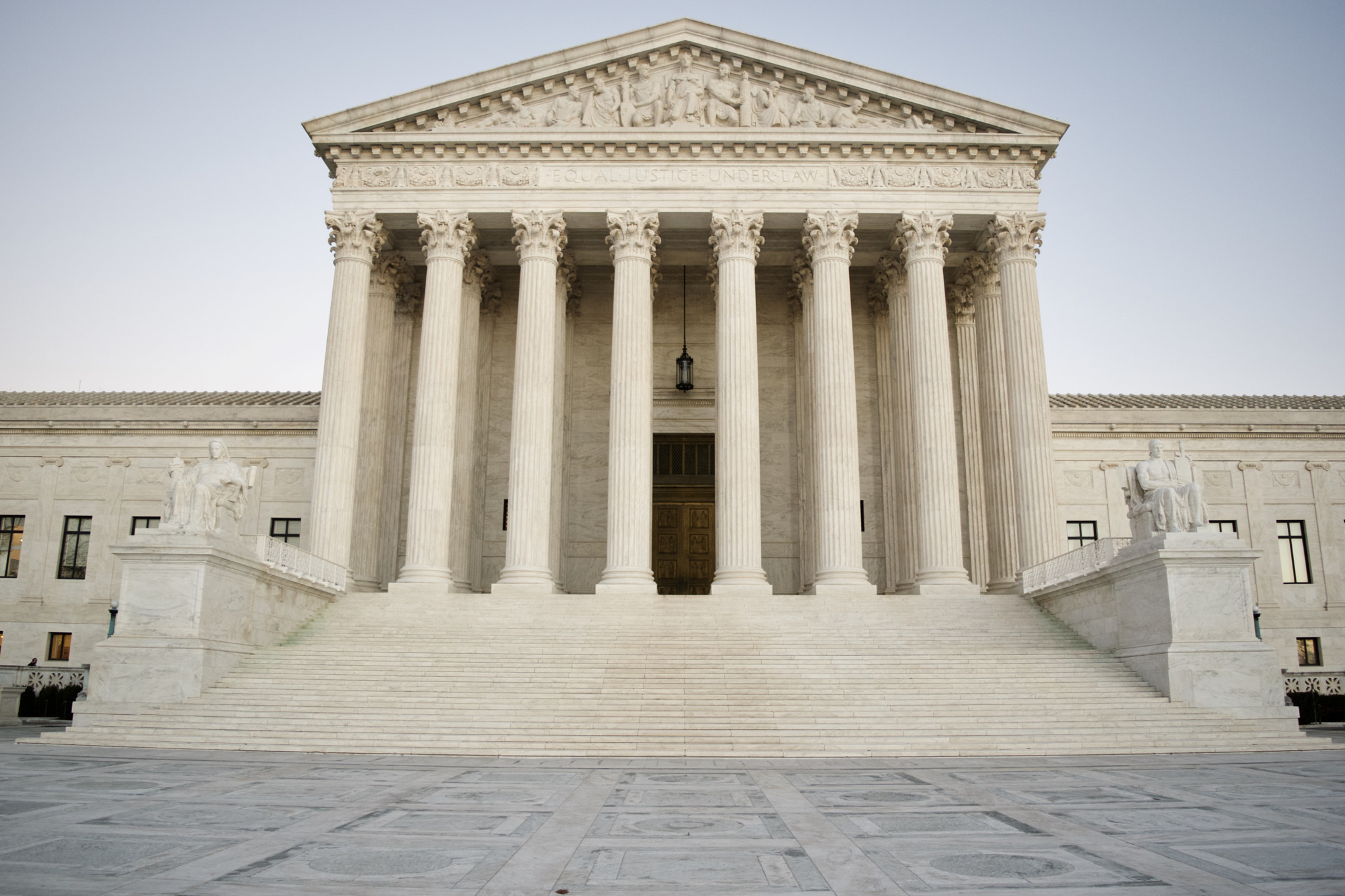
The courts have been arguing about this programme for most of the year, and the argument’s shape explains why Diawara could be removed in July under a policy a class-action court had found unlawful. In February, U.S. District Judge Brian Murphy in Boston ruled that third-country removals require written notice to the person being removed and a meaningful opportunity to raise fears of persecution or torture in the destination country — a process the challenged policy, in his assessment, did not provide. The First Circuit partly upheld that ruling, and CBS reported that a federal appeals court upheld a class-action ruling that the policy was unlawful because it denied deportees due process. The administration’s response was to ask the Supreme Court to intervene before the merits were decided. On September 29, the justices did: in an unsigned order they stayed the lower-court rulings, allowing deportations to continue, and agreed to hear Department of Homeland Security v. D.V.D. in December. Justices Sotomayor, Kagan and Jackson would have denied the stay. A final decision is expected by the end of June 2027. Signal Post News covered the September 29 order as it landed in our report on the Supreme Court allowing third-country deportations to restart, and the onward-removal risk at the centre of this case is the same one Amnesty International raised last week over a different destination in our report on U.S. deportees in Sierra Leone facing forced return home.
It is important to be exact about what the December argument will and will not settle. It will settle the lawfulness of the policy’s procedures: how much notice and what kind of opportunity to object the Constitution and the governing statutes require before the government may send a person to a third country, and whether lower courts had the authority to block the policy as broadly as they did. It will not, by itself, decide Moussa Diawara’s case, order anyone’s return, or adjudicate what happened in a hotel in Accra in August — those are factual questions for the separate proceedings his lawyer has begun. Nor will it rule on Ghana’s conduct, which no U.S. court has jurisdiction to judge. What December decides is the rulebook under which the next 25,000 cases proceed, and against which Diawara’s treatment will retrospectively be measured.
What happens next
For Diawara himself, the immediate fight is the one his attorney, Reuben S. Kerben, has opened in Washington, D.C., asking a federal judge to order the government to return him to the United States. Three scenarios cover the realistic range. In the first, a judge agrees that his removal, as executed, defeated the protection he held and orders the government to facilitate his return — a remedy courts have granted in other wrongful-removal cases, and one the government would likely appeal. In the second, the court holds that the United States complied with the only order binding it, and his claim fails regardless of what Ghana did; his remedy, if any, would then lie in a new protection claim he cannot easily file from hiding. In the third, and on recent form the most likely near-term outcome, his case is slowed into the slipstream of the Supreme Court’s: argued around, stayed behind, or decided in the shadow of a June 2027 ruling that redefines the ground under it. In every scenario he remains, for now, in an undisclosed country, and his family remains in Texas, where his son’s verdict stands as the record’s plainest sentence: “It feels really empty without him.”
For the thousands of others holding withholding orders, December is the date that matters. A ruling for the government would confirm that their protection ends at the first destination and make onward-removal risk a permanent feature of third-country practice unless Congress rewrites the statute. A ruling for the challengers would not end third-country removals — no party is asking for that — but would rebuild them around notice and a genuine chance to contest the destination, and would force the question this case poses in its sharpest form: if the United States knows, or has been told, where the second flight goes, at what point does the first flight become the violation? Until the justices answer, the programme continues under the September stay, the flights continue with it, and the distance between a judge’s order in 2012 and a bench in Bamako in 2026 remains the measure of the gap the law has not yet closed.
Sources
CBS News, 60 Minutes, “How some deportees end up in countries U.S. judges ruled off limits” (aired October 25, 2026) — report and transcript: transcript via WGHN; transcript via Europe Says; segment video via CBS Evening News: youtube.com. Reuters, “Top cases on the U.S. Supreme Court’s docket” (third-country deportations, December arguments, September 29 stay, 25,000 deported to 29 countries) — reuters.com. Associated Press, “Supreme Court lets quick deportations to third countries resume for now while it weighs Trump policy” (September 29, 2026) — AP via Netscape News. Washington Examiner, “Trump administration goes after 60 Minutes for framing of Texas deportation case” (October 26, 2026; DHS and ICE statements, including the final-order position and the agencies’ allegation about the basis of his claim) — washingtonexaminer.com. File photographs: David Daniel Turner, Sir Amugi and Jesse Collins, via Wikimedia Commons.