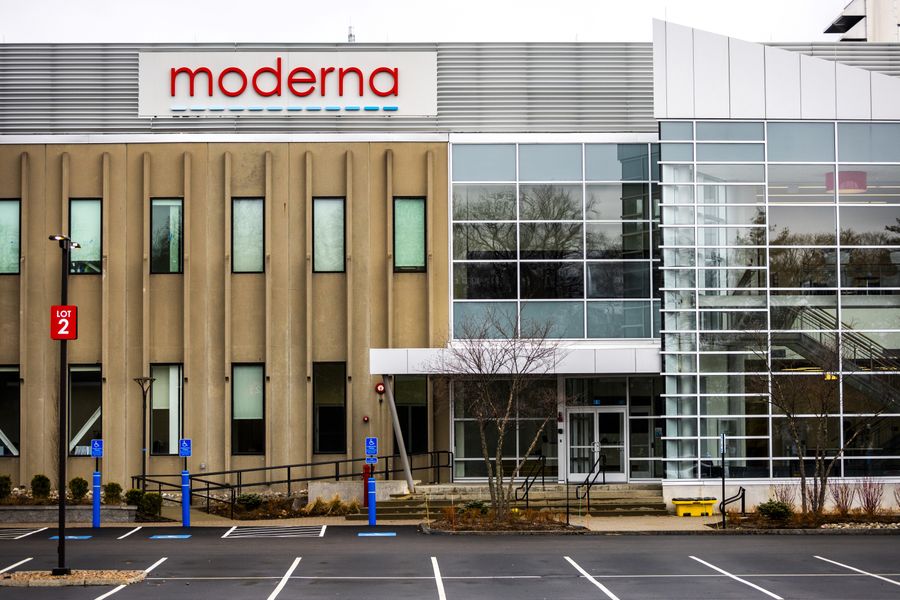
Moderna and Merck have produced what the companies call the first positive Phase 3 result for both an individualized neoantigen therapy and an mRNA-based cancer treatment. In the 1,137-patient INTerpath-001 trial, a custom-built shot called intismeran autogene, given with Merck's KEYTRUDA, significantly improved recurrence-free survival and distant-metastasis-free survival compared with KEYTRUDA alone after high-risk melanoma had been surgically removed.
The announcement arrived before the market opened on Wednesday, August 19 — the date in the companies' official release — and the share-price reaction was immediate. Moderna rose 176.97% during that session to $174.38 before easing 4.65% to $166.26 after hours. Merck gained 12.60% to $152.20 and then slipped 0.46% after hours to $151.50. Those figures are the rally-day reporting snapshot, not a live quote for September 23.
The distinction matters because the scientific news and the stock-market story are related but not identical. The trial says the combination delayed recurrence and distant spread better than KEYTRUDA alone at a planned interim analysis. It does not yet say that patients lived longer overall, and it does not solve the cost and logistics of making a different medicine for every patient. The result is a platform breakthrough; the commercial verdict remains open.
Why this matters: proof for mRNA beyond COVID
COVID vaccines established that synthetic messenger RNA could be designed, manufactured and delivered at extraordinary speed. Cancer poses a harder test. A virus presents broadly shared targets; a tumor evolves inside one person and carries a private collection of mutations. Intismeran is designed from a sample of each patient's tumor, with synthetic mRNA encoding as many as 34 selected neoantigens. Those instructions are intended to train T cells to recognize molecular flags on residual cancer cells.
KEYTRUDA, or pembrolizumab, attacks the problem from another direction. The antibody blocks the PD-1 pathway that tumors use to suppress immune activity. In simplified terms, the vaccine tries to show the immune system what to hunt, while KEYTRUDA helps release the brakes. The Phase 3 comparison therefore tested whether the Moderna Merck KEYTRUDA combination could improve on a widely used immunotherapy by itself.
It did on two important disease-control measures. Recurrence-free survival tracks how long patients remain alive without melanoma returning; distant-metastasis-free survival focuses on whether the cancer spreads to a remote organ or tissue. The companies described both improvements as statistically significant and clinically meaningful. They have not yet disclosed the full numerical dataset in the topline release, so the size, consistency and subgroup pattern of the benefit still need expert scrutiny.
Background: Moderna's post-COVID fall and its decade-long neoantigen bet
Moderna entered the pandemic as an ambitious platform company and emerged with a globally recognized product, a giant cash windfall and expectations that proved impossible to sustain. As demand for repeated COVID vaccination normalized, revenue fell, losses returned and the stock surrendered most of its pandemic-era valuation. Investors began asking whether Moderna was a one-product company whose technology had met the perfect emergency once.
Intismeran is the clearest answer Moderna has produced. Merck and Moderna have jointly developed the program since 2016, long before the pandemic made mRNA a household term. Earlier Phase 2b melanoma data had already pointed in the same direction: at five years, the companies reported a 49% reduction in the risk of recurrence or death and a 59% reduction in the risk of distant metastasis or death for the combination versus KEYTRUDA alone. Phase 3 was the essential test of whether that signal could hold in a larger, randomized global study.
INTerpath-001 enrolled patients with completely resected stage IIB, IIC, III or IV cutaneous melanoma. They were randomized two to one to receive intismeran plus KEYTRUDA or KEYTRUDA alone for roughly a year. The setting matters: these patients had no detectable tumor left after surgery, but their risk of relapse remained high. Treating microscopic residual disease is biologically different from shrinking a bulky late-stage tumor — and, skeptics note, it can be a more favorable place to demonstrate benefit.
Winners and losers
Moderna's redemption case strengthened dramatically. The result gives the company something investors had waited years to see: Phase 3 evidence that its core technology can produce value outside infectious disease. It also changes the financing conversation. A platform once valued largely on respiratory-vaccine sales can now be modeled as a potential oncology business, albeit one with no approved cancer product yet.
Merck gains a possible extension to the KEYTRUDA franchise. KEYTRUDA is already central to Merck's earnings and is used across many cancer types. Pairing it with a new individualized therapy could deepen its role in melanoma and create a template for other tumors. The strategic value is not merely another product; it is a way to keep KEYTRUDA at the center of combination regimens as competitive and patent pressures grow.
BioNTech faces a higher benchmark, not a dead end. The rival mRNA pioneer has its own personalized cancer-vaccine programs. Moderna's win validates the category and can lift the whole field — BioNTech shares rose 21.96% in the rally-day snapshot — but it also means future BioNTech data will be judged against an actual Phase 3 success rather than a theoretical promise.
Pfizer's exposure is indirect. Pfizer's pandemic partnership made BioNTech synonymous with COVID mRNA, but Pfizer has no stated economic stake in this Moderna-Merck melanoma regimen. Its shares eased in the same market snapshot even as BioNTech, Tempus AI (+24.09%) and CRISPR Therapeutics (+12.91%) climbed. That divergence is a reminder that investors rewarded direct or thematic oncology exposure, not every company connected to the history of mRNA.
Patients may ultimately be the largest winners — but the word “may” matters. Preventing recurrence and distant spread after surgery can be clinically consequential. Yet overall survival remains under follow-up, the detailed safety and efficacy tables have not been fully presented, and access depends on whether the treatment can be produced quickly, reliably and at a price health systems can bear.
The skepticism: survival, setting and the personalized factory problem
Three cautions stand between a positive trial and a durable franchise. First, no mature overall-survival result is available. RFS and DMFS are meaningful endpoints, but investors and clinicians will want to know whether the combination ultimately helps patients live longer — and whether any additional adverse effects are justified by that benefit.
Second, adjuvant melanoma is a comparatively favorable proving ground. Surgery has removed visible disease, melanoma is highly immunogenic, and KEYTRUDA already establishes a strong immune-therapy backbone. Success here does not guarantee the same result in less immunogenic tumors, in heavily pretreated patients or in cancers with rapidly progressing disease.
Third, an mRNA personalized cancer vaccine is not a normal vial produced by the million. Each treatment begins with a tumor sample, sequencing, computational selection of neoantigens and a patient-specific manufacturing run. Commercial success requires thousands of parallel one-person supply chains with strict quality control and short turnaround times. A therapy can be medically valuable and still struggle if manufacturing delays, failure rates or price restrict access.
What the numbers mean: a 177% move and a $69.6 billion valuation
The most important number is not 177%; it is the difference between the probability investors assigned to a successful oncology platform before and after the readout. Moderna's intraday move to $174.38 nearly tripled the stock in one session. At the specified market snapshot, the company was up 465.07% for the year, carried a market capitalization of about $69.62 billion and had traded between $22.28 and $176.66 over the preceding 52 weeks.
That repricing tells us the market did more than add the likely value of one melanoma indication. Investors capitalized a chain of future possibilities: regulatory approval, adoption alongside KEYTRUDA, expansion into additional tumor types and a reusable individualized-manufacturing system. Each link has risk. If even one breaks — weak detailed data, a slow filing, disappointing survival, difficult reimbursement or failure in other cancers — a valuation built on platform breadth can contract quickly.
The peer moves reinforce that interpretation. Merck's 12.60% rise reflected the direct franchise benefit without Moderna's binary platform re-rating. BioNTech, Tempus AI and CRISPR Therapeutics rallied as investors broadened the news into a bet on computational drug design, precision oncology and genetic medicine. The after-hours pullbacks showed the first wave of profit-taking, not a reversal of the clinical result.
What happens next: filings, survival data and other cancers
The immediate next step is disclosure. Merck and Moderna said they would present detailed INTerpath-001 data at an international medical meeting and share them with regulators. Clinicians will look for hazard ratios, confidence intervals, absolute recurrence rates, follow-up duration, consistency across disease stages and any added toxicity. Regulators will decide whether the RFS and DMFS evidence is sufficient for a filing before overall survival matures.
The second test is expansion. The partners' INTerpath program includes nine Phase 2 and Phase 3 trials across melanoma, non-small cell lung cancer, bladder cancer and renal cell carcinoma, with additional early studies in pancreatic, gastric and other settings. Repeating the melanoma result in a second tumor would do more to validate a platform than any stock move.
Fast scenario: detailed data hold up, regulators accept the endpoints and a filing leads to a possible 2027 decision. That is a scenario cited in market commentary, not a company promise. Middle scenario: submission and review extend into 2027 or 2028 as agencies seek longer follow-up, manufacturing evidence or additional analyses. Slow scenario: regulators wait for more mature survival data or require further work, pushing a decision later. The official announcement gives no guaranteed FDA date.
The bottom line is narrower and more consequential than the rally suggests. Moderna and Merck have shown that a patient-specific mRNA therapy can beat KEYTRUDA alone on two major Phase 3 disease-control endpoints in resected melanoma. That is genuine scientific progress. Whether it becomes a widely accessible cancer treatment — and whether Moderna's new valuation survives the journey — will be decided by the data, factories and regulators that come next.
More from Science and Health
- Philadelphia airport measles exposure: what travelers should know
- The Ebola vaccine trial reshaping outbreak response in Congo
- Apple's screenless fitness tracker and the next wearable battle
Sources
- Merck and Moderna, Phase 3 INTerpath-001 topline announcement, August 19, 2026
- Benzinga via TradingView, “Moderna Stock More Than Doubled in a Month. Now Comes the Hard Part,” September 2026
- Barchart syndicated report on the 176.97% rally and commercialization questions
- Scientific American image source: Moderna headquarters
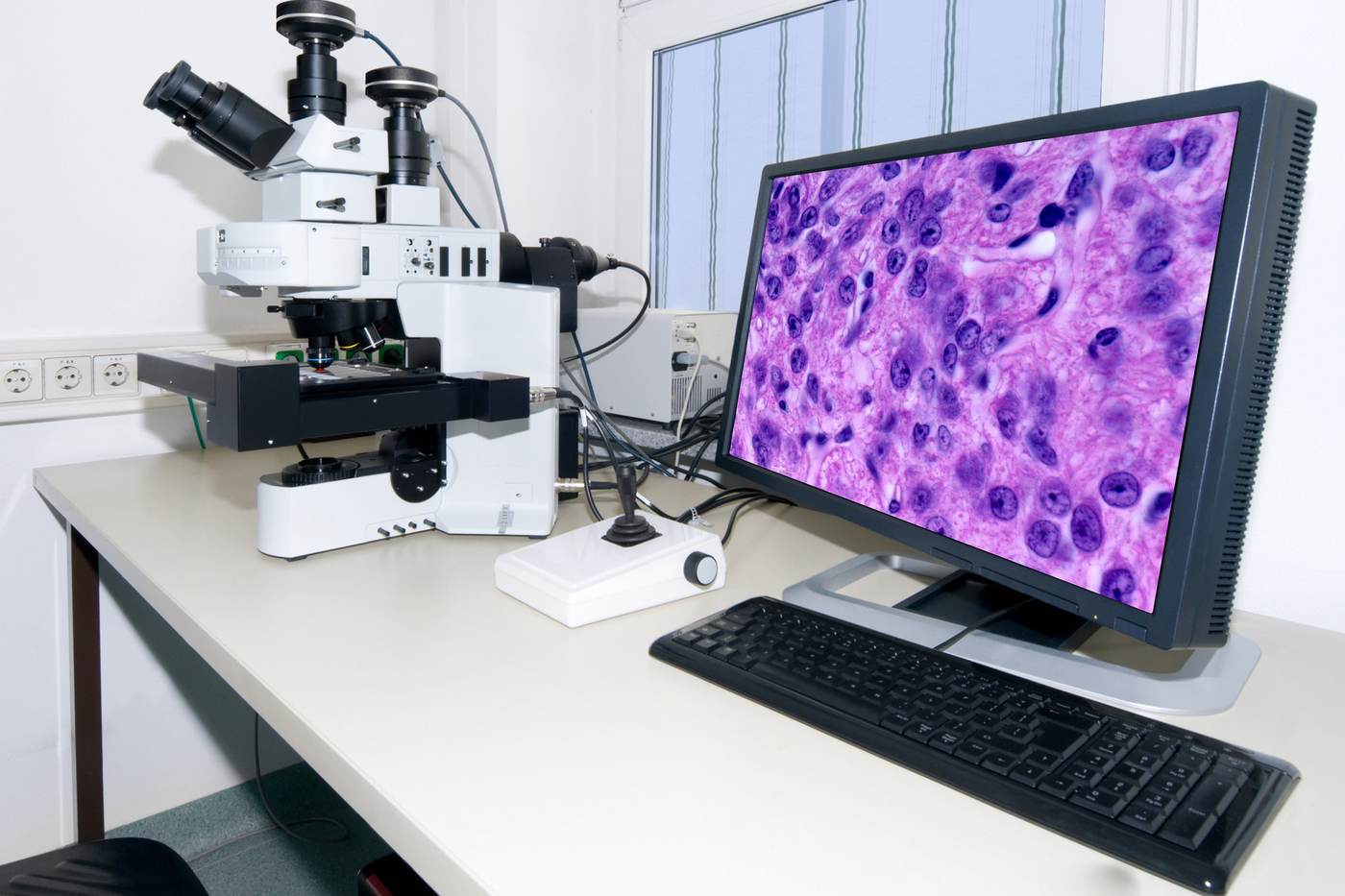
- Luxembourg Institute of Health image source: cancer research laboratory
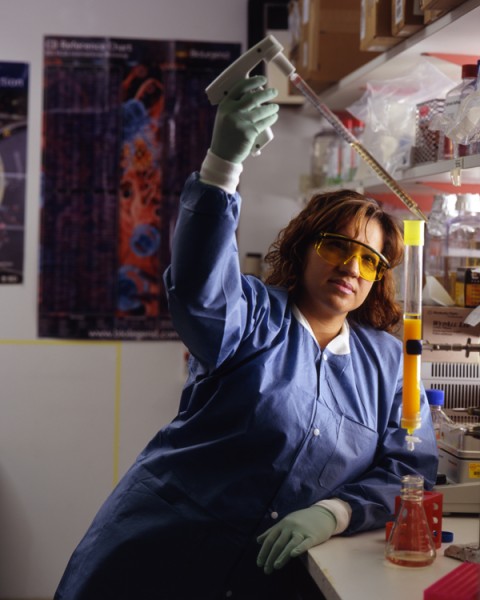
- NIH/NIAMS media library image source: protein purification
Reporting basis: The companies' official announcement is dated August 19, 2026. Market figures above preserve the specified rally-day snapshot and should not be read as current quotations or investment advice.