The trial
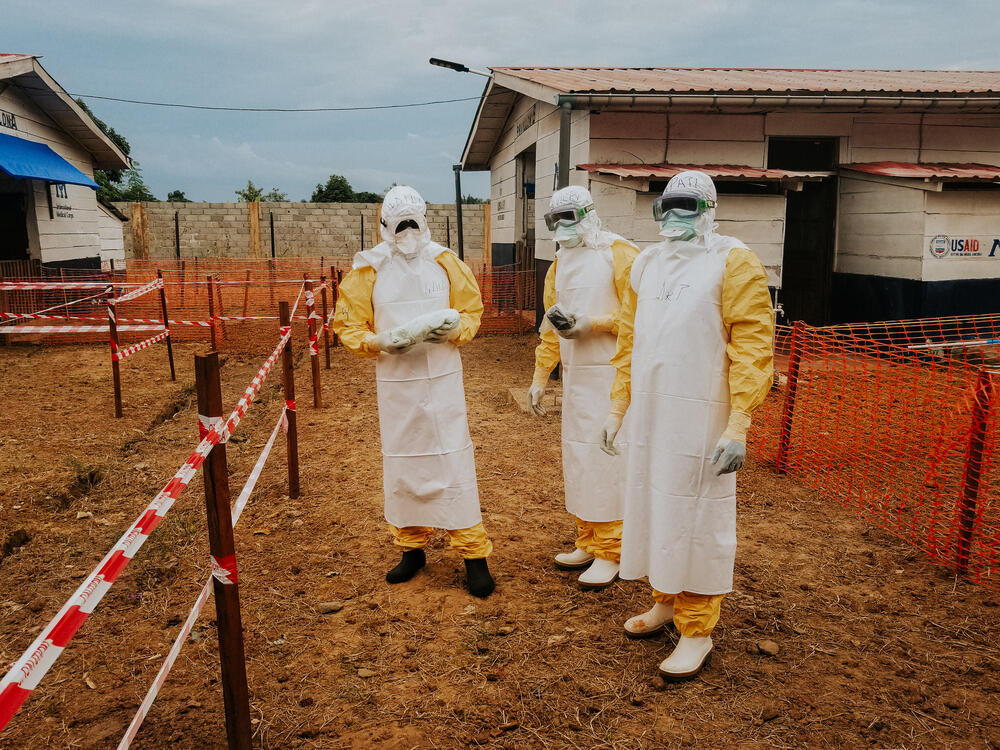
An Ebola vaccine trial is getting under way in the Democratic Republic of the Congo for frontline health workers and others involved in the outbreak response. Announcing the development on Monday, the World Health Organization said 20,000 doses of the Ervebo vaccine have been allocated for the research vaccination programme in Ituri province, the epicentre of the outbreak.
Vaccination began on Saturday, September 19, in Bunia, the capital of Ituri province in the country's northeast. Ituri governor Gaby Kasongo Mulumba received an initial dose alongside local medical personnel — a public gesture aimed at building trust in a region where responders have historically faced suspicion and violence.
The programme is backed by the WHO and Doctors Without Borders (MSF), whose epidemiological arm Epicentre has launched a study called BRAVO — with the Congolese Ministry of Health, Africa CDC, and the national biomedical research institute — following frontline workers for up to a year. In total, 70,000 Ervebo doses have been made available: 50,000 for compassionate use among health and frontline personnel, 20,000 for the Phase 3 trial.
The outbreak it is fighting
The stakes could hardly be higher. The current epidemic, officially declared on May 15, is the country's largest-ever Ebola outbreak, surpassing all previous totals recorded in the DRC. Congolese health authorities report more than 7,600 confirmed cases and 3,670 deaths — a case fatality rate of roughly 48 percent.
The outbreak is caused by the Bundibugyo strain — and that single fact explains the entire trial. There is no licensed vaccine or specific treatment for Bundibugyo virus disease. Ervebo, developed by Merck and produced in Germany, was licensed for the Zaire strain, a different species of the virus; it has been highly effective against Zaire and widely used in the DRC. Whether it protects against Bundibugyo is simply unknown.
The epicentre remains Ituri province, where nearly eight in ten infections have been recorded, though the virus has spread to seven provinces. WHO officials cite "encouraging signs" transmission may be slowing — but MSF warned Friday there is still no clear evidence the epidemic is coming under control: the difference between an outbreak nearing its peak and one still gathering force.
Why frontline workers first
Prioritizing health workers is both ethical and scientific. They face the highest exposure — handling the bodily fluids through which Ebola spreads, often in under-resourced facilities — and during the 2018–2020 eastern DRC epidemic, health worker infections repeatedly hollowed out the response itself.
Scientifically, their high, measurable exposure means a trial can detect a protective signal faster and with fewer participants than a general-population study. As MSF epidemiologist Dr. Guyguy Manangama put it: "Even partial protection could help reduce severe illness and deaths. However, these potential benefits must be demonstrated scientifically. That is precisely the purpose of BRAVO."
There is also a strategic logic. Health workers are the backbone of surveillance, contact tracing, and clinical care — the WHO is simultaneously strengthening all three, plus community engagement and cross-border preparedness. Protecting them protects the entire response architecture. "Community engagement will be key," the WHO stressed. "It is only when communities are engaged in the response that such outbreaks are brought under control."
Why this matters
This trial tests one of global health's most uncomfortable questions: what do you do when the perfect tool doesn't exist? With more than 3,600 dead, the answer is to test whether the tool at hand works well enough. Preliminary lab and animal data suggest Ervebo "may offer some degree of protection" against Bundibugyo — the WHO's and MSF's shared, careful phrasing.
The analytical significance extends beyond this outbreak. Emerging pathogens routinely outpace vaccine development; the gap between a new threat and a purpose-built countermeasure is measured in years, while outbreaks are measured in weeks. If Ervebo shows meaningful cross-protection, it establishes a template — repurposing licensed vaccines against related pathogens as a bridge strategy — that could reshape pandemic preparedness. If it fails, it underscores how thin the world's defenses remain against viral families it has not specifically prepared for.
There is also an institutional story: the trial is integrated into the Ministry of Health-led response, with Africa CDC and the Congolese INRB as core scientific partners — part of a deliberate shift toward African-led outbreak research.
How we got here
Ervebo is one of global health's genuine success stories: developed by Merck, it demonstrated extraordinary efficacy against Ebola Zaire from the 2014–2016 West African epidemic onward — approaching 100 percent in some ring-vaccination trials — and became the stockpiled backbone of Ebola response.
Bundibugyo has always been the neglected sibling: first identified in Uganda in 2007, it caused smaller, less frequent outbreaks than Zaire and attracted a fraction of the research investment. No vaccine was developed specifically for it — the market was too small, the outbreaks too sporadic. That the world is now testing a Zaire vaccine against a Bundibugyo outbreak is the bill coming due for years of underinvestment.
The DRC's outbreak history provides the grimmer context. The country has weathered more Ebola outbreaks than any other nation, including the devastating 2018–2020 epidemic in the east that killed over 2,200 people and unfolded amid armed conflict. Each outbreak has taught the same lessons — community trust is decisive, health workers must be protected, surveillance must be relentless — and each new outbreak tests whether those lessons were truly learned.
What success looks like
Success here has two definitions, and both matter. The narrow one: the BRAVO study demonstrates that Ervebo provides meaningful protection against Bundibugyo — reducing infections, severe illness, or deaths among vaccinated frontline workers over the year-long follow-up. Even partial efficacy would be a landmark result, giving responders a licensed, stockpiled, well-understood tool for future Bundibugyo outbreaks.
The broader one: the trial itself is conducted safely, ethically, and transparently in one of the world's most challenging operating environments — eastern DRC, where insecurity, displacement, and mistrust of outsiders are constant headwinds. A trial that protects participants, respects communities, and produces credible data would be a proof of concept for African-led outbreak research under fire.
The risks are real: the vaccine could prove ineffective, leaving a false sense of security — which is why honest monitoring and communication matter as much as the jabs — and uptake could falter if communities perceive experimentation rather than protection.
What happens next
In the coming weeks, watch the outbreak curve — whether WHO's "encouraging signs" of slowing transmission become a genuine decline or MSF's caution proves warranted — and the trial's early safety and uptake data.
Over the coming year, the BRAVO follow-up will generate the efficacy evidence the world needs. A positive result would likely trigger larger allocations from the global stockpile, updated WHO guidance for Bundibugyo outbreaks, and — perhaps most importantly — renewed investment in vaccines for neglected Ebola strains. A negative result would be a different kind of valuable: honest evidence that the world needs purpose-built Bundibugyo countermeasures, urgently.
Either way, this outbreak has already rewritten the record books as the DRC's largest. The trial now under way in Bunia is the world's attempt to make sure the next record-breaking outbreak meets a better-prepared response.
Sources
UN News, "UN News Today 21 September 2026" (Ebola vaccine trial gets under way in DR Congo), September 21, 2026: Read the report
ReliefWeb / MSF, "MSF launches Ebola disease vaccination study among DRC frontline workers," September 21, 2026: Read the report
Central Africa News (WAM), "Ebola vaccine trial begins in DR Congo: WHO," September 21, 2026: Read the report
WE News English, "DR Congo Launches Trial Of Ebola Vaccine," September 2026: Read the report