Health / Markets — The detailed Phase 3 numbers investors had waited for since August landed on Thursday: Moderna and Merck's personalised melanoma vaccine, intismeran, cut the risk of recurrence or death by 42% on top of Keytruda. Analysts called the data solid and even great. Moderna's shares still sank more than 25% — a sell-the-news collapse that says as much about a stock up more than 500% this year as it does about the science.
Track it live: markets tracker — live index and stock data, updated continuously.
The strangest stock move of the week had the best clinical news attached to it. On Thursday, October 22, Moderna and Merck released the detailed results of the Phase 3 INTerpath-001 trial of intismeran autogene, a cancer vaccine built individually for each patient from the mutations in their own tumour, given alongside Merck's immunotherapy Keytruda to people whose high-risk melanoma had been surgically removed. The combination reduced the risk of the cancer coming back or the patient dying by 42% compared with Keytruda alone, and cut the risk of distant spread or death by 38%. By the standards the market itself had set — analysts said before this week's European Society for Medical Oncology meeting that investors wanted a recurrence benefit of 40% or more — the trial cleared the bar.
Moderna's stock fell anyway, and fell hard. Shares sank more than 25% on Thursday, wiping about $24 billion off the company's market value and putting the stock on course for its steepest one-day percentage fall on record, last down 25.2% at $183.88 in Reuters' reporting. Merck, the much larger partner, slipped only about 1%. The data had leaked earlier in the day on an oncology website, forcing the companies to publish ahead of Saturday's scheduled presentation at the ESMO Congress in Madrid — and the leak, not the result, set the tone for the trading session.
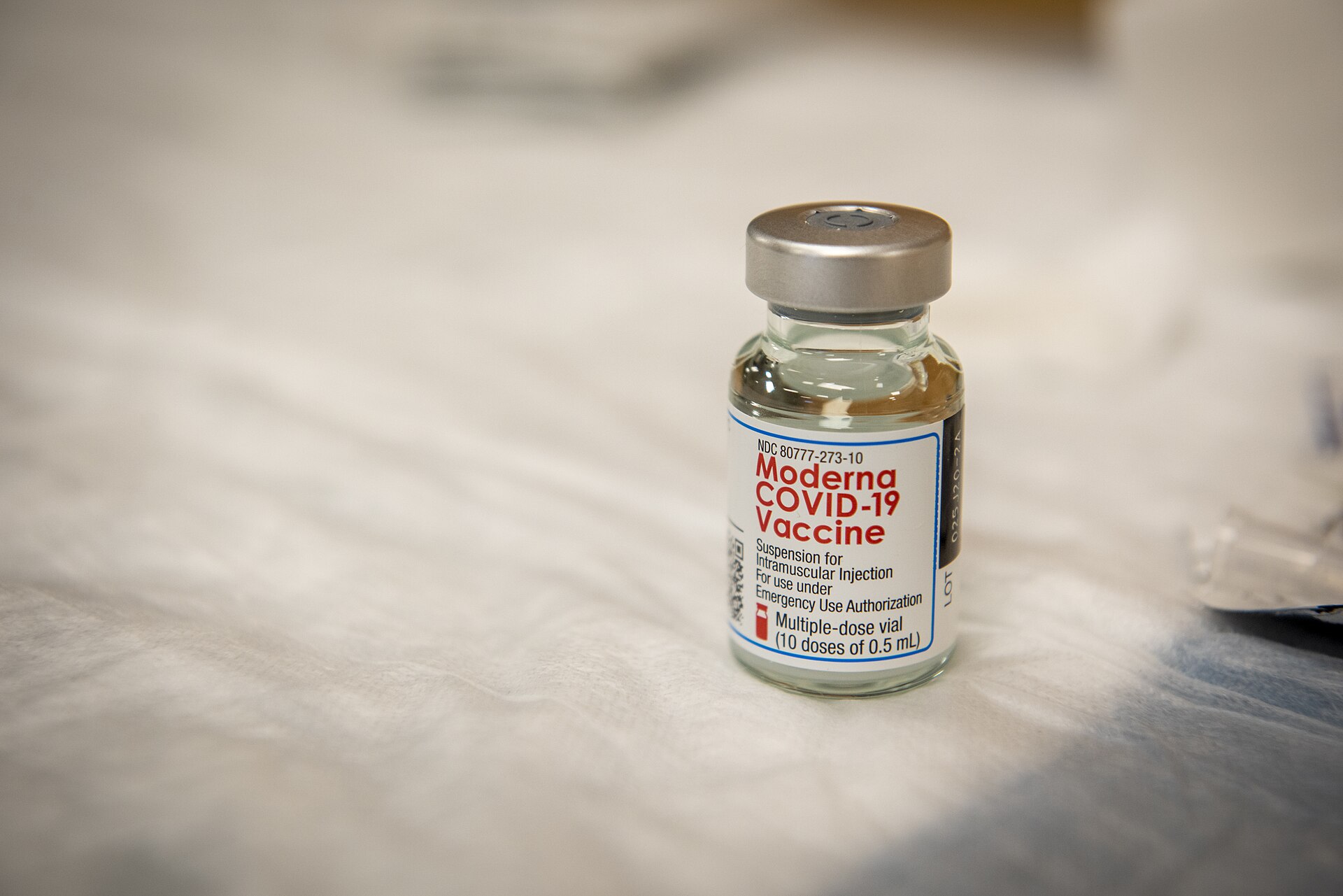
What the trial actually showed
INTerpath-001 enrolled more than 1,100 patients with high-risk melanoma that had been cut out by surgery — the moment when the visible disease is gone but microscopic cells may remain, and when recurrence risk hangs over every follow-up scan. Patients received nine doses of intismeran together with Keytruda, starting about 13 weeks after surgery, or Keytruda alone, which is a standard treatment in this setting. Thursday's figures cover the first two years after treatment.
The headline numbers are relative risk reductions, and they are worth translating. A 42% reduction in the risk of recurrence or death does not mean 42% of patients were cured; it means that, at any point in those two years, patients on the combination were substantially less likely to have their cancer return than patients on Keytruda alone. The 38% reduction in distant metastasis or death matters for a different reason: melanoma that spreads to distant organs is the form that kills, so delaying or preventing spread is closer to the outcome patients fear most than a local recurrence that can sometimes still be treated.
"This is highly statistically significant. It is not by chance," Dr Hussein Tawbi, a melanoma expert at the University of Texas MD Anderson Cancer Center and an investigator on the trial, told Reuters. The companies and outside analysts agree on the historical framing: this is the first Phase 3 evidence that a vaccine built from a patient's own tumour mutations, combined with a drug that releases the immune system's brakes, can keep cancer at bay after surgery. Saturday's full presentation in Madrid is expected to add the detail — subgroup results, safety and tolerability — that Thursday's summary did not carry.
Why this matters
The scientific claim underneath the stock drama is large. COVID-19 proved mRNA could be designed and manufactured at planetary speed against a shared target. Cancer is the opposite problem: every tumour is a private collection of mutations, and intismeran is a different medicine for every patient — synthetic mRNA encoding as many as 34 selected neoantigens, the molecular flags unique to that person's cancer, intended to train T cells to hunt whatever malignant cells survived the surgeon. A Phase 3 win in melanoma is the first hard evidence that this manufacture-a-drug-of-one model works at scale, in a randomised trial of more than a thousand people, against an active standard of care rather than a placebo.
That is why August's topline announcement — the companies said the trial had succeeded but released no numbers — moved the stock so violently, a story we covered when Moderna's cancer vaccine scored its first Phase 3 win. It is also why Thursday's reaction confuses people who only read the headline numbers. The trial did not get worse between August and October. The price of believing in it got higher: the shares had nearly quadrupled from the August announcement through Wednesday's close and were up more than 500% this year. At that altitude, "good" stops being enough.
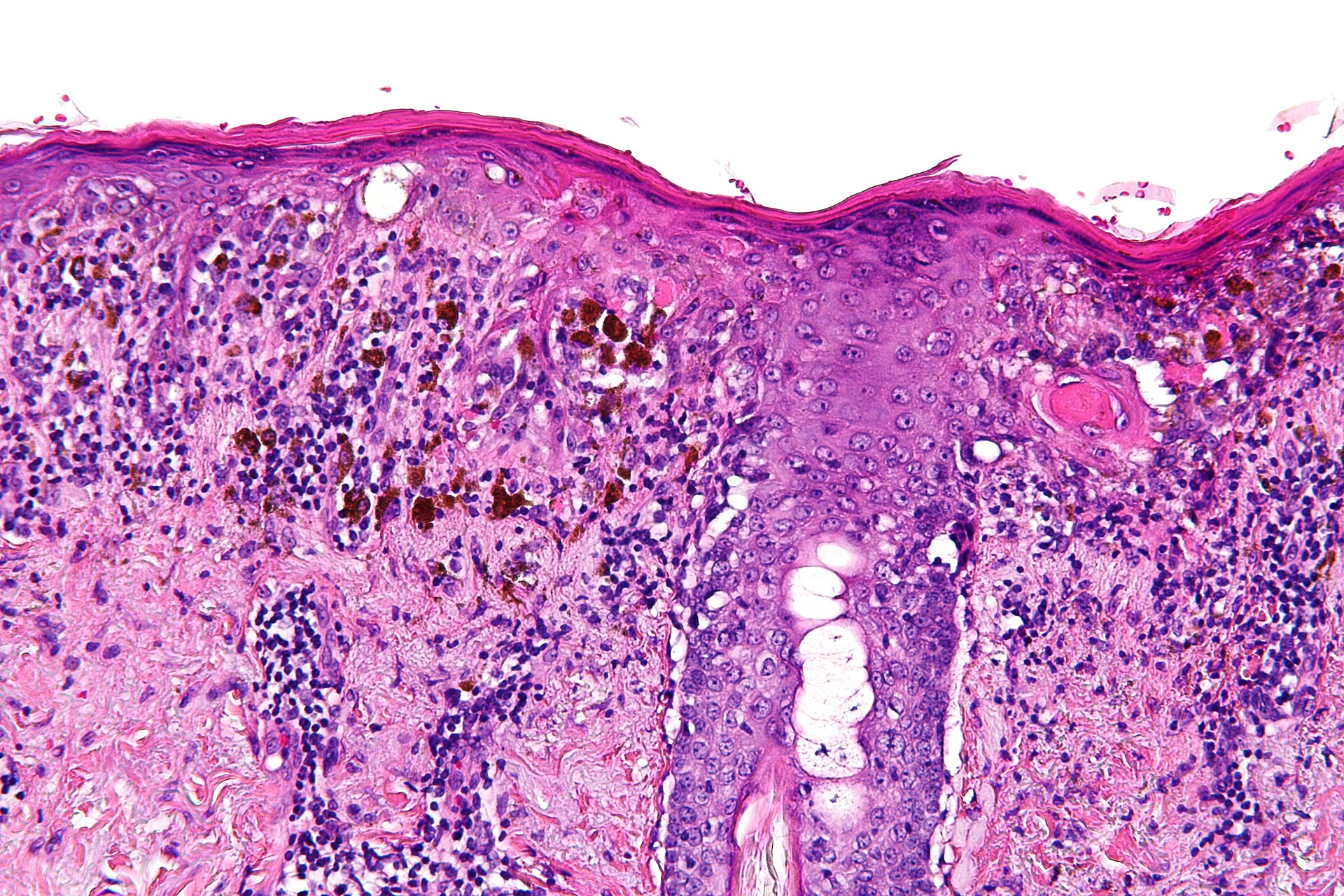
The sell-the-news problem, in numbers
Wall Street's own vocabulary for Thursday is "sell the news" — the pattern in which a stock rises for months on anticipation and falls when the anticipated event arrives, however it turns out, because the buyers who remain are the ones who needed perfection. UBS analyst Michael Yee called the recurrence data "solid" and the pullback an expected sell-the-news event, pointing to expectations inflated by months of bullish commentary from the companies. William Blair's Myles Minter went further on the science — he described the data as "great" — while identifying the real question the selloff is asking: whether a treatment proven in melanoma will work in other cancers well enough to justify the valuation the market had already awarded it. Jefferies, in Investopedia's roundup, called the data encouraging and said it raised confidence in related studies.
Put the two ledgers side by side. On the science ledger: a 42% recurrence-risk reduction against a 40% hope, a 38% reduction in distant spread or death, statistical significance an independent investigator describes as beyond chance, and a presentation slot at Europe's biggest oncology meeting. On the market ledger: a leak that stole the announcement's timing, a stock up roughly sixfold since January, a $24 billion one-day paper loss, and a benefit that landed just above — not far above — the line investors had drawn. Both ledgers are real. Thursday was the day the second one was allowed to vote.
There is also a quieter asymmetry. Merck, for whom Keytruda is one of the world's biggest-selling medicines and intismeran is one programme among many, fell about 1%. Moderna, whose post-COVID future is substantially a bet that personalised cancer vaccines become a franchise, fell more than 25%. The same data release was a footnote to one balance sheet and an earthquake to the other — a reminder that in biotech, the question is rarely whether the science works in isolation, but how much of a company is riding on it. The wider argument about where cancer risk and treatment are heading runs through our coverage of what is driving cancer cases worldwide.
What critics and sceptics will ask next
Three honest caveats belong in any account of Thursday's data. First, recurrence-free survival is not overall survival: the trial has shown the combination delays the cancer's return in the first two years, and the longer follow-up that would show whether patients ultimately live longer is still maturing. Second, a personalised vaccine is a manufacturing business as much as a drug — each dose set must be sequenced, designed and produced for one patient inside a treatment window that starts weeks after surgery — and Thursday's release said nothing new about cost, capacity or price. Third, melanoma is in some ways the friendliest test case for an immune-based vaccine, because it carries many mutations for the immune system to target; extending the result to cancers with fewer mutations is the unproven leap Minter flagged, and it is the leap the current valuation most depends on.
None of those caveats makes the result small. They define the difference between a breakthrough and a business, and Thursday's market action was investors repricing the distance between the two in a single session.
What happens next
The immediate test comes on Saturday in Madrid, when the full dataset is presented at ESMO's Presidential Symposium: safety data, the shape of the benefit across patient subgroups, and how durable the effect looks beyond the two-year mark will decide whether analysts who defended the stock on Thursday keep defending it. Beyond the congress, the questions are regulatory and commercial — what filing path the companies pursue on recurrence data, and whether the personalised manufacturing model can be built at a cost health systems will pay — and neither was answered in Thursday's release.
For patients, none of Thursday's market theatre changes the underlying fact: for the first time, a vaccine made from the unique mutations of a person's own cancer has been shown in a large Phase 3 trial to help keep that cancer from coming back. For investors, the same day delivered the complementary lesson — that a stock can be right about the science and still have priced in more than the science, so far, can prove. Both things happened on October 22. Only one of them will matter in ten years.
Sources: Reuters, "Merck/Moderna cancer vaccine cuts risk of melanoma death or recurrence by over 40%" and "Moderna sheds about $24 billion as cancer vaccine data triggers 'sell-the-news' retreat," October 22, 2026; Moderna and Merck Phase 3 INTerpath-001 results release, October 22, 2026 (via Business Wire reporting); Investopedia, "Moderna Stock Sinks Nearly 20% After Leak of Cancer-Vaccine Data," October 22, 2026; Barchart, "Moderna Stock Sinks Following Vaccine Data Leak," October 22, 2026.