Milei UN General Assembly speech
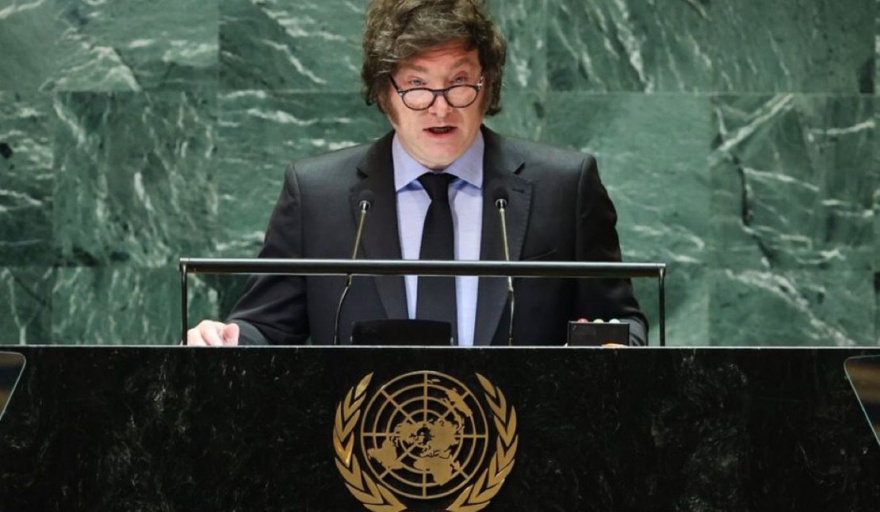
The Milei UN General Assembly speech on Wednesday, September 23, was designed as an act of institutional defiance. From the green-marble rostrum of the 81st General Assembly in New York, Argentina's president said the United Nations had broken its founding “sacred covenant” and become “a useless organisation whose only purpose is to sustain a caste of fatally arrogant parasites masquerading as well-intentioned bureaucrats.” Then he turned from ideology to territory: the Falkland Islands, or Malvinas, were a “national cause,” he said, and the UN had “looked the other way” while a British-licensed oil project advanced in waters claimed by Argentina.
That pairing made the speech more consequential than another denunciation of multilateral bureaucracy. Milei has attacked the UN in each of his three General Debate appearances since taking office in December 2023. This time, however, the polemic carried a material target. The Sea Lion oil project is moving toward drilling and planned production under licenses Buenos Aires calls “illegal and illegitimate.” Milei used the world's central diplomatic stage to warn that Argentina's sovereignty campaign is becoming a contest over permits, capital, corporate exposure and future petroleum revenue.
What Javier Milei said at the 81st UN General Assembly
Milei organized his remarks around three questions: what the UN should have done but failed to do; what it did despite lacking a mandate; and how governments should approach artificial intelligence. On the first, he accused the organization of failing to guarantee collective security and human rights, allowing “chaos, violence and international terrorism to flourish,” sheltering dictatorships and voting “systematically” against Israel while remaining silent about Islamist terrorism and the killing of Christians in Africa.
On the second, he cast the UN as a “bureaucratic leviathan” that had exceeded its remit. He described Covid restrictions as “a global experiment in social control disguised as science,” and grouped the “gender agenda, environmental extremism and unchecked immigration” with Agenda 2030 as examples of international institutions prescribing how citizens should live. He closed that passage with Ludwig von Mises: “Good people do not think about controlling the lives of their fellow human beings.” These are ideological claims, not neutral descriptions of the UN's record, and they track Milei's libertarian belief that concentrated public authority is more likely to coerce than solve.
His AI argument followed the same logic. Milei said technological revolutions had repeatedly produced fears about jobs that did not materialize as predicted. He offered Argentina as a lightly regulated base for artificial-intelligence companies, with no pre-emptive regulation, limited liability for companies operating with AI agents and tax incentives. The through-line was consistent: the UN should protect peace and rights, but it should not become a supranational regulator of society or technology.
Why this matters: rebellion from inside the institution
A sitting president declaring the UN useless from the UN's own rostrum is more than provocation. It exploits the institution's greatest strength and weakness at once. The General Assembly gives every member state a microphone, including leaders who reject much of its agenda. The UN can absorb hostile speeches because universality is its purpose; yet every repeated attack from a head of government erodes the presumption that the organization is an indispensable forum rather than a stage rented by its critics.
Milei's third consecutive assault matters because it is no longer an outsider's campaign line. He has used the same venue year after year to define Argentine alignment with the United States, Israel and what he calls the West. In 2024 he criticized the presence of Cuba and Venezuela on the Human Rights Council. The pattern is deliberate: participate in multilateral forums, reject their authority when it conflicts with national or ideological priorities, and use their global audience to promote a competing “agenda of freedom.”
There is a contradiction, but also a strategy. Milei wants the UN to produce consequences on the Falklands while denying it broad legitimacy elsewhere. “There's no shortage of words or resolutions. What is lacking is consequences,” he said. That line captures the speech's tension. Buenos Aires needs multilateral law and General Assembly resolutions to amplify a claim it cannot enforce. Milei therefore condemns the institution as useless while demanding that it become useful on Argentina's chosen issue.
Why the Sea Lion oil project has put the Falklands back at the centre
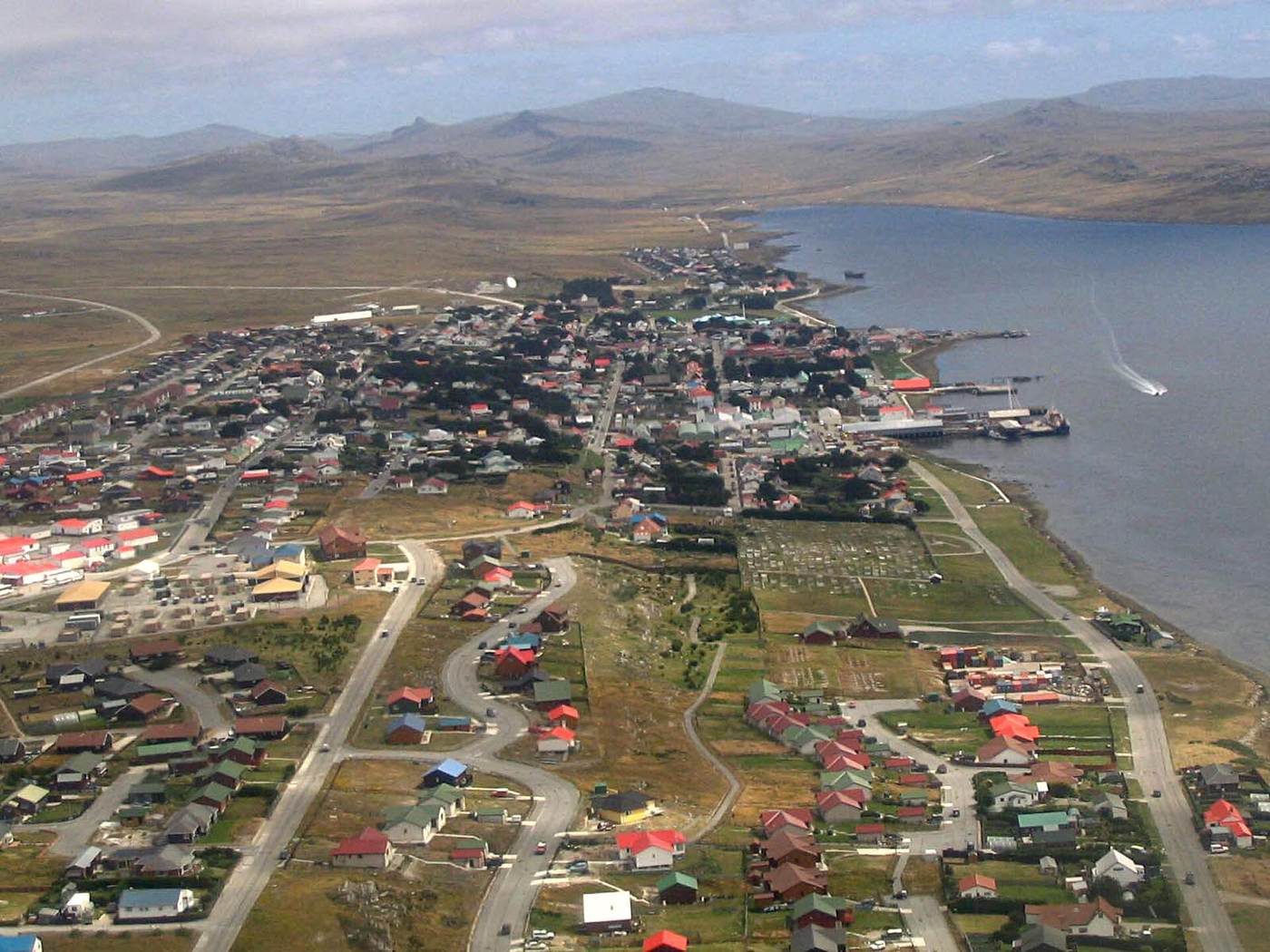
The sovereignty dispute never disappeared from Argentine politics, but oil has changed its temperature. Sea Lion lies about 220 kilometers north of the islands. UK-based Rockhopper Exploration and Israel's Navitas Petroleum are advancing the project, with production planned for 2028, according to Al Jazeera's reporting. For the island government and the operators, that means investment, jobs and a potential long-term revenue stream. For Argentina, every license, contract and well can look like a permanent economic fact built on contested sovereignty.
That is why this Milei Falklands UN speech moved beyond ceremonial language. Buenos Aires has lodged protests, begun sanctions proceedings against at least 60 companies and individuals linked to offshore drilling, and sent a sovereignty-defense bill to Congress. In practice, Argentina sanctions oil companies tied to the Falklands project to raise the commercial cost of work it cannot directly stop at sea. Each step attempts to raise the cost of participating in the project—even when Argentina cannot stop activity at sea. The legal pressure is meant to follow companies, financiers, insurers and contractors beyond the islands.
The economic scale is visible even without relying on a speculative reserve valuation. A project 220 kilometers offshore, involving British and Israeli-linked operators and a production target two years away, requires years of financing, specialist vessels, insurance and supply contracts. Argentina's sanctions list already reaches dozens of legal and natural persons. That makes Sea Lion not merely an oil field but a network of potential pressure points. It also raises the stakes for investors deciding whether political risk can be priced or will become unmanageable.
Burnham, Falklands self-determination and two irreconcilable legal stories
Argentina grounds its claim in territorial integrity, the history of British administration since 1833 and UN General Assembly resolution 31/49, adopted in 1976, which called on both sides to resume negotiations and avoid unilateral changes while the sovereignty dispute remained unresolved. Milei argued that self-determination “does not apply in this case, since the population was implanted by the occupying power on a territory whose sovereignty is in dispute.” That is Argentina's long-standing position; it is contested, not settled fact.
Britain starts from the opposite principle. The islands are a largely self-governing British overseas territory, and London says the islanders must decide their future. In a 2013 referendum, 1,513 of 1,517 voters chose to remain a British overseas territory. After Milei's speech, the British UN delegation said the United Kingdom had “no doubt” about its sovereignty and called Argentina's measures unacceptable. Prime Minister Andy Burnham said he would defend the islanders' right to self-determination.
Neither side's preferred principle dissolves the other. Argentina argues that a transplanted population cannot convert contested possession into sovereignty. Britain argues that denying current residents a political voice would itself violate self-determination. The UN has encouraged negotiations without resolving that clash. The result is a diplomatic stalemate in which commercial action—especially oil development—can create movement even when formal talks do not.
Background: war, memory and national identity
Britain and Argentina fought a 10-week war over the islands in 1982 after Argentina's military junta invaded. Argentina surrendered, and the conflict left the territory under British control while deepening the Malvinas' place in Argentine national identity. The issue crosses party lines because it combines geography, history, military loss and a widely taught claim of unfinished decolonization.
Milei's libertarianism makes his embrace of that national cause politically useful and ideologically awkward. He favors market opening, close ties with Washington and Israel, and a sharply reduced state. The Malvinas campaign relies on state power, sanctions and legal restriction. Domestic opponents say the renewed emphasis is intended to improve his standing before an expected 2027 re-election bid. Peronist lawmaker Guillermo Michel told Reuters the issue was being used “to look good in the eyes of society or to try to shift the agenda.” A consultancy study cited by Al Jazeera found that Milei's recent televised Malvinas address only modestly improved his public image.
That criticism does not make the sovereignty claim insincere. It does show why timing matters. A president can believe the claim, benefit from invoking it and still face limits on its electoral effect. The Sea Lion project gives him a concrete antagonist—foreign licenses and identifiable firms—where older diplomatic appeals produced mainly statements.
Who benefits, who loses and where Israel fits
Milei benefits domestically if he can occupy a national symbol historically associated with Peronists and military governments without surrendering his anti-bureaucratic identity. He can argue that sanctions and legislation are “peaceful, practical and effective” tools rather than empty ritual. The political risk is overpromising: if drilling advances on schedule, critics can portray the campaign as theatrical.
The Falkland Islands government, the British oil industry and project operators benefit if Sea Lion proceeds. Production would deepen the islands' economic autonomy and make future negotiations harder to imagine on Argentina's terms. Rockhopper and Navitas gain from converting licenses into producing assets. The losers would include businesses exposed to Argentine proceedings and any future cross-border cooperation that becomes collateral damage.
Israel-linked commercial interests occupy the most delicate position. Navitas Petroleum's role connects the project to a country Milei describes as a close values-based ally. Milei met Israeli Prime Minister Benjamin Netanyahu on Thursday, September 24, one day after the speech. There is no public evidence in the cited reporting that the meeting resolved or even centered on Sea Lion. But the overlap creates a test: Argentina's Falklands policy may eventually impose costs on a company tied to one of Milei's closest international partnerships.
For more on how allied relationships can coexist with sharp policy differences at the same General Assembly, see Signal Post News's coverage of Netanyahu's UNGA address and the delegate walkout, Zelenskyy's “don't stay silent” appeal and the Trump–Xi summit results.
The Trump Falklands neutrality question
President Donald Trump's suggestion that Washington could reconsider its traditionally neutral position gave Milei an opening, not a commitment. The United States has not endorsed Argentina's claim. Still, a change in American language could matter because Washington's diplomatic weight exceeds the formal effect of another General Assembly resolution. Milei has presented his closeness to Trump as evidence that “winds of change” may favor Argentina.
That strategy can cut both ways. If Washington moves toward Buenos Aires, the UK would face pressure from its most important security partner. If the suggestion produces no policy change, Milei may have tied a national cause to a personal alliance without extracting a durable gain. The distinction between a presidential hint and a documented change in U.S. policy is therefore crucial.
What happens next
The first scenario is continued symbolic confrontation: Argentina expands protests and sanctions while drilling moves forward and Britain reiterates that sovereignty is not negotiable without the islanders' consent. This is the most familiar path and the least disruptive to production, though it raises compliance costs.
The second is legal escalation. Argentina could widen proceedings against contractors, seek asset seizures where its courts have jurisdiction or test claims in arbitration and foreign courts. Whether those steps succeed would depend on jurisdiction, contract structures and recognition abroad. A sanctions announcement is not the same thing as an enforceable judgment, and the companies would have avenues to challenge Argentine action.
The third is geopolitical bargaining. A Trump shift could push London and Buenos Aires toward talks on resources, transport or fisheries without settling sovereignty. Milei's relationship with Netanyahu could create a separate channel around Israeli-linked commercial exposure. Those arrangements would be politically easier than a sovereignty deal, but even technical cooperation might be attacked by hardliners on either side as conceding too much.
The final possibility is that oil transforms the dispute faster than diplomacy can. Once major capital is committed and production begins, revenue and infrastructure create constituencies for continuity. That is why Milei brought Sea Lion to the UN now. His speech was not only a complaint that the institution had failed to enforce a 50-year-old resolution. It was a warning that delay itself has consequences—and that the Falklands question is moving from maps and memorials into corporate balance sheets.
Sources and further reading
- Reuters — UN choosing to “look the other way” on Falklands dispute, Milei says
- Al Jazeera via Scoop — Milei says UN “looking the other way” on Falkland Islands dispute
- UN News — UN's “sacred covenant has been broken,” Argentina's Milei tells General Assembly
Reporting basis: Fixed September 25, 2026 snapshot. Sovereignty over the islands and the application of self-determination remain disputed; forward-looking legal and diplomatic outcomes are analysis, not established fact.