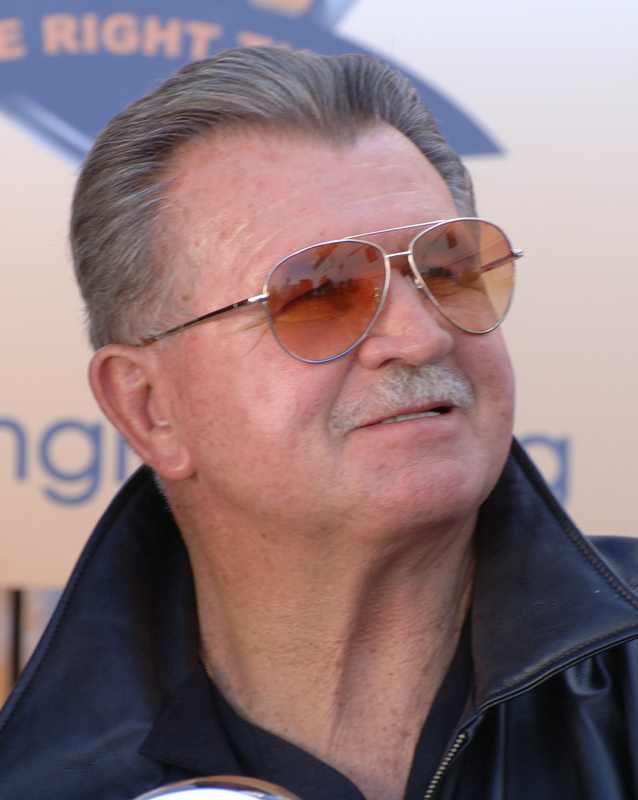
Mike Ditka dies at 86
Mike Ditka dies at 86: the Hall of Fame tight end who reinvented his position, then coached the swaggering 1985 Bears to Super Bowl XX — the franchise's only championship of the Super Bowl era — has died, his family announced Friday.
Mike Ditka, the Pro Football Hall of Fame tight end who became the growling, mustachioed face of the Chicago Bears and coached the 1985 team to the franchise's only Super Bowl title, has died. He was 86. His family announced the death in a statement on Friday, October 9, 2026, calling him "the heart of our family" and saying he will be "missed beyond measure." No cause of death was given. The news was first reported by Jarrett Payton — the son of Ditka's late star running back Walter Payton — on Chicago sports radio station 104.3 The Score, shortly before the family's statement confirmed it.
Why this matters
Ditka's death closes the book on one of the last living links to football's black-and-white-to-color-television bridge era — a man who starred as a player in the 1960s, coached through the league's 1980s boom, and remained a cultural fixture into the streaming age. The 1985 Bears are not just a championship team; forty years on, they remain the NFL's most mythologized single-season outfit — the defense everyone measures against, the rap video everyone remembers, the coach everyone imitates.
Chicago has not won a Super Bowl since, which is precisely why "Da Coach" never faded there: he is the city's last champion. His passing also lands at a moment when the league is still wrestling with how it treats the men who built it. Ditka spent his later years as a forceful advocate for better medical and retirement benefits for former players, a cause that gives his obituary a sting of unfinished business.
From Aliquippa to Canton: how we got here
Born October 18, 1939, in the steel country of western Pennsylvania and raised in Aliquippa, Ditka carried the nickname "Iron Mike" from his youth — and played like it. At the University of Pittsburgh he was a ferocious two-way talent, and the Bears made him the fifth overall pick of the 1961 NFL draft.
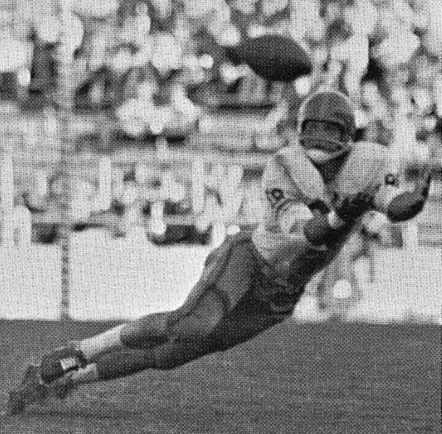
What happened next rewrote a position: as a rookie, Ditka became the first tight end in league history to top 1,000 receiving yards in a season, winning Rookie of the Year at a time when tight ends were supposed to block first and catch as an afterthought. He played six seasons in Chicago from 1961 through 1966, winning the 1963 NFL championship in the pre-Super Bowl era, then spent two years with the Philadelphia Eagles and four with the Dallas Cowboys, closing his 12-year playing career as a champion again with the Cowboys' Super Bowl VI winners.
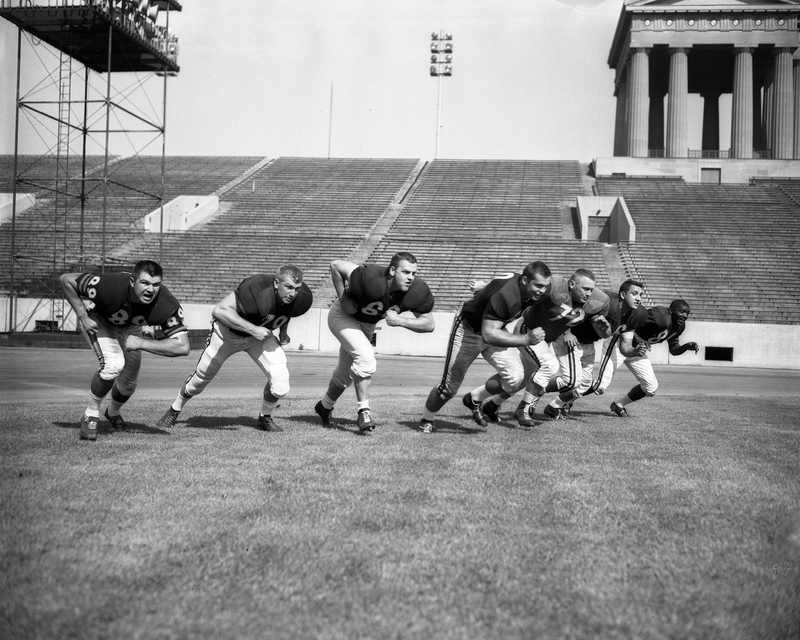
A five-time Pro Bowler, he retired after the 1972 season ranked second among all tight ends in career receptions. In 1988 he became the first tight end ever inducted into the Pro Football Hall of Fame. The coaching path ran through Tom Landry's Dallas staff, where Ditka spent nine seasons as an assistant and won another ring, before Bears founder George Halas — persuaded in part by a letter Ditka wrote expressing his desire to come home — hired him as Chicago's head coach in 1982.
The 1985 Bears, by the numbers
The case for the 1985 Bears as the most dominant single-season team of the Super Bowl era is written in the record book. Chicago went 15–1 in the regular season, its only loss a Monday night shootout in Miami. Then came the demolition: the Bears outscored three playoff opponents 91–10, culminating in a 46–10 rout of the New England Patriots in Super Bowl XX on January 26, 1986, in New Orleans.
The defense — Buddy Ryan's famed 46 scheme — is still the unit every great defense gets compared to, four decades later. Ditka was named NFL Coach of the Year for 1985 and again in 1988. Over 11 seasons in Chicago he took the Bears to the playoffs seven times. And the Mike Ditka career stats that define his playing peak still startle: 316 receptions for 4,503 yards and 34 touchdowns in 84 games as a Bear, compiled in an era when tight ends simply did not produce like that.
The player who reinvented the tight end
Strip away the coaching legend and the television persona, and Ditka's most durable football contribution may be positional. Before him, the tight end was a sixth offensive lineman who occasionally leaked out for a pass. Ditka was a superior blocker who also ran routes and caught the ball like a wideout — the template for every pass-catching tight end who followed, from the stars of the 1990s and 2000s to today's featured weapons.
That is not nostalgia talking; it is roster construction. Modern offenses are built around the idea that the tight end can be a primary receiver, and that idea's proof of concept wore number 89 in Chicago. When the Bears retired that number in a 2013 ceremony, the team said it would be the last number it ever retires — a measure of what Ditka meant to the franchise.
The coach, the character, and the controversies
"Da Coach" was a persona Ditka inhabited fully: blunt, profane, combative with reporters, worshipped by fans, a fixture of Chicago folklore celebrated in everything from a namesake restaurant to his own line of cigars. On the sideline he was a motivator in the old mold — which is also where the honest accounting gets complicated.
The 1985 defense was masterminded by defensive coordinator Buddy Ryan, with whom Ditka had a famously adversarial relationship; the players carried both men off the field after Super Bowl XX. The enduring what-if of that night is Ditka's decision to hand the ball to 300-pound defensive tackle William "The Refrigerator" Perry for a one-yard touchdown instead of giving the score to Walter Payton — a choice Ditka later said he regretted, admitting it never crossed his mind in the moment.
Chicago fired him after the 1992 season; his 1997–1999 stint as Mike Ditka's Saints coaching chapter is remembered mostly for the staggering 1999 draft-day trade that sent New Orleans' entire draft plus another first-rounder to Washington for running back Ricky Williams. After coaching, Ditka became a prominent television analyst for NBC and ESPN. None of the rough edges diminish the record; if anything, they explain why the Mike Ditka tributes pouring in from players, fans, and colleagues describe a man rather than a statue.
What his death means — and what comes next
Expect the tributes to keep coming through the weekend: the Bears, the league, and the Hall of Fame will honor him, and Chicago — a city that never really stopped chanting for the '85 team — will mourn him as its own. The poignancy is sharpened by timing: 1985 fullback Matt Suhey died over Labor Day weekend, the second loss to that immortal roster in a little over a month.
Longer term, Ditka's death removes one of the loudest voices arguing that the NFL owes more to the men whose bodies built the modern game; whether the league answers that argument will be part of his legacy's next chapter. And the football question his career poses only gets more interesting with time: in an era of analytics departments and soft-spoken CEO coaches, could a figure like "Da Coach" — all gut, growl, and cigar smoke — win today? The 1985 Bears suggest the answer is less about style than about the thing Ditka always demanded: players who hit, a defense that hunted, and a city that believed.
Related coverage
- Browns–Steelers Thursday Night Football: final score and analysis
- Jaguars beat Patriots 35–6 as Travis Hunter records his first NFL interception
- MLB's final fortnight: the races and numbers that mattered
Sources
- Reuters, October 9, 2026 — Mike Ditka, Hall of Fame player and Bears coach, dies at 86
- CNN, October 9, 2026 — Mike Ditka, the quintessential Chicago Bear, dies at 86
- NBC Sports, October 9, 2026 — Legendary player, coach Mike Ditka dies at 86
- USA Today, October 9, 2026 — Memories and tributes following Mike Ditka's passing
- New York Post, October 9, 2026 — Mike Ditka, legendary Bears coach, dead at 86
The family statement confirmed Ditka's death Friday and did not announce a cause. Career records and chronology are cross-checked across the cited reports. Analysis is the author's own.
Analysis by Alany Chu · Published October 9, 2026. Facts attributed; analysis is the author's own.