World / Ukraine War
Ukrainian President Volodymyr Zelenskyy has awarded US first lady Melania Trump the Order of Princess Olga, first class, citing her “significant personal contribution” to humanitarian support for Ukraine — above all the six-day Oleshky ceasefire evacuation and her work for Ukrainian children deported or forcibly moved from Russian-occupied territory.
Track it live: Live war tracker · Ukraine war map
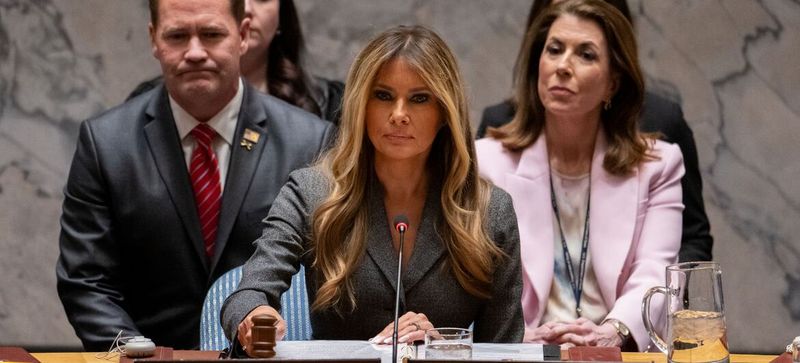
KYIV, November 4, 2026 — The Melania Trump Princess Olga award is now a matter of official record: Ukrainian President Volodymyr Zelenskyy has awarded the US first lady a state honour for her role in helping to organise a humanitarian evacuation from a frontline town last week, according to a presidential decree published on Wednesday and reported by Reuters. The honour is the Order of Princess Olga, first class, and the decree ties it directly to the evacuation of civilians from Russian-occupied Oleshky and to Mrs Trump’s work on behalf of Ukrainian children, including children deported or forcibly moved from territory Russia holds.
The award closes a remarkable week in the war’s humanitarian history. The evacuation it recognises was built on a six-day local ceasefire that Ukrainian officials say Mrs Trump played a pivotal role in organising, and which Reuters described as the longest local pause in fighting since Russia’s full-scale invasion in 2022. It also lands in the middle of a much larger and harder argument: how much of the first lady’s Ukraine record can be independently verified, and how the numbers attached to it compare with the full scale of the cases Ukraine says remain unresolved. Both threads run through the decree, and both are set out in full below.
What the Zelenskyy decree of November 2 actually says
The decree is dated November 2 and was published on Wednesday, November 4, Reuters reported. In it, Zelenskyy cited Mrs Trump’s “significant personal contribution” to humanitarian support for Ukraine, and her work to help Ukrainian children, including those deported or forcibly moved from Russian-occupied territory. That wording matters, because it defines what the honour is formally for: not diplomacy in the abstract, and not the wider relationship between Kyiv and Washington, but a personal contribution to humanitarian work, with the children’s issue named inside the citation itself.
The award itself is the Order of Princess Olga, first class — the grade named in the decree. The order is one of Ukraine’s state honours reserved for women, recognising exceptional contributions in spheres that include science, education, culture and charitable work. A first-class award to the spouse of a serving US president, in wartime, for work carried out through a humanitarian back channel rather than through a ministry or an agency, is without an obvious precedent in the war so far — which is part of why the decree drew attention well beyond Kyiv within hours of publication.
The Melania Trump Oleshky evacuation the honour rewards
The act at the heart of the citation is the evacuation of Oleshky, a town in southern Ukraine under Russian occupation. Ukrainian officials have said Mrs Trump played a pivotal role in organising the six-day ceasefire that allowed civilians to leave, a pause that concluded on Sunday, November 1. Reuters described it as the longest local pause in fighting since Russia’s full-scale invasion in 2022 — a measure of how rare an agreed, sustained halt along an active stretch of front has been in this war, and of why a six-day window was treated by those involved as a significant event in itself.
The truce was announced by the White House on October 23 and took effect on October 27. In her own account of the operation, Mrs Trump said nearly 800 people were evacuated — a figure this article attributes to her, as it has not been presented as an independently verified total. Signal Post News has followed the mission from its announcement through its final legs: the ceasefire agreement itself and the arrival of the evacuees in Ukrainian-controlled territory.
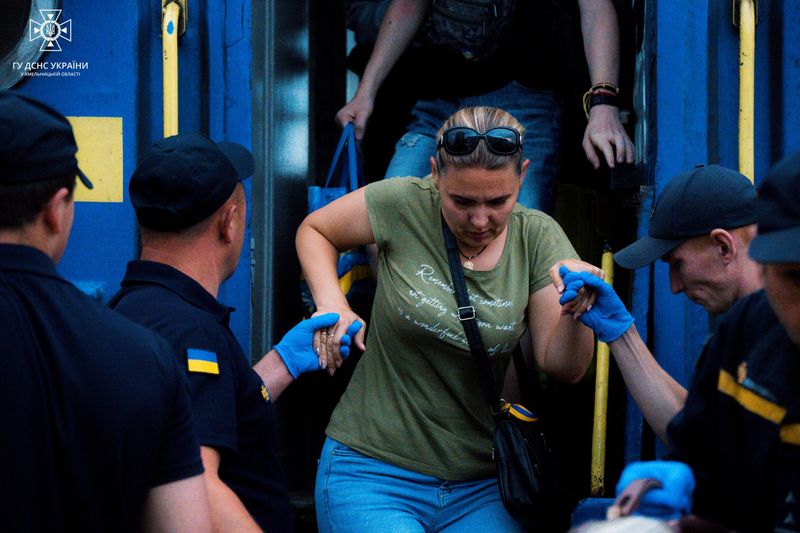
For the people who used it, the route out was long. According to Ukraine’s human rights commissioner, Dmytro Lubinets, evacuees reached Ukrainian-controlled territory after a journey of about 19 hours. The oldest evacuee was 94 and the youngest just over one year old, Lubinets said, and pets were brought out too — a detail that says something about who was left in Oleshky and what leaving meant for them. Reported figures put the number who registered to leave at about 750, split between buses bound for Ukraine and buses bound for Russia; that registration figure, like the nearly 800 total, is a reported number attributed to those involved rather than an independently audited count.
What remained behind was a town emptied of most of its younger residents long before the ceasefire. The town’s remaining population was put at between 1,700 and 2,000 people, mostly elderly, with about 50 children among them, according to the prior reporting. Lubinets credited the First Lady with personal involvement at every stage of the mission, and called it the first ceasefire since 2022 to hold so long along such a stretch of front. Taken together, the Ukrainian account describes an operation that was narrow in geography but unusual in the war: an agreed pause, negotiated through a humanitarian channel, that held for its full term and moved hundreds of civilians across the line.
The children in the citation: 34, 26 and 20,651
The second strand of the decree is the children. Mrs Trump’s work on behalf of Ukrainian children — including those deported or forcibly transferred by Russia — is written into the citation, and it is here that the public record carries two different numbers, which should not be blended. The White House says Mrs Trump has helped reunite 34 children with their families since August 2025. Ukraine credits her with 26, according to Lubinets speaking to the Kyiv Independent. Both figures are on the record; they come from different sides of the channel, and neither the White House nor Kyiv has, in the reporting reviewed, reconciled the difference publicly.
Both numbers also sit inside a caseload of a different order entirely. Ukraine has verified 20,651 cases of children deported or forcibly transferred by Russia, according to the figure reported by Interfax-Ukraine and attributed to Ukraine. Bring Kids Back UA, the Ukrainian initiative working on returns, says about 2,700 children have been brought back in total. Set against 20,651 verified cases, the returns credited to any single channel — whether counted as 34 or as 26 — are a small fraction of the whole, a point that shapes how the award is being read, and one the analysis below takes up directly.
Why this matters
Analysis. State honours are signals as much as rewards, and this one sends several at once. A Ukrainian president awarding his country’s order for women to the wife of the US president, in the fourth year of a full-scale war, formalises a channel that has operated personally rather than institutionally: the same channel credited with the longest local ceasefire of the invasion and with a share of the child returns. It lands, too, at a moment when Washington’s wider Ukraine policy is contested after the US midterms — when every Kyiv–Washington transaction is read in both capitals for what it says about the durability of American support. On the same day the decree was published, the war itself supplied the backdrop: Russia’s 310-drone strike on power stations in the Kyiv and Zhytomyr regions, a reminder that the humanitarian track and the military track are running in parallel, and neither is waiting for the other.
Supporters of the first lady’s role read the decree as Kyiv’s own verdict: the humanitarian channel delivered something concrete — a real evacuation of hundreds of people from an occupied town, and real returns of children to their families — and the state that received that help has now said so in its most formal available language. On this reading, the personal nature of the channel is precisely the point: it reached a result that conventional diplomacy, across more than four years of war, had not produced on that stretch of front.
Critics and sceptics read the same decree more cautiously. Their case, as reflected in independent reporting, is that the wider record is harder to verify than the White House suggests, that the headline totals are the participants’ own, and that the numbers involved — dozens of returned children against more than twenty thousand verified cases, hundreds of evacuees from one town — are small against the total scale of the problem. On this reading, the honour says a great deal about the value Kyiv places on the channel, and rather less, by itself, about how much of the underlying record can be independently confirmed. Both readings are live, and the scrutiny section below sets out what is actually known.
Context: the Order of Princess Olga first class, and a back channel open since August 2025
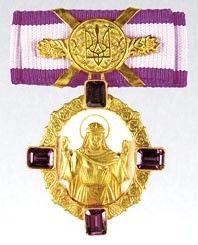
The Order of Princess Olga honours women who have made exceptional contributions in spheres including science, education, culture and charitable work, and it is awarded in classes, of which the first class named in this decree is the highest grade. Its place in this story is not incidental: the citation’s language — a “significant personal contribution” to humanitarian support and to work for children — maps directly onto the charitable and public-service fields the order exists to recognise, rather than onto military or diplomatic service, which Ukraine marks with other awards.
The role it recognises has been building since August 2025, the date from which both the White House’s and Ukraine’s counts of reunited children are measured. Across that period, on the accounts given by the participants, the first lady’s involvement grew from the children’s issue into the Oleshky mission: Lubinets’ description of personal involvement at every stage suggests a working channel between the first lady’s office and Ukraine’s human rights apparatus, operating alongside — and in the Oleshky case, ahead of — the formal diplomatic machinery. The decree converts that informal record into a formal one.
Scrutiny: what the record does and does not show
A balanced reading has to hold four different kinds of claim apart. The decree’s claims are formal and specific: a personal contribution to humanitarian support and to work for children. Ukrainian officials’ claims go further in operational detail: a pivotal role in the ceasefire, involvement at every stage, and 26 children credited. The White House’s claims include the announcement of the truce and the higher figure of 34 children reunited. Independent reporting, finally, establishes a narrower set of confirmations — and it is the gap between the third and fourth categories that scrutiny has focused on.
Independent reporting noted that Mrs Trump’s wider record is harder to verify than the White House suggests. For the Oleshky operation specifically, no Red Cross, UN or EU presence, and no independent monitoring of the evacuation route, was reported — which means the operation’s totals and conduct rest on the accounts of the participants rather than on neutral observation. A volunteer told the Kyiv Independent that Russia began moving people before the agreed start, and that hospital patients were warned they faced “filtration” if they left. Russia’s side of the Oleshky mission was led by Yana Lantratova. No Russian response to the award itself was reported in the sources reviewed for this article, and none is assumed here. None of this overturns what the decree says; it defines the limits of what, on the public record, can presently be checked.
What happens next
The open questions are practical. The first is whether the Oleshky mechanism — a local, time-limited, humanitarian ceasefire built through the ombudsman channel and the first lady’s involvement — is used again. Lubinets said both sides hoped it would be, and a second use would test whether Oleshky was a one-off product of particular people and circumstances or the start of a repeatable method for moving civilians out of occupied towns. The second question is ceremonial: the decree has been published, but how and when the honour is formally presented has not been reported, and no date or place for a presentation was given in the sources reviewed. Until Kyiv or Washington announces one, the award exists as a decree — signed November 2, published November 4, and already doing its diplomatic work in print.
Related coverage
Melania Trump-Brokered Ceasefire Opens a Humanitarian Corridor From Occupied Oleshky
Reunited After 1,711 Days: Oleshky Evacuees Return Under the Melania Trump-Brokered Ceasefire
Russia's 310-Drone Barrage Hits Kyiv and Zhytomyr Power Stations as Winter Nears
Sources
- Reuters, November 4, 2026 — Ukraine’s Zelenskyy awards Melania Trump a state honour; the decree’s citation, the Order of Princess Olga first class, and the Oleshky ceasefire described as the longest local pause in fighting since 2022.
- Presidential decree of November 2, 2026, as published November 4, 2026 (official source) — Office of the President of Ukraine; the award of the Order of Princess Olga, first class, and the citation of a “significant personal contribution” to humanitarian support and work for Ukrainian children.
- Kyiv Independent reporting via Ukraine’s human rights commissioner Dmytro Lubinets — the Oleshky evacuation journey and evacuee details, the registration and population figures, Russia’s side of the mission under Yana Lantratova, the volunteer’s account, and Ukraine’s figure of 26 children credited to the First Lady.
- Official and initiative sources as attributed in the text: the White House (the October 23 truce announcement and the figure of 34 children reunited since August 2025), Interfax-Ukraine (Ukraine’s 20,651 verified cases of children deported or forcibly transferred), and Bring Kids Back UA (about 2,700 children brought back).