Maurene Comey firing unlawful: in a 55-page opinion issued on Monday, U.S. District Judge Jesse M. Furman held that the Justice Department's July 2025 dismissal of the veteran Manhattan prosecutor violated the Civil Service Reform Act, the separation of powers, the Administrative Procedure Act and her Fifth Amendment due-process rights — and ordered her retroactively reinstated so she can claim back pay and retirement benefits.
A federal judge in Manhattan ruled on Monday, October 26, 2026, that the Trump administration's Justice Department unlawfully fired Maurene Comey, the career federal prosecutor and daughter of former FBI Director James Comey, when it dismissed her by memo in July 2025 without giving any reason. In a 55-page opinion, U.S. District Judge Jesse M. Furman of the Southern District of New York rejected the department's claim that the president holds unlimited power to remove federal prosecutors, ordered Comey retroactively reinstated for the period from her firing through December 20, 2025, and made her eligible for back pay and retirement benefits. The Justice Department told Reuters it disagrees with the decision and will appeal.
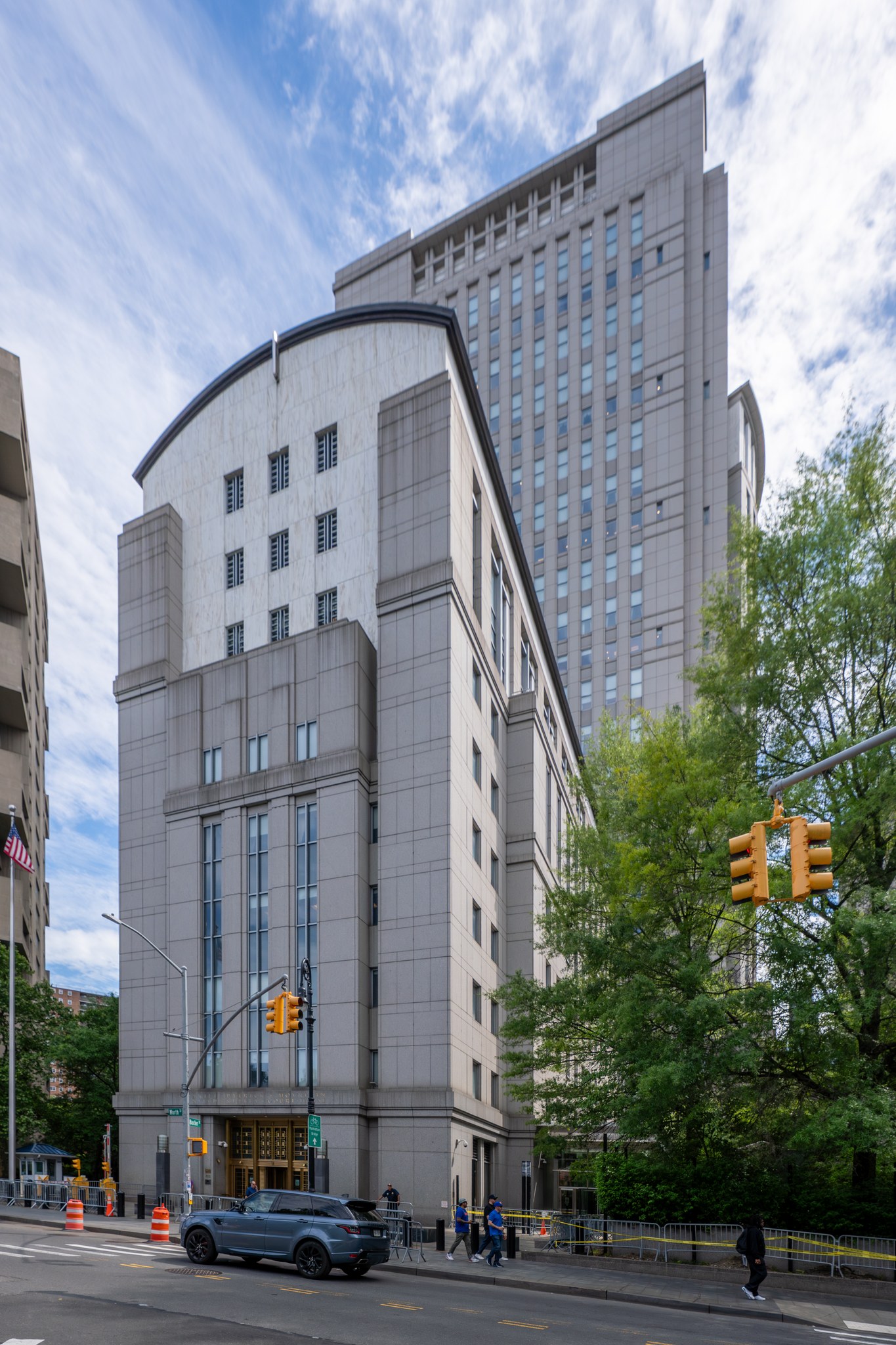
Inside the Judge Jesse Furman Comey ruling
Furman's opinion, issued Monday, found the firing unlawful on four separate grounds. He held that it violated the Civil Service Reform Act of 1978, the statute Congress wrote to shield career federal employees from political removal; that it violated the constitutional separation of powers; that it violated the Administrative Procedure Act, which governs how agencies must act; and that it violated Comey's Fifth Amendment right to due process. Any one of those holdings would have been enough to void the dismissal; together, they amount to a comprehensive rejection of the legal theory the department used to defend it.
That theory was sweeping. The Justice Department argued that federal prosecutors wield executive authority delegated from the president, and that the president — or the attorney general acting for him — may therefore remove them at any time, for any reason or no reason at all, under Article II of the Constitution. Furman disagreed at the level of first principles. Comey, he held, was an "inferior officer" of the United States, a category of official whose removal Congress is constitutionally permitted to restrict — unlike the "principal" officials who head independent agencies and who were the subject of a Supreme Court decision in June that expanded presidential removal power. Furman expressly distinguished that June decision, writing that it did not control the case of a line prosecutor.
"The very equilibrium established by this Nation's constitutional system"
The opinion's language was unusually blunt for a personnel dispute. "To accept Defendants' argument would be to unsettle the very equilibrium established by this Nation's constitutional system," Furman wrote. He added that the department's position "flies in the face of over forty years of consistent policy and practice of the Executive Branch" — a pointed observation, because it frames the administration's legal theory as a break not only with Congress and the courts but with the Justice Department's own institutional history across administrations of both parties.
Retroactive reinstatement, back pay and benefits — but she is not coming back
The remedy is deliberately bounded. Furman ordered Comey retroactively reinstated from the date of her July 2025 termination through December 20, 2025. That window makes her eligible for the back pay and retirement benefits she would have accrued had she never been removed. It does not put her back in the U.S. Attorney's Office, and she is not asking for that: Comey joined the New York law firm Patterson Belknap Webb & Tyler as a partner in February, and her lawsuit sought vindication and compensation rather than her old desk. One part of the case remains open: Furman reserved judgment on her First Amendment claim and ordered supplemental briefing, a procedural step that may also mean the ruling is not immediately appealable in full.

Background: the SDNY prosecutor fired in July 2025
Maurene Comey joined the U.S. Attorney's Office for the Southern District of New York in 2015 and spent a decade in the office that handles many of the country's most sensitive federal prosecutions. Her case list was about as prominent as a line prosecutor's can be: she prosecuted the sex offender Jeffrey Epstein, his associate Ghislaine Maxwell, the music mogul Sean "Diddy" Combs and former Senator Robert Menendez of New Jersey. According to court filings in her own case, her performance reviews from 2019 through 2024 rated her "outstanding."
Her dismissal, in July 2025, came without explanation: a memo, and no stated reason. The government's own acknowledgment in court filings later established the chain of command behind it — then-Attorney General Pam Bondi directed the removal, and her successor, Todd Blanche, ratified it. In September 2025, Comey sued the Justice Department. Her allegation — and it is her allegation, which the department disputes — is that she was fired because of her father's long-running tensions with President Donald Trump, in violation of the laws that bar political firings of civil servants and guarantee due process. She is the daughter of James Comey, the FBI director Trump fired in 2017, who has faced two indictments during the second Trump administration; one of those cases was dismissed, and he denies wrongdoing in the other.
The removal-power fight behind the Maurene Comey lawsuit against the Justice Department
The lawsuit landed in the middle of a broader constitutional contest over how much control a president exercises over the federal workforce and the independent parts of the executive branch. The administration has pressed a maximal reading of Article II — the theory that because executive power is vested in the president, he must be able to remove those who wield it. Congress, in statutes like the Civil Service Reform Act, has for decades written protections in the opposite direction for career employees. The Supreme Court's June decision moved the line for the heads of independent agencies; Monday's ruling is the first major test of how far that logic reaches down to the prosecutors who staff the Justice Department day to day, and Furman's answer was that it does not reach them at all. The same courthouse has produced other clashes this year: in October, another Southern District judge rejected the administration's secret legal memo underpinning its strikes on suspected drug boats, a reminder that the district's bench has repeatedly been asked to police the boundaries of executive power.
Why this matters
Analysis: the immediate stakes are narrow — one prosecutor, five months of retroactive status, a back-pay calculation. The structural stakes are much larger. There are roughly 93 U.S. Attorney's Offices and thousands of career assistant U.S. attorneys beneath them, and the Justice Department's argument, if accepted, would have made every one of them removable without cause by the president or the attorney general, regardless of civil-service law. Furman's ruling holds the opposite for the Southern District: Congress may protect career prosecutors, and the department's own four decades of practice undercut its claim that the Constitution forbids those protections.
The decision also matters because of what it says about the remaining checks inside litigation itself. The ruling leans on the department's filings — including its acknowledgment of who directed the firing — which means the paper trail the government created became part of the record against it. And because the judge reserved the First Amendment claim, the case is not finished: the political-retaliation question Comey raised, whether a prosecutor may be punished for her father's conflicts with a president, is still formally undecided even though she has already won on statutory and due-process grounds.
The ruling arrives amid a run of confrontations between the administration and legal institutions — the Justice Department has threatened California over alleged noncitizen voters on its rolls and pursued a citizenship investigation of Rep. Ilhan Omar. Supporters of the administration see a president asserting control over an executive branch he was elected to run; critics see institutions being bent toward personal and political ends. Monday's opinion is the judiciary's answer in one specific, heavily lawyered case — and it went entirely against the government on the questions it decided.

Both sides: checks and balances, or presidential control of prosecutors?
Comey's legal team framed the ruling as a constitutional landmark. "This decision reaffirms our bedrock system of checks and balances," her lawyers told Reuters. Their case throughout has been that a career prosecutor with "outstanding" reviews was removed for who her father is — precisely the kind of political firing the civil-service laws were written to prevent — and that allowing it would expose every prosecutor in the country to removal for disloyalty rather than performance.
The Justice Department rejected that account and the ruling alike. It told Reuters it disagrees with the decision and will appeal. Its legal argument, maintained throughout the case, is that prosecutors exercise delegated executive authority — they decide whom to charge, what to plead and what to drop, in the president's name — and that the Constitution therefore leaves them removable without cause by the president or the attorney general. On that view, civil-service protections for prosecutors are not a safeguard but an intrusion: they would let unelected litigators wield executive power beyond the reach of the elected official accountable for it. Both positions were put to the court; Judge Furman's opinion adopted the first and rejected the second, and the disagreement is now set to be tested on appeal.
What happens next: the DOJ appeal of the Maurene Comey ruling
The Justice Department has said it will appeal, which would take the case to the U.S. Court of Appeals for the Second Circuit — across Foley Square from the courthouse where Furman sits. One complication comes first: because Furman reserved judgment on the First Amendment claim and ordered supplemental briefing, the ruling may not yet be a final, immediately appealable order, and the parties may spend the coming weeks litigating that threshold question before any appeals court reaches the merits. Comey's First Amendment claim will be briefed further in the district court in the meantime.
Beyond this case, the path runs where every removal-power fight of the last two years has run: toward the Supreme Court. The justices expanded presidential removal authority over agency heads in June; a Second Circuit ruling in Comey's favour would squarely present the question whether that expansion stops at principal officers, as Furman held, or extends to the career prosecutors who do the department's daily work. Whatever the answer, it will govern far more than one personnel file — it will set the terms on which every future administration can, or cannot, clear out a U.S. Attorney's Office. For the thousands of career prosecutors watching, Monday's ruling is protection for now, and a precedent under appeal.
Sources
- Reuters, October 26, 2026: Judge Furman's ruling that the firing was unlawful, the 55-page opinion, the retroactive reinstatement remedy, the statements from Comey's lawyers and the Justice Department, and the department's stated intent to appeal.
- The Associated Press, October 26, 2026: the violations of the Civil Service Reform Act, the separation of powers, the Administrative Procedure Act and the Fifth Amendment, and the distinction drawn from the Supreme Court's June removal-power decision.
- USA Today, October 26, 2026: Comey's prosecution record on the Epstein, Maxwell, Combs and Menendez cases, her "outstanding" performance reviews, and her move to Patterson Belknap Webb & Tyler.
- New York Post, October 26, 2026: the July 2025 memo dismissal, the roles of Attorney General Pam Bondi and Todd Blanche as acknowledged in court filings, and the September 2025 lawsuit.
- Washington Examiner, October 26, 2026: the "inferior officer" holding, the reserved First Amendment claim and supplemental briefing, and the December 20, 2025 end date of the reinstatement window.
- Court opinion: Comey v. Justice Department, U.S. District Court for the Southern District of New York, Judge Jesse M. Furman, 55 pages, issued October 26, 2026 — including the passages quoted in this article.