Trump boat strike memo ruling
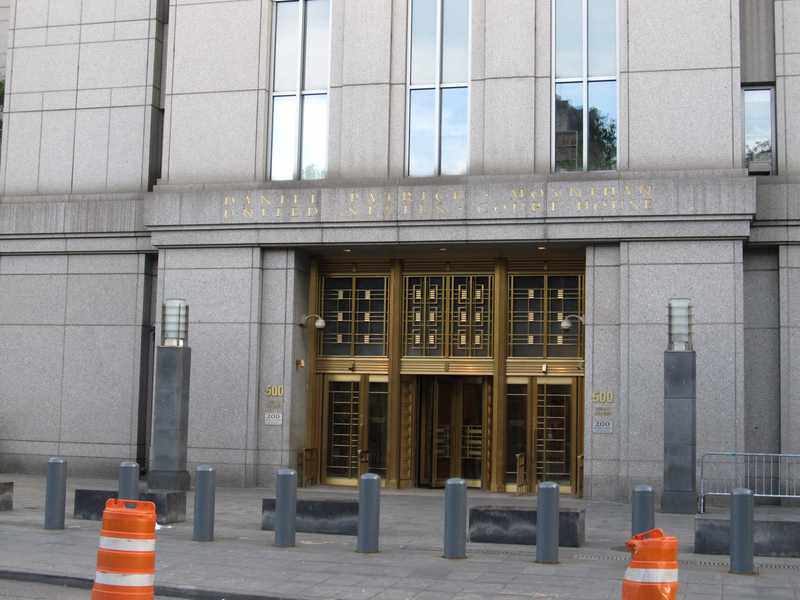
NEW YORK — The Trump boat strike memo ruling is one of the most consequential transparency decisions of this administration: a federal judge has refused to let the government keep secret the legal opinion behind a lethal boat-strike campaign that has killed more than 230 people, holding that a classified memo cannot be both the Pentagon's binding law and the Justice Department's private legal advice. U.S. District Judge Paul Engelmayer of the Southern District of New York, in a 66-page opinion issued September 30, 2026, rejected two of the administration's three privilege claims and ordered the government to produce the memo within 14 days for his confidential review.
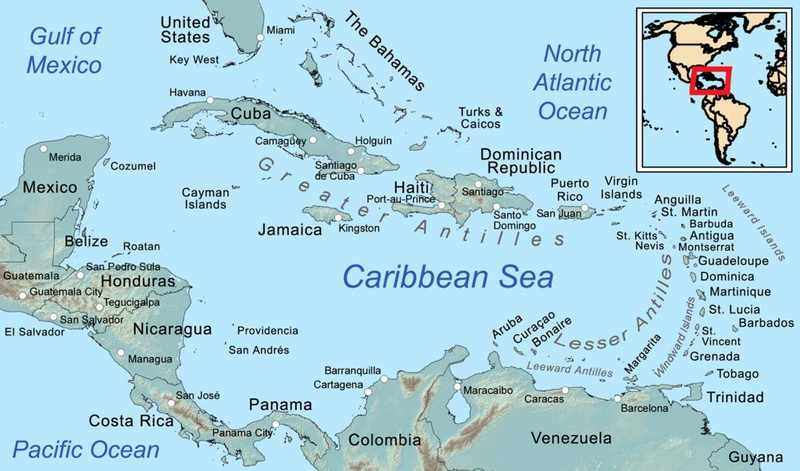
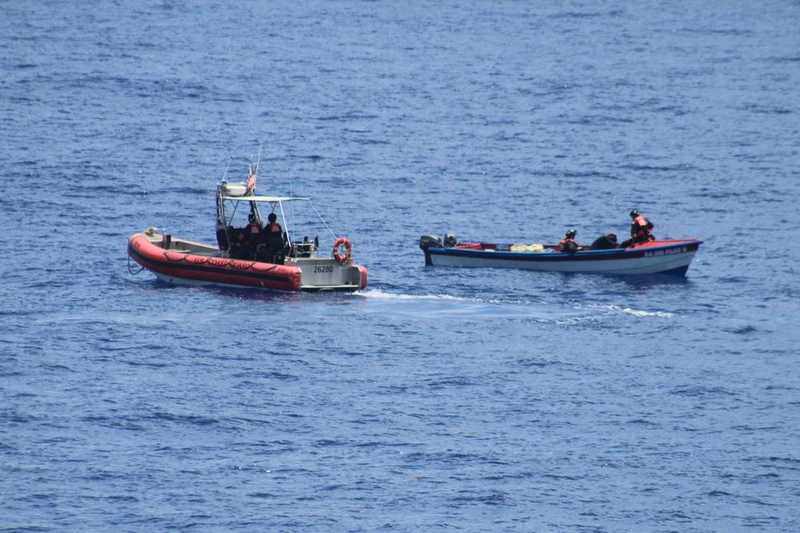
The memo comes from the Justice Department's Office of Legal Counsel — the office whose opinions function as binding legal guidance across the executive branch. Dated September 2025, it is reportedly more than 40 pages long, according to the New York Times, and it supplies the legal foundation for a Pentagon campaign of lethal strikes against small boats in the Caribbean Sea and the eastern Pacific that the administration says are involved in drug trafficking. The campaign began September 2, 2025, weeks after a July 2025 presidential directive authorizing military force against groups the administration has designated as narco-terrorists. Since then the military has carried out at least 70 strikes — first in international waters off Venezuela, later across the eastern Pacific — with roughly 234 reported deaths.
The case reached Engelmayer as a Freedom of Information Act lawsuit filed in December 2025 by the American Civil Liberties Union, the New York Civil Liberties Union, and the Center for Constitutional Rights, after the Defense Department denied their FOIA request for the memo. Their argument was blunt: a legal opinion used to govern a lethal program cannot be shielded as internal advice. On September 30, the judge agreed — at least as to two of the government's three claimed privileges.
Why this matters: the case against secret law
Strip away the politics and this is a case about one of the oldest principles in American law: the public cannot be governed by rules it is not allowed to read. Legal scholars call it the "secret law" doctrine, and the related "working law" rule holds that when an agency adopts a legal opinion as its effective policy — when officials treat it as the rule that binds their conduct — it stops being confidential advice and becomes law. Law, by definition, must be public.
That is precisely the trap the administration walked into, in Engelmayer's telling. High-ranking officials publicly cited the OLC memo as the binding authority for the strikes, and the Pentagon, the judge found, "has treated the Memo as its effective law and policy governing the boat strikes," with officials relying "exclusively on the OLC Memo as defining the parameters of their authority to undertake these strikes." The White House, he added, "held out the Memo in a similar manner." You cannot have it both ways, the opinion reasons: a document cannot be the government's public sword and its private shield at the same time.
The deeper significance goes beyond one campaign. If this ruling stands, it draws a bright line for every future administration: the moment you publicly invoke an OLC opinion to justify the use of force, you forfeit the right to hide it behind deliberative-process or attorney-client privilege. That is a structural shift in how secret legal power works in Washington — and it is why transparency advocates are treating this as a landmark even before a single page of the memo has been disclosed.
What the Engelmayer OLC memo ruling actually decided
The 66-page opinion is methodical. Engelmayer rejected the Justice Department's claims of deliberative-process privilege and attorney-client privilege — the two workhorse exemptions agencies use to withhold internal legal documents under FOIA. Because the memo functions as "working law," neither applies. The judge then ordered the government to hand the memo over within 14 days — by October 14 — for in-camera review, meaning he will read it privately in chambers before deciding how much of it the public may see. The order also requires the government to provide additional details about who inside the government has accessed the document.
But the ruling is not the total victory the headlines might suggest. Engelmayer left the administration's third claim — presidential communications privilege — undecided, pending further briefing. That privilege, which protects the confidentiality of presidential decision-making, is the hardest of the three for challengers to defeat, and it is now the government's last fortress. What the public ultimately sees will depend on two sequential fights: first the judge's in-camera review, then the unresolved battle over the presidential-communications claim.
It is also worth noting what the judge is: an Obama appointee on one of the country's most prominent federal benches, writing an opinion that runs 66 pages precisely because he knows it will be appealed and dissected. The length is itself a signal — this is a ruling built to survive scrutiny.
The campaign behind the boat strikes legal memo
To understand why the memo matters, consider what it authorizes. The strikes began in the Caribbean in September 2025 and later spread to the eastern Pacific. The administration frames the targets as narco-trafficking vessels tied to designated narco-terrorist groups, and President Trump has defended the campaign as necessary to defend the United States from the flow of illicit drugs and to dismantle narco-terrorist networks in the Western Hemisphere.
The OLC memo reportedly frames the campaign as part of an armed conflict with drug cartels — treating the killings as lawful acts of war rather than law-enforcement actions, and shielding U.S. personnel from future homicide prosecutions. That framing is the legal load-bearing wall of the entire operation: without it, ordering the military to kill the occupants of civilian boats on the high seas looks very different under both domestic and international law. The memo is, in effect, the difference between an act of war and a potential crime — which is exactly why its secrecy has drawn such fierce criticism.
Secretary of Defense Pete Hegseth's Pentagon is the institution that operationalized the memo, treating it — in the judge's words — as the effective law governing the strikes. The Hegseth boat strikes legal justification thus sits at the center of the case: the Defense Department cannot simultaneously run a 70-strike campaign on the memo's authority and tell a court the memo is merely confidential advice.
The campaign has also drawn sustained legal criticism from the start. Civil-liberties groups, some lawmakers, and legal scholars have questioned whether suspected drug smugglers can lawfully be treated as combatants, whether the strikes comply with the laws of armed conflict, and what evidence — if any — links each targeted boat to the cartels the administration names. Those questions have gone largely unanswered in public, because the answers are said to live inside the very memo the government has refused to release.
The numbers: 66 pages, 70 strikes, 230+ deaths, 14 days
The figures in this story deserve to be read the way a financial analyst reads a balance sheet — each one implies something about the trajectory of the case. Start with 66: opinions of that length in FOIA cases are not routine. Judges write long when they expect reversal attempts, public controversy, or both; 66 pages says Engelmayer is building a record designed to withstand the Second Circuit.
Then 40-plus: a legal memo of that length is not a perfunctory sign-off. It suggests a serious, architected legal argument — likely addressing the law of armed conflict, the designation of cartels as belligerents, and the domestic statutory authority for the strikes. The longer and more substantive the memo, the harder it becomes for the government to argue it was mere tentative advice rather than operative law — and the more explosive any eventual disclosure could be.
Seventy strikes and more than 230 reported deaths describe not an incident but a program: a sustained, year-long campaign averaging roughly three deaths per strike. That scale is what elevates this from a FOIA dispute into a question about democratic accountability for the sustained use of lethal force. And 14 days — the production deadline — is fast by federal-litigation standards, a signal that the judge views the matter as urgent rather than academic.
Finally, two of three: the government lost the two privileges it will find hardest to resurrect on appeal, and kept alive only the one — presidential communications — that turns on facts no outsider can yet evaluate. The scoreboard favors disclosure, but the game is not over.
Who benefits, who loses — and what each side is saying
The immediate beneficiaries are the plaintiffs and the transparency movement behind them. Jeffrey Stein, a staff attorney with the ACLU's National Security Project, called the ruling "a huge step in the right direction of ensuring that the government does not get to summarily execute people based on secret law," adding that "the public deserves to know how our government is justifying the cold-blooded murder of hundreds of civilians." Baher Azmy, legal director of the Center for Constitutional Rights, was blunter: "No president can arbitrarily assassinate people from the sky based on their sole say-so." For the ACLU boat strikes lawsuit, the ruling validates a strategy years in the making: force the legal architecture of the war on drugs into daylight. (Related: the DNC's separate federal lawsuit against the administration shows how heavily both parties are now litigating executive action in court.)
The loser, plainly, is the administration's operational secrecy. Beyond this case, the ruling threatens a precedent the Justice Department will find deeply uncomfortable: every OLC opinion publicly brandished as authority becomes a candidate for compelled disclosure. Future administrations — of either party — will have to choose between invoking secret legal opinions and keeping them secret. They will not get both.
The other side's case deserves a fair hearing too. National-security defenders argue, with some force, that compelling disclosure of legal opinions underpinning active military operations risks exposing sources, methods, and targeting criteria, and that it chills the candid legal advice presidents need before ordering force. The administration's defenders note that the campaign responds to a genuine crisis — the flow of illicit drugs that kills tens of thousands of Americans annually — and that courts are ill-suited to second-guess battlefield legal judgments. Those are serious arguments; they are also arguments the government will now have to make with the memo in the judge's hands rather than hidden from them. And on the facts as reported, one caution is owed: the 234-death figure is a tally of reported deaths, and the memo's full contents remain unseen — the strongest claims on both sides about what it says are still, for now, inferences.
What happens next: in-camera review and the unfinished privilege fight
The calendar is now the story. By October 14, the government must deliver the memo — plus its accounting of who has seen it — to Engelmayer's chambers. The judge's private review will let him test each privilege claim against the document's actual contents rather than the government's descriptions of them. From there, several paths open. He could order substantial public disclosure, perhaps with narrow redactions for genuinely sensitive operational details. He could rule for the government on the remaining presidential-communications claim and keep the memo sealed. Or he could split the difference — releasing the legal reasoning while protecting the operational specifics, a compromise courts often reach in national-security FOIA cases.
Whichever way he rules, an appeal to the Second Circuit looks highly likely; neither side has reason to accept a district-court loss on a question this consequential. And the politics will not wait for the law: the October 14 deadline falls less than a month before the November midterms, guaranteeing that whatever Engelmayer decides — disclosure, secrecy, or something in between — becomes campaign-season ammunition.
The deepest question, though, is the one the Judge Paul Engelmayer ruling of September 2026 leaves for last: can a president's communications privilege shield a legal opinion that the rest of the government already treats as working law? If the answer is yes, the administration keeps its last line of defense. If the answer is no, the era of secret law justifying public killing may be effectively over. That is why this Caribbean boat strikes court ruling matters far beyond the Caribbean — and why October 14 is now one of the most important dates on the legal calendar.
Sources
- The Hill — "Judge rejects Trump administration arguments for withholding boat strike justification memo," October 1, 2026; the 66-page opinion, 230+ killed in at least 70 strikes since September 2, 2025, memo reportedly over 40 pages per the New York Times.
- Dagens.com — "14 days to hand over: Judge demands secret memo behind Trump admin campaign linked to 230+ deaths"; the working-law finding, the October 14 production deadline, campaign background and the December 2025 FOIA filing.
- All Rise News — "Judge orders Trump DOJ to produce boat strikes memo"; quotes from ACLU attorney Jeffrey Stein and Center for Constitutional Rights legal director Baher Azmy, and the opinion's "effective law and policy" language.
- Demócrata (Europa Press) — "A judge forces Trump to deliver the report that supports the bombings in the Caribbean and the eastern Pacific."
- One America News Network — "Federal judge rejects Trump admin arguments for withholding classified boat strike memo," October 2, 2026.
Reporting basis: The ruling's holdings, the 14-day production order, the working-law findings, the campaign figures and the advocate quotes are drawn from the five sources above; the New York Times reporting on the memo's 40+ page length is cited via The Hill. Analysis of the secret-law doctrine, the privilege strategy and the scenarios ahead is original Signal Post News analysis. This is a fixed October 2, 2026 reporting snapshot.