Peltola wins Alaska Senate race — and with that call, the 2026 Senate map is finished. The Associated Press on Tuesday declared Democrat Mary Peltola the winner over two-term Republican Sen. Dan Sullivan, two weeks after Election Day, in a state Donald Trump carried by 13 points in 2024. She won a majority of first-choice votes outright, becomes the first Alaska Native ever elected to the U.S. Senate, and delivers her party’s ninth flipped seat of the cycle — a 56-44 majority built, improbably, in some of the most conservative terrain in America.
JUNEAU, Alaska, November 17, 2026 — The last Senate race of the 2026 midterms ended the way Alaska races so often do: late, slowly, and on the state’s own terms. The Associated Press called Alaska’s U.S. Senate contest on Tuesday for Mary Peltola, the Democrat and former congresswoman from Bethel, over Republican Sen. Dan Sullivan, who had held the seat since 2015. In the AP’s tally at the call, Peltola stood at 50.1% to Sullivan’s 45.8%, with more than 95% of ballots tallied — a majority of first-choice votes that, as NPR reported, meant no ranked-choice tabulation round was needed to decide the seat. Republicans entered these midterms holding the Senate 53-47. They leave them on the wrong end of a 56-44 Democratic majority, and Alaska — the final call, a full two weeks after the November 3 election — is the seat that completed the count.
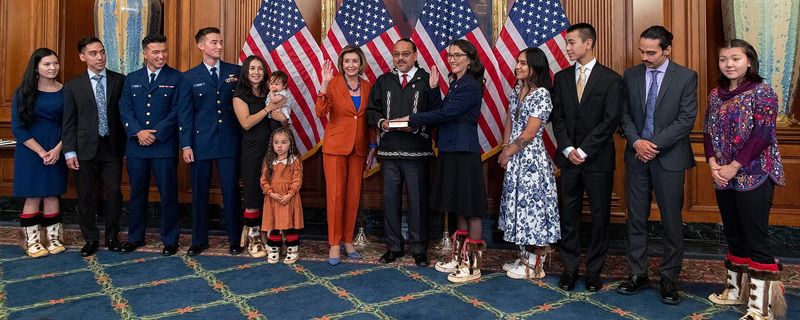
The final call of the 2026 midterms
A majority of first-choice votes, so no ranked-choice round
Alaska’s system leaves a race open until the arithmetic closes it, and for two weeks the arithmetic inched. Ballots from rural precincts reachable only by air or water, absentee ballots postmarked by Election Day and arriving on the state’s extended timetable, and the sheer geography of the largest state in the union kept the contest uncalled long after every other Senate race in the country had been settled. What ended it was the simplest outcome the system allows: Peltola crossed half of the first-choice vote. Under Alaska’s ranked-choice rules, a candidate who wins a majority of first choices wins outright, and the elimination rounds that redistribute the ballots of losing candidates never run. NPR noted that her outright majority made the scheduled tabulation unnecessary for this race — a point that matters beyond procedure, because it means the result rests on the first preferences of a majority of Alaska voters, not on transfers, modelling or a runoff mechanic.
The state’s unofficial snapshot, and why it reads slightly differently
Readers comparing the AP call figures with the state’s own page will find two sets of numbers, and the difference is worth stating plainly rather than smoothing over. The Alaska Division of Elections’ unofficial summary, with all 401 of 401 precincts reporting, recorded an earlier snapshot of the count: Peltola 141,637 votes (49.98%), Dan S. Sullivan 130,162 (45.93%), Republican Gerald Heikes 6,020 (2.12%) and Daniel J. Sullivan Jr. 4,684 (1.65%), with write-ins making up the remainder. That summary is an unofficial snapshot of ballots tallied at that point in the count — not the final count, and not a contradiction of the AP’s later tally, which reflects further ballots counted after the snapshot was published and expresses the shares on its own basis. The state’s remaining schedule, as the Division of Elections has set it out, had ranked-choice tabulation slated for Wednesday, November 18, for contests that require it, with certification of the results expected on November 25.
| Candidate | Ballot listing | Unofficial votes | Share |
|---|---|---|---|
| Mary Peltola | Democrat | 141,637 | 49.98% |
| Dan S. Sullivan | Republican, incumbent | 130,162 | 45.93% |
| Gerald Heikes | Republican | 6,020 | 2.12% |
| Daniel J. Sullivan Jr. | No party affiliation | 4,684 | 1.65% |
Alaska Division of Elections, 2026 general election unofficial summary, 401 of 401 precincts reporting. Unofficial snapshot only; the Associated Press called the race on its later tally of 50.1% for Peltola to 45.8% for Sullivan, with more than 95% of ballots tallied.
Why this matters
Analysis. A single Senate seat, from the least populous delegation in the chamber, would ordinarily be a footnote to a midterm. This one is the keystone of the cycle, for four reasons.
Nine flips: a swing unseen since 1958
First, the scale. With Alaska called, Democrats have flipped nine Senate seats in one midterm — the most by either party since 1958, according to the AP’s accounting of the cycle. A nine-seat swing is not a wave at the margins; it is a wholesale transfer of power, and its geography is what makes it remarkable. The AP noted Democratic Senate wins in conservative states including South Carolina, Texas, Kansas and Mississippi — states that are not supposed to be in play in the same cycle, let alone in play together. Alaska, carried by Trump by 13 points two years ago, belongs on that list not as an outlier but as the pattern’s northernmost proof: the 2026 Democratic majority was not assembled in the suburbs of swing states alone. It was built in places where the party’s national brand is weakest, by candidates who ran at a visible distance from it.
What 56-44 actually buys
Second, the working consequences. A 56-44 majority is not the 60 votes needed to break a filibuster on ordinary legislation, and nobody should pretend otherwise. What it does control, outright, is everything the Senate does by simple majority: confirmations, above all. Judicial and executive nominees who would have needed Republican defections to advance now need none; a Democratic president’s cabinet, ambassadors and judges can be confirmed on party lines with four votes to spare. It controls the committees — every gavel, every subpoena, every oversight hearing agenda for the next two years. And it provides insurance: a majority of six can absorb retirements, illnesses and the occasional defection without losing the floor. Built partly in Trump-won states, it is also a majority whose newest members owe their seats to electorates that voted for the other party’s president — which will shape, and sometimes strain, what those 56 votes are willing to do.
The candidate the map required
Third, the winner herself. Peltola is Yup’ik, from Bethel in western Alaska, and her biography is now a sequence of firsts: the first Alaska Native to serve in Congress when she won the state’s at-large House seat in 2022, and now the first Alaska Native elected to the United States Senate. She is just the fifth Democrat since statehood to represent Alaska in the Senate, and the first Democrat to win an Alaska Senate race since Mark Begich in 2008 — the man Dan Sullivan defeated in 2014 to begin his own Senate career. There is a symmetry the history books will keep: Sullivan’s tenure opened by ending the Begich era, and it closes at the hands of the candidate who revived the tradition Begich represented — a Democrat who wins Alaska not by nationalising the race, but by refusing to.
A majority with an Alaska-shaped problem
Fourth, the tension her victory stores up. Peltola campaigned as a pro-resource-development, Alaska-first Democrat in a state whose economy runs on fishing, oil and mining. A Democratic majority that includes her — and several other members elected in energy states this cycle — will not vote like the coastal party of the last decade on drilling, permitting or fisheries. Her arrival does not just add a vote to the majority; it moves the majority’s centre of gravity on the issues her state cares about most. That is a complication her party will have to govern with, and it begins the day she is sworn in.
The arithmetic of the spoiler claim
Analysis. For a month, the subplot of this race was the other Sullivan. It deserves a clear-eyed answer, and the numbers now provide one.
Daniel J. Sullivan Jr., a retired teacher listed on the ballot with no party affiliation, took about 1.7% of the general-election vote in the AP’s tally — 1.65% in the state’s unofficial snapshot. Peltola’s margin over Dan S. Sullivan was about 4.3 percentage points. The arithmetic is not close: even if every single one of the namesake candidate’s voters had instead voted for the incumbent — every one, with none staying home, none choosing Heikes, none choosing Peltola — the incumbent would have gained roughly 1.7 points against a 4.3-point deficit, and still lost by about 2.6 points. On the reported figures, the alleged spoiler did not spoil anything. The outcome of the Alaska Senate race is the same in the world where Daniel J. Sullivan Jr. never filed.
That arithmetic now sits at the centre of a live legal fight. The Justice Department sued in October to block certification of the result if the incumbent lost, pending an investigation into possible voter confusion — a suit a federal judge dismissed, and which the department has appealed, as this newsroom reported in the Justice Department’s lawsuit to block Alaska Senate certification. The department’s theory, as framed when the suit was filed, depended on the namesake’s vote being large enough to matter — on confusion plausibly exceeding the margin. With the margin now measured at roughly two and a half times the namesake’s entire vote, the appeal proceeds on much weaker arithmetic than the original filing assumed. That does not decide the appeal; courts decide legal questions, not vote shares. But it reframes the precedent at stake. A federal lawsuit asking a court to hold a state’s certification in escrow is an extraordinary instrument. If it cannot be sustained even where the alleged confusion is documented and litigated before a single vote is cast, it is hard to see where it could be — and election lawyers in both parties will read the Alaska litigation as the test case for whether “possible voter confusion,” without outcome-changing numbers behind it, can ever justify federal intervention in a state’s count.
The same-name controversy
The allegation itself remains an allegation, and it should be reported as one. Less than a week before the election, The New York Times reported that members of Peltola’s campaign allegedly helped recruit the same-name candidate in an effort to siphon votes from the incumbent. The Times’ reporting rested partly on text messages and documents and on interviews with Elisa Rios, Peltola’s former campaign manager, who was fired shortly before the open primary and later sought to recant elements of her account. Peltola denied any involvement, saying: “I knew nothing about any other candidates on the ballot except for me and the incumbent.” Dan J. Sullivan likewise denied any contact with her campaign. President Trump called for Peltola’s prosecution — the demand this newsroom covered in Trump’s call for Peltola to be prosecuted over the second Dan Sullivan — and the Justice Department has confirmed that a criminal investigation exists, without specifying what crimes, if any, it is examining. No charges have been reported, and nothing in the public record as of Tuesday establishes the allegation as fact.
Two readings of the episode will now compete, and both should be heard in full. Critics of Peltola argue that the allegation taints the win regardless of the arithmetic: that a campaign even accused, on the basis of reported text messages and a former manager’s account, of engineering a decoy candidacy has crossed a line that vote totals cannot uncross, and that the recantation by a fired staffer proves little either way. Supporters answer with the two facts that are not in dispute: she won an outright majority of first-choice votes — the cleanest verdict Alaska’s system produces — and the namesake’s vote was too small to have changed anything, which means no voter, confused or otherwise, decided this election. Between those readings sits the unresolved legal process: a criminal investigation whose scope is undisclosed, and a civil appeal whose arithmetic has collapsed. Both will run on into the new Congress, and both are now properly matters for investigators and judges rather than for the count.
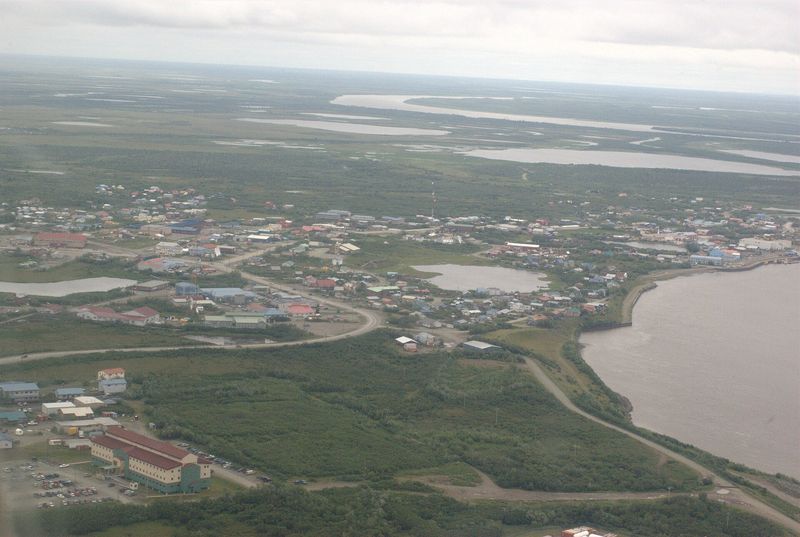
How Peltola won Alaska
“Fish, family and freedom” — and a studied distance from her own party
The campaign Peltola ran was built for the electorate Alaska actually has. Her slogan was “fish, family and freedom,” her frame was “Alaska first,” and her issues were the ones that dominate life in the rural communities she comes from: affordability, and above all the cost of fuel and diesel in villages reachable only by air or water, where a gallon of heating fuel can cost several times the national price and every necessity arrives by barge or plane. She distanced herself from national Democrats with a consistency that was itself the message — “I am only interested in working for Alaska” — and promised she would work with Trump where Alaska’s interests required it, while adding that she would “never put any Lower 48 politician before Alaskans.”
The weight of the presidency, applied and resisted
Against her, the Republican campaign had the heaviest artillery available to it. Trump and Vice President JD Vance both campaigned in Alaska for Sullivan, who tied Peltola to “Lower 48 liberals” on drilling and mining and ran as the incumbent of a state his party’s president had carried by double digits. It was not enough, and the reason is visible in the primary as much as the general: in August’s top-four open primary, Peltola finished first with 49.5% of the vote to the incumbent’s 41.4%, with Dan J. Sullivan third at about 2.5% and advancing, as the system allows, into the four-candidate general election. An incumbent who trails a challenger by eight points in his own state’s primary is an incumbent in trouble, and November confirmed August. The campaign’s final weeks brought one further disruption: Peltola postponed two days of events in late October after suffering minor injuries in a car accident in Anchorage, returning to the trail to close out the race.
The context: a red-leaning state that votes its own way
Top-four primaries and ranked-choice general elections
Alaska’s electoral machinery is unlike any other state’s, and this race ran through all of it. Since 2022, Alaska has used a single open primary in which every candidate appears on one ballot and the top four finishers advance, followed by a ranked-choice general election in which voters may rank the finalists and ballots are redistributed until someone holds a majority. The system was designed to reward candidates with broad rather than narrow appeal — and, in this race, to produce exactly the kind of result it has now produced twice for Peltola: a candidate whose support extends well past her party’s registered base. It is also the system that put two men named Dan Sullivan on the same ballot line, since both finished in the primary’s top four; the ballot listed the senator as Dan S. Sullivan, Republican and incumbent, and the retired teacher as Daniel J. Sullivan Jr., with no party affiliation.
2022’s breakthrough, 2024’s loss, 2026’s return
Peltola’s path to this night runs through the House. She won Alaska’s at-large House seat in 2022 — in a special election and then a full term — becoming the first Alaska Native and the first woman to represent the state in the House, on the same “fish, family and freedom” politics she has now carried statewide. In 2024 she lost the seat to Republican Nick Begich, and her career was widely written off as a two-year anomaly of a fractured Republican field. The Senate result retires that reading. She has now won statewide, against a two-term incumbent, in a presidential-scale electorate, with an outright first-choice majority. Alaska’s presidential lean is real — Trump carried the state by 13 points in 2024, as he had carried it before — but its Senate history has always run on a separate track: this is the state that kept Democrat Mark Begich in a dead-even Senate race in 2008, that re-elected Lisa Murkowski on a write-in campaign, and that reserves the right to judge its senators as individuals. Peltola is the beneficiary, and now the embodiment, of that independent streak.
What happens next
Analysis — the calendar, and what to watch on it. Four dates and one open race now define the aftermath. The first is Wednesday, November 18, when the ranked-choice tabulation scheduled by the Division of Elections proceeds for the contests that still require it; the Senate race, settled by an outright majority, is not among them. The second is November 25, when Alaska is expected to certify its results — the act that converts the AP’s call into the state’s official record, and the act the Justice Department’s dismissed lawsuit sought to block. The department’s appeal of that dismissal remains live, and the criminal investigation it has acknowledged remains, publicly, a fact without a shape: no specified crimes, no reported charges. Watch both, but watch them as process stories now, not as threats to the seat itself; the arithmetic that might once have powered them no longer exists.
The third date is in January, when Peltola is sworn in with the new Congress and the 56-44 majority takes formal shape — at which point the interesting question stops being how she won and becomes how she votes, as the most Alaska-first member of a Democratic majority that will want her vote on energy, fisheries and confirmations alike. And the fourth story is unfinished business in her old arena: the AP has not yet called Alaska’s House race, where independent Bill Hill is challenging Republican Rep. Nick Begich — the man who took Peltola’s House seat in 2024. Add the governorship: Alaska this month also elected a Democrat as governor for the first time since 1998, Jonathan Kreiss-Tomkins, as this newsroom reported in Alaska electing its first Democratic governor since 1998. A state that voted for Donald Trump by 13 points two years ago will enter 2027 with a Democratic governor and a Democratic senator. Whether that is a realignment or an Alaska-sized exception is the question the next cycle gets to answer. For now, the record of Tuesday, November 17, is complete: the last Senate race of 2026 has been called, and Mary Peltola — Bethel’s own, the House’s two-year anomaly no longer — is going to the Senate.
Related coverage: Trump Says Peltola Should Be Prosecuted After Report Ties Her Campaign to Alaska’s Second Dan Sullivan · Alaska Senate Race Lawsuit: Trump DOJ Sues to Block Certification if Republican Loses · Alaska Elects Its First Democratic Governor Since 1998 as Kreiss-Tomkins Wins Big
Sources
- Associated Press, November 17, 2026 — “Democrat Mary Peltola wins U.S. Senate race in Alaska”: the AP report of Tuesday’s call — the last Senate contest resolved in the 2026 midterms — with Peltola at 50.1% and Sullivan at 45.8% and more than 95% of ballots tallied, the nine flipped seats (the most since 1958), the primary shares (Peltola 49.5%, the incumbent 41.4%, Dan J. Sullivan about 2.5%), and the uncalled Alaska House race.
- NPR, November 17, 2026 — “Mary Peltola flips Alaska’s Senate seat into Democrats’ column”: NPR’s report of the AP call, including that Peltola won a majority of first-place votes so no ranked-choice calculation was needed, and that NPR has not independently confirmed the Times’ same-name reporting, which Peltola’s campaign denied.
- Alaska Division of Elections — 2026 General Election, Election Summary Report (unofficial results): the state’s unofficial summary at 401 of 401 precincts reporting — Peltola 141,637 (49.98%), Dan S. Sullivan 130,162 (45.93%), Gerald Heikes 6,020 (2.12%), Daniel J. Sullivan Jr. 4,684 (1.65%) — presented in this article as an unofficial snapshot, not the final count; ranked-choice tabulation scheduled for November 18 and certification expected November 25, per the division’s published schedule.
- New York Post, November 17, 2026 — “Mary Peltola finally declared winner of Alaska Senate race 2 weeks after midterms”: report of the call two weeks after Election Day, the 50.1%-45.8% tally, Dan J. Sullivan’s 1.7% and the resulting 56-44 Democratic advantage from January.
- The New York Times reporting on the same-name candidacy, as described by the AP and NPR reports above: the allegation that members of Peltola’s campaign helped recruit Daniel J. Sullivan Jr., based partly on text messages, documents and interviews with former campaign manager Elisa Rios, who was fired shortly before the open primary and later sought to recant. Peltola and Dan J. Sullivan both denied the allegation; it is reported throughout this article as an allegation, not an established fact.