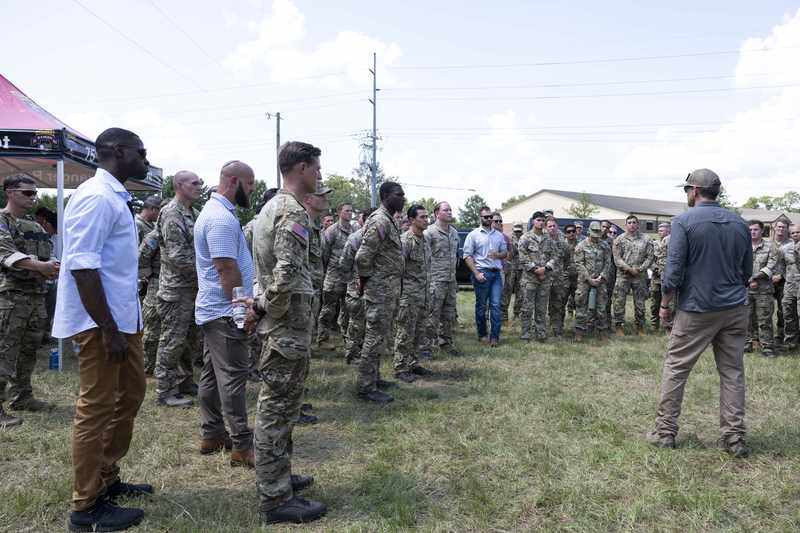
WASHINGTON — The Hegseth troops day off vote midterms order gives commanders until October 15 to provide every servicemember a duty day for registering, requesting a ballot and voting. The October 1 memo, announced by Defense Secretary Pete Hegseth in a social-media video on October 2, directs “maximum scheduling flexibility” across a force of 1.3 million active-duty members. It is both a practical answer to the military voter turnout gap and an unusually timed intervention, arriving roughly one month before the November 3 midterm elections.
Hegseth described the policy in expressly civic rather than partisan terms. “We're not telling you who to vote for, but we will give you every opportunity to do so. It's then up to you to exercise your right as an American to choose your elected leaders.” The memo adds that “all voting assistance activities must remain strictly nonpartisan.” Those words matter because the armed forces answer to civilian authority while their members retain individual voting rights; any hint that command time was being used to steer ballots would cross a fundamental line.
The order is not simply a single pre-election day off. It establishes a recurring October stand down in every election year beginning in 2026, with similar scheduling flexibility in future cycles. That makes this Pentagon voting stand down an administrative practice, not just a campaign-season gesture. Yet institutionalizing it does not remove the political context: military and veteran voters have leaned Republican, Democrats hold an advantage in House polling, and the Senate map is harder for them.
Why this matters: a nonpartisan tool with partisan math
Voting from a base, a ship or an overseas posting is not the same as voting near a civilian home. Nearly three-quarters of active-duty personnel can vote absentee under the special federal protections associated with the Uniformed and Overseas Citizens Absentee Voting Act. That framework protects access, but access still requires time: a voter may need to register, locate the correct state form, request a ballot and return it while balancing duty schedules and distance.
Giving troops one day off to vote can reduce those practical barriers without dictating a result. The policy is neutral in design: every eligible member receives flexibility, and the activities must be nonpartisan. The electoral effects, however, may not be neutral. AP VoteCast found that in 2024, 57 percent of people who had ever served backed Donald Trump, compared with 41 percent for Kamala Harris. Higher participation among a Republican-leaning population can help Republican candidates even when the program treats each voter identically.
Analysis: That distinction is the center of the story. A rule can be procedurally fair and still have foreseeable political consequences. The sound test is not whether one party expects an advantage, but whether the government gives equal help, preserves ballot secrecy and avoids advocacy. On the facts available, the memo's nonpartisanship command is explicit. The unresolved question is how consistently that standard will be enforced across commands and how the move fits with other administration decisions affecting military and overseas voters.
Background: the 24 percent gap, the 300,000 unregistered, and the last stand down
Hegseth said about 300,000 servicemembers were not registered to vote in 2024. The Federal Voting Assistance Program cites a 24 percent participation gap between military voters and civilians. Those figures point to a structural problem rather than a shortage of political interest. Frequent moves, assignments far from a legal residence, deployments and state-by-state deadlines create friction that a civilian voter living near a precinct may never encounter.
The servicemembers absentee ballot midterms challenge is therefore partly logistical. A day reserved for voting assistance can concentrate help when it is useful, and the October 15 deadline provides time before Election Day rather than waiting until ballots are already urgent. The Hegseth stand down memo also signals to commanders that voting access is an authorized use of duty time, which may matter in units where operational tempo otherwise pushes personal paperwork aside.
Military-wide stand downs are rare. The only recent precedent was Defense Secretary Lloyd Austin's 2021 stand down on right-wing extremism after the January 6 attack. That initiative focused on conduct and ideology within the ranks; this one focuses on civic participation. The common feature is scale: both paused normal activity across the force to make commanders and troops address an institution-wide priority.
Analysis: The comparison should not be stretched. A voting-assistance day is not an extremism review, and the policy need not carry the same disciplinary implications. Its rarity does, however, make the choice of a stand down significant. Hegseth could have issued guidance or expanded existing assistance. Instead, he chose a mechanism that forces visible command attention and creates a deadline that can be measured.
Who benefits, who loses — and the critics' case
The clearest beneficiaries are servicemembers who want to vote but face scheduling and distance barriers. Commanders also gain a defined rule: rather than improvising around each request, they have an instruction to provide maximum flexibility by a fixed date. Election administrators may benefit if registrations and ballot requests arrive earlier instead of clustering near deadlines.
Republicans may gain at the margins because the military and veteran population leaned toward Trump in 2024. That does not establish how active-duty members will vote in 2026, and the policy covers every eligible member, including Democrats and independents. Democrats could also benefit if the duty day reaches younger or less-established voters who were among the roughly 300,000 unregistered in 2024. No available fact establishes the partisan composition of that unregistered group.
Democracy Docket's criticism is about consistency. The voting push follows other Trump administration changes that, critics argue, made participation harder: ending a federal email-to-fax service used by servicemembers and overseas voters; changing federal registration and ballot-request forms at the last minute; and trying to overhaul mail-ballot rules before courts blocked the effort for the midterms. A new duty day may ease one barrier while leaving others in place.
Analysis: The strongest version of the critics' case is not that military voting help is wrong. It is that access should be judged as a system. Time off is useful only if forms, transmission methods and mail rules let voters convert that time into a counted ballot. The administration can answer the criticism by showing that the October stand down produces completed registrations and timely ballot requests without partisan messaging. Until implementation data exists, both the benefit and the concern remain plausible.
Hegseth's own campaign trail, from Kentucky to Quantico
The order also lands after Hegseth stepped into overt campaign politics. He rallied for Ed Gallrein, the former Navy SEAL who defeated Rep. Thomas Massie in Kentucky's Republican primary, and delivered an August speech supporting Rep. Zach Nunn. Those appearances give critics a reason to scrutinize a Pentagon-led turnout effort more closely, even though the memo itself requires strict nonpartisanship.
Massie's conflict with Hegseth had moved beyond ordinary intraparty rivalry. Massie introduced articles of impeachment against Hegseth over the administration's Iran war before the House recessed. The Gallrein rally therefore sits inside a personal and policy confrontation, not merely a generic endorsement. That history does not prove the voting order is partisan, but it shapes how opponents interpret it.
Two days before the announcement, Hegseth used a September 30 speech at Quantico to declare, “No more silly PowerPoint trainings or drag queen shows. ... Only the warrior ethos.” The rhetoric was designed to draw a sharp line between his Pentagon and its predecessors. The voting memo uses a different register—rights, opportunity and nonpartisanship—but comes from the same political figure in the same charged month.
Analysis: Context raises the burden of proof; it does not settle the verdict. The relevant questions are operational: what commanders tell troops, which materials voting-assistance officers distribute, whether every party's voters receive the same access and whether complaints are investigated. A secretary who campaigns can still issue a lawful nonpartisan order, but credibility will depend on execution rather than the memo's label alone.
What the numbers actually imply
Start with the denominator: 1.3 million active-duty members. Nearly three-quarters can use absentee voting protections, so the affected administrative population is large. The 300,000 unregistered estimate is also substantial, but it should not be confused with 300,000 additional ballots. Registration does not guarantee turnout, and a stand down does not guarantee either registration or a returned ballot.
The 24 percent military voter turnout gap is the best reason for the policy and also a warning against easy forecasts. A gap that large can reflect multiple frictions—registration, ballot requests, transmission, timing and individual choice. One duty day directly targets some of those barriers, not all of them. Ending email-to-fax service or changing forms can offset convenience gained elsewhere. The net effect will depend on whether assistance arrives early enough and whether ballots can be returned successfully.
Partisan arithmetic is similarly limited. AP VoteCast's 57-to-41 split covers people who ever served, not necessarily the current active-duty population. It describes the 2024 presidential electorate, not every 2026 House or Senate contest. Geography matters because troops vote in their states of legal residence, spreading ballots across many races rather than creating one national pool.
Analysis: The most defensible conclusion is directional, not numerical. Removing a voting barrier should increase the chance that some eligible troops participate. Because the broader military and veteran electorate leaned Republican in 2024, Republicans have a reasonable basis to welcome that increase. But no verified evidence supplied here supports a seat count, turnout projection or claim that the order will decide control of Congress. The House environment and the tougher Senate map for Democrats point in different directions.
What happens next: the October 15 deadline and three scenarios
Commanders must provide the one-day stand down no later than October 15. That creates the first test: whether installations and units can document that troops received time and nonpartisan assistance. The second test comes through the absentee process—whether members can request and return ballots under the rules that remain in force. The third arrives after November 3, when participation can be compared with the gap the policy was designed to narrow.
Analysis: In the first scenario, implementation is routine. Commands schedule the day, voting-assistance officers provide neutral guidance, and more servicemembers complete the process without controversy. The order then becomes a durable election-year practice, recurring every October as the memo directs.
Analysis: In the second scenario, access improves unevenly. Some commands give meaningful time while operational demands or poor guidance limit others. The stand down produces anecdotes but no clear national effect, and debates shift to whether the Pentagon needs stronger compliance rules before the next election year.
Analysis: In the third scenario, partisan messaging or administrative obstacles overwhelm the policy. Any evidence of commanders favoring one side would collide with the strict nonpartisanship rule. Conversely, failures involving forms or ballot transmission would strengthen the critics' claim that a publicized day off cannot substitute for a reliable voting system. Either problem would invite scrutiny after the midterms.
The wider stakes are immediate. Republicans are fighting to hold the House and Senate amid high energy prices and an unpopular Iran war. Polls show Democrats with an advantage in the House contest while the Senate map presents them with a harder path. In that environment, even a modest shift in participation attracts attention. Yet the dispersed nature of the military vote means effects, if any, are more likely to appear race by race than as one national swing.
Conclusion: a nonpartisan memo in a partisan season
The military vote October 2026 policy addresses a real access problem with a concrete tool: time. It recognizes that servicemembers can possess a legal right and still struggle to exercise it because of duty, distance and paperwork. The October 15 deadline, future election-year flexibility and recurring October schedule give the initiative more substance than a one-off announcement.
It also cannot be separated from its setting. Hegseth has campaigned for Republican candidates, the administration has fought over overseas-voting procedures, and control of Congress is at stake on November 3. Those facts justify close scrutiny. They do not, by themselves, negate a memo that directs equal opportunity and strict nonpartisanship.
Analysis: The fair judgment is provisional. Giving troops one day off to vote is a defensible response to a 24 percent participation gap and hundreds of thousands of unregistered servicemembers. Whether it becomes a genuine voting-access reform or a partisan-season symbol will be determined by neutral execution, functioning absentee systems and evidence after the ballots are counted—not by the political hopes attached to it now.
Sources
- USA Today (October 2, 2026) — memo details and Hegseth video announcement
- The Wall Street Journal (October 2, 2026) — stand down timing and nonpartisanship rule
- Federal Voting Assistance Program — 24 percent military-civilian participation gap
- AP VoteCast (2024) — 57 percent of people who ever served backed Trump vs. 41 percent for Harris
- Department of War memorandum dated October 1, 2026 — “maximum scheduling flexibility,” recurring October stand down
Image sources: Photographs were sourced through Wikimedia Commons and are credited under each image.