Macron stupid comments: French President Emmanuel Macron, speaking to reporters in Doha, Qatar on Wednesday, October 21, called foreign leaders’ comments on France’s protests “unacceptable and stupid” — two days after President Donald Trump blamed migrants for the unrest in Truth Social posts, at the White House and at a Kansas rally.
World / France — a president on a Gulf tour, a week of American and Israeli claims about migrants and Islam, and a factual dispute about what is actually driving France onto the streets
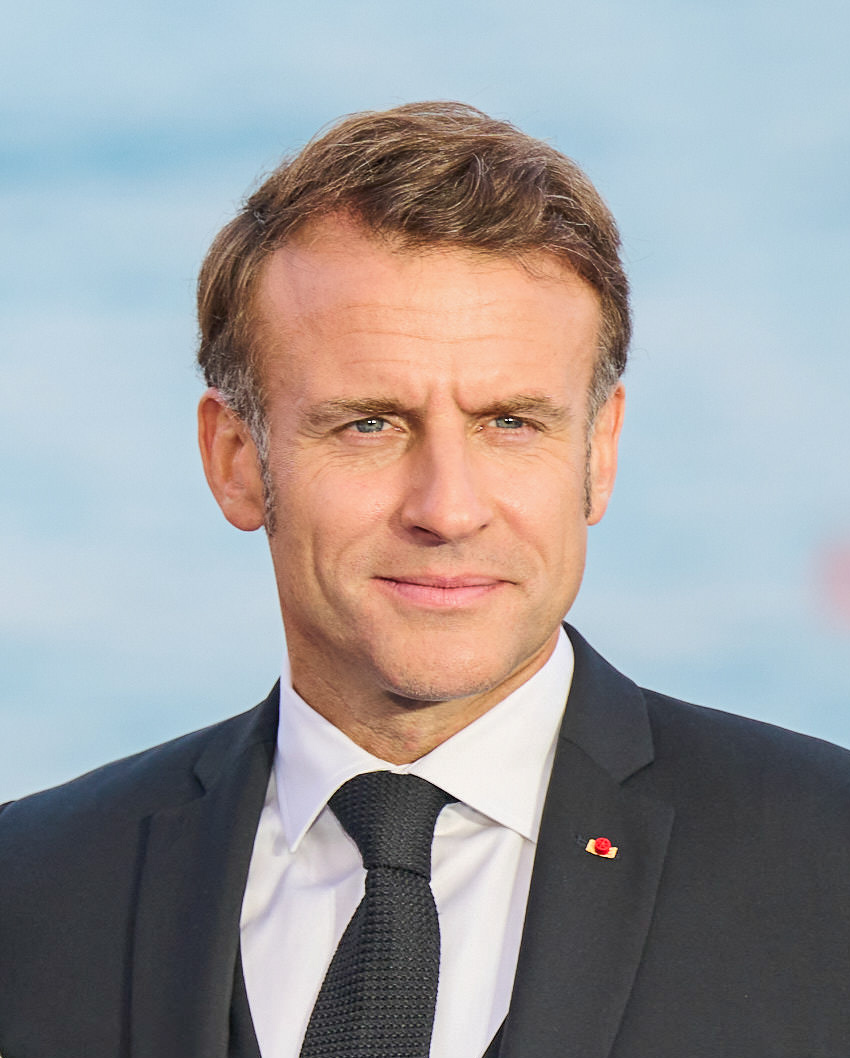
What Macron said in Doha, in his own words
Macron’s remarks, reported by CNN and by AFP and carried by Reuters, were unusually blunt for a head of state talking about allies, and they are best read whole rather than in fragments. “There has been foreign manipulation of information, which has led to unacceptable and stupid comments from many people, including foreign leaders,” he said.
He rejected the central claim that has run through the foreign commentary this week. “We’ve had people claiming that we were invaded by hordes of migrants and Islamists, which is completely false,” he said. And he framed the criticism as a question of loyalty to France itself: “All the people who speak ill of our country right now are people who don’t love our country. So these people bother me. I love my country.”
He placed the comments in an electoral context, without naming the elections. “There are people who campaign at France’s expense — leaders who are in campaign mode, whether here in the region or on the other side of the Atlantic,” he said. And he drew a careful distinction that matters for the factual dispute underneath the rhetoric: he said there was “no visible foreign interference in the events that took place” on France’s streets — the interference he alleged was in the information around the events. “We saw images generated by AI which showed scenes that never took place in France,” he said, adding that leaders had sometimes credulously taken up what was in artificial intelligence.
Macron did not name Trump or Netanyahu in the remarks. When reporters asked whether Trump was among the leaders he meant, he confirmed that he was. That confirmation is what turns a general complaint about foreign commentary into a direct, if still unnamed-in-the-speech, rebuke of the president of the United States and, by the same logic, of the other leaders who spoke in similar terms this week.
What Trump, Vance and Netanyahu said first
The sequence matters, because Macron was answering a specific week of statements. On Monday, October 19, Trump posted on Truth Social: “The migrants have taken over France. They must CLOSE THE BORDERS, FAST!” A longer post the same day claimed France is being “conquered, looted and burned to the ground by migrants, jihadists and communists who hate Christianity” and “Western civilization itself.” Those are Trump’s words and Trump’s claims, attributed here as his; they are not established facts, and the next section sets out what French authorities and fact-checkers have and have not found.
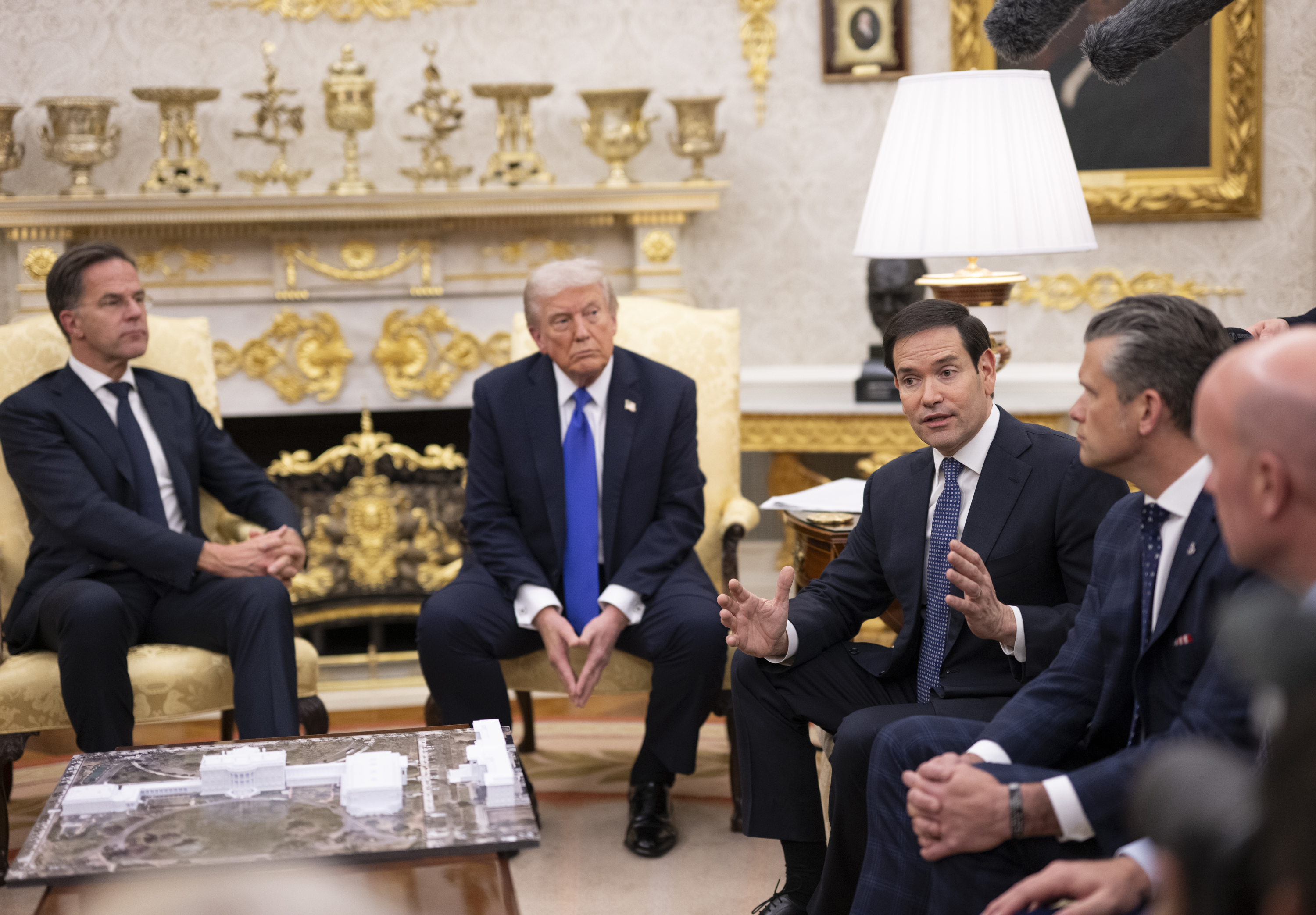
Trump repeated the argument in person. At the White House on Monday he said: “What’s happening in France has to do with immigration — not schools, not anything — it’s immigration. I told President Macron, ‘Close up your borders!’” He also said: “Paris is going to be a Muslim city very soon.” At a rally in Wichita, Kansas, on Monday night, he repeated the France claims and tied them explicitly to the November 3 U.S. midterm elections — presenting France, in his telling, as a warning of what immigration policy produces, and as an argument in an American campaign.
He was not alone. Vice President JD Vance posted on X on Monday: “Western liberals imported the third world into France and other countries in the name of diversity and compassion.” On Tuesday, Israeli Prime Minister Benjamin Netanyahu described France as hit by an “invasion of extremist Islam.” It was against that accumulation — a U.S. president, a U.S. vice president and an Israeli prime minister, in the space of about 48 hours — that Macron used the words “unacceptable and stupid” on Wednesday.
What is actually known about the protests
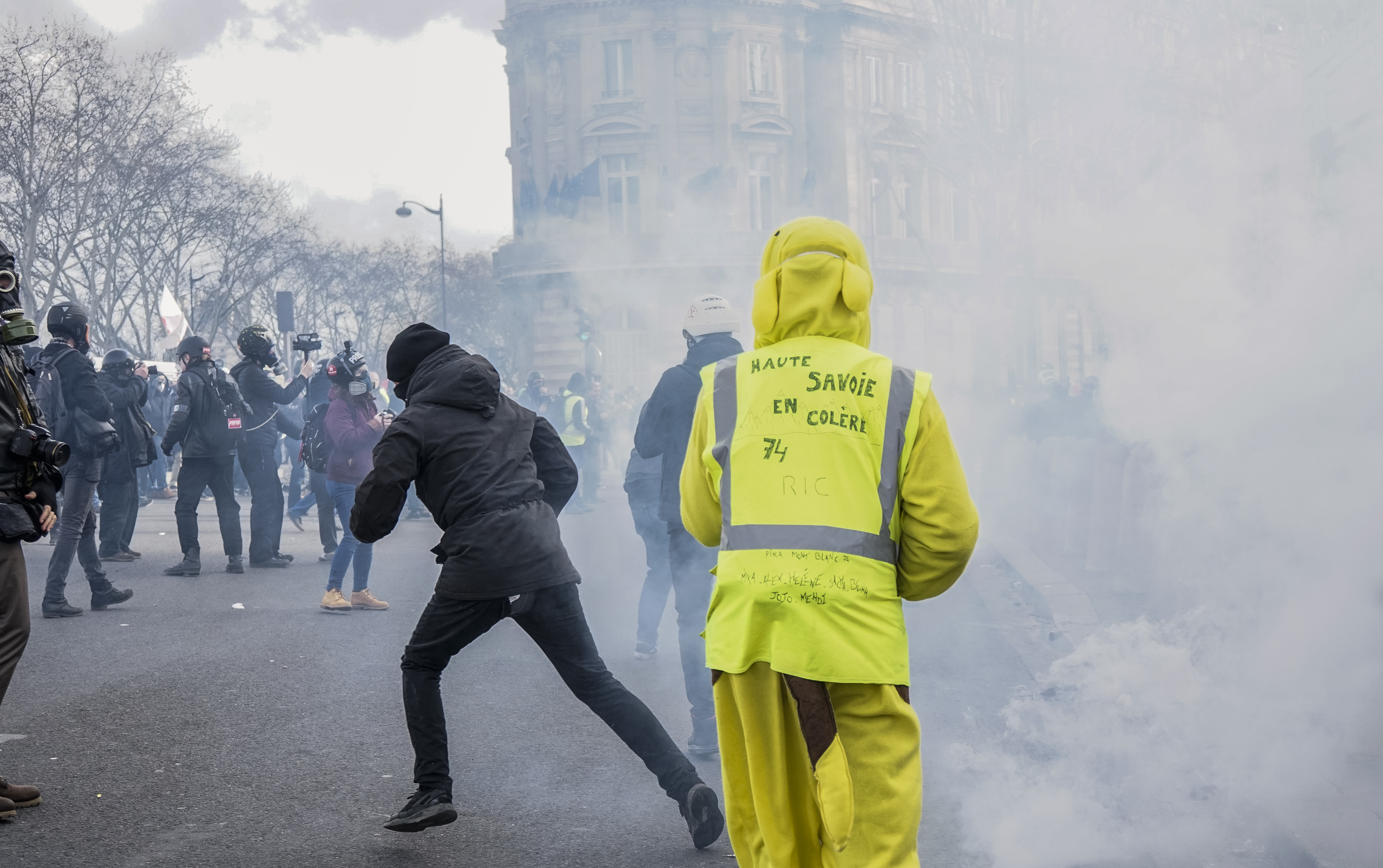
Strip the rhetoric from both sides away and the documented timeline is narrower, and different in emphasis from either camp’s framing. The protests began in September, led by students, over education funding. They grew into a wider movement about the cost of living and fuel prices. The weekend of October 17 brought serious rioting in places, more than 2,000 arrests across that weekend, and localized curfews. Macron, in an address from the Élysée on October 18, blamed ultra-left agitators and looters for the worst of the violence and pointed to fuel prices driven up by the war with Iran as a driver of the underlying anger. The government has promised a “massive” police presence for new demonstrations called for Saturday, October 24, with Yellow Vests coordination groups calling supporters back onto the streets.
On the specific claim at the centre of this week’s clash — that migrants are driving the unrest — the record, as reported, is this: French authorities have not linked immigrants to the rioting, and AP’s FACT FOCUS assessment described Trump’s claim that migrants have taken over France as unsubstantiated. That does not settle every argument about French immigration policy, which is a long-running domestic debate with strong views on several sides. It does mean the specific causal claim made this week — immigration, “not schools, not anything,” is what the protests are about — is contradicted by the protest movement’s own stated origins in education funding and living costs, and is not supported by any link French authorities have announced between immigrants and the rioting. Signal Post News states both framings because both were made by heads of government; it does not state the migrant claim as fact, because no evidence for it has been produced in the reporting above.
Why this matters
First, the midterms angle, because Macron named it himself. His phrase “leaders who are in campaign mode” “on the other side of the Atlantic” was an accusation that France is being used as a campaign prop in the run-up to the November 3 U.S. midterms — and Trump’s Wichita rally, where he tied the France claims directly to the midterms, gives that accusation a concrete reference point. Whether voters hear France as a warning about immigration, as Trump framed it, or hear a president describing an ally in civilizational terms two weeks before an election, as Macron’s framing invites, is now part of the closing argument of the American campaign. A foreign president has, in effect, entered the fact-check of a U.S. campaign claim — something allies almost never do in public, precisely because it can be turned into further campaign material.
Second, the AI angle, which may outlast this week’s insults. Macron said images generated by AI showed scenes that never took place in France, and that foreign leaders had “credulously” repeated what artificial intelligence produced. If a head of government is right that synthetic images of riots are reaching other heads of government and being repeated as fact, the problem is bigger than one protest movement: it is a pipeline in which fabricated pictures of an ally’s streets can shape real statements by real presidents within days. Macron’s distinction is worth keeping precise — he alleged manipulation of information about the events, and said he saw no visible foreign interference in the events themselves. The streets, on his account, are French. The pictures, in part, are not real.
Third, transatlantic relations. France and the United States have argued in public before — over Iraq in 2003, over submarines in 2021, over trade and defence spending repeatedly since 2017 — and Macron and Trump in particular have cycled between conspicuous warmth and open friction across two Trump presidencies. But a French president calling an American president’s comments “stupid,” on the record, to reporters, and then confirming the target when asked, is a step beyond the usual coded language of communiqués. It tells European governments something about how far Macron is willing to go in an election season in Washington, and it tells Washington that at least one major ally will answer campaign rhetoric about its internal unrest as a head of state, not as a bystander. Netanyahu’s parallel description of an “invasion of extremist Islam” widens the same point beyond the Atlantic: France is pushing back against a framing, not only against one man.
The background: 2018, and a long Macron–Trump history
The Yellow Vests name carries its own history, and it explains why this autumn’s movement alarms Paris even when its numbers are smaller than the headlines suggest. The original gilets jaunes erupted in November 2018 over a fuel-tax rise, grew into months of Saturday protests and periodic rioting in Paris and provincial cities, and forced Macron into concessions and a national debate tour in the first great crisis of his presidency. The 2026 movement did not start as a Yellow Vests movement — it started with students and education funding in September, then broadened into cost-of-living and fuel anger as prices rose with the Iran war. That Yellow Vests coordination groups are now calling the Saturday demonstrations is exactly why the government is promising a massive police presence: the brand, the tactics and the Saturday rhythm are all from 2018, even if this year’s spark was different.
The personal history matters too. Macron hosted Trump for Bastille Day in 2017 and was hosted for a state visit in Washington in 2018; the two men have also clashed publicly over NATO, climate, digital taxes and Iran across the years since. That history is why Wednesday’s language will be read in both capitals as deliberate rather than accidental: Macron knows precisely how a confirmed, on-the-record “stupid” lands in Washington, because few foreign leaders know Trump’s media reflexes better. It is also why a quiet week should not be expected: Trump has rarely left a foreign leader’s public criticism unanswered, and he is, as Macron noted, in campaign mode with a rally schedule and a Truth Social account that has already returned to France three times in three days.
Who gains, who loses
For Macron, the gain is domestic as much as foreign. A president whose October 18 address blamed agitators and fuel prices has struggled to own the story of the protests at home; answering foreign leaders lets him stand as the defender of France against outside caricature — “I love my country” is a line aimed at French ears at least as much as American ones — and shifts at least one news cycle from curfews and arrests to sovereignty and fake images. The risk is symmetrical: if Saturday’s demonstrations turn violent on a large scale, every foreign microphone he criticised will replay his “completely false” against the pictures, real ones this time.
For Trump, France costs little at home and may pay: the claim was already doing campaign work in Wichita before Macron answered, and a French president’s rebuke can be folded into the same argument about foreign elites. The cost is diplomatic and may only become visible later, in the cooperation Washington needs from Paris on Iran, trade and security files that do not trend on social media. For Vance and Netanyahu, the week costs less still — neither was named in Doha either, and only Trump was confirmed. The clearest losers, on the record as it stands, are accuracy and the protesters’ own stated cause: a movement that began over education funding and the price of fuel has spent a week being described, abroad, as something French authorities say it is not, and at home being answered, in part, as a public-order problem rather than a funding one.
What happens next
The immediate test is Saturday, October 24, when the newly called demonstrations meet the promised massive police presence; the scale and conduct of that day will do more to settle the argument about what this movement is than another week of statements. The second test is whether Trump answers Macron directly — on Truth Social, at a rally, or at the White House — and whether he repeats the migrant claim after the AP assessment and the French authorities’ position have been so widely reported. The third is November 3: if France remains a midterm talking point, Macron’s “campaign at France’s expense” charge becomes part of the result’s story either way. And underneath all three sits the question Macron raised about the pictures themselves: which of the images that moved presidents this week were real, who made the ones that were not, and whether anyone who repeated them corrects the record. Signal Post News will continue its live coverage of the protests and will update this story as responses arrive.
Sources
CNN, reporting on President Emmanuel Macron’s remarks to reporters in Doha, Qatar, October 21, 2026 (quotes: “unacceptable and stupid”; “invaded by hordes of migrants and Islamists, which is completely false”; “no visible foreign interference”; AI-generated images). AFP, via Le Pays de France, October 21, 2026, and The Times, October 21, 2026, reporting the same Doha remarks. Reuters, video description and reporting, October 21, 2026, including Macron confirming, when asked, that President Trump was among the leaders he meant. Associated Press, FACT FOCUS assessment, October 2026: Trump’s claim that migrants have taken over France is unsubstantiated; French authorities have not linked immigrants to the rioting; the protests began in September over education funding and grew over the cost of living. President Donald Trump, Truth Social posts, October 19, 2026, and remarks at the White House, October 19, 2026, and at a rally in Wichita, Kansas, October 19, 2026 (all quoted verbatim above and attributed to him). Vice President JD Vance, post on X, October 19, 2026. Prime Minister Benjamin Netanyahu, remarks, October 20, 2026, as reported. France 24 and Le Monde, coverage of the September–October 2026 protest movement, the October 17 weekend arrests and curfews, and the planned October 24 demonstrations. Related Signal Post News coverage: France protests live coverage and Trump’s earlier France posts. All claims by political leaders are attributed to those leaders in the text; none is stated as established fact by Signal Post News.