France Yellow Vests march: the France Yellow Vests march planned for Saturday, October 24, was formally filed with the Paris prefecture on Wednesday, setting up a second weekend of confrontation four days after riots swept French cities.
Europe / France Unrest & Markets — a Bastille-to-Opéra route, a president promising order from Qatar, and a bond market that just priced France at 5 percent for the first time since 2002
A filing, a route, and a name: “Act II”
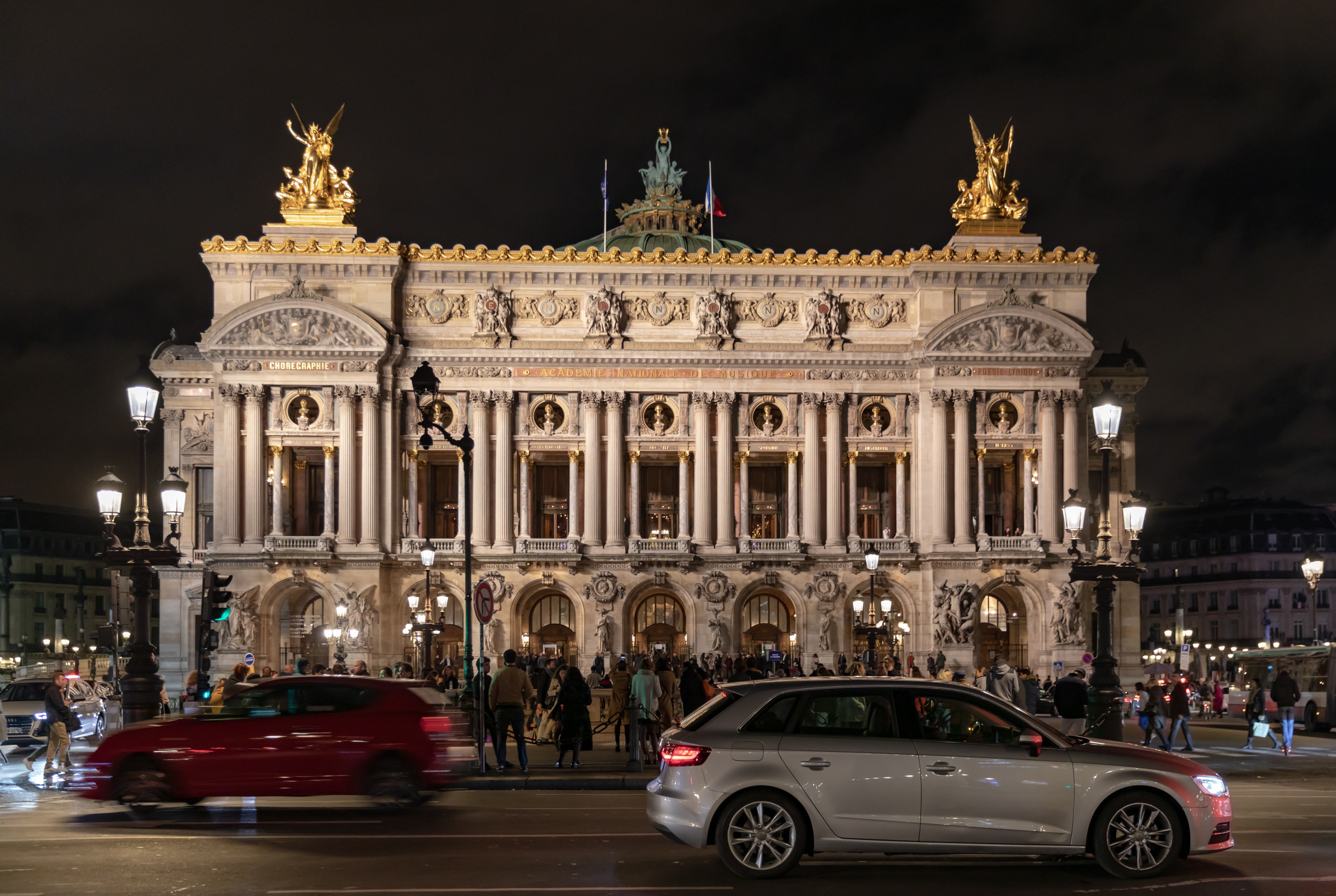
The paperwork is what changed on Wednesday. A representative of the October 17 coordination told France 2 that a declaration had been formally submitted to the prefecture for a route running from Place de la Bastille to Opéra. “I have just sent, with a few colleagues, a declaration to the prefecture for a route that starts at Bastille and goes to Opéra,” said Benjamin Ball, who publishes a site mapping the actions planned for Saturday — which organisers are calling the movement’s “Act II,” in the Yellow Vests’ own numbering tradition from 2018–19. Ball added that the Paris branch of the CGT union and the student union have also announced they will gather at Bastille. Reuters reported that student groups have separately called protests for the same day to press demands for greater investment in education, and that the Yellow Vest activists are seeking to revive their 2018 campaign against rising living costs and declining public services.
The government’s answer came on two tracks at once: negotiation and force. Lecornu was due to meet union leaders on Wednesday, seeking ways to defuse one of the worst crises France has faced in recent years and to avoid a repeat of the violence that swept Paris, Marseille, Lyon and Limoges on October 17, when overwhelmed police took hours to contain rioting and looting, Reuters reported. At the same time, the prime minister promised that the police deployment for October 24 would be “massive,” localised curfews were imposed for another night in parts of the country, and government ministers promised a vastly reinforced security operation after acknowledging shortcomings in their initial response — with troops expected to be deployed alongside additional police. Macron said he would meet intelligence officials, Lecornu and other ministers on Thursday to obtain a detailed account of the October 17 unrest. Even the football calendar bent: Toulouse’s home Ligue 1 fixture against Troyes was postponed from Saturday to Sunday at the request of the Haute-Garonne prefecture, the league said.
The union meeting itself produced an early measure of how far apart the two sides remain. Sophie Binet, general secretary of the CGT, said she had not seen Lecornu “for thirteen months” and urged him to “come out of his bunker” and heed what she called an enormous social mobilisation, arguing that workers and young people have been “humiliated for ten years.” She rejected the government’s suggestion that the hard-left France Unbowed party bears responsibility for the unrest. Student representatives, notably, were not invited to Wednesday’s meeting, even though the movement began in September as a revolt of high-school students over absent teachers and dilapidated buildings — the constituency whose demands started all of this was not in the room where securing Saturday’s processions was discussed.
The argument about last Saturday is already a second front
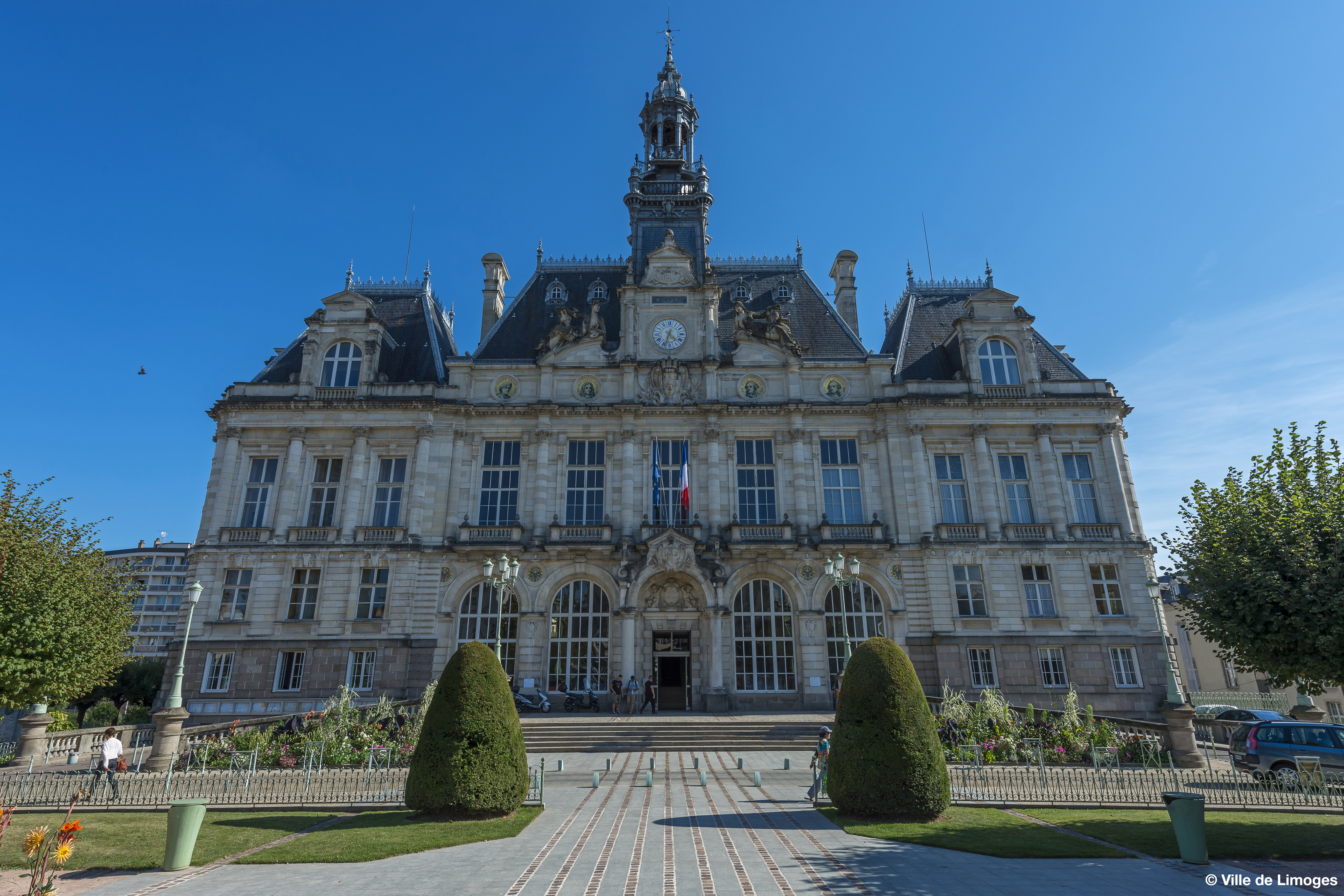
Before Saturday’s march has taken a single step, Wednesday was consumed by a fight over the meaning of the previous one. Former president François Hollande, now a deputy, told France Inter there had been “very serious failures” in maintaining public order and “a lack of experience,” arguing the government underestimated the anger building over several weeks and deployed insufficient police. “We are dealing with a weak government, an absent president of the Republic and ministers who do not necessarily have experience,” he said. Édouard Philippe, the former prime minister now running for president with Horizons, told France 2 he welcomed the measures to restore order — “it is time” — questioned the timing of Macron’s Gulf trip, and backed “absolute firmness” in the penal response to vandals alongside more powers for municipal police. Éric Ciotti, leader of the UDR and mayor of Nice, accused the government of “completely incoherent” management of public order and claimed that less than half of the possible police staffing had been mobilised — a claim the government has not accepted — and he characterised the arson attack on Limoges town hall, in his words, as “an act of terrorism.”
Ministers, for their part, worked the business front. Economy Minister Roland Lescure called the weekend’s events “extremely serious,” said “France was attacked from within by anarchists and thugs,” and, responding to warnings from the head of insurer Axa that repeated unrest would make it harder to compensate victims, insisted the state would put an “extremely firm” mechanism in place while reminding insurers that their role is to honour their contracts. Serge Papin, the minister for small business and purchasing power, confirmed a support fund for traders worth “several million euros,” reserved for companies with fewer than 50 employees and available immediately rather than waiting for the 2027 budget. Carrefour chief executive Alexandre Bompard told France Inter he had seen “entrepreneurs with fear in their eyes” after looting at franchised stores, rejected any link between the looting and purchasing power — “what was stolen in our stores this weekend was not food, it was strong alcohol, for trafficking” — and warned that “self-defense reflexes” were emerging among shopkeepers. The cities minister, Vincent Jeanbrun, defended on TF1 a government circular aimed at counting money improperly earned by convicted rioters as income, which would strip them of social minima and require repayment of overpayments; asked whether that could penalise an entire family for one person’s actions, he answered that “the family is a recognised entity in France, there is a solidarity.” And in Marseille, the newly elected senator Renaud Muselier claimed between “15,000 and 30,000 looters” had descended on the city on Saturday — a figure the city’s Socialist mayor, Benoît Payan, contested.
Each of these claims is doing work. The opposition is building a competence case: that a government which lost control of its cities once cannot be trusted with a second Saturday. The government is building a category case: that October 17 was not protest but predation — anarchists, thugs, traffickers — and therefore that Saturday’s policing is not the management of dissent but the prevention of crime. The organisers’ counter-claim is the oldest one in this movement’s book: that the march is declared, routed and lawful, that its grievances are prices and public services, and that the people who looted are not the people who filed the paperwork. All three cases will be judged, fairly or not, by what happens between Bastille and Opéra.
Why this matters
A filed declaration is a small administrative act, and it is the most consequential French news of the week, for three reasons. The first is convergence. October 17 drew 550,000 people nationwide by the Interior Ministry’s count — 800,000 by the organisers’ — because constituencies that rarely march together did: lycée students who started the movement in September, trade unions, farmers, pensioners and Yellow Vest veterans. Wednesday’s filing shows the convergence holding for a second weekend and acquiring structure: a named route, a named day, union branches gathering at the same starting point, and a student movement calling its own protests the same day. Movements that survive their first weekend and organise their second are the ones governments have to negotiate with, not merely police.
The second reason is the credibility trap the government has built for itself. Having acknowledged that it underestimated October 17 — Interior Minister Laurent Nuñez has admitted authorities lost control in some cities — and having promised a “massive” deployment, extended curfews and presidential firmness, the government has converted Saturday into a pass-fail test of the state’s basic competence. If the march passes peacefully, ministers will claim the firmness worked. If it degenerates, the failure will be worse than the first time precisely because it was promised not to happen. Macron delivering his vow from Qatar, where he is seeking energy deals as France grapples with rising fuel costs, hands the opposition its framing on a plate: Philippe’s “not the most opportune” trip is the polite version of Hollande’s “absent president.”
The third reason is money, and it is the one that will outlast the weekend. Every week of unrest raises the price France pays to borrow, and the borrowing price is now the crisis’s most honest opinion poll. A government that cannot calm its streets cannot consolidate its finances; a government that buys calm with spending it does not have makes the finances worse. That is the pincer ING’s Charlotte de Montpellier described to Barron’s: “France has neither the fiscal room to buy social peace nor the political room to impose adjustment easily.” Saturday’s march will be over by Sunday. The 5 percent yield will still be there on Monday morning.
What the numbers say
Start with the street. The Interior Ministry put October 17 turnout at 550,000 nationwide, including 110,000 in Paris; organisers put it at about 800,000. The arrest tallies have climbed as counting caught up with events: more than 1,800 arrests announced on Sunday, above 2,000 in later official updates, and Justice Minister Gérald Darmanin said more than 2,500 people had been taken into police custody by Monday evening. More than 500 police officers, gendarmes and firefighters were injured in the earlier tally. One demonstrator died after collapsing on Boulevard Magenta in Paris — police said cardiorespiratory arrest — and Le Parisien reported a 17-year-old lost a hand to a police grenade in Saint-Étienne. Those are the baselines against which Saturday will be measured, and both sides know it.
Now the market. France’s 10-year OAT yield rose more than 20 basis points this week — by far the most among the world’s largest economies, which averaged 5.7 basis points, according to LSEG data reported by Reuters — and touched 5 percent on Wednesday for the first time since July 2002, with Barron’s recording a print of 5.023 percent, up about 10 basis points on the day and more than 170 basis points since late February. The premium investors demand to hold French rather than German debt sat near 150–160 basis points, a 15-year high last seen in the eurozone debt crisis. The 30-year French yield rose to 5.49 percent even as other European yields fell. Behind the yields sit the stocks: French public debt near 120 percent of GDP, and a deficit Barron’s reported as likely to top 5.4 percent of GDP this year and 6.5 percent next without sweeping changes. The costs are already landing on named companies: Carrefour, Europe’s largest food retailer, cut its targets for operating profit margin growth on Tuesday because of the riots. Oil rebounding above $110 a barrel on Wednesday added to the pressure. Readers can follow the market side of this story on our live markets tracker. Track it live: signalpostnews.com/tracker/markets.
What happens next
Thursday brings the government’s internal reckoning: Macron’s meeting with intelligence officials, Lecornu and ministers for a detailed account of how October 17 was lost. What leaks from that meeting — blame assigned to prefects, to intelligence, to staffing — will preview Saturday’s command decisions. Friday brings the operational picture: the prefecture’s formal response to the filed route, any bans on parallel gatherings, and the final curfew map. Saturday itself has three broad scenarios. In the first, a large, declared, heavily policed march passes from Bastille to Opéra without major incident, and the crisis downshifts into politics: budget negotiations, union demands, and an argument about concessions. In the second, the march holds but its edges burn — the October 17 pattern, in which the main Paris procession passed while violence erupted on the sidelines and in other cities — and the argument about who is responsible consumes another week. In the third, the weekend degenerates outright, the 5 percent yield becomes 5.5, and the question stops being Lecornu’s competence and becomes the government’s survival into next year’s presidential election, in which the far-right National Rally currently leads in the polls.
Signal Post News will follow Saturday’s march and the market reaction. Related coverage: 550,000 march nationwide as town halls burn; curfews imposed after the weekend riots; and French bonds tumble as riots rattle investors.
Sources
Reuters, “French government faces fresh test as Yellow Vests mobilise,” October 21, 2026 — the Saturday filing, Lecornu’s union meeting, the 5 percent yield and its July 2002 comparison, Macron’s Thursday intelligence meeting, the reinforced security operation and expected troop deployment. Reuters, “France’s Macron vows no repeat of riots as Yellow Vests mobilise,” October 21, 2026 — Macron’s statement in Qatar that those seeking disorder “will be prevented from doing so.” Reuters markets report via syndication, “Euro zone bond yields rise as French borrowing costs hit 24-year high,” October 21, 2026 — LSEG data (French yields up more than 20 basis points on the week against a 5.7-point average), the 150–160 basis point spread over Bunds, Carrefour’s target cut, oil above $110, ING’s Benjamin Schroeder. Barron’s, “France Debt Crisis Deepens As 10-year Bonds Top 5% for First Time Since 2002,” October 21, 2026 — the 5.023 percent print, 170 basis points since late February, debt near 120 percent of GDP, deficit projections, ING’s Charlotte de Montpellier. The Times, “French borrowing costs at 24-year high as crisis deepens,” October 21, 2026 — the 30-year yield at 5.49 percent and comparative UK and German yields. France 2 and French broadcast reporting as carried by Asal Media, October 21, 2026 — Benjamin Ball and the Bastille-to-Opéra declaration, the CGT Paris branch and student union at Bastille, Sophie Binet, François Hollande, Édouard Philippe, Éric Ciotti, Roland Lescure, Serge Papin, Alexandre Bompard and Vincent Jeanbrun. CBS News reporting via syndication, October 21, 2026 — extended curfews, Nuñez’s admission, Darmanin’s custody figure above 2,500. Reuters, “Toulouse v Troyes Ligue 1 game postponed amid unrest in France,” October 21, 2026 — the prefecture-requested postponement to Sunday, October 25.