France student protests 2026
UPDATE — October 3, 2026
France student protests October 2026: the October 1 turning point
France student protests October 2026 entered a more dangerous phase on Thursday, October 1. The Education Ministry counted student actions at 1,027 schools nationwide, including 222 active blockades. The Interior Ministry recorded 1,949 arrests that day, mostly for alleged offenses against public officials, violence and unlawful assembly, while 305 police officers, gendarmes and firefighters were injured.
Education Minister Édouard Geffray said 65 education workers — including 40 headteachers — and 170 students had been injured since the movement began. His description of a protest “taken hostage by ultra-violent groups” marked the government's pivot: grievances that started inside schools were now being answered as a national public-order emergency.
Riot police and a “firm response” from Lecornu's government
Prime Minister Sébastien Lecornu convened an emergency crisis meeting as ministers recast the unrest as “urban violence.” Interior Minister Laurent Nuñez ordered the “necessary mobile units” — riot police and mobile gendarmes — into the field to “restore republican order.” Justice Minister Gérald Darmanin separately instructed chief prosecutors to deliver a “firm response” and urged them to seek parental civil liability so families would pay for damage caused by their children.
The riot-police deployment is a defining test for Lecornu's young government. It may suppress arson and assaults, but it also raises the political cost of every confrontation involving minors. The administration now has to separate peaceful pupils from violent outsiders while demonstrating that force is not a substitute for an education policy. That tension sits inside the broader fight over Lecornu's €54 billion budget strategy and the proposed France 2027 budget education cuts.
October 2: school closures, 1,747 arrests and new flashpoints
Prefects ordered roughly 400 lycées closed on Friday, October 2, with distance learning used in many of them. By midday, the Education Ministry said 564 establishments had been disrupted. The Interior Ministry reported 1,747 arrests on Friday, taking the cumulative total above 5,000 since Monday; roughly 85 percent of those arrested were minors. About 30 university campuses were also blocked, showing that the lycée movement had begun to jump into higher education.
The geography of the violence widened. Fires damaged the entrances of two Paris high schools, and part of the entrance hall at Nelson-Mandela high school in Nantes burned. Police used tear gas during clashes in Brest and batons and riot shields in Aubervilliers. In La Ciotat, a teacher was sprayed with petrol and assaulted. In Belfort, a police officer was surrounded, knocked down and kicked. Paris police prefect Patrice Faure banned gatherings around 13 named closed lycées.
The confrontations have not erased the testimony that set the movement in motion. Associated Press interviews described overloaded timetables, long days, staff who did not listen and anxiety around university applications. The protest began on September 21 at Lycée Saint-Exupéry in Créteil, where pupils raised overcrowded classes, teacher shortages, dilapidated buildings, staff absences, long hours and overheated classrooms. The policy failure and the criminal violence are both real; treating either as the whole story obscures the other.
The LFI blame game reshapes the politics
A government account of an intelligence briefing pointed to hard-left La France Insoumise and its “ultra-left proxies” as instigators. LFI coordinator Manuel Bompard accused the government of “sinking into conspiracy thinking,” while LFI lawmaker Louis Boyard denied the charge. The accusation shifts the dispute from school conditions to political legitimacy: Lecornu can use it to consolidate an order-first coalition, while LFI can cast itself as the defender of young protesters. It also gives the National Rally, newly established as a Senate group, an opening to demand still tougher policing.
Who gains and who loses. The government gains room to isolate violent actors, but risks losing credibility with families if every blockade is treated as insurrection. LFI gains attention and a channel into youth anger, but any link between its rhetoric and disorder will be used against it. Students with concrete demands lose most when arson and assaults dominate the images; teachers, headteachers and families bear the immediate cost of closures and danger.
Tuesday, October 6: three scenarios for the next national test
After meeting Geffray, SNES-FSU leader Sophie Vénétitay said there were still “no guarantees” and called a teachers' strike for Tuesday, October 6, in support of lycée demands. Student unions separately called another nationwide mobilization for Tuesday.
Scenario one — a negotiated de-escalation. Concrete commitments on substitute teachers, staffing and urgent building repairs give unions a reason to keep demonstrations peaceful and reduce blockades.
Scenario two — a split movement. Union-led marches remain orderly while smaller groups keep attacking schools and police. The government then faces the difficult task of protecting lawful protest without allowing violent actors to dictate the response.
Scenario three — a wider confrontation. Lycée pupils, university students and striking teachers converge, arrests rise again and the unrest becomes inseparable from the 2027 budget and election campaign. That outcome would turn a school-resources revolt into an early referendum on Lecornu's authority.
Friday marked another violent escalation. "Students fought running battles with police and several schools were ablaze Friday as violence gripped France," CNN reported on October 2. More than 400 schools remained closed on Friday. In Strasbourg, youths built barricades in tear-gas-clouded streets, while protests in Lyon and other cities stayed more peaceful. In Paris, fires damaged the entrances of the Leonard de Vinci and Gaston-Bachelard high schools, according to France24/AFP via The Insight International.
Arrest counts now tell two different stories — report both with attribution, and do not merge them. Justice Minister Gérald Darmanin told RTL radio on Friday that about 2,000 people had been arrested since the protests began, roughly two-thirds placed in police custody and about 90 percent of them minors (Reuters; The Insight International). Separately, Interior Minister Laurent Nuñez told TF1 on Friday that police had arrested 5,000 people, most of them teenagers, since Monday (AFP via Devdiscourse). These describe different measures — a cumulative justice-ministry count and a since-Monday interior-ministry count — and should not be treated as interchangeable, exactly as this page's October 2 update cautioned for the earlier tallies.
Darmanin asked prosecutors to hold parents civilly liable for damage caused by their children, and said he fears the unrest will carry on through the weekend: "We've moved from student protests to a question of public order" (CNN; Reuters; The Insight International). That framing — from a student protest to a public-order question — is the government's line going into the weekend, and it hardens the stakes for any negotiation.
The draft 2027 budget presented on Thursday gives education a below-inflation 1.7 percent increase to €65.53 billion ($73.77 billion), excluding teacher pensions (Reuters via Devdiscourse). This is the precise "budget detonator" scenario this article flagged: with no visible education concession in the budget, students keep a fresh grievance — and the government has handed the movement a new target just as it demands order.
What happens next: nationwide union-led protests in support of the high schoolers are planned for Tuesday, and trade unions have called a teachers' strike for Tuesday, a week after public-sector workers walked out (CNN; Devdiscourse). After meeting Education Minister Édouard Geffray on Friday, student representatives called for non-violent protests to continue: "We disassociate ourselves from the urban violence," said Nathanaël Combary of Renouveau Lycéen (CNN). Authorities banned gatherings around closed schools in several areas, with little effect (CNN). The unrest has also crossed the border: protests and damage were reported at a handful of schools in Liège, Belgium (AFP).
Sources: CNN; Reuters; Le Monde; AFP (via Devdiscourse); France24/AFP via The Insight International.
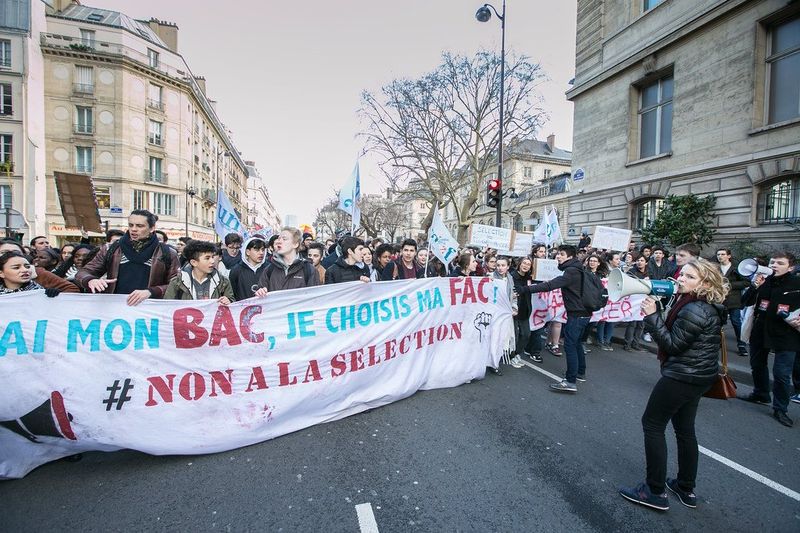
France student protests 2026 began as a week of anger over crumbling classrooms and teacher shortages, then exploded into the country's worst school unrest in years on Tuesday, as thousands of lycée pupils clashed with police across the country. By Wednesday morning, 440 people — most of them minors — had been detained, 76 students and staff were reported injured since the demonstrations began, and Interior Minister Laurent Nuñez was telling BFMTV about protesters hurling hydrochloric acid at officers.
UPDATE — October 2, 2026
October 1 became the movement's decisive turning point. France's Interior Ministry reported 1,949 arrests in a single day. Justice Minister Gérald Darmanin said on Friday that about 2,000 people had been arrested since the protests began and that roughly two-thirds were placed in police custody; his cumulative figure and the ministry's one-day count describe different measures and should not be treated as interchangeable.
The Education Ministry said more than 1,020 lycées — about one in four nationwide — were affected by strikes or protests on Thursday, including 222 blockades. Student groups reported action at around 30 universities, while the government said roughly 400 schools and other establishments would be shut on Friday, October 2, where damage or blockades made normal teaching unsafe.
The human cost rose sharply. The Interior Ministry counted 305 police and gendarmes injured on Thursday; Education Ministry figures put injuries since the movement began at 170 pupils and 65 staff, including about 40 headteachers. At Victor Hugo Lycée in Marseille, the head was doused with petrol while trying to stop arsonists; the head of Fernand Dégrugillier Lycée in Auchel was hospitalized after a firework struck his ear; the head of Maurice Genevoix Lycée near Orléans was punched; fire damaged the entrance hall at Nelson Mandela Lycée in Nantes; and a teacher in Angers was reported seriously hurt after being struck with an iron bar.
After an emergency ministerial meeting, Prime Minister Sébastien Lecornu's office said the movement had shifted “toward urban violence.” Education Minister Édouard Geffray said it had been “taken hostage by ultra-violent groups.” Darmanin urged prosecutors to pursue parents' civil liability for damage caused by their children and said, “We have gone from high-school student demonstrations to a public-order disturbance.” Interior Minister Laurent Nuñez urged parents not to send their children to protests.
The political argument remains contested. A source close to Lecornu said intelligence agencies told the crisis meeting that hard-left politicians, including members of La France Insoumise, had initiated the movement; LFI lawmaker Louis Boyard denied that claim. Unions also diverged: SNPDEN-UNSA school-heads chief Bruno Bobkiewicz said the movement seemed “out of control,” while SNES-FSU teachers' union chief Sophie Vénétitay called for de-escalation and for the teenagers' demands to be heard.
The verified violence does not erase the grievances that began the protests: shortages of teachers and other staff, overcrowded classes, deteriorating buildings and classrooms made difficult by heatwave conditions. Nor do those grievances excuse assaults, arson or property damage. The October 1 numbers change the political stakes because Lecornu's government must now defend public order while showing that its 2027 budget can address strained schools; a response framed only around policing risks deepening the funding dispute, while concessions made under pressure could intensify the wider budget fight.
Sources: Le Monde; The Times; BusinessWorld (Reuters); Aju Press.
October 1 update: attacks on schools and emergency crews mark a dangerous turn
Thursday brought the most violent escalation since the protests began last week. Attackers doused a headteacher in petrol and started fires in at least two schools as demonstrations over staff shortages and dilapidated buildings spread across France. In Marseille, hundreds of young people surrounded a fire engine responding to a blaze at Saint-Exupéry high school, forced the firefighters to abandon it and then set the vehicle alight. At Victor Hugo high school in the same city, a headteacher was doused in petrol and injured, according to the prosecutor's office. Fire crews also reported a school blaze in the western city of Nantes.
The first direct attack on a headteacher and the first torching of an emergency vehicle change the character of the unrest. What began with blockades, barricades and clashes at school gates has crossed into assaults on people and state responders. The tactics are also travelling: reports of disruption or violence now stretch through Lille, Le Havre, Manosque, Nantes and Pantin, making this less a single-city breakdown than a fast-moving national security and education crisis.
Prime Minister Sébastien Lecornu's office convened an inter-ministerial crisis meeting on Thursday afternoon. Dozens have been injured and hundreds arrested, most of them teenagers. In Saint-Denis, a crowd of young people faced a police line while one student held a sign asking, “Can we explain ourselves without being teargassed?” Students accuse police of heavy-handed tactics, including the use of tear gas. The government says the failures inside France's high schools must be acknowledged and addressed, while insisting that violence cannot be tolerated.
Interior Minister Laurent Nuñez said troublemakers were moving from school to school to incite violence. Education Minister Édouard Geffray urged schools to switch to remote classes when protesters blocked their premises. That response may keep lessons technically running, but it also risks shifting the burden onto families least equipped for online schooling and onto pupils already protesting unequal resources.
Why this matters: the budget has raised the stakes
The escalation landed on the day the government announced deeply unpopular spending cuts in its 2027 budget. That timing matters. It turns a dispute over missing staff, damaged buildings and class conditions into a referendum on national priorities, while giving both the government and its opponents an incentive to frame the violence politically. Speaking in Madrid during a state visit, President Emmanuel Macron said no fear could justify violence and accused some officials of going in front of lycées “to excite the pupils.” Lecornu accused La France insoumise of urging the movement to widen. The blame game may rally each camp, but it does not repair a classroom or restore confidence between teenagers and police.
The immediate losers if schools close are pupils who need reliable teaching, parents who cannot absorb sudden days at home and staff caught between blockades and government pressure. The student union wants major new funding and has called a further day of action for October 6. If that mobilization draws more schools and public-sector workers, France could move from rolling local blockades to a coordinated national confrontation. If violence dominates the images, however, the movement risks losing public sympathy and giving the government political cover for a harder security response. The decisive question before October 6 is whether either side can separate legitimate demands from the actors turning school protest into street violence.
What happened: a Tuesday of burning bins and tear gas
France's Education Ministry said protests affected roughly 400 of the country's 3,700 lycées. The scale mattered: this was no longer a string of isolated school disputes but a national action capable of moving from gates to streets within hours.
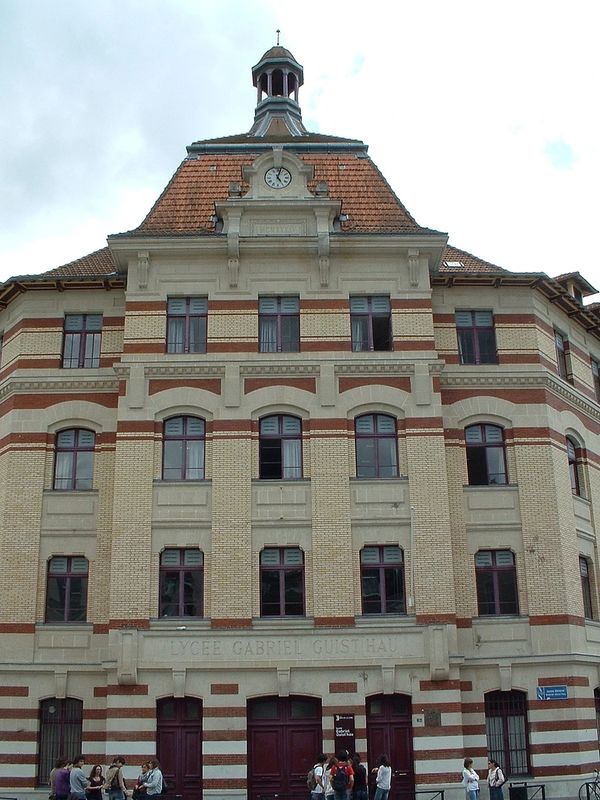
In Lille, masked pupils set bins alight and projectiles flew toward police. Lyon saw riot lines, fires and tear gas. At Saint-Denis, officers charged after fireworks and other projectiles were fired. In Nantes, teenagers piled bins at the entrance to Lycée Gabriel-Guist'hau, according to AFP. About 100 protesters threw projectiles outside Lycée Bréquigny in Rennes, while roughly 80 students gathered at Lycée Lamartine in Paris beneath a sign reading, “More hours of lessons than sleep.”
Nuñez said 440 people were detained Tuesday, most of them minors, and about two-thirds were taken into police custody. He also reported seven incidents in which hydrochloric acid was thrown at law enforcement. Monday had already produced 164 detentions, so Tuesday's tally marked a sharp acceleration. The school action coincided with a nationwide public-sector strike over pay and working conditions; unions put that turnout at about 300,000.
Why this matters
The immediate dispute is about classrooms, staff and schedules. The larger confrontation is between an austerity-bound state and a restless generation at the worst possible political moment for President Emmanuel Macron's weakened camp. France is due to unveil its 2027 budget on Thursday, and anticipated spending cuts give students and public-sector unions a common target.
Detaining 440 people in a single day — most of them minors — also turns the policing of teenagers into an election issue seven months before the presidential vote. France's lycée movements have a history of contagion: blockades that begin over a specific education grievance can spill into universities, transport hubs and broader street politics.
How we got here
The lycée blockade is a familiar French political institution, visible in pension fights and during the 2018–19 gilets jaunes upheaval. This time, students describe concrete pressures: overcrowded classes, missing teachers, dilapidated buildings, punishing timetables and classrooms that became dangerously hot during summer heatwaves.
Those complaints intersect with a public-sector wage fight. French teachers are paid less on average than many European counterparts. OECD data show that France's primary and secondary education spending sat around the middle of the member-country range and rose between 2015 and 2022, yet education's share of public budgets slipped slightly. The argument in the streets is therefore not simply that France spends nothing, but that schools have been quietly deprioritized relative to other demands.
The numbers, in context
Four hundred affected schools out of 3,700 is roughly one lycée in nine — the threshold at which a protest becomes a movement. The jump from 164 detentions Monday to 440 Tuesday shows how quickly both participation and confrontation escalated.
Education Minister Édouard Geffray said 76 students and staff had been injured since the demonstrations began. Authorities separately reported 48 injured officers. Seven acid attacks were a grim novelty in a school protest, and Nuñez used them to frame the police crackdown as self-defence rather than overreaction.
Who is saying what
Students accuse police of excessive “repression” and say the security response obscures their underlying demands. Teachers' unions say pupils and staff share frustrations over understaffing and deteriorating conditions. The government accepts that problems in lycées must be heard but condemns the escalation: Prime Minister Sébastien Lecornu called it “irresponsible,” while Geffray described the violence as “inqualifiable” and said legal proceedings had begun.
La France Insoumise is the political wild card. Hard-left politicians joined demonstrations, prompting the government and rivals to accuse LFI of stoking unrest. In Seine-Saint-Denis, LFI mayor Bally Bagayoko joined hundreds outside Lycée Paul-Éluard, led the national anthem and called the protests “completely legitimate.” He later said his words had been taken out of context. Nuñez, meanwhile, called the police response proportionate and condemned masked protesters carrying projectiles.
What happens next
An off-ramp. Student leaders have called for renewed action while also demanding talks. A negotiated package on staffing, building repairs or schedules could deflate the blockades before they harden into a national campaign.
A budget detonator. If Thursday's 2027 budget confirms education cuts without a visible concession, the government will hand students a fresh grievance and encourage a combined student-worker front.
Contagion. If blockades move into universities, the unrest could become a permanent feature of the 2027 campaign, with LFI attempting to act as its parliamentary champion. The clearest near-term indicators are whether custody numbers keep rising and whether the budget contains an education sweetener.
France's students did not invent the grievances, and the government did not invent the violence. But a Tuesday of burning bins and hydrochloric acid has turned a school-resources dispute into a national test — of policing, of budgets, and of a political class staring down an election year.
Related coverage
Sources
- Le Monde — “Facing 'worsening situation' in high schools, French government sends riot police” (October 2, 2026)
- Le Monde — “French government struggles to contain escalating high school protests” (October 2, 2026)
- Reuters via TBS News — about 400 French schools closed (October 2, 2026)
- Associated Press via Los Angeles Post — student interviews and crisis-meeting report (October 1, 2026)
- BBC and The Independent reporting roundup — arrest and injury figures (October 1, 2026)
- Reuters — “Attackers douse teacher in petrol as student protests rage across France” (October 1, 2026)
- Brussels Signal / BFM — “Violent high-school protests spread around France” (October 1, 2026)
- Reuters — “Dozens injured in French student protests over school resources” (September 30, 2026)
- Al Jazeera — “Public workers in France strike over pay as student protests turn violent” (September 30, 2026)