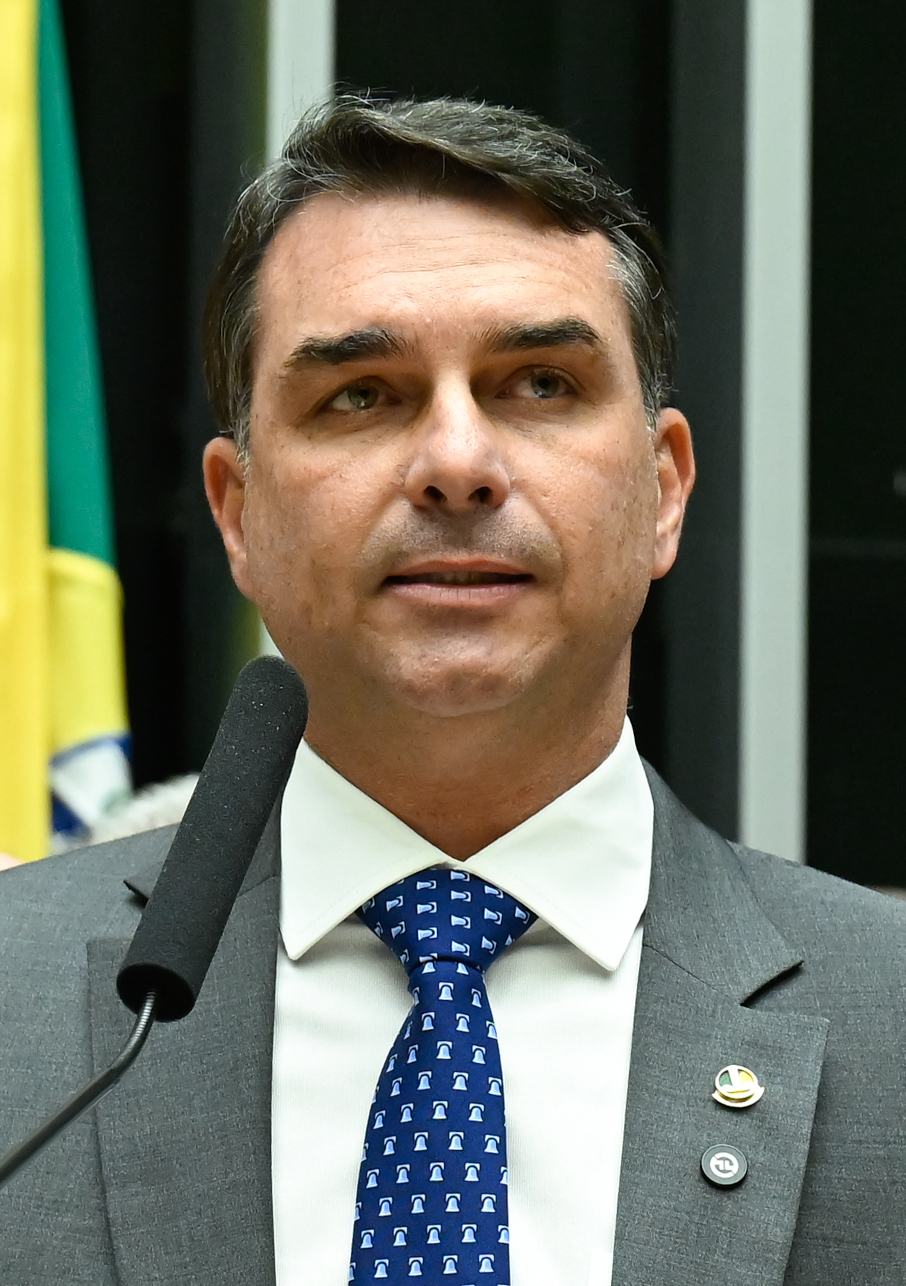
The Brazil presidential runoff results were thrown into confusion on Sunday when a Supreme Court justice ordered polling stations to stay open for two extra hours — three minutes before they were due to close — and the electoral court paused a vote count it had already begun publishing. Justice Cristiano Zanin extended voting nationwide until 7 p.m. Brasília time after both campaigns asked for more time: President Luiz Inácio Lula da Silva's camp over buses that never reached voters in São Paulo and Salvador, and Senator Flávio Bolsonaro's camp over heavy rain in the south. Counting has since resumed, the Associated Press reported, but the ruling has already set up legal challenges to the outcome of a race that final polls showed in a statistical tie — whichever man wins.
Update — Sunday evening, October 25: The count has since been completed and Lula has won the runoff. In the electoral court's count with 99.88% of polling sections processed, Lula took 51.76% of valid votes (64,149,501) to Flávio Bolsonaro's 48.24% (59,778,349), and Datafolha projected his victory on election night. Read the full result story: Lula Wins Brazil Presidential Runoff, Beating Flávio Bolsonaro to a Fourth Term. The report below is the election-day story as it unfolded, kept with its original figures from the night.

Three minutes before closing, the rules changed
Brazil's runoff was supposed to end the way Brazilian elections usually end: polls close at 5 p.m., the electronic voting machines report within minutes, and the Superior Electoral Court — the TSE — publishes a count so fast that winners are normally known the same evening. On Sunday, that script broke at 4:57 p.m. Justice Cristiano Zanin of the Supreme Federal Court ruled that voting would continue nationwide until 7 p.m., accepting an urgent request from Lula's electoral coalition. The TSE, which had already started releasing results, announced it would pause the count until the extended window closed.
The numbers it had published in those first minutes underlined why nobody should have been reading them as a verdict: with just 0.25 percent of electoral sections counted — 1,225 of 499,248 — Lula held 57.66 percent of 335,743 valid votes (193,574) against 42.34 percent (142,169) for Bolsonaro, according to the TSE figures carried by results trackers. That is a sample smaller than a single mid-sized city, drawn from wherever machines happened to report first. Brazil's first round three weeks earlier showed how violently early figures can swing as different regions report: Bolsonaro, written off in some early aggregations, finished the night ahead. The paused snapshot says nothing reliable about who won on Sunday, and this article does not treat it as a lead of any substance.
Two campaigns, two emergencies
What makes Sunday's ruling harder to file as a partisan intervention is that both sides had asked the courts for more time — for opposite problems in opposite strongholds. Lula's campaign alleged that public transport had been obstructed in at least nine states, with municipal bus fleets reduced in cities governed by Bolsonaro allies. In Salvador, the capital of Bahia, a state electoral judge ordered the arrest of the city's mobility secretary, Pablo Souza, after at least 75 public buses were prevented from leaving municipal garages on Sunday morning, the AP reported. São Paulo and Salvador both tend to favor the incumbent. Bolsonaro's campaign, for its part, pointed to heavy rain in Brazil's south, where the senator is favored, and asked for voters there to be given more time as well.
The Organization of American States' electoral observation mission said it was monitoring the transport reports. Justice Zanin, who was Lula's personal lawyer before Lula appointed him to the Supreme Court in 2023, later narrowed his own ruling: the extension applied only where polling stations were still open when it arrived.
Closed doors and switched-off machines
By the time the order travelled from Brasília to nearly half a million polling sections, parts of the country had already finished voting. In Rio de Janeiro, voting machines at one station had been switched off minutes after the scheduled close — and, election workers found, could not simply be turned back on. At a school in Brasília where volunteers oversaw the count, most of the workers left 15 to 20 minutes after polls closed, having already handed their count information to the electoral authorities, unsure whether they were supposed to stay. The confusion was not a technicality: in a race this close, every station that closed early, every machine that stayed off, and every voter who may have been turned away in the gap between the 5 p.m. close and the 7 p.m. extension is now potential evidence in a courtroom.
Both camps moved immediately to frame that courtroom fight. Edhinho Silva, chairman of Lula's Workers' Party, said the campaign was already looking into legal action over what it called interference in the electoral process. Bolsonaro's campaign had not formally commented on the ruling when the AP filed its report, but his ally Nikolas Ferreira attacked the decision head-on, arguing that a ruling from a justice who used to be Lula's lawyer amounted to an attempt to contest a likely Bolsonaro win. Neither campaign, notably, has alleged that votes already cast were altered; the dispute is about access, timing and who got to vote — and about who gets to be believed.
Why this matters
Brazil's electronic count is one of the fastest and most trusted in the democratic world, and that trust is precisely what Sunday put at risk. The danger of a paused count is not that ballots vanish — the machines are not connected to the internet, results are recorded locally, and the TSE's process is heavily audited. The danger is narrative. In 2022, Jair Bolsonaro spent months seeding doubt about the same system before losing narrowly to Lula, refused to concede cleanly, and watched his supporters storm government buildings in Brasília the following January; he was later sentenced to 27 years in prison for plotting to overturn that defeat. A two-hour hole in the middle of election night, ordered by a judge one candidate appointed and the other camp already distrusts, is exactly the kind of gap in which a losing campaign can build a story that the count itself cannot refute fast enough.
That is why the margin, when it finally lands, matters almost as much as the winner. A victory by three or four points would be very hard to litigate away: the extension was requested by both campaigns, applied nationwide, and clarified within the hour, and the disputed stations would have to plausibly hold more votes than the gap. A victory by a few tenths of a point — entirely possible, given that Datafolha's final valid-vote estimate put Bolsonaro at 51 percent to Lula's 49, inside the margin of error, and Atlas/Bloomberg had it 50.8 to 49.2 — would invite challenges over every closed station in Bahia and every rain-soaked queue in the south. The first round's other great fact hangs over all of it: more than 33 million of nearly 160 million eligible Brazilians did not vote on October 4. In a compulsory-voting country, abstention on that scale is itself a political force, and Sunday's transport failures will be measured against it.
How Brazil got to a coin-flip runoff
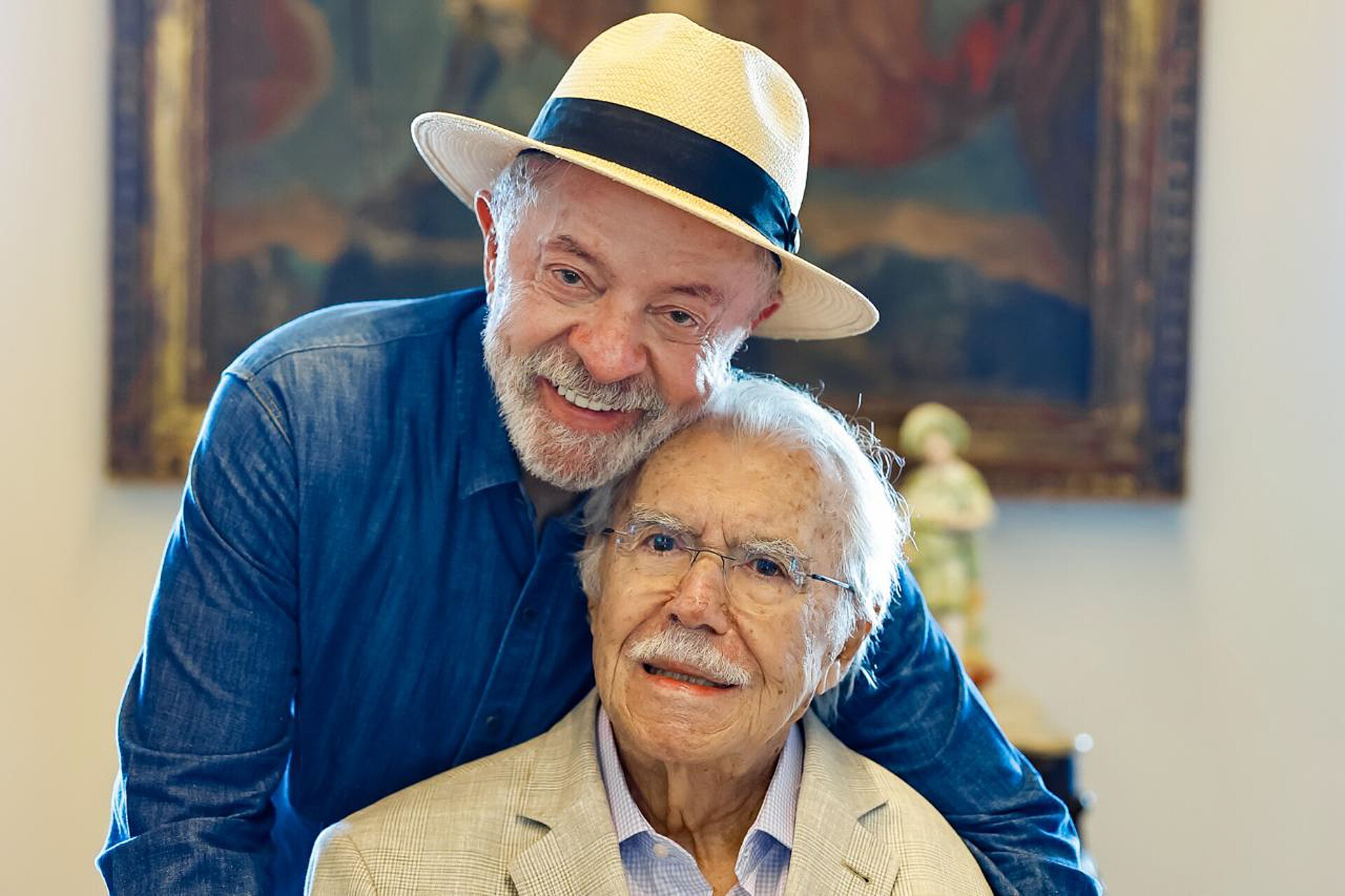
The October 4 first round was the upset that set up Sunday's drama. Flávio Bolsonaro — a senator running his first presidential race, carrying the most famous surname on Brazil's right while his father serves a prison sentence — finished first with 47.03 percent, about 56.1 million votes, against Lula's 45.16 percent and roughly 53.9 million, a gap of some 2.2 million votes, as we reported in our first-round coverage. Lula, a former union leader who first governed from 2003 to 2010 and returned to the presidency in 2023, is seeking a fourth term; four years ago he beat Jair Bolsonaro by the narrowest margin since Brazil's return to democracy in 1985. The three weeks between rounds, covered in our election-day report, never produced a clear favourite: every major final poll landed inside its own margin of error.
The campaign itself was fought on the cost of living and on security. Bolsonaro made a tough-on-crime pitch the centre of his offer and promised to bring food prices down; Lula answered with expensive incentives aimed at undecided voters and with the argument that only he could protect social programmes for Brazil's poorest. Layered over both was the United States. Lula accused the Trump administration of trying to tilt the race — pointing to high tariffs on Brazilian exports and to Washington's designation of drug-trafficking groups as foreign terrorist organizations — while Bolsonaro advertised his closeness to the White House and the promise of better deals, including on Brazil's rare-earth minerals. President Donald Trump said on Sunday that he was watching the election but declined to endorse either man, after having praised Flávio Bolsonaro's first-round performance. Beyond Brazil, the result feeds a regional pattern: a Bolsonaro win would extend a run of rightward turns in Latin America this year, while a Lula win would leave Brazil and Mexico as the region's two big left-led economies. The environmental stakes run through the same divide, as our reporting on Amazon deforestation during the campaign has tracked.
What happens next
The count itself is the first thing to watch: with the extended window closed, the TSE's electronic tally should move quickly, and Brazilian practice is for a winner to become mathematically clear the same night even before the final sections report. Three scenarios follow. If the resumed count opens a gap of several points, expect the losing campaign's legal talk to fade into the background noise of a polarized country, and expect Washington, the OAS and regional governments to recognize the result promptly. If the margin narrows toward the first round's two points — or below — expect formal challenges built around the extension: which stations reopened, which did not, how many voters were affected in Salvador and São Paulo, and whether the two hours changed anything that mattered. And if either candidate declares victory before the TSE's numbers justify it, the precedent of 2022 says the hours that follow will matter more than the speech.
The winner takes office in January and will need more than 50 percent of Sunday's valid votes — he will also need a Congress, a court system and a public that accept how he got there. Brazil's institutions survived 2022's stress test, at real cost. Sunday night's three-minute ruling was, on the evidence available, an attempt to let more Brazilians vote, requested in different forms by both men on the ballot. Whether it is remembered that way depends on numbers that, as this article was published, had only just started moving again.
Sources
- Associated Press, Oct 25 2026 (via Reflector): "Brazil resumes vote counting after last-minute extension of polling hours in tense presidential race" — Zanin ruling three minutes before close; confusion at closed stations and switched-off machines in Rio; volunteers leaving in Brasília; clarification limiting the extension to stations still open; Salvador mobility secretary Pablo Souza arrest order after at least 75 buses blocked; Edhinho Silva legal-action statement; Nikolas Ferreira reaction; OAS mission monitoring; Trump watching, no endorsement. https://www.reflector.com/news/national/brazil-votes-in-a-tense-lula-vs-bolsonaro-runoff-with-us-influence-over-latin-america/article_f9c7132a-de8f-5b46-a375-396cc92171ff.html
- Reuters, Oct 25 2026 (via TradingView): "Brazil pauses presidential runoff vote count after voting hours extended" — TSE temporarily paused the count after the Supreme Court extended voting nationwide by two hours; Lula took the early lead in the partial count before the pause. https://www.tradingview.com/news/reuters.com,2026:newsml_S0N461024:0-brazil-pauses-presidential-runoff-vote-count-after-voting-hours-extended/
- Reuters, Oct 25 2026 (via TradingView / AAP): Supreme Court extended voting by two hours; Zanin accepted Lula coalition's request citing transport issues in three Bahia cities; TSE published 0.25 percent count showing Lula 57.66 percent, Bolsonaro 42.34 percent before pausing; Lula campaign sought extensions in at least nine states over alleged transport reductions. https://aapnews.aap.com.au/news/brazil-votes-in-tight-runoff-between-lula-and-bolsonaro
- CNN, Oct 25 2026: "Polls close in tight Brazil runoff" — first round: Bolsonaro 2.2 million votes ahead of Lula; Trump previously praised Flávio's first-round performance and called the election "very important"; regional rightward trend analysis (Brian Winter, Americas Quarterly). https://www.cnn.com/2026/10/25/americas/brazil-election-lula-bolsonaro-intl-latam?cid=external-feeds_iluminar_meta
- Superior Electoral Court (TSE) figures via Depor / Poliwave live trackers, Oct 25 2026, last updated 5:06 p.m. Brasília time: 0.25 percent of sections counted (1,225 of 499,248); Lula 193,574 votes (57.66 percent), Flávio Bolsonaro 142,169 (42.34 percent); 335,743 valid votes. https://depor.com/en/us-live/who-won-brazils-election-2026-flavio-bolsonaro-vs-lula-da-silva-live-results-and-runoff-updates-nnda-nnrt-noticia/
- The Times, Oct 25 2026: final polls Atlas/Bloomberg Bolsonaro 50.8 percent, Lula 49.2; Datafolha 51–49 on valid votes; both campaigns requested the extension (transport delays and bad weather). https://www.thetimes.com/world/latin-america/article/brazil-election-2026-polls-results-news-lula-bolsonaro-v2zsc2z73