Lithuania nuclear weapons ban vote
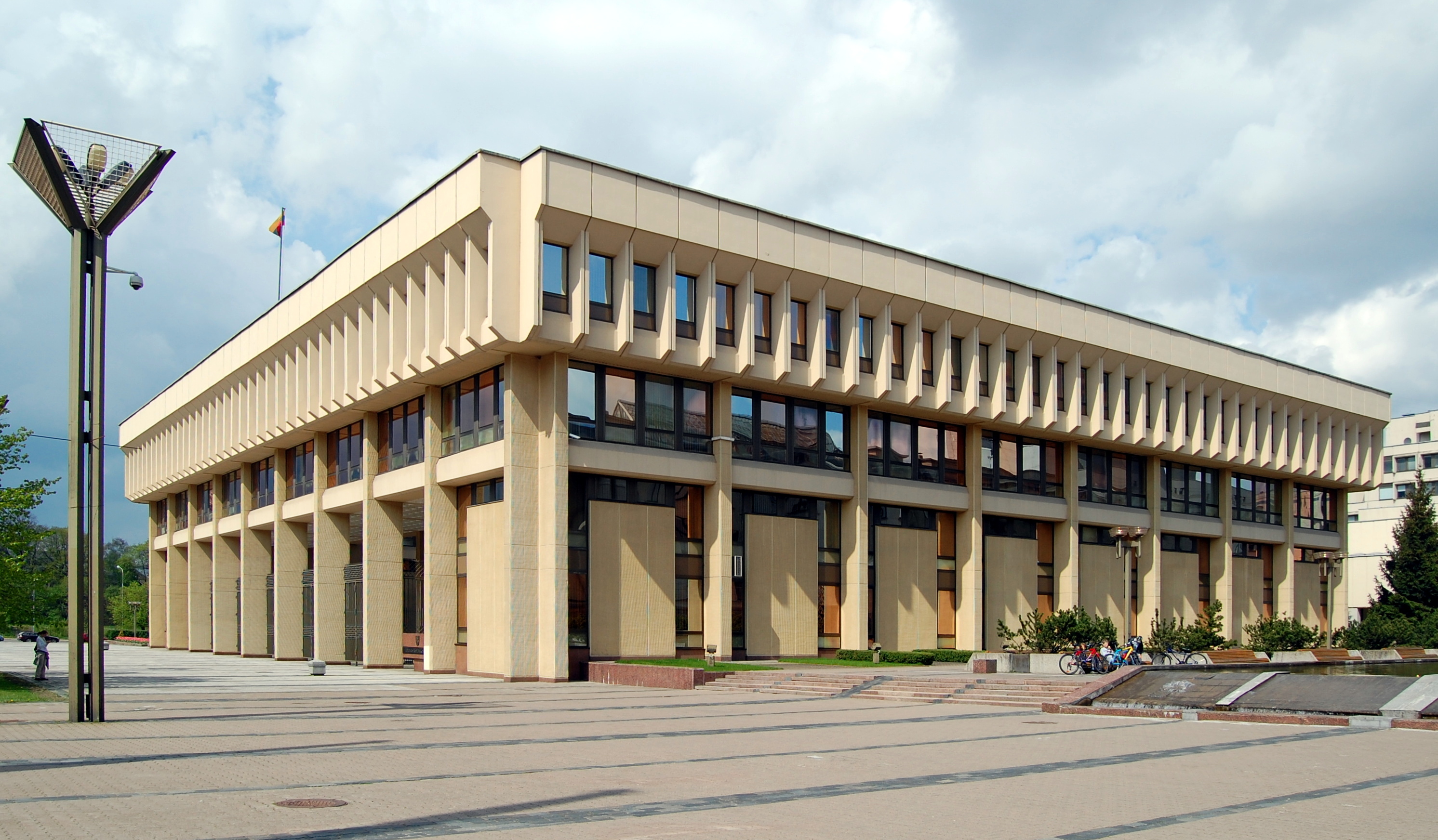
Lithuania's parliament voted Tuesday in favour of removing the country's constitutional prohibition on nuclear arms and foreign military bases, completing the first of two adoption ballots required to amend the constitution. The Lithuania nuclear weapons ban vote does not itself lift the ban: a second adoption vote, scheduled for January 12, 2027, must also clear the constitutional threshold. Nor has Lithuania decided to host a nuclear weapon. What lawmakers approved was the next procedural step toward removing a legal barrier.
Hours later, Kremlin spokesman Dmitry Peskov warned that the move could produce “a new round of escalation.” He linked the vote to President Donald Trump's proposal this month for a new American military base in Lithuania, a separate idea that has not become a basing agreement. The juxtaposition captures the difficulty of nuclear policy on NATO's eastern flank: Vilnius describes legal flexibility as deterrence; Moscow reads that same flexibility as a strategic signal.
What is known
- The October 6 ballot was the first of two adoption votes, not final enactment.
- Repeal would remove Article 137's ban on weapons of mass destruction and foreign military bases.
- A final vote is scheduled for January 12, 2027, after the constitutionally required interval.
- No nuclear deployment has been approved, announced or scheduled.
Why this matters
Article 137 belongs to Lithuania's first constitutional generation after the collapse of the Soviet Union. For more than three decades it has expressed two linked instincts: a rejection of weapons of mass destruction and a determination that foreign powers should not again establish bases on Lithuanian soil. Repealing it would therefore carry weight beyond the narrow legal text. A frontline NATO state would be dismantling a post-Soviet restraint at a time when European governments are rethinking how much nuclear risk they are prepared to absorb for deterrence.
Supporters argue that a constitutional prohibition gives adversaries certainty while denying NATO planners options. Seimas Speaker Juozas Olekas has said Lithuania should be able to participate fully in NATO's nuclear deterrence system. Foreign Affairs Committee chair Remigijus Motuzas put the case more bluntly: “We cannot afford to be less protected than other NATO countries.” Former defence minister Laurynas Kasčiūnas notes that Latvia, Estonia and Poland have no equivalent restriction, and that Finland removed its own in June 2026.
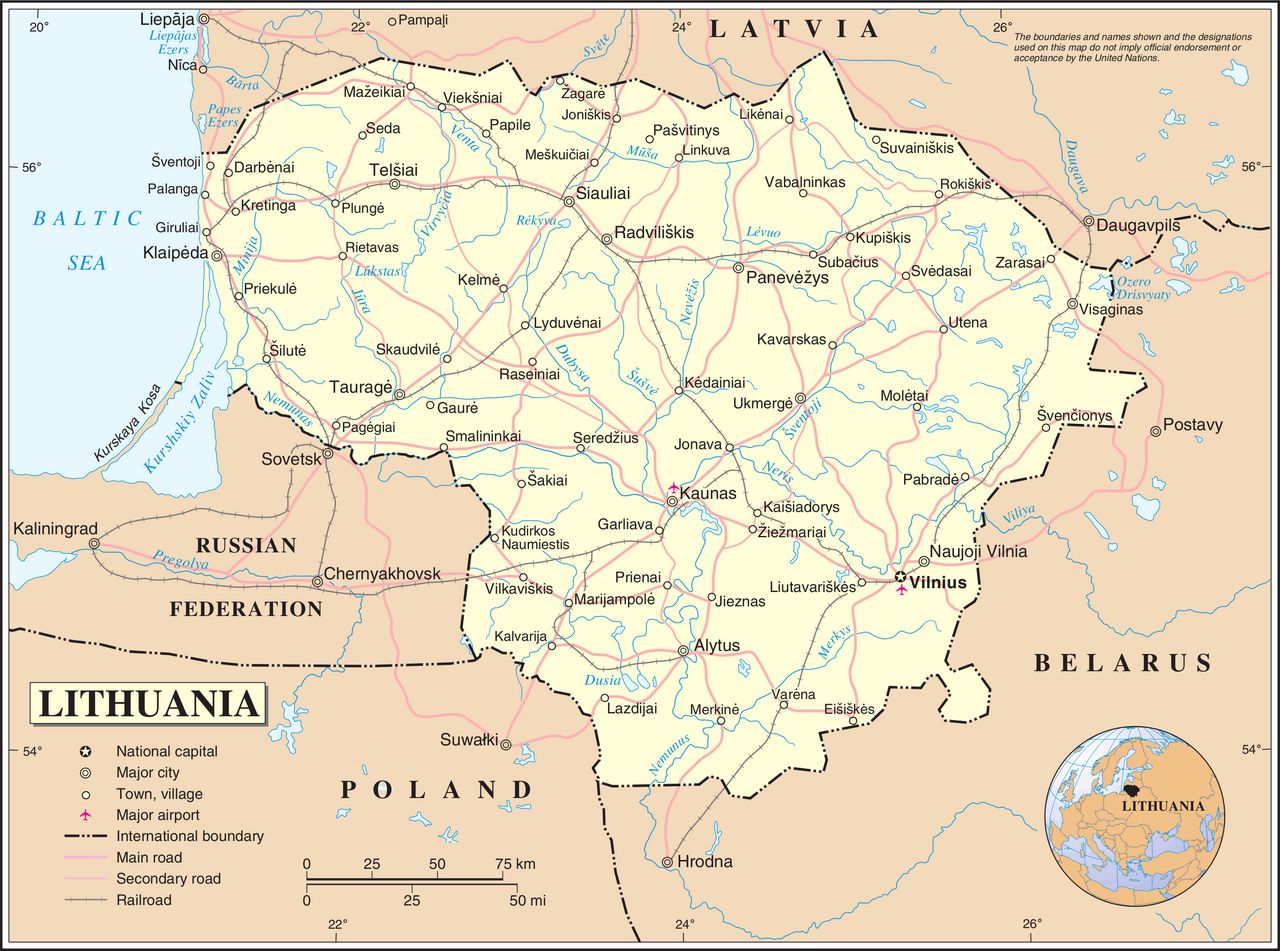
Moscow evaluates the change through a different security logic. From the Kremlin's perspective, legal permission is not a neutral abstraction when it concerns a NATO country bordering Russia's Kaliningrad region and Belarus. Russia denies that it plans to attack NATO territory, while Russian officials argue that the alliance's military infrastructure has continued moving east. That claim is disputed by NATO governments, which describe their deployments as defensive responses to Russian actions. The dispute is not simply over intentions; it is over which side's preparations should be treated as the cause and which as the reaction.

What Peskov said — and what the vote did not do
“If the military infrastructure of what is, in effect, NATO's leading country (the US) is moving closer to our borders, then, of course, this cannot be perceived as anything other than a step towards escalating tensions,” Peskov said, according to Reuters.
He continued: “The same applies to the deployment of nuclear weapons on the territory of a neighbouring state. Neither of these developments will contribute to stability and predictability on the European continent; on the contrary, they will, much to our regret, mark yet another significant escalation of tensions.” Russian Foreign Ministry spokeswoman Maria Zakharova separately called Lithuania's course “absolutely irresponsible.” Peskov has previously warned that Lithuania could become a target if foreign nuclear arms were deployed there.
Those warnings address a possible future deployment, not an event that has occurred. President Gitanas Nausėda supports removing the constitutional constraint but has said Lithuania does not plan to host nuclear weapons in the near future, according to IR Press. The distinction is central: repeal would create legal room for future decisions; it would not make those decisions automatically.
Background: Article 137 and the road to January
Article 137 prohibits weapons of mass destruction and foreign military bases on Lithuanian territory. The provisions were adopted more than 30 years ago after Lithuania regained independence from the Soviet Union. They reflected the experience of occupation and the security assumptions of a different European order.
The amendment process began with a September 22 first reading. Lawmakers voted 99 in favour, 13 against and five abstaining, according to reporting carried by Around Prague and Informat. Constitutional amendments require two adoption votes, each with at least 94 of the Seimas's 141 members — a two-thirds majority — and at least three months between the votes. The October 6 decision was the first adoption ballot. The second is set for January 12.
The numbers in context
The 99 votes recorded at first reading were five above the 94-vote threshold. That margin matters, but it is not a forecast: attendance, party discipline and political conditions can change before January. A final tally from the October 6 adoption ballot was not included in the source material reviewed for this report, so the significance is procedural rather than numerical: the amendment advanced, but its enactment remains conditional.
The military baseline is also more substantial than the constitutional language alone suggests. The United States has kept an armoured battalion of almost 1,000 troops in Lithuania since 2019 through overlapping rotations. Those conventional forces do not amount to a permanent US base, and they are not nuclear forces. Trump's proposal for an American base would proceed on its own diplomatic, legal and budgetary track.
A wider European nuclear debate
Lithuania's vote sits inside a broader change in European nuclear politics. In March 2026, French President Emmanuel Macron revised France's doctrine to open the possibility of temporarily deploying French nuclear weapons in other European countries. Finland removed its equivalent legal restriction in June and later joined the initiative. Latvia said Tuesday that Paris had agreed to discuss Latvian participation, according to Hodhod Yemen News.
“Nuclear sharing” can be used loosely in political debate. In NATO's established arrangements, it generally involves US nuclear weapons stationed in Europe, host-country aircraft or infrastructure, consultation among allies, and US custody of the weapons in peacetime. France maintains an independent deterrent outside NATO's nuclear planning system, so any French arrangement would require separate terms. Removing Article 137 would not by itself place Lithuania inside either model.
For NATO nuclear planners, legal flexibility in Lithuania could widen future options and complicate an adversary's calculations. For French diplomacy, interest from Baltic and Nordic states gives Macron's initiative political reach. For Lithuania's deterrence advocates, the benefit is less a promised weapon than the removal of a constraint they regard as unique and outdated.
Who is alarmed — and who remains cautious
The Kremlin and Belarus are the most directly alarmed because they would face any new allied infrastructure across short distances. Their concern is not difficult to state fairly: even before a deployment, a legal change can affect military planning, warning time and threat perception. The counterargument from Vilnius is that Russian and Belarusian military activity has already changed Lithuania's security environment, and that self-imposed limits can weaken deterrence without buying reciprocal restraint.
Lithuanian critics occupy a different position. Some question whether repeal is necessary when no near-term nuclear deployment is planned. Others fear the move could be exploited by Russian and Belarusian propaganda, making Lithuania appear more aggressive while delivering no immediate military benefit. Some have called for a referendum, arguing that such a consequential post-Soviet clause should not be removed by parliamentary procedure alone.
That caution does not automatically amount to opposition to NATO. It reflects a dispute over method, timing and democratic consent. Nausėda's own formulation — support repeal, but rule out near-term hosting — attempts to split the difference: preserve strategic options without claiming that a deployment is imminent.
What happens next
Scenario one: the final vote passes
If at least 94 lawmakers support the amendment on January 12, Article 137's restriction would be removed under the constitutional process described by Lithuanian officials and regional reports. The immediate change would be legal capacity. Lithuania could then consider future agreements on basing or nuclear participation without colliding with that clause. It would still need a separate political decision, allied agreement, military planning and, depending on the arrangement, further domestic approvals. No weapon would arrive because of the constitutional vote alone.
Scenario two: the amendment stalls
If support falls below the threshold, the prohibition remains. That outcome could be read domestically as a demand for a referendum or a narrower security arrangement. Abroad, Moscow might portray it as resistance to NATO escalation, while Lithuania's deterrence advocates could argue that constitutional mechanics had frozen an outdated vulnerability. Both readings would be political interpretations, not proof of Lithuania's underlying intentions.
Russia's possible responses
Before January, the most likely observable Russian response is rhetorical: warnings, diplomatic pressure and public messaging aimed at Lithuanian voters and lawmakers. Russian officials could also point to force posture in Kaliningrad or Russian nuclear deployments in Belarus as evidence of a deteriorating regional balance. Whether Moscow would change deployments because of Lithuania's legal process is unknown; those are planning possibilities, not reported decisions.
The harder question is whether the vote becomes a regional template. Finland's June move and Latvia's talks with France suggest that legal and political barriers to European nuclear cooperation are already being reassessed. Estonia and Poland do not have Lithuania's constitutional restriction. Yet each country has its own alliance role, domestic politics and exposure to Russia, so a common eastern-flank policy is not inevitable.
For now, the calendar imposes discipline on the story. September 22 opened the process. October 6 advanced it. January 12 will determine whether the legal barrier actually falls. Everything beyond that — a US base, participation in NATO nuclear sharing, or a French deployment — remains a separate choice.